Allergy, Asthma and Immunology

A blog that publishes updates and open access scientific papers about allergy, asthma and immunology. Editor: Juan Carlos Ivancevich, MD. Specialist in Allergy & Immunology

Menu

  • Home
  • Allergy OA
  • Dermatology OA
  • Otorhinolaryngology OA
  • Pediatrics OA
  • Respiratory Medicine OA
  • Contact

May 17, 2023

Obstructive Sleep Apnea May Lead to Early Cognitive Decline in Men

Distinct cognitive changes in male patients with obstructive sleep apnoea without co-morbidities

Valentina Gnoni1, Michel Mesquita2, David O'Regan1,3,4, Alessio Delogu5, Ivan Chakalov6,7, Andrea Antal7, Allan H. Young8,9, Romola S. Bucks10,11, Melinda L. Jackson12 and Ivana Rosenzweig1,3,4*
  • 1Sleep and Brain Plasticity Centre, Department of Neuroimaging, Institute of Psychiatry, Psychology and Neuroscience, King's College London, London, United Kingdom
  • 2L&M Data Science Ltd., London, United Kingdom
  • 3Sleep Disorder Centre, Nuffield House, Guy's Hospital, London, United Kingdom
  • 4Faculty of Life Sciences and Medicine, King's College London, London, United Kingdom
  • 5Institute of Psychiatry, Psychology and Neuroscience, King's College London, London, United Kingdom
  • 6Department of Anesthesiology, University Medical Center Göttingen, Göttingen, Germany
  • 7Department of Neurology, University Medical Center Göttingen, Göttingen, Germany
  • 8Department of Psychological Medicine, Institute of Psychiatry, Psychology and Neuroscience, King's College London, London, United Kingdom
  • 9South London and Maudsley National Health Service (NHS) Foundation Trust, Bethlem Royal Hospital, Beckenham, United Kingdom
  • 10School of Psychological Science, University of Western Australia, Perth, WA, Australia
  • 11The Raine Study, School of Population and Global Health, University of Western Australia, Perth, WA, Australia
  • 12Turner Institute for Brain and Mental Health, School of Psychological Sciences, Monash University, Melbourne, VIC, Australia

Introduction: Obstructive sleep apnoea (OSA) is a multisystem, debilitating, chronic disorder of breathing during sleep, resulting in a relatively consistent pattern of cognitive deficits. More recently, it has been argued that those cognitive deficits, especially in middle-aged patients, may be driven by cardiovascular and metabolic comorbidities, rather than by distinct OSA-processes, such as are for example ensuing nocturnal intermittent hypoxaemia, oxidative stress, neuroinflammation, and sleep fragmentation.

Read more »
Publicado por ivancev@gmail.com en 11:34 AM No comments:
Email ThisBlogThis!Share to XShare to FacebookShare to Pinterest

May 15, 2023

Upregulated expression of Notch1/4 - JAG-1/DLL-1 detected in allergic rhinitis

Hjalmarsson, E., Petro, M., Georén, S.K. et al. Allergy Asthma Clin Immunol 19, 41 (2023). https://doi.org/10.1186/s13223-023-00793-4

Abstract

Background

Allergic rhinitis (AR) is a chronic disease with high prevalence. There are currently many treatments available. However, despite an often good therapeutic response, many patients still report impairment in quality of life (QoL) during the pollen season. A skewed T helper (Th)2 polarization is a well-acknowledged pathologic feature of AR. In animal models, local notch signaling in peripheral tissue seems crucial for Th2 cell differentiation and the development of AR. However, the involvement of Notch signaling in Th2 cell differentiation and the development of AR in humans remains unknown. Hence, the present study investigated the human expression of Notch receptors on CD4+ T-cells in nasal mucosa and blood. Correspondingly Notch ligand expression was assessed on nasal epithelial cells and neutrophils.

Read more »
Publicado por ivancev@gmail.com en 11:31 AM No comments:
Email ThisBlogThis!Share to XShare to FacebookShare to Pinterest

May 14, 2023

Evaluation of pediatric patients with suspected polyethylene glycol and polysorbate allergy before mRNA SARS-CoV2 vaccination

Karaaslan BG, Burtecene N, Mustu U, Ocak S, Kasapcopur O, Kıykım A, Cokugras H. Allergol Immunopathol (Madr). 2023 May 1;51(3):174-180. doi: 10.15586/aei.v51i3.800.


Abstract

mRNA vaccines, particularly, have been associated with an increased risk of allergic reactions and rarely anaphylaxis. Although rare, vaccine reactions can cause significant anxiety and fear in the population, leading to indecision and vaccine refusal. This study aimed to retrospectively evaluate the role of polyethylene glycol (PEG) sensitivity in vaccination decision-making in pediatric patients at high risk of allergy or with suspected allergic reactions to the first dose of the severe acute respiratory syndrome coronavirus 2 (SARS-CoV2) vaccine. Seventeen enrolled patients were found to have decreased readiness to receive the Coronavirus Disease 2019 (COVID-19) vaccine after developing hypersensitivity to multiple and/or injectable drugs.

Read more »
Publicado por ivancev@gmail.com en 12:02 PM No comments:
Email ThisBlogThis!Share to XShare to FacebookShare to Pinterest

The Evolving Landscape of Immunotherapy for the Treatment of Allergic Conditions

Pandya A, Adah E, Jones B, Chevalier R. Clin Transl Sci. 2023 May 11. doi: 10.1111/cts.13546.


Abstract

Allergic conditions such as asthma, chronic urticaria, atopic dermatitis, and eosinophilic esophagitis have long been treated with oral and topical steroids which resulted in negative off target effects. However, newer biologic medications are increasingly being developed and approved for treatment of these conditions. These medications have a variety of mechanisms of action to target pathophysiology specific to these diseases. As biologics become more targeted, fewer off-target effects are seen improving tolerability for patients as well as expanded options for treatment of these conditions.

Read more »
Publicado por ivancev@gmail.com en 11:52 AM No comments:
Email ThisBlogThis!Share to XShare to FacebookShare to Pinterest

May 12, 2023

The Future of Food Allergy: Challenging Existing Paradigms of Clinical Practice.

Anagnostou A, Lieberman J, Greenhawt M, Mack DP, Santos AF, Venter C, Stukus D, Turner PJ, Brough HA. Allergy. 2023 May 2. doi: 10.1111/all.15757. 

Abstract

The field of food allergy has seen tremendous change over the past 5–10 years with seminal studies redefining our approach to prevention and management and novel testing modalities in the horizon. Early introduction of allergenic foods is now recommended, challenging the previous paradigm of restrictive avoidance.

The management of food allergy has shifted from a passive avoidance approach to active interventions that aim to provide protection from accidental exposures, decrease allergic reaction severity and improve the quality of life of food-allergic patients and their families. Additionally, novel diagnostic tools are making their way into clinical practice with the goal to reduce the need for food challenges and assist physicians in the—often complex—diagnostic process. With all the new developments and available choices for diagnosis, prevention and therapy, shared decision-making has become a key part of medical consultation, enabling patients to make the right choice for them, based on their values and preferences.
Read more »
Publicado por ivancev@gmail.com en 12:27 PM No comments:
Email ThisBlogThis!Share to XShare to FacebookShare to Pinterest

House dust mite allergy: The importance of house dust mite allergens for diagnosis and immunotherapy

Huang HJ, Sarzsinszky E, Vrtala S. Mol Immunol. 2023 Apr 27;158:54-67. doi: 10.1016/j.molimm.2023.04.008. 


Abstract

House dust mite (HDM) allergy belongs to the most important allergies and affects approximately 65–130 million people worldwide. Additionally, untreated HDM allergy may lead to the development of severe disease manifestations such as atopic dermatitis or asthma.

Diagnosis and immunotherapy of HDM allergic patients are well established but are often hampered by the use of mite extracts that are of bad quality and lack important allergens. The use of individual allergens seems to be a promising alternative to natural allergen extracts, since they represent well-defined components that can easily be produced and quantified. However, a thorough characterization of the individual allergens is required to determine their clinical relevance and to identify those allergens that are required for correct diagnosis of HDM allergy and for successful immunotherapy. This review gives an update on the individual HDM allergens and their benefits for diagnosis and immunotherapy of HDM allergic patients.
Read more »
Publicado por ivancev@gmail.com en 11:59 AM No comments:
Email ThisBlogThis!Share to XShare to FacebookShare to Pinterest

May 11, 2023

Lung-specific MCEMP1 functions as an adaptor for KIT to promote SCF-mediated mast cell proliferation

Choi YJ, Yoo JS, Jung K, Rice L, Kim D, Zlojutro V, Frimel M, Madden E, Choi UY, Foo SS, Choi Y, Jiang Z, Johnson H, Kwak MJ, Kang S, Hong B, Seo GJ, Kim S, Lee SA, Amini-Bavil-Olyaee S, Maazi H, Akbari O, Asosingh K, Jung JU.  Nat Commun. 2023 Apr 11;14(1):2045. doi: 10.1038/s41467-023-37873-3.

Abstract

Lung mast cells are important in host defense, and excessive proliferation or activation of these cells can cause chronic inflammatory disorders like asthma. Two parallel pathways induced by KIT–stem cell factor (SCF) and FcεRI–immunoglobulin E interactions are critical for the proliferation and activation of mast cells, respectively. Here, we report that mast cell-expressed membrane protein1 (MCEMP1), a lung-specific surface protein, functions as an adaptor for KIT, which promotes SCF-mediated mast cell proliferation.

Read more »
Publicado por ivancev@gmail.com en 9:47 AM No comments:
Email ThisBlogThis!Share to XShare to FacebookShare to Pinterest

May 8, 2023

The Japanese Epidemiologic Study for Perioperative Anaphylaxis, a prospective nationwide study: allergen exposure, epidemiology, and diagnosis of anaphylaxis during general anaesthesia


Takazawa T, Horiuchi T, Nagumo K, et al.  Br J Anaesth. 2023 Mar 27:S0007-0912(23)00080-6. doi: 10.1016/j.bja.2023.02.018.


Abstract

Background: Diagnosis of perioperative anaphylaxis is often challenging. This study describes the utility of a newly developed tool for identifying patients with a high possibility of anaphylaxis, and aimed to investigate the frequency of anaphylaxis with each drug during the perioperative period in Japan.

Methods: This study included patients with anaphylaxis of Grade 2 or higher severity during general anaesthesia at 42 facilities across Japan in 2019 and 2020. We developed and adopted a unique objective evaluation tool yielding a composite score for diagnosing anaphylaxis, which includes the results of skin tests and basophil activation tests, and clinical scores for perioperative anaphylaxis. The number of cases using each drug and the total number of anaphylaxis cases were investigated to calculate the frequency of anaphylaxis.
Read more »
Publicado por ivancev@gmail.com en 4:18 PM No comments:
Email ThisBlogThis!Share to XShare to FacebookShare to Pinterest

Quantitative proteomics profiling of plasma from children with asthma


Zhou Y, Kuai S, Pan R, Li Q, Zhang J, Gu X, Ren H, Cui Y.  Int Immunopharmacol. 2023 May 3;119:110249. doi: 10.1016/j.intimp.2023.110249.

Abstract

A lack of validated blood diagnostic markers presents an obstacle to asthma control. The present study sought to profile the plasma proteins of children with asthma and to determine potential biomarkers. Plasma samples from children in acute exacerbation (n = 4), in clinical remission (n = 4), and from healthy children (n = 4, control) were analyzed using a tandem mass tag (TMT)-labeling quantitative proteomics and the candidate biomarkers were validated using liquid chromatography-parallel reaction monitoring (PRM)/mass spectrometry (MS) with enzyme-linked immunosorbent assay (ELISA).
Read more »
Publicado por ivancev@gmail.com en 11:19 AM No comments:
Email ThisBlogThis!Share to XShare to FacebookShare to Pinterest

May 3, 2023

Can we predict who will benefit most from biologics in severe asthma? A post-hoc analysis of two phase 3 trials

  • Research
  • Open Access

  • Wenjia Chen, 
  • Helen K. Reddel, 
  • J Mark FitzGerald, 
  • Richard Beasley, 
  • Christer Janson & 
  • Mohsen Sadatsafavi 

Respiratory Research volume 24, Article number: 120 (2023) 

Abstract

Background

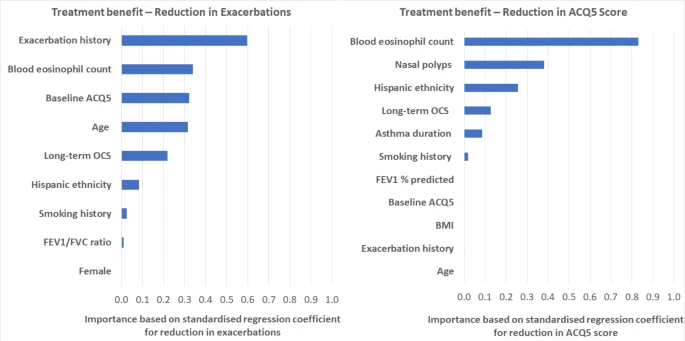
Individualized prediction of treatment response may improve the value proposition of advanced treatment options in severe asthma. This study aimed to investigate the combined capacity of patient characteristics in predicting treatment response to mepolizumab in patients with severe asthma.

Methods

Patient-level data were pooled from two multinational phase 3 trials of mepolizumab in severe eosinophilic asthma. We fitted penalized regression models to quantify reductions in the rate of severe exacerbations and the 5-item Asthma Control Questionnaire (ACQ5) score.

Read more »
Publicado por ivancev@gmail.com en 6:33 PM No comments:
Email ThisBlogThis!Share to XShare to FacebookShare to Pinterest

April 28, 2023

Emerging Role of Alarmins in Food Allergy: An Update on Pathophysiological Insights, Potential Use as Disease Biomarkers, and Therapeutic Implications


Rizzi A, Lo Presti E, Chini R, Gammeri L, Inchingolo R, Lohmeyer FM, Nucera E, Gangemi S. J Clin Med. 2023 Apr 4;12(7):2699. doi: 10.3390/jcm12072699. 

Abstract

Food allergies are immuno-mediated adverse reactions to ingestion or contact with foods, representing a widespread health problem. The immune response can be IgE-mediated, non-IgE-mediated, or with a mixed mechanism. The role of innate immunity and alarmins in the pathogenesis of diseases such as asthma and atopic dermatitis is well known. Some authors have investigated the correlation between alarmins and food allergies, often obtaining interesting results.
Read more »
Publicado por ivancev@gmail.com en 6:51 PM No comments:
Email ThisBlogThis!Share to XShare to FacebookShare to Pinterest

April 27, 2023

Potential contribution of Helicobacter pylori proteins in the pathogenesis of type 1 gastric neuroendocrine tumor and urticaria. In silico approach

Sánchez Caraballo A, Guzmán Y, Sánchez J, Munera M, Garcia E, Gonzalez-Devia D. PLoS One. 2023 Apr 25;18(4):e0281485. doi: 10.1371/journal.pone.0281485. 

Abstract

Background

Helicobacter pylori has been linked to several diseases such as chronic urticaria, gastritis, and type 1 gastric neuroendocrine tumors (type 1 gNET). Although these diseases seem to have different mechanisms, their relationship with H. pylori suggests a common inflammatory pathway.

Objective

To identify potential cross-reactive antigens between H. pylori and humans involved in chronic urticaria and type 1 gNET.

Methods

Alignment was carried out among human proteins associated with urticaria (9 proteins), type 1 gNET (32 proteins), and H. pylori proteome.

Read more »
Publicado por ivancev@gmail.com en 9:08 AM No comments:
Email ThisBlogThis!Share to XShare to FacebookShare to Pinterest

IL-1β and Allergy: Focusing on Its Role in Allergic Rhinitis


Wang HR, Wei SZ, Song XY, Wang Y, Zhang WB, Ren C, Mou YK, Song XC. Mediators Inflamm. 2023 Apr 12;2023:1265449. doi: 10.1155/2023/1265449.

Abstract

Allergic rhinitis (AR) is a chronic upper airway immune-inflammation response mediated by immunoglobulin E (IgE) to allergens and can seriously affect the quality of life and work efficiency. Previous studies have shown that interleukin-1β (IL-1β) acts as a key cytokine to participate in and promote the occurrence and development of allergic diseases.
Read more »
Publicado por ivancev@gmail.com en 8:58 AM No comments:
Email ThisBlogThis!Share to XShare to FacebookShare to Pinterest

April 26, 2023

High baseline prevalence of atopic comorbidities and medication use in children treated with allergy immunotherapy in the REAl-world effeCtiveness in allergy immunoTherapy (REACT) study


Fritszching B, Porsbjerg C, Buchs S, Larsen JR, Freemantle N, Contoli M. H Front Pediatr. 2023 Mar 28;11:1136942. doi: 10.3389/fped.2023.1136942. 

Abstract

Background: Respiratory allergy, commonly manifesting as allergic rhinitis (AR) and asthma, is a chronic progressive disease that frequently starts in childhood. Allergy immunotherapy (AIT) is the only causal treatment for respiratory allergy with the potential to modify the underlying cause of allergy and, ultimately, prevent disease progression. This analysis aimed to determine if AIT is received sufficiently early to halt the progression of allergic disease, by characterizing the burden and progression of disease in children prior to AIT initiation in real-life clinical practice.

Methods: The REAl-world effeCtiveness in allergy immunoTherapy (REACT) study was a large retrospective cohort study using German claims data between 2007 and 2017. Characteristics of two pre-defined AIT age cohorts from the REACT study - children (aged <18 years) and adults (aged ≥18 years) - were evaluated during the 1-year period before the first AIT prescription.

Read more »
Publicado por ivancev@gmail.com en 7:13 PM No comments:
Email ThisBlogThis!Share to XShare to FacebookShare to Pinterest

April 24, 2023

Consensus on the management of united airways disease with type 2 inflammation: a multidisciplinary Delphi study

  • Research
  • Open Access

  • Marina Blanco-Aparicio, 
  • Javier Domínguez-Ortega, 
  • Carolina Cisneros, 
  • Carlos Colás, 
  • Francisco Casas, 
  • Alfonso del Cuvillo, 
  • Isam Alobid, 
  • Santiago Quirce & 
  • Joaquim Mullol 


Allergy, Asthma & Clinical Immunology volume 19, Article number: 34 (2023) 

Abstract

Background

Scientific evidence on patients with multimorbid type 2 asthma and chronic rhinosinusitis with nasal polyps (CRSwNP) from a united airways disease (UAD) perspective remains scarce, despite the frequent coexistence of these entities. We aimed to generate expert consensus-based recommendations for the management of UAD patients.

Methods

Using a two-round Delphi method, Spanish expert allergists, pulmonologists and otolaryngologists expressed their agreement on 32 statements (52 items) on a 9-point Likert scale, classified as appropriate (median 7–9), uncertain (4–6) or inappropriate (1–3). Consensus was considered when at least two-thirds of the panel scored within the range containing the median.
Read more »
Publicado por ivancev@gmail.com en 12:26 PM No comments:
Email ThisBlogThis!Share to XShare to FacebookShare to Pinterest
Newer Posts Older Posts Home
Subscribe to: Comments (Atom)

Newsletter

Get new posts by email:
Powered by follow.it

Search This Blog

Translations

ORCID Juan C. Ivancevich

ORCID iD iconhttps://orcid.org/0000-0001-8713-6258

Blog Archive

Popular posts

  • Allergic Rhinitis and Its Impact on Asthma (ARIA)-EAACI Guidelines—2024–2025 Revision: Part I—Guidelines on Intranasal Treatments
    B. Sousa-Pinto, J. Bousquet, R. J. Vieira, et al. Allergy (2025): 1–23, https://doi.org/10.1111/all.70131. ABSTRACT Background Allergic rhi...
  • Endotypes of atopic dermatitis
    Fyhrquist N, Yang Y, Karisola P, Alenius H. J Allergy Clin Immunol. 2025 Jul;156(1):24-40.e4. doi: 10.1016/j.jaci.2025.02.029. Abstract   Pa...
  • Diagnosis and management of mast cell activation syndrome (MCAS) in Canada: a practical approach.
    Lee, E., Picard, M. Allergy Asthma Clin Immunol 21, 49 (2025). https://doi.org/10.1186/s13223-025-00998-9 Abstract Stepwise practical approa...

Twitter

Tweets by @Aller_MD

Interesting Links

  • World Allergy Organization
  • Latin American Society of Allergy, Asthma & Immunology
  • Interasma
  • European Academy of Allergy & Immunology
  • American College of Allergy, Asthma & Immunology
  • American Academy of Allergy, Astma & Immunology
  • TRIP Database
  • Ga2len
Juan Carlos Ivancevich, MD. Powered by Blogger.