August 22, 2024

The Global Prevalence of Seborrheic Dermatitis A Systematic Review and Meta-Analysis

Polaskey MT, Chang CH, Daftary K, Fakhraie S, Miller CH, Chovatiya R.  JAMA Dermatol. 2024 Aug 1;160(8):846-855. doi: 10.1001/jamadermatol.2024.1987. 

Key Points

Question  What is the global prevalence of seborrheic dermatitis, and how do demographic variations affect its prevalence?

Findings  In this meta-analysis of 121 studies including 1 260 163 individuals, the pooled global prevalence of seborrheic dermatitis was 4.38%, with significant variations across age groups and geographical regions.

Meaning  This study highlights the global prevalence of seborrheic dermatitis and its significant variations across demographics and geographical regions.

Abstract

Importance  Seborrheic dermatitis is a prevalent chronic inflammatory skin disease, yet its global prevalence, pathogenesis, and epidemiology remain inadequately defined.

Objective  To provide a detailed estimation of the global prevalence of seborrheic dermatitis, analyze demographic variations, and explore differences in various settings.

Data Sources  Embase, PubMed, Scopus, and Cochrane Database of Systematic Reviews were searched from inception through October 2023.

August 19, 2024

Pityriasis Rubra Pilaris in an Atopic Dermatitis Patient: A Case Report

Almoqati M, Almasoudi L, Alfaqih Z, et al. (August 17, 2024) Cureus 16(8): e67077. doi:10.7759/cureus.67077

Abstract

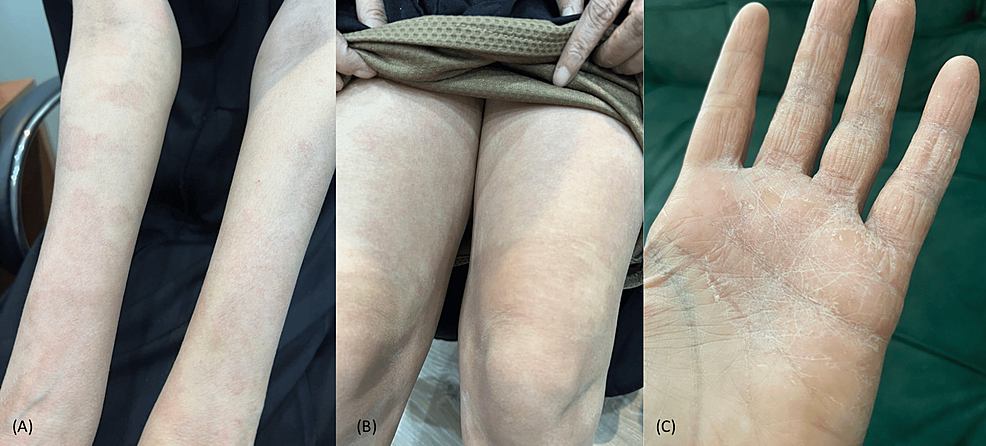
Multiple, diffuse, well-defined, fine, scaly erythematous patches with
an area of spared skin on (A) upper extremities, (B) lower extremities,
and (C) palmoplantar keratoderma
Pityriasis rubra pilaris (PRP) is a rare, chronic, inflammatory papulosquamous skin disease. Here, we report a case of a 43-year-old female with a known history of atopic dermatitis, bronchiectasis, and goiter who presented with a six-month history of persistent itchy skin lesions on her extremities. A skin examination revealed multiple diffuse, well-defined, fine, scaly erythematous patches with areas of spared skin over all four extremities, along with palmoplantar keratoderma. The trunk was spared. The differential diagnosis included atopic eczema, pityriasis rubra pilaris, dermatomyositis, mycosis fungoides, parapsoriasis, psoriasis, and drug-induced eczematous dermatitis.
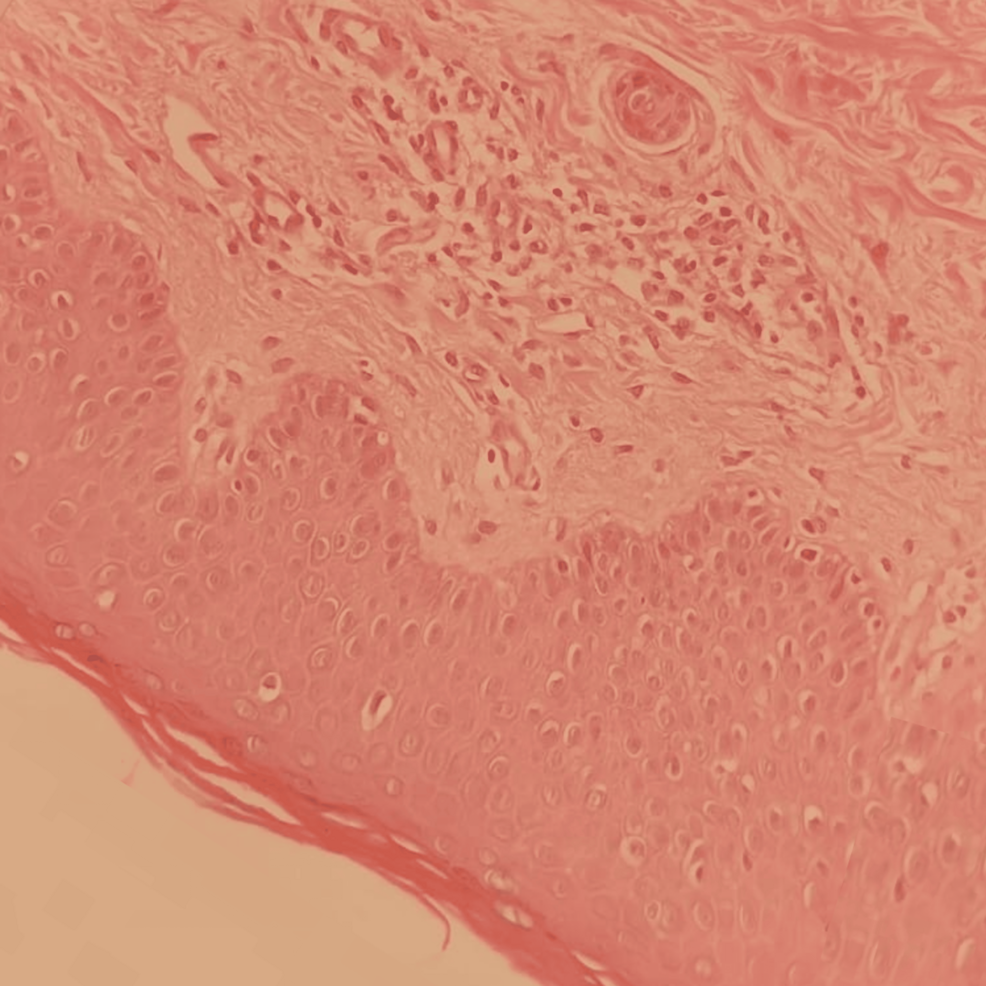
Mild hyperkeratosis, acanthosis, spongiosis, follicular plugging,
and mild perivascular lymphohistiocytic cellular infiltrates in the dermis

August 15, 2024

Bilastine for the treatment of allergic rhinoconjunctivitis and urticaria: results from an international Delphi study

Canonica GW, Kuna P, Maurer M, Mösges R, Novak Z, Papadopoulos N, Rodriguez del Rio P, the Delphi Study Group.  Drugs Context. 2024;13:2024-2-3. https://doi.org/10.7573/ dic.2024-2

Abstract 

Background: Second-generation oral H1 -antihistamines, including bilastine, represent the emerging treatments of allergic rhinitis (including rhinoconjunctivitis) and chronic urticaria in both adults and children. This study analyses available evidence supporting the use of bilastine amongst second-generation antihistamines for the symptomatic treatment of allergic rhinitis and urticaria in adults and children. 

August 14, 2024

Understanding Health Care Students' Perceptions, Beliefs, and Attitudes Toward AI-Powered Language Models: Cross-Sectional Study

Cherrez-Ojeda I, Gallardo-Bastidas JC, Robles-Velasco K et al. JMIR Med Educ. 2024 Aug 13;10:e51757. doi: 10.2196/51757.

Abstract

Background: ChatGPT was not intended for use in health care, but it has potential benefits that depend on end-user understanding and acceptability, which is where health care students become crucial. There is still a limited amount of research in this area.

Objective: The primary aim of our study was to assess the frequency of ChatGPT use, the perceived level of knowledge, the perceived risks associated with its use, and the ethical issues, as well as attitudes toward the use of ChatGPT in the context of education in the field of health. In addition, we aimed to examine whether there were differences across groups based on demographic variables.

August 13, 2024

Primary immunodeficiency diseases of adults: a review of pulmonary complication imaging findings

Grenier PA, Brun AL, Longchampt E, Lipski M, Mellot F, Catherinot E. Eur Radiol. 2024 Jun;34(6):4142-4154. doi: 10.1007/s00330-023-10334-7. 

Abstract

Our objective in this review is to familiarize radiologists with the spectrum of initial and progressive CT manifestations of pulmonary complications observed in adult patients with primary immunodeficiency diseases, including primary antibody deficiency (PAD), hyper-IgE syndrome (HIES), and chronic granulomatous disease (CGD).

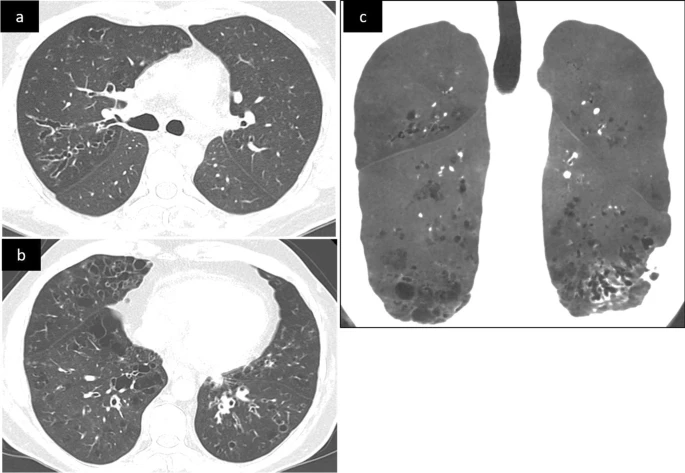
Unenhanced CT scan in a 35-year-old patient with common variable immunodeficiency (CVID)
In patients with PAD, recurrent pulmonary infections may lead to airway remodeling with bronchial wall-thickening, bronchiectasis, mucus-plugging, mosaic perfusion, and expiratory air-trapping. Interstitial lung disease associates pulmonary lymphoid hyperplasia, granulomatous inflammation, and organizing pneumonia and is called granulomatous-lymphocytic interstitial lung disease (GLILD). The CT features of GLILD are solid and semi-solid pulmonary nodules and areas of air space consolidation, reticular opacities, and lymphadenopathy. These features may overlap those of mucosa-associated lymphoid tissue (MALT) lymphoma, justifying biopsies. In patients with HIES, particularly the autosomal dominant type (Job syndrome), recurrent pyogenic infections lead to permanent lung damage.

ChatGPT in medicine: A cross-disciplinary systematic review of ChatGPT's (artificial intelligence) role in research, clinical practice, education, and patient interaction

Fatima A, Shafique MA, Alam K, Fadlalla Ahmed TK, Mustafa MS. Medicine (Baltimore). 2024 Aug 9;103(32):e39250. doi: 10.1097/MD.0000000000039250.

Abstract

Background: 

ChatGPT, a powerful AI language model, has gained increasing prominence in medicine, offering potential applications in healthcare, clinical decision support, patient communication, and medical research. This systematic review aims to comprehensively assess the applications of ChatGPT in healthcare education, research, writing, patient communication, and practice while also delineating potential limitations and areas for improvement.

Method: 

Our comprehensive database search retrieved relevant papers from PubMed, Medline and Scopus. After the screening process, 83 studies met the inclusion criteria.

August 12, 2024

The complexities of decision-making associated with on-demand treatment of hereditary angioedema (HAE) attacks

Betschel, S.D., Caballero, T., Jones, D.H. et al.  Allergy Asthma Clin Immunol 20, 43 (2024). https://doi.org/10.1186/s13223-024-00903-w

Abstract

Background

Hereditary angioedema (HAE) is characterized by debilitating attacks of tissue swelling in various locations. While guidelines recommend the importance of early on-demand treatment, recent data indicate that many patients delay or do not treat their attacks.

Objective

This survey aimed to investigate patient behavior and evaluate the key factors that drive on-demand treatment decision-making, as reported by those living with HAE.

Focused allergic rhinitis practice parameter for Canada


Ellis, A.K., Cook, V., Keith, P.K. et al. Allergy Asthma Clin Immunol 20, 45 (2024). https://doi.org/10.1186/s13223-024-00899-3

Abstract

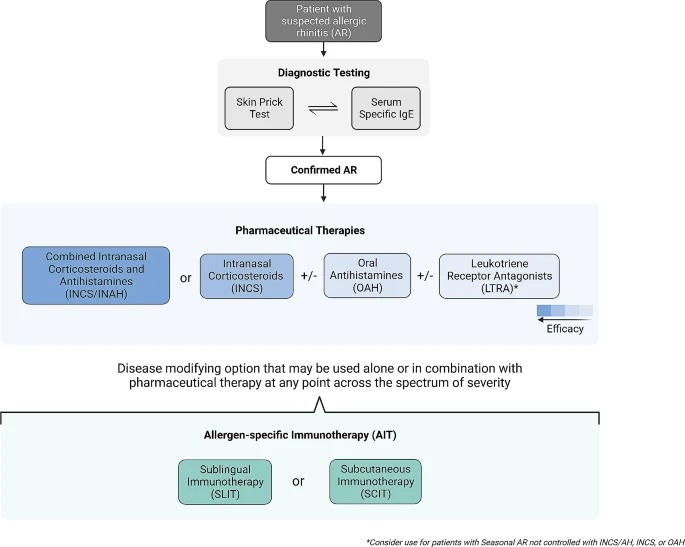
A stepwise algorithm for the diagnosis and treatment of allergic rhinitis.
Allergic rhinitis (AR) is a prevalent disease in Canada that affects both children and adults. Several guidelines for the management of AR have been published by professional allergy societies worldwide. However, there are regional differences in the clinical management of AR, and regulatory approval of some AR pharmacotherapies varies among countries. Thus, six research questions specific to the treatment of AR in Canada were identified for this focused practice parameter. Reviews of the literature published since 2016 were conducted to obtain evidence-based support for the responses of the Work Group to each research question. In response to research question 1 “In patients with symptoms indicative of AR, is serum-specific IgE sufficient to identify candidates for immunotherapy or is a skin prick test mandatory?”