August 29, 2024

Cost and Cost-Effectiveness of the Management Strategies of Chronic Urticaria A Systematic Review

Nochaiwong S, Chuamanochan M, Ruengorn C, Awiphan R, Bernstein JA, Thavorn K. JAMA Dermatol. Published online August 28, 2024. doi:10.1001/jamadermatol.2024.2863

Key Points

Question  What are the costs and cost-effectiveness of chronic urticaria (CU) management strategies?

Findings  In this systematic review including 17 unique studies, based on 2023 US dollars, median annual cost estimations for CU ranged from $5621 to $6933. Biologic omalizumab, 300 mg, for H1 antihistamine–refractory chronic spontaneous urticaria (CSU) appears to be cost-effective from a third-party payer’s perspective.

Meaning  In this review, biologic omalizumab, 300 mg, for H1 antihistamine–refractory CSU offered good value for money in US health care services; price negotiations and rebates of high-cost drugs may help promote sustainability and more effective health care allocation for CU.

Abstract

Importance  Although treatment for chronic urticaria (CU) has improved over the past decades, evidence regarding costs and net benefits associated with these treatment strategies have yet to be comprehensively characterized and synthesized.

First-Generation Antihistamines and Seizures in Young Children

Kim JH, Ha EK, Han B, Han T, Shin J, Chae KY, Rhie S, Han MY.  JAMA Netw Open. 2024 Aug 1;7(8):e2429654. doi: 10.1001/jamanetworkopen.2024.29654.


Key Points

Question  What is the association of prescriptions of first-generation antihistamines with seizure events in young children?

Findings  In this cohort study of 3178 children in Korea, prescriptions of a first-generation antihistamine were associated with a 22.0% higher seizure risk in children, especially in those aged 6 to 24 months.

Meaning  These findings reinforce the importance of cautious first-generation antihistamine prescription in young children and underline the need for further research to fully understand associations between antihistamine use and seizure risk.

Abstract

Importance  The widespread use of antihistamines in children for treatment of common cold symptoms and their central nervous system effects, like drowsiness, underscore the importance of being aware of the associated risks.

Objective  To assess associations between prescriptions of first-generation antihistamines and seizures in children using a comprehensive and nationwide dataset.

An Overview of Adherence—What It Is and Why It Is Important

Conroy ER, Banzon TM, Simoneau T, Phipatanakul W, van Boven JFM, Larenas-Linnemann D. J Allergy Clin Immunol Pract. 2024 Jul 27:S2213-2198(24)00750-5. doi: 10.1016/j.jaip.2024.07.018.

Abstract

Summary of methods to measure medication adherence. 
Asthma, allergic rhinitis, and food allergy are common allergic diseases, yet adherence to many management options remains poor, leading to worse health outcomes and financial implications for society and health systems. The underlying causes of nonadherence are numerous, ranging from patient-specific factors to broader socioeconomic and systems-based factors. In this review, we aim to discuss the definition of adherence, which can be divided into 3 components: initiation, implementation, and persistence, as well as to review various methods of measuring adherence.

August 24, 2024

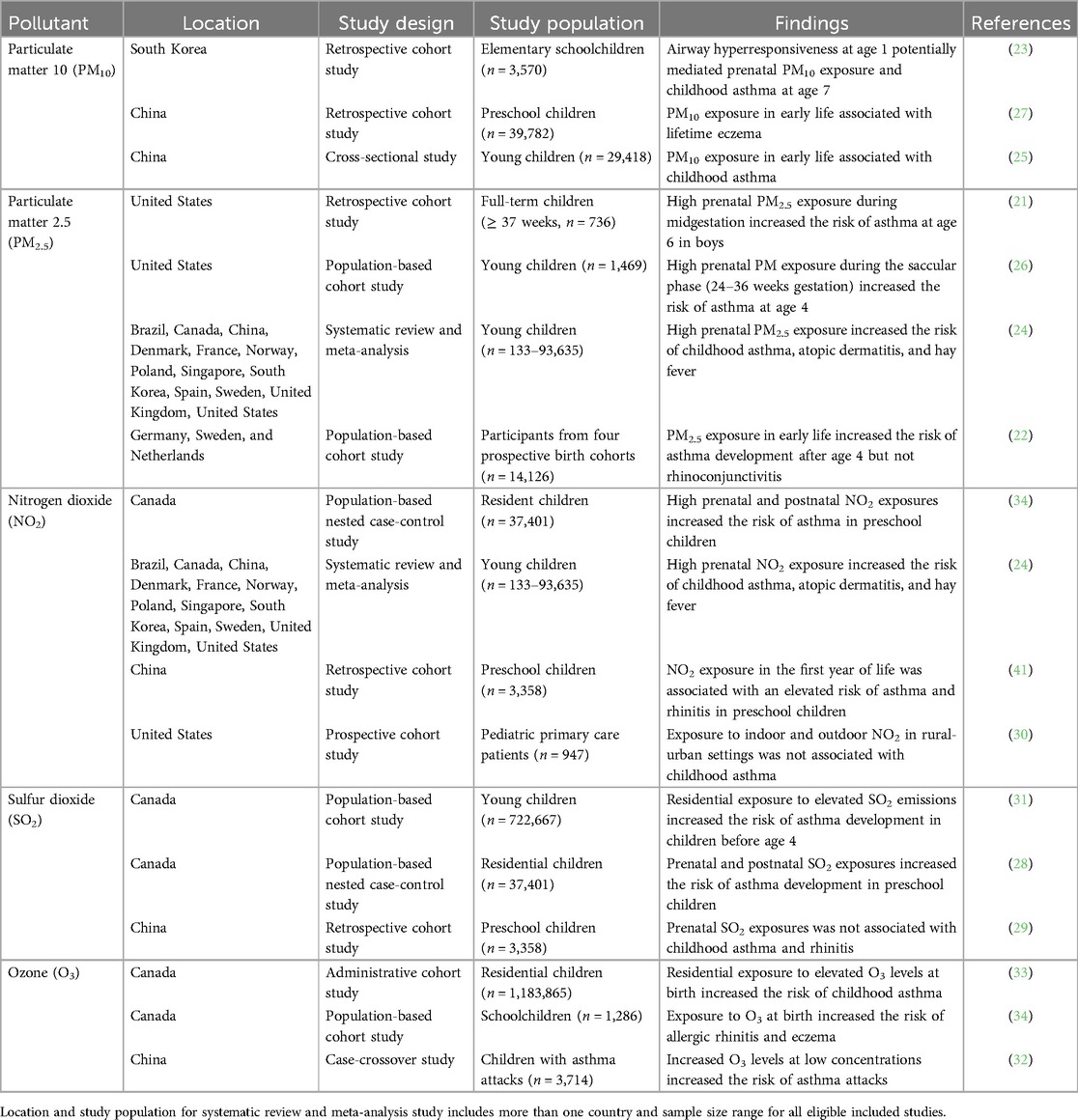
Early life exposures of childhood asthma and allergies—an epidemiologic perspective

Rajesh Melaram Front. Allergy, 22 August 2024 Volume 5 - 2024 | https://doi.org/10.3389/falgy.2024.1445207


Abstract

Children around the world are continuing to develop and suffer from chronic lung diseases such as asthma. Childhood asthma commonly presents with recurrent episodes of cough, shortness of breath, and wheezing, all of which can lead to missed school days and hospitalization admissions. The role of environmental pollutants and aeroallergens has been increasingly recognized in relation to asthma etiology.

August 23, 2024

Innate lymphoid cells in immunoglobulin E-mediated food allergy

Ilangovan J, Neves JF, Santos AF. Curr Opin Allergy Clin Immunol. 2024 Aug 13. doi: 10.1097/ACI.0000000000001018. 

Abstract


Purpose of review 

The known and potential role of ILCs in food allergy and tolerance
Recognition of the importance of innate lymphoid cells (ILCs) in the immune mechanisms of food allergy has grown in recent years. This review summarizes recent findings of ILCs in immunoglobulin E (IgE)-mediated food allergy. New research on ILCs in the context of the microbiome and other atopic diseases are also considered with respect to how they can inform understanding of the role of ILCs in food allergy.

Two Novel Inflammation Indexes; Can Systemic İmmune-inflammation Index and Pan-immune-inflammation Value Be Associated with Chronic Rhinosinusitis?

Hepkarsi S, Yilmazer C. Eur J Rhinol Allergy 2024;7(2):55-60.


Abstract

Objective: Chronic rhinosinusitis (CRS) can be classifed as CRS with nasal polyps (CRSwNP) and CRS without nasal polyps (CRSsNP). The aim of this study was to evaluate and compare the Systemic Immune-Infammation Index (SII) and Pan-Immune-Infammation Value (PIV) levels of patients diagnosed with chronic rhinosinusitis (CRS) with nasal polyposis (CRSwNP) and CRS without nasal polyposis (CRSsNP) along with healthy controls.

Methods: The study analyzed 320 patients from 2022 to 2023. Patients were divided into three groups. 110 CRSwNP patients, 110 CRSsNP patients, and 100 healthy individuals were included in Groups A, B, and C, respectively. SII and PIV levels were assessed after CRSwNP or CRSsNP diagnosis. The values of complete blood count, SII, and PIV were compared.

Comparative Effectiveness of Licensed Influenza Vaccines in Preventing Influenza-related Medical Encounters and Hospitalizations in the 2022–2023 Influenza Season Among Adults ≥65 Years of Age

Jennifer H Ku, Emily Rayens, Lina S Sy, Lei Qian, Bradley K Ackerson, Yi Luo, Julia E Tubert, Gina S Lee, Punam P Modha, Yoonyoung Park, Tianyu Sun, Evan J Anderson, Hung Fu Tseng, Clinical Infectious Diseases, 2024;, ciae375, https://doi.org/10.1093/cid/ciae375

Abstract

Background

Influenza causes substantial morbidity, particularly among older individuals. Updated data on the effectiveness of currently licensed vaccines in this population are needed.

Methods

At Kaiser Permanente Southern California, we conducted a retrospective cohort study to evaluate comparative vaccine effectiveness (cVE) of high-dose (HD), adjuvanted, and standard-dose (SD) cell-based influenza vaccines, relative to the SD egg-based vaccine. We included adults aged ≥65 years who received an influenza vaccine between 1 August 2022 and 31 December 2022, with follow-up up to 20 May 2023.

August 22, 2024

Therapeutic monoclonal antibodies in allergy: Targeting IgE, cytokine, and alarmin pathways

Eggel A, Pennington LF, Jardetzky TS. Therapeutic monoclonal antibodies in allergy: Targeting IgE, cytokine, and alarmin pathways. Immunol Rev. 2024 Aug 19. doi: 10.1111/imr.13380. 

Summary

The etiology of allergy is closely linked to type 2 inflammatory responses ultimately leading to the production of allergen-specific immunoglobulin E (IgE), a key driver of many allergic conditions. At a high level, initial allergen exposure disrupts epithelial integrity, triggering local inflammation via alarmins including IL-25, IL-33, and TSLP, which activate type 2 innate lymphoid cells as well as other immune cells to secrete type 2 cytokines IL-4, IL-5 and IL-13, promoting Th2 cell development and eosinophil recruitment. Th2 cell dependent B cell activation promotes the production of allergen-specific IgE, which stably binds to basophils and mast cells. Rapid degranulation of these cells upon allergen re-exposure leads to allergic symptoms.