September 5, 2024

Recent Advances in Allergic Rhinitis: A Narrative Review.

Tidke M, Borghare P T, Pardhekar P, et al. (September 04, 2024) Cureus 16(9): e68607. doi:10.7759/cureus.68607

Abstract

Allergic rhinitis (AR) is a prevalent chronic respiratory condition characterized by nasal inflammation, sneezing, congestion, and itching, significantly impacting quality of life. Over recent years, considerable advancements have been made in understanding the pathophysiology, diagnosis, and management of AR. This narrative review aims to synthesize these recent developments, providing a comprehensive overview of key areas. Emerging insights into AR pathophysiology have elucidated the complex interplay between genetic predisposition, environmental factors, and immune system dysregulation. Notably, the role of the epithelial barrier and the microbiome in AR pathogenesis has garnered increasing attention, offering potential targets for novel therapies. Advances in diagnostic technologies, such as component-resolved diagnostics and molecular allergology, have enhanced the precision of allergy identification, enabling more personalized treatment approaches.

Shared genetic architecture between gastro-esophageal reflux disease, asthma, and allergic diseases

Gong, T., Kuja-Halkola, R., Harder, A. et al. Commun Biol 7, 1077 (2024). https://doi.org/10.1038/s42003-024-06795-1

Abstract

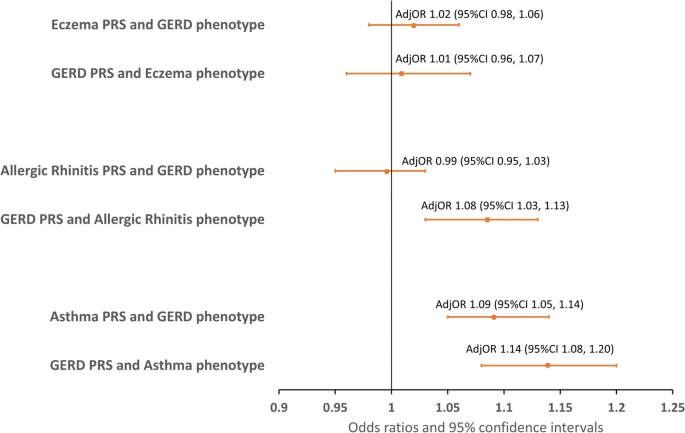
Associations between phenotypes and polygenic risk scores for
GERD with eczema, allergic rhinitis, and asthma in Swedish twins.
The aim is to investigate the evidence for shared genetic architecture between each of asthma, allergic rhinitis and eczema with gastro-esophageal reflux disease (GERD). Structural equation models (SEM) and polygenic risk score (PRS) analyses are applied to three Swedish twin cohorts (n = 46,582) and reveal a modest genetic correlation between GERD and asthma of 0.18 and bidirectional PRS and phenotypic associations ranging between OR 1.09-1.14 and no correlations for eczema and allergic rhinitis. Linkage disequilibrium score regression is applied to summary statistics of recently published GERD and asthma/allergic disease genome wide association studies and reveals a genetic correlation of 0.48 for asthma and GERD, and Genomic SEM supports a single latent factor.

September 3, 2024

Real-World Study of Ragweed Sublingual Immunotherapy in Hungary

Nagy, A., Katalin, B., Csáki, C., Fábos, B., Mohácsi, E., & Papp, G. (2024). Allergologia Et Immunopathologia52(5), 80-84. https://doi.org/10.15586/aei.v52i5.1150

Abstract

Background: Ragweed (Ambrosia elatior) has become invasive in Europe, causing significant respiratory issues. Subcutaneous allergen immunotherapy (SCIT) has long been used to manage pollen allergies, but sublingual immunotherapy (SLIT) has gained interest.

Objective: This study aimed to evaluate the clinical benefits of ragweed SLIT under real-world in a cohort of Hungarian patients allergic to ragweed pollen.

Methods: We retrospectively reviewed the clinical records of 57 patients during the 2015 and 2016 ragweed pollen seasons. Patients were divided into two groups: Group 1 (n = 29), who had not received immunotherapy, and Group 2 (n = 28), who had previously undergone immunotherapy with another sublingual preparation. All patients were treated with Oraltek® ragweed for 4–6 months, initiating 2–4 months before the pollen season and rest of the period was 2 months of the 2016 pollen season. Symptom score (SS), medication score (MS), and combined symptom and medication score (CSMS) were evaluated intra- and intergroup.

Predictive models and applicability of artificial intelligence-based approaches in drug allergy

Núñez, Rafaela; Doña, Inmaculada; Cornejo-García, José Antonio. Current Opinion in Allergy and Clinical Immunology 24(4):p 189-194, August 2024. | DOI: 10.1097/ACI.0000000000001002

Abstract

Purpose of review 

Drug allergy is responsible for a huge burden on public healthcare systems, representing in some instances a threat for patient's life. Diagnosis is complex due to the heterogeneity of clinical phenotypes and mechanisms involved, the limitations of in vitro tests, and the associated risk to in vivo tests. Predictive models, including those using recent advances in artificial intelligence, may circumvent these drawbacks, leading to an appropriate classification of patients and improving their management in clinical settings.

Recent findings 

Graphical summary of the development and
implementationof a ML model to diagnose drug allergy patients
.
Scores and predictive models to assess drug allergy development, including patient risk stratification, are scarce and usually apply logistic regression analysis. Over recent years, different methods encompassed under the general umbrella of artificial intelligence, including machine and deep learning, and artificial neural networks, are emerging as powerful tools to provide reliable and optimal models for clinical diagnosis, prediction, and precision medicine in different types of drug allergy.

September 2, 2024

Characterizing Long COVID in Children and Adolescents

Gross RS, Thaweethai T, Kleinman LC, et al. JAMA. Published online August 21, 2024. doi:10.1001/jama.2024.12747

Key Points

Question What prolonged symptoms experienced by youth are most associated with SARS-CoV-2 infection?

Findings Among 5367 participants in the RECOVER-Pediatrics cohort study, 14 symptoms in both school-age children (6-11 years) and adolescents (12-17 years) were more common in those with vs without SARS-CoV-2 infection history, with 4 additional symptoms in school-age children only and 3 in adolescents only. Empirically derived indices for PASC research and associated clustering patterns were developed.

Meaning This study developed research indices for characterizing pediatric PASC. Symptom patterns were similar but distinguishable between school-age children and adolescents, highlighting the importance of characterizing PASC separately in different age groups.
Abstract
Importance Most research to understand postacute sequelae of SARS-CoV-2 infection (PASC), or long COVID, has focused on adults, with less known about this complex condition in children. Research is needed to characterize pediatric PASC to enable studies of underlying mechanisms that will guide future treatment.

Objective To identify the most common prolonged symptoms experienced by children (aged 6 to 17 years) after SARS-CoV-2 infection, how these symptoms differ by age (school-age [6-11 years] vs adolescents [12-17 years]), how they cluster into distinct phenotypes, and what symptoms in combination could be used as an empirically derived index to assist researchers to study the likely presence of PASC.

Design, Setting, and Participants Multicenter longitudinal observational cohort study with participants recruited from more than 60 US health care and community settings between March 2022 and December 2023, including school-age children and adolescents with and without SARS-CoV-2 infection history.

Exposure SARS-CoV-2 infection.
Main Outcomes and Measures PASC and 89 prolonged symptoms across 9 symptom domains.

Development of the Postacute Sequelae of SARS-CoV-2 Infection (PASC)
Research Index and Threshold for Adolescents (Ages 12 to 17 years)
Results A total of 898 school-age children (751 with previous SARS-CoV-2 infection [referred to as infected] and 147 without [referred to as uninfected]; mean age, 8.6 years; 49% female; 11% were Black or African American, 34% were Hispanic, Latino, or Spanish, and 60% were White) and 4469 adolescents (3109 infected and 1360 uninfected; mean age, 14.8 years; 48% female; 13% were Black or African American, 21% were Hispanic, Latino, or Spanish, and 73% were White) were included. Median time between first infection and symptom survey was 506 days for school-age children and 556 days for adolescents. In models adjusted for sex and race and ethnicity, 14 symptoms in both school-age children and adolescents were more common in those with SARS-CoV-2 infection history compared with those without infection history, with 4 additional symptoms in school-age children only and 3 in adolescents only. These symptoms affected almost every organ system. Combinations of symptoms most associated with infection history were identified to form a PASC research index for each age group; these indices correlated with poorer overall health and quality of life. The index emphasizes neurocognitive, pain, and gastrointestinal symptoms in school-age children but change or loss in smell or taste, pain, and fatigue/malaise–related symptoms in adolescents. Clustering analyses identified 4 PASC symptom phenotypes in school-age children and 3 in adolescents.

Conclusions and Relevance This study developed research indices for characterizing PASC in children and adolescents. Symptom patterns were similar but distinguishable between the 2 groups, highlighting the importance of characterizing PASC separately for these age ranges.

PDF

Differential decline of SARS-CoV-2-specific antibody levels, innate and adaptive immune cells, and shift of Th1/inflammatory to Th2 serum cytokine levels long after first COVID-19

Kratzer B, Gattinger P, Trapin D, et al. Allergy. 2024; 00: 1-20. doi:10.1111/all.16210

Abstract

Background

SARS-CoV-2 has triggered a pandemic and contributes to long-lasting morbidity. Several studies have investigated immediate cellular and humoral immune responses during acute infection. However, little is known about long-term effects of COVID-19 on the immune system.

Methods

We performed a longitudinal investigation of cellular and humoral immune parameters in 106 non-vaccinated subjects ten weeks (10 w) and ten months (10 m) after their first SARS-CoV-2 infection. Peripheral blood immune cells were analyzed by multiparametric flow cytometry, serum cytokines were examined by multiplex technology. Antibodies specific for the Spike protein (S), the receptor-binding domain (RBD) and the nucleocapsid protein (NC) were determined. All parameters measured 10 w and 10 m after infection were compared with those of a matched, noninfected control group (n = 98).

Results

Study enrolment scheme and antibody decline pattern.
Whole blood flow cytometric analyses revealed that 10 m after COVID-19, convalescent patients compared to controls had reduced absolute granulocyte, monocyte, and lymphocyte counts, involving T, B, and NK cells, in particular CD3+CD45RA+CD62L+CD31+ recent thymic emigrant T cells and non-class-switched CD19+IgD+CD27+ memory B cells. Cellular changes were associated with a reversal from Th1- to Th2-dominated serum cytokine patterns.

August 31, 2024

Allergen immunotherapy adverse events in adults with respiratory allergies-data from ADER: An EAACI task force report

Julijana A, Dimitrios M, George K, et al. Allergy. 2024; 00: 1-10. doi:10.1111/all.16286

Abstract

Background

Registries can yield important insights on allergen immunotherapy (AIT) outcomes in daily clinical practice. However, systematic recordings of adverse events (AE) due to AIT in real-life are lacking.

Methods

The Allergen Immunotherapy Adverse Events Registry (ADER) is a prospective, multicenter registry on real-life AIT safety. Data on adults (>18 years old) with respiratory allergies receiving AIT with mites, pollens, epithelia, and/or molds were retrieved and analyzed from ADER. The frequency, characteristics and risk factors of AE were investigated. The MedDRA terminology was used to record AE.

Results

A total of 1545 individuals with a mean age of 33 ± 10 years receiving 1815 AIT courses (n = 1060 sublingual (SLIT); n = 755 subcutaneous (SCIT)) in centers from eight countries were included. Patients had allergic rhinitis (65%) or, asthma only (3.7%) or rhinitis with asthma (31.2%).

Exploratory pharmacodynamics and efficacy of PF-06817024 in a Phase 1 study of patients with chronic rhinosinusitis and atopic dermatitis

Danto, S.I., Tsamandouras, N., Reddy, P. et al. Allergy Asthma Clin Immunol 20, 46 (2024). https://doi.org/10.1186/s13223-024-00894-8

Abstract

PF-06817024 is a humanized antibody against interleukin-33 that has the potential to inhibit type 2 inflammation. An exploratory analysis of the pharmacodynamics and clinical effects of single and repeat doses of PF-06817024 was assessed in patients with chronic rhinosinusitis with nasal polyps (CRSwNP) and patients with moderate-to-severe atopic dermatitis (AD), respectively, as part of a Phase 1, first-in-human study.

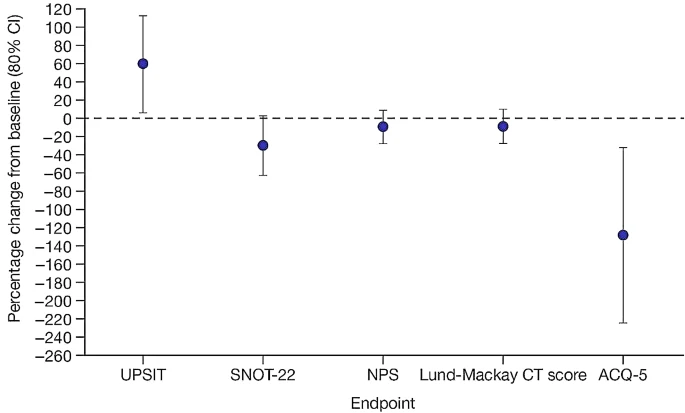
Percentage change from baseline in efficacy endpoints
at Day 61 in patients with CRSwNP
Rhinosinusitis symptoms were improved, and nasal polyps were decreased in size following treatment with PF-06817024 in patients with CRSwNP. In patients with AD, PF-06817024, in aggregate, reduced disease severity and improved symptoms, as demonstrated by greater percentage decrease from baseline in Eczema Area and Severity Index (EASI) scores and reduced pruritus numerical rating scores, compared with placebo.