September 23, 2024

Scabies, Bedbug, and Body Lice Infestations: A Review

Thomas C, Castillo Valladares H, Berger TG, Chang AY.  JAMA. 2024 Sep 9. doi: 10.1001/jama.2024.13896. 

Abstract

Clinical Presentations of Scabies, Bedbug, and Body Lice Infestations
Importance  Scabies, bedbug, and body lice infestations are caused by organisms that live on or in the skin, on clothing, or in the environment and commonly cause pruritus and rash. In 2021, approximately 622 million incident cases of scabies occurred globally. Data on bedbug infestations are limited. Body lice prevalence ranges from 4.1% to 35% among persons experiencing homelessness worldwide.

Observations  Scabies is caused by mites (Sarcoptes scabiei) that burrow into the epidermis. Transmission primarily occurs from prolonged skin-to-skin contact with an individual who has an infestation. Common scabies is characterized by excoriated pruritic papules, plaques, and pathognomonic burrows on finger/toe web spaces, volar wrists, ankles, axillae, buttocks, male genitalia, and areolae. Permethrin cream and oral ivermectin are first-line treatments for adults, with similar clearance rates by week 2 (74% with permethrin vs 68% with ivermectin; relative risk, 0.91; 95% CI, 0.76-1.08).

September 20, 2024

High-risks drug adverse events associated with Cetirizine and Loratadine for the treatment of allergic diseases: a retrospective pharmacovigilance study based on the FDA adverse event reporting system database

Kong W, Dong Y, Yi S, Mo W, Yang H. Clin Transl Allergy. 2024;e12392. https://doi.org/10.1002/clt2.12392

Abstract

Background

Cetirizine and Loratadine are the two best-selling second-generation antihistamines for allergic diseases. This study aims to provide a comparative analysis of the differences in adverse drug events (ADEs) between these two medications, which can assist clinicians in making appropriate treatment decisions.

Methods

ADE reports related to Cetirizine and Loratadine obtained from the FDA adverse event reporting system (FAERS) database were analyzed using disproportionality analysis and Bayesian analysis to evaluate and compare the ADE signals of both drugs.

Results

The number of Cetirizine-related ADEs and Loratadine-related
ADEs reported yearly after 2004
.
A total of 28,051 and 28,073 ADE reports were retrieved from the FAERS database related to Cetirizine and Loratadine, respectively, with both drugs showing a predominance of middle-aged females. Specifically, Loratadine was associated with respiratory symptoms, mainly nasal symptoms such as rhinorrhea (n = 326, ROR 6.75), sneezing (n = 251, ROR 15.24), and nasal congestion (n = 185, ROR 4.25), while Cetirizine did not show this association.

A systematic review protocol: health economic evaluations of immunotherapy and biologics for food allergy management

Fong, A.T., Jacob, J., Protudjer, J.L.P. et al. Allergy Asthma Clin Immunol 20, 48 (2024). https://doi.org/10.1186/s13223-024-00909-4

To the Editor,

Food allergy is a significant public health concern, that currently affects an estimated 4–10% of people worldwide and the prevalence is thought to be increasing. Food allergy typically demands that those affected avoid consumption of known allergens, which contributes to requisite dietary and behavioural changes. In turn, such changes and the potential for severe reactions, contributes to substantial economic costs, including the cost of treatment, healthcare service utilisation, carers’ time and so on. These economic costs of food allergy are spread throughout families, communities, and society at large. With novel approaches to therapies and evolving discussions on allergy management, there are multiple knowledge gaps on the economic burden of food allergies and the cost-effectiveness of the various treatments available...

September 18, 2024

Intranasal versus oral treatments for allergic rhinitis: A systematic review with meta-analysis

Torres MI, Gil-Mata S, Bognanni A et al. J Allergy Clin Immunol Pract. 2024 Sep 7:S2213-2198(24)00888-2. doi: 10.1016/j.jaip.2024.09.001. 

Abstract

Background

Treatments for allergic rhinitis include intranasal or oral medications.

Objective

To perform a systematic review with meta-analysis comparing the effectiveness of intranasal corticosteroids or antihistamines versus oral antihistamines or leukotriene receptor antagonists in improving allergic rhinitis symptoms and quality of life.

Methods

We searched four bibliographic databases and three clinical trial datasets for randomised controlled trials (i) assessing patients ≥12 years old with seasonal or perennial allergic rhinitis, and (ii) comparing intranasal corticosteroids or antihistamines versus oral antihistamines or leukotriene receptor antagonists. We performed a meta-analysis of the Total Nasal Symptom Score (TNSS), Total Ocular Symptom Score (TOSS), Rhinoconjunctivitis Quality of Life Questionnaire (RQLQ), development of adverse events, and withdrawals due to adverse events. Certainty of evidence was assessed using GRADE.

Results


We included 35 studies, most of which assessed patients with seasonal allergic rhinitis and displayed an unclear risk of bias. Superiority of intranasal treatments was found for all assessed outcomes. Intranasal corticosteroids were more effective than oral antihistamines at improving the TNSS (MD=-0.86; 95%CI=-1.21;-0.51; I2=70%), TOSS (MD=-0.36; 95%CI=-0.56;-0.17; I2=0%) and RQLQ (MD=-0.88; 95%CI=-1.15;-0.61; I2=0%), being mostly associated with clinically meaningful improvements.

September 17, 2024

Treatment of Atopic Dermatitis in Children

Sid Idris F Cureus 16(9): e69416. doi:10.7759/cureus.69416


Abstract

Atopic dermatitis treatment
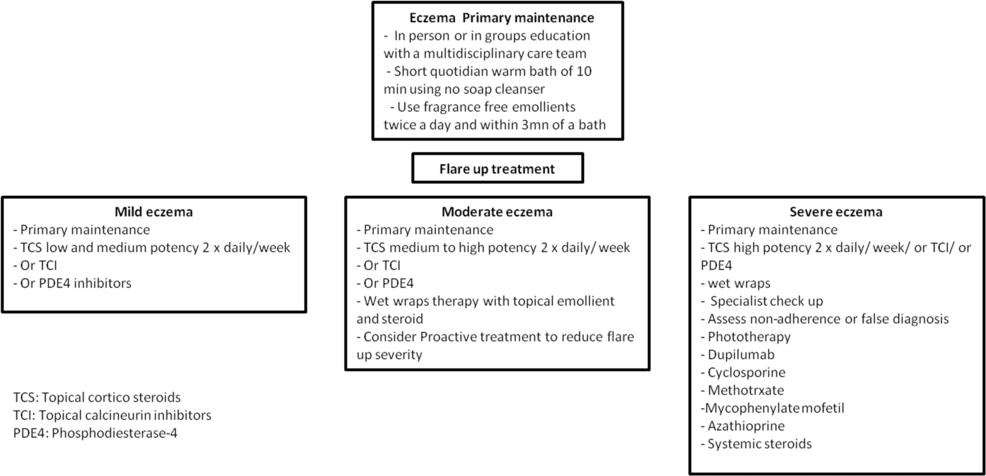
Atopic dermatitis (AD), also called eczema, is a common inflammatory skin condition that causes itchy lesions and is widespread globally, especially in wealthy countries. It is the most prevalent skin disorder among children. A small percentage of children's eczema persists into adulthood, and a few of them exhibit a severe form of the condition. The development of AD is influenced by immune, environmental, and genetic factors; mutations in the filaggrin gene and a family history of atopy are regarded as risk factors that cause a hyperimmune response, which in turn increases the production of interleukin-13 and interleukin-4. As a result, the skin barrier is compromised, the T-helper 2 immune response is subsequently triggered, and atopic dermatitis develops. Diagnosing and treating AD are mostly dependent on primary care physicians. Nonetheless, treating AD is still challenging, and most pediatricians send even patients with mild eczema to dermatologists for management.

Community-Acquired Pneumonia. A Review

Valerie M. Vaughn, Robert P. Dickson, Jennifer K. Horowitz et al. JAMA. Published online September 16, 2024. doi:10.1001/jama.2024.14796

Abstract

Importance  Community-acquired pneumonia (CAP) results in approximately 1.4 million emergency department visits, 740 000 hospitalizations, and 41 000 deaths in the US annually.

Observations  Community-acquired pneumonia can be diagnosed in a patient with 2 or more signs (eg, temperature >38 °C or ≤36 °C; leukocyte count <4000/μL or >10 000/μL) or symptoms (eg, new or increased cough or dyspnea) of pneumonia in conjunction with consistent radiographic findings (eg, air space density) without an alternative explanation. Up to 10% of patients with CAP are hospitalized; of those, up to 1 in 5 require intensive care. Older adults (≥65 years) and those with underlying lung disease, smoking, or immune suppression are at highest risk for CAP and complications of CAP, including sepsis, acute respiratory distress syndrome, and death. Only 38% of patients hospitalized with CAP have a pathogen identified.

September 16, 2024

Ultra-processed foods, allergy outcomes and underlying mechanisms in children: An EAACI task force report

Berni Canani R, Carucci L, Coppola S, et al. Pediatr Allergy Immunol. 2024; 35:e14231. doi:10.1111/pai.14231

Abstract

Background

Consumption of ultra-processed foods [UPFs] may be associated with negative health outcomes. Limited data exist regarding the potential role of UPFs in the occurrence of allergic diseases. The underlying mechanisms underpinning any such associations are also poorly elucidated.

Methods

We performed a systematic review and narrative evidence synthesis of the available literature to assess associations between UPF consumption and pediatric allergy outcomes (n = 26 papers), including data on the association seen with the gut microbiome (n = 16 papers) or immune system (n = 3 papers) structure and function following PRISMA guidelines.

Results

Advanced Glycation end products and the immune system. 
Dietary exposure to fructose, carbonated soft drinks, and sugar intake was associated with an increased risk of asthma, allergic rhinitis, and food allergies in children.

The risk of anaphylaxis on holidays

Ridolo, Erminia; Barone, Alessandro; Ottoni, Martina; Nicoletta, Francesca.  Current Opinion in Allergy and Clinical Immunology 24(5):p 349-355, October 2024. | DOI: 10.1097/ACI.0000000000001014

Abstract

Purpose of review 

The goal of this review is to summarize the potential causes of anaphylaxis in the different holiday contexts, providing practical suggestions aimed to mitigate the stress challenged by allergic patients because of unfamiliar situations.

Recent findings 

A regard was reserved to potential food triggers, particularly uncommon ones and typical of certain destinations, and to arthropods responsible for anaphylaxis.