October 1, 2024

Association Between Smell Loss, Disease Burden, and Dupilumab Efficacy in Chronic Rhinosinusitis with Nasal Polyps

Soler ZM, Patel ZM, Mullol J, Mattos J, Nash S, Xia C, Wang Z, Borsos K, Corbett M, Jacob-Nara JA, Sacks H, Rowe P, Deniz Y, Lane AP. Am J Rhinol Allergy. 2024 Sep 19:19458924241274501. doi: 10.1177/19458924241274501.

Abstract

Objective

To evaluate the association between smell loss and other aspects of disease, and evaluate dupilumab efficacy in patients with severe chronic rhinosinusitis with nasal polyps (CRSwNP) and moderate or severe smell loss.

Methods

This post-hoc analysis of the SINUS-24/52 studies (NCT02912468/NCT02898454) analyzed nasal polyp score (NPS, 0−8), nasal congestion/obstruction (NC, 0−3), Lund-Mackay CT-scan score (LMK-CT, 0−24), rhinosinusitis severity visual analog scale (RS-VAS, 0-10), and 22-item Sinonasal Outcome Test (SNOT-22, 0−110) according to baseline monthly average patient-reported loss of smell scores (LoS, 0−3) of >1 to 2 (moderate) or >2 to 3 (severe) in patients randomized to dupilumab 300 mg or placebo every 2 weeks.

September 30, 2024

The evolving reality of digital health

Bit-Avragim N, Bousquet J, Cantù S, Omboni S, Ravot E, Tunnah P. T Digit Health. 2024 Sep 26;10:20552076241277646. doi: 10.1177/20552076241277646.


Abstract


The roles of stakeholders in digital health initiatives.
Dark purple: strong driver; light purple: driver;
orange: influences the driver HCPs, healthcare professionals.
Myriad digital health interventions, applications, devices and technologies have, and are, being developed to help refine and personalise medicine from the patient, healthcare professional (HCP), healthcare system and industry perspectives. At a gathering of leaders in digital health, discussion included the current landscape of such digital health tools (DHTs), with specific examples from cardiology and respiratory medicine, and both the benefits and sometime downfalls of such tools. While DHTs can help patients and HCPs detect and monitor health conditions, the experts discussed how adoption of DHTs may be hampered by issues such as access to technology; data privacy and security concerns; technology integration into current healthcare systems; cost and reimbursement; and lack of guidelines and regulatory hurdles.

September 28, 2024

Trained immunity-based vaccines for infections and allergic diseases

Martín-Cruz L, Benito-Villalvilla C, Angelina A, Subiza JL, Palomares O.  J Allergy Clin Immunol. 2024 Sep 18:S0091-6749(24)00979-5. doi: 10.1016/j.jaci.2024.09.009. 


Abstract

Induction of peripheral and central trained immunity (TRIM). 
Trained immunity has emerged as a new concept in immunology associated with the memory of innate immune cells and linked to specific metabolic and epigenetic reprogramming of these cells. Trained immunity may confer nonspecific and sustained protection against a broad range of pathogens, and recent findings show that it might also be involved in allergy mechanisms. Some conventional vaccines have demonstrated trained immunity induction as the mechanism underlying their heterologous protection.

Real-world outcomes of patients with hereditary angioedema with normal C1-inhibitor function and patients with idiopathic angioedema of unknown etiology in Canada

Adatia, A., Boursiquot, JN., Goodyear, D. et al. Allergy Asthma Clin Immunol 20, 50 (2024). https://doi.org/10.1186/s13223-024-00910-x

Abstract

Background

Hereditary angioedema with normal C1-inhibitor function (HAE nC1-INH) and idiopathic angioedema of unknown etiology (AE-UNK) are rare conditions that cause recurrent subcutaneous and submucosal swelling. The characteristics and clinical outcomes of patients with these conditions in Canada have not been studied.

Methods

The aim of this study was to extract real-world evidence from the electronic health records of patients with HAE nC1-INH or AE-UNK who were managed in selected practices of Canadian HAE-treating specialist physicians between 01-Jan-2012 and 01-Jan-2022, to examine case numbers, treatment, clinical outcomes, and healthcare utilization.

Results

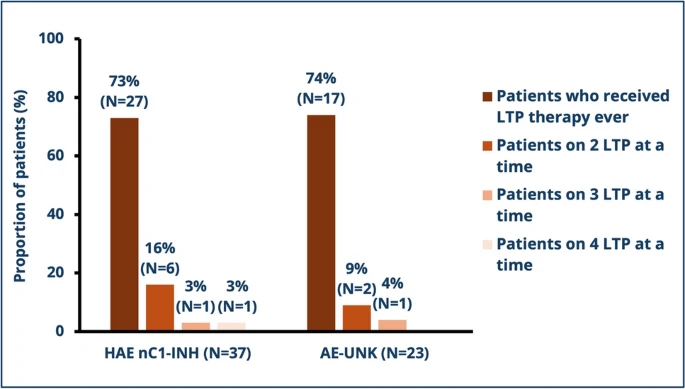
LTP treatment use. HAE nC1-INH, non-histaminergic hereditary
angioedema with family history;
AE-UNK, non-histaminergic hereditary angioedema without
family history
Of 60 patients (37 with HAE nC1-INH, 23 with AE-UNK), median (range) age at symptom onset was 21.5 (5.0–57.0) and 23.0 (10.0–54.0) years, respectively. Time to diagnosis from onset of symptoms was 7.0 (0.0–43.0) and 2.0 (− 10.0 to 50.0) years. Significant differences were observed in terms of the predominant triggers for angioedema attacks between patients with HAE nC1-INH and AE-UNK: stress (65% vs. 26%, p = 0.007) and estrogen therapy (35% vs. 9%, p = 0.031).

September 27, 2024

High volume nasal irrigations with steroids for chronic rhinosinusitis and allergic rhinitis

Bertazzoni G, Conti C, Testa G, Pipolo GC, Mattavelli D, Piazza C, Pianta L. Eur Arch Otorhinolaryngol. 2024 Sep 26. doi: 10.1007/s00405-024-08901-9.

Abstract

Purpose

The primary aim of this systematic review is to assess the efficacy, safety, and cost-effectiveness of high-volume steroid nasal irrigation (SNI) for treating chronic rhinosinusitis (CRS) and allergic rhinitis (AR).

Methods

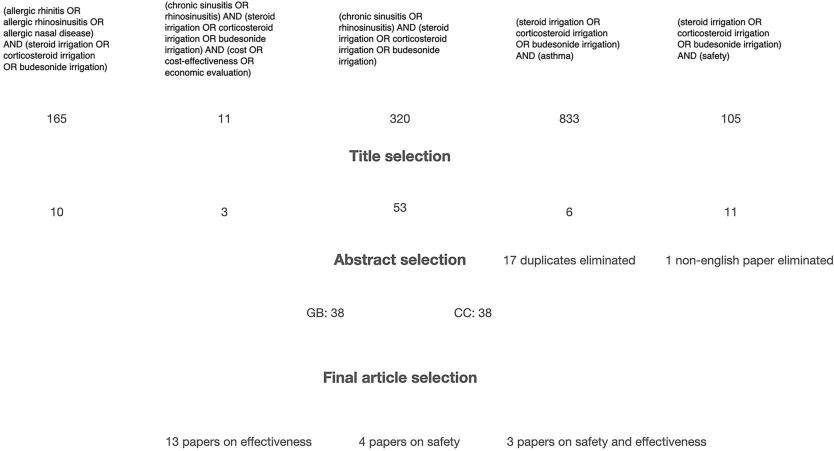
A systematic review of literature from 2012 to 2024 was conducted using PubMed to identify relevant studies. The search focused on terms related to AR, CRS, and steroid nasal irrigation. Studies were screened for relevance and duplicates removed, resulting in 20 studies being included in the final analysis. These studies were categorized based on their focus on efficacy, safety, or both, and underwent a risk of bias assessment using Cochrane and ROBINS-I tools.

September 26, 2024

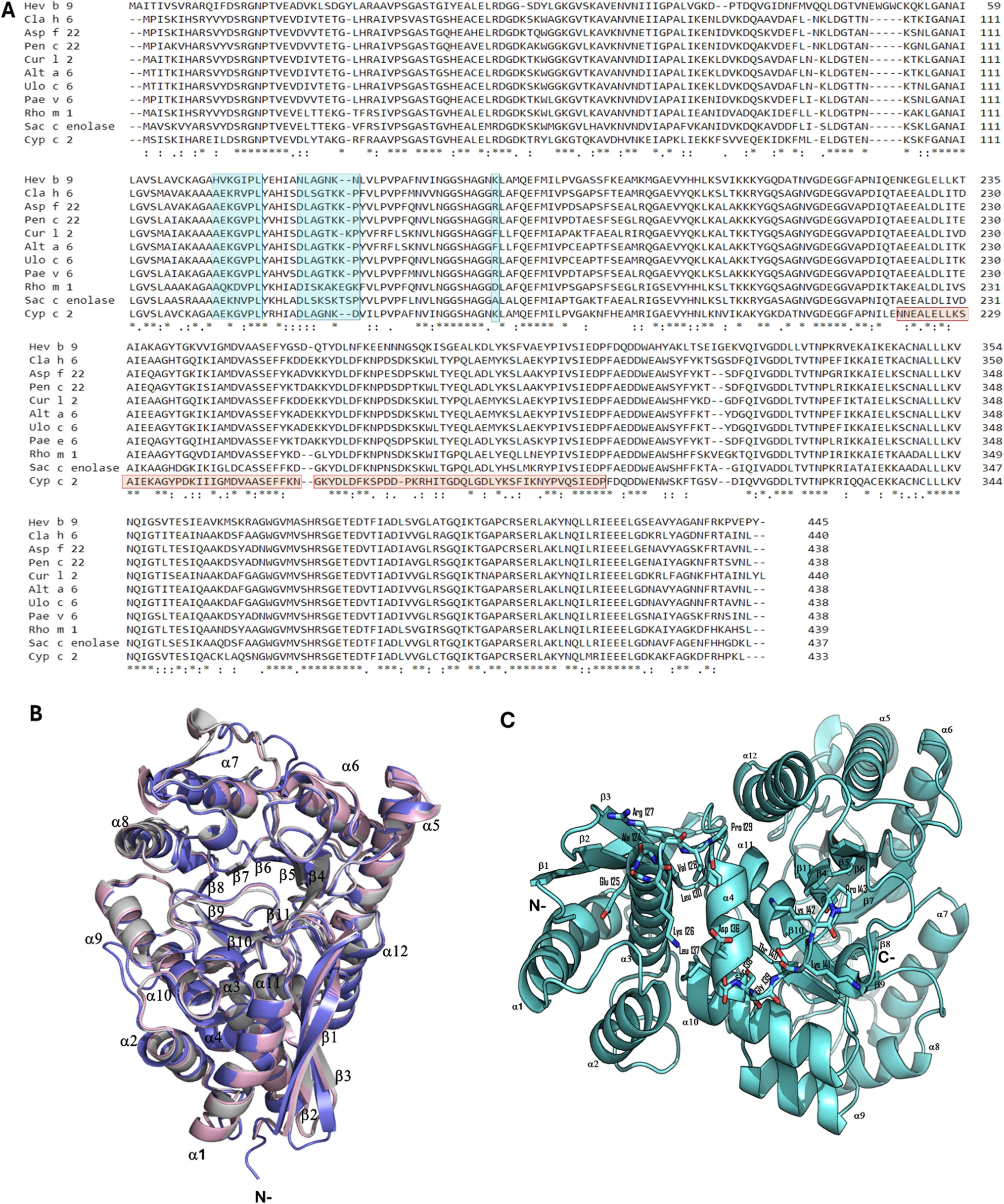
Impact of Enolase in Allergic Disease

Morales-Amparano, M.B., Teran, M.G., Huerta-Ocampo, J.Á. et al. Curr Allergy Asthma Rep 24, 571–579 (2024). https://doi.org/10.1007/s11882-024-01170-w

Abstract

Purpose of Review

There is growing evidence that enolase is involved in allergy. This manuscript reviews the impact of enolase in allergic disease and describes several sources of this allergen including molds, plants, animals, and pollens, among others. IgE epitopes are carefully analyzed as they may account for cross-reactivity.

Recent Findings

Enolase's conserved amino acid sequence and structure.
Enolase has been previously associated to food allergy and contact dermatitis. However, other groups and we have identified recently novel enolases derived from diverse pollens in patients suffering asthma and allergic rhinitis.

September 25, 2024

Impact of Allergic Rhinitis on Academic Performance in Adolescents and Adults: a Bayesian Analysis of MASK-air® Real-world Direct Patient Data

Vieira RJ, Pereira AM, Papadopoulos NG et al.  J Investig Allergol Clin Immunol. 2024 Sep 25:0. doi: 10.18176/jiaci.1010. 


Previous studies have shown that allergic rhinitis (AR) can negatively impact academic performance. Real-world data provide improved knowledge in this field, particularly by helping to quantify how the control and treatment of AR affect academic performance. In this study, we aimed to use real-world patient data to quantify the proportion of school hours lost per week according to control of allergic diseaseand asthma-associated multimorbidity...

PDF


September 24, 2024

Concurrent validity, cut-offs and ability to change of patient-reported outcome measures for rhinitis and asthma in MASK-air®

Bousquet J, Sousa-Pinto B, Anto JM, et al. Clin TranslAllergy. 2024;e12390. https://doi.org/10.1002/clt2.12390

Abstract

The MASK-air® app.
Patient-reported outcome measures (PROMs) are used to assess a patient's health status at a particular point in time. They are essential in the development of person-centred care. This paper reviews studies performed on PROMs for assessing AR and asthma control, in particular VAS scales that are included in the app MASK-air® (Mobile Airways Sentinel networK) for asthma and rhinitis. VASs were initially developed on paper and pencil and tested for their criterion validity, cut-offs and responsiveness.