Mazur M, Czarnobilska E. Int J Mol Sci. 2025 Jun 21;26(13):5966. doi: 10.3390/ijms26135966. Abstract
Allergic diseases have been increasing in prevalence over the last years. In a polluted environment, this problem can worsen and become more complex. Long-term exposure to air pollution can lead to the aggravation of allergic rhinitis (AR) and even to the development of seasonal asthma. Climate changes can accelerate and extend the pollination season. Research indicates that air pollution may modify the properties of pollen, making it more aggressive. Asymptomatic allergic people disclose their allergies in a polluted environment.
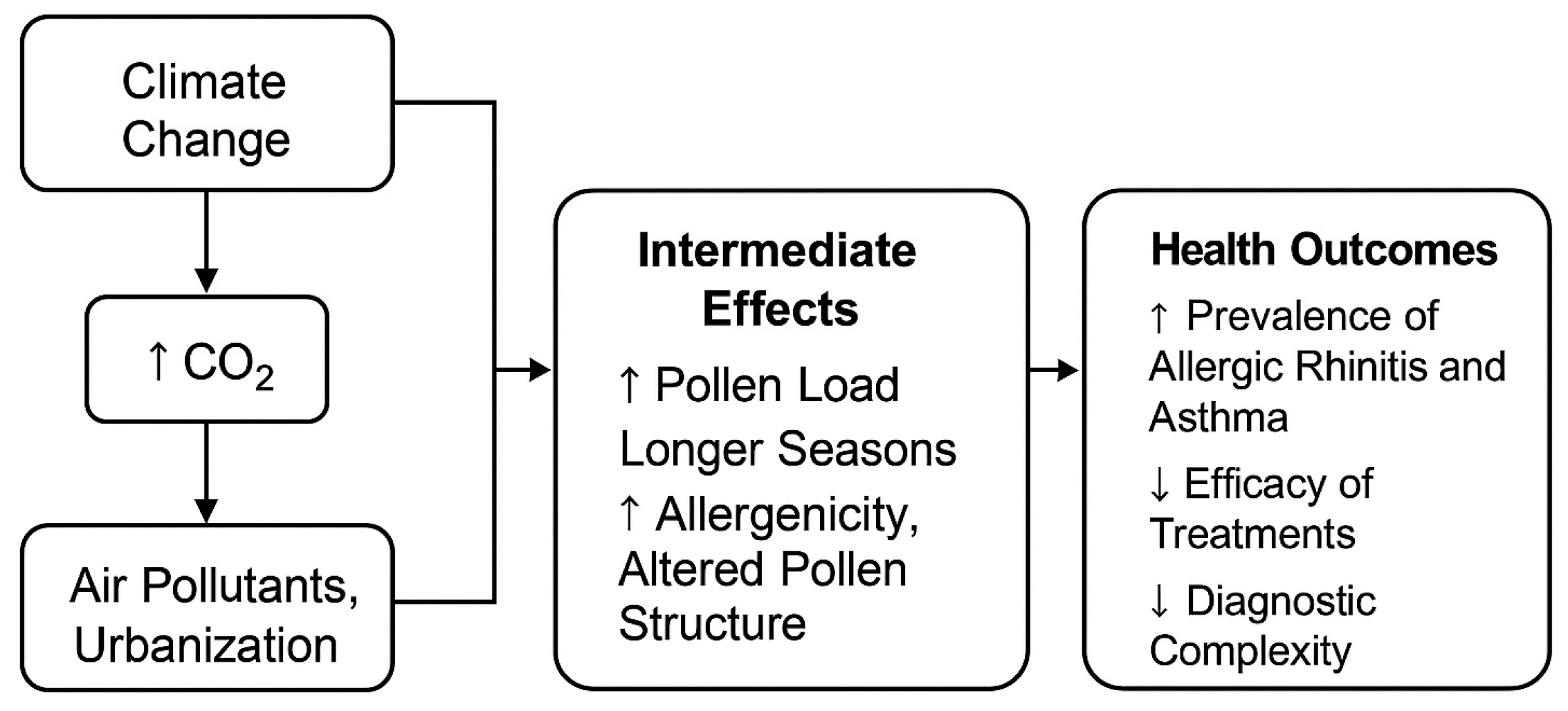 |
Schematic Representation of Environmental Impacts
on Pollen and Allergy Burden |
A polluted environment complicates the diagnosis of seasonal allergies. The treatment might be more challenging as standard allergy medications may not be enough to control symptoms. The causal treatment of allergic rhinitis is specific allergen immunotherapy (AIT), which may prove less effective in people living in a polluted environment. The problem may lie in the proper evaluation for AIT as well as the assessment of its effectiveness. To date, the best way to confirm an allergy and qualify a patient for AIT seems to be molecular diagnostics. The question arises whether patients exposed to air pollution, which could potentially reduce the effectiveness of AIT, are still eligible for AIT. It is also debatable whether molecular diagnostics remain effective in such cases. Advancing precision medicine alongside environmental management represents a critical pathway toward reducing the growing global burden of allergic diseases.PDF



No comments:
Post a Comment