November 14, 2022

Temperature-controlled Laminar Airflow (TLA) in symptomatic severe asthma – a post hoc analysis of severe exacerbations, quality of life and health economics

  • Research
  • Open Access


BMC Pulmonary Medicine volume 22, Article number: 407 (2022

Purpose

Uncontrolled severe asthma constitutes a major economic burden to society. Add-ons to standard inhaled treatments include inexpensive oral corticosteroids and expensive biologics. Nocturnal treatment with Temperature-controlled Laminar Airflow (TLA; Airsonett®) could be an effective, safe and cheaper alternative. The potential of TLA in reducing severe asthma exacerbations was addressed in a recent randomised placebo-controlled trial (RCT) in patients with severe asthma (Global Initiative for Asthma (GINA) step 4/5), but the results were inconclusive. We re-analysed the RCT with severe exacerbations stratified by the level of baseline asthma symptoms and Quality of Life.

Mechanisms regulating neutrophil responses in immunity, allergy, and autoimmunity

REVIEW ARTICLE - Open Access

Alaz Özcan, Onur Boyman

Early View

Online Version of Record before inclusion in an issue

https://doi.org/10.1111/all.15505


Abstract

Neutrophil granulocytes, or neutrophils, are the most abundant circulating leukocytes in humans and indispensable for antimicrobial immunity, as exemplified in patients with inborn and acquired defects of neutrophils. Neutrophils were long regarded as the foot soldiers of the immune system, solely destined to execute a set of effector functions against invading pathogens before undergoing apoptosis, the latter of which was ascribed to their short life span. This simplistic understanding of neutrophils has now been revised on the basis of insights gained from the use of mouse models and single-cell high-throughput techniques, revealing tissue- and context-specific roles of neutrophils in guiding immune responses.

November 12, 2022

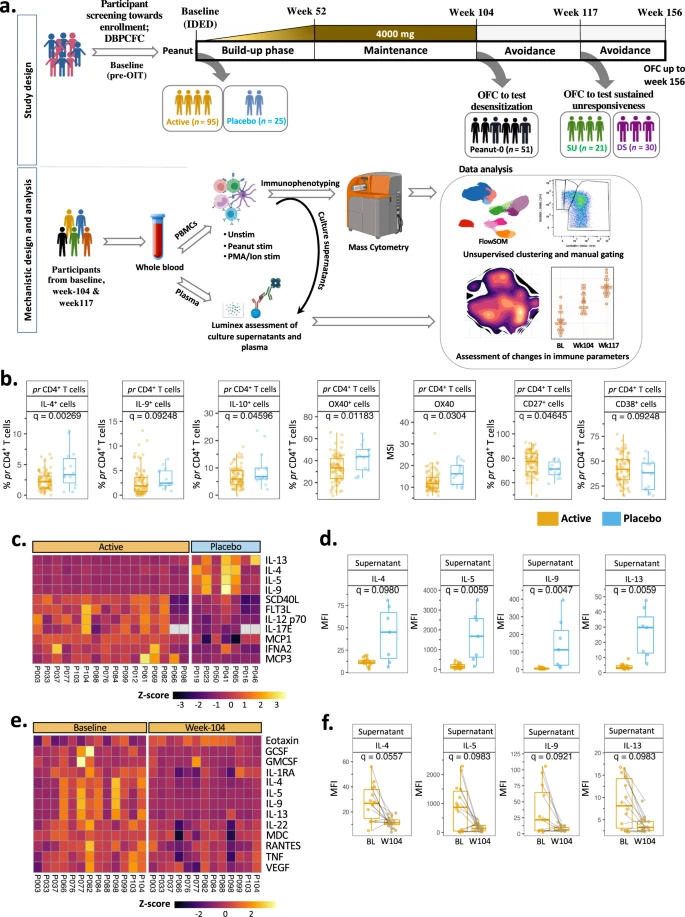
CD8+ T cell differentiation status correlates with the feasibility of sustained unresponsiveness following oral immunotherapy

  • Article
  • Open Access

Peanut OIT effects an immune shift away from Th2 phenotype.
Abstract

While food allergy oral immunotherapy (OIT) can provide safe and effective desensitization (DS), the immune mechanisms underlying development of sustained unresponsiveness (SU) following a period of avoidance are largely unknown. Here, we compare high dimensional phenotypes of innate and adaptive immune cell subsets of participants in a previously reported, phase 2 randomized, controlled, peanut OIT trial who achieved SU vs. DS (no vs. with allergic reactions upon food challenge after a withdrawal period; n = 21 vs. 30 respectively among total 120 intent-to-treat participants). Lower frequencies of naïve CD8+ T cells and terminally differentiated CD57+CD8+ T cell subsets at baseline (pre-OIT) are associated with SU. Frequency of naïve CD8+ T cells shows a significant positive correlation with peanut-specific and Ara h 2-specific IgE levels at baseline.

November 10, 2022

Chronic rhinosinusitis associated with chronic bronchitis in a five-year follow-up: the Telemark study

  • Research
  • Open Access


BMC Pulmonary Medicine volume 22, Article number: 406 (2022

Background

Chronic rhinosinusitis (CRS) is associated with generalised airway inflammation. Few studies have addressed the relationship between CRS and chronic bronchitis (CB).

Methods

This prospective study over a five-year period aims to investigate the risk of developing CB in subjects reporting CRS at the beginning of the study. A random sample of 7393 adult subjects from Telemark County, Norway, answered a comprehensive respiratory questionnaire in 2013 and then 5 years later in 2018.

November 9, 2022

Biologics for allergy: therapeutic potential for ocular allergic diseases and adverse effects on the eye

Allergology International

Allergology International

KenFukudaa TatsumaKishimotoa TamakiSumia KenjiYamashiroa NobuyukiEbiharab

https://doi.org/10.1016/j.alit.2022.09.005
Open access

Abstract

Biologics applying antibodies against IgE, IL-5, IL-5 receptor α, IL-4 receptor α, and IL-13 have dramatically improved recent treatment outcomes in allergic diseases including asthma, rhinitis, and atopic dermatitis. However, these drugs have not been approved for ocular allergic diseases such as allergic conjunctivitis, vernal keratoconjunctivitis, and atopic keratoconjunctivitis.

November 8, 2022

Derivation of asthma severity from electronic prescription records using British thoracic society treatment steps

  • Research
  • Open Access


BMC Pulmonary Medicine volume 22, Article number: 397 (2022

Background:

Asthma severity is typically assessed through a retrospective assessment of the treatment required to control symptoms and to prevent exacerbations. The joint British Thoracic Society and Scottish Intercollegiate Guidelines Network (BTS/SIGN) guidelines encourage a stepwise approach to pharmacotherapy, and as such, current treatment step can be considered as a severity categorisation proxy.

October 29, 2022

Allergen immunotherapy: past, present and future


Durham SR, Shamji MH. Allergen immunotherapy: past, present and future. Nat Rev Immunol. 2022 Oct 17:1–12. doi: 10.1038/s41577-022-00786-1. Epub ahead of print.

Abstract

Allergen immunotherapy is a form of therapeutic vaccination for established IgE-mediated hypersensitivity to common allergen sources such as pollens, house dust mites and the venom of stinging insects. The classical protocol, introduced in 1911, involves repeated subcutaneous injection of increasing amounts of allergen extract, followed by maintenance injections over a period of 3 years, achieving a form of allergen-specific tolerance that provides clinical benefit for years after its discontinuation. More recently, administration through the sublingual route has emerged as an effective, safe alternative.

Skin biomarkers predict development of atopic dermatitis in infancy.

Rinnov MR, Halling AS, Gerner T, Ravn NH, Knudgaard MH, Trautner S, Goorden SMI, Ghauharali-van der Vlugt KJM, Stet FS, Skov L, Thomsen SF, Egeberg A, Rosted ALL, Petersen T, Jakasa I, Riethmüller C, Kezic S, Thyssen JP. Skin biomarkers predict development of atopic dermatitis in infancy. Allergy. 2022 Sep 16. doi: 10.1111/all.15518.


Open Access

Background: There is currently no insight into biomarkers that can predict the onset of pediatric atopic dermatitis (AD).

Methods: Nested in a prospective birth cohort study that examined the occurrence of physician-diagnosed AD in 300 children, 44 random children with onset of AD in the first year of life were matched on sex and season of birth with 44 children who did not develop AD.

October 28, 2022

Ever and cumulative occupational exposure and lung function decline in longitudinal population-based studies: a systematic review and meta-analysis

Rabbani G, Nimmi N, Benke GP, et al.
Occupational and Environmental Medicine October 2022. doi: 10.1136/oemed-2022-108237


Abstract

Objectives
Adverse occupational exposures can accelerate age-related lung function decline. Some longitudinal population-based studies have investigated this association. This study aims to examine this association using findings reported by longitudinal population-based studies.

Methods Ovid Medline, PubMed, Embase, and Web of Science were searched using keywords and text words related to occupational exposures and lung function and 12 longitudinal population-based studies were identified using predefined inclusion criteria. The quality of the studies was assessed using the Newcastle-Ottawa Scale. Lung function decline was defined as annual loss of forced expiratory volume in 1 s (FEV1), forced vital capacity (FVC) or the ratio (FEV1/FVC).

October 27, 2022

Asthma Exacerbations During the Pandemic: Time to Rethink Clinical Markers

Ortega H, Katz LE, Chupp G. Asthma Exacerbations During the Pandemic: Time to Rethink Clinical Markers. J Allergy Clin Immunol Glob. 2022 Oct 20. doi: 10.1016/j.jacig.2022.09.003. Epub ahead of print.

Abstract

Background

Reductions in asthma exacerbations during the COVID-19 pandemic may have an impact on clinical trial enrollment and outcomes.

Objective

To review clinical studies and reports evaluating asthma exacerbations before and during the COVID-19 pandemic.

Methods

We reviewed clinical studies conducted with biologics over the past decade that evaluated asthma exacerbations as the primary endpoint.

October 26, 2022

Efficacy of single dose dermatological 0.1% Tacrolimus Ointment in the treatment of vernal keratoconjunctivitis

Sharjeel M, Iqbal U, Jabran A, Mehmood A, Mohiuddin M.
Efficacy of single dose dermatological 0.1% Tacrolimus Ointment in the treatment of vernal keratoconjunctivitis. J Pak Med Assoc. 2022 Sep;72(9):1694-1698. doi: 10.47391/JPMA.3541.


Abstract

Objective: To assess the safety of dermatological 0.1% tacrolimus ointment when used topically and its efficacy in the treatment of vernal keratoconvinctivtis.


Method: The quasi-experimental, multi-centre study was conducted at the Gujranwala Medical College/District Headquarters Teaching Hospital, Gujranwala, and the Gomal Medial College/Mufti Mehmood Teaching Hospital, Dera Ismail Khan, Pakistan, from July 2019 to March 2020, and comprised patients of severe vernal keratoconvinctivtis. Symptoms and clinical signs were graded on a pre-devised scale. Patients were given small amount of tacrolimus 0.1% ointment applied to the inferior conjunctival fornix before going to bed. The duration of treatment was 3 months and the patients were followed up for up to 6 months. Data was analysed using SPSS 20.

Development and validation of a tool for the assessment of benefit from treatment of allergic rhinitis in children and adolescents (PBI-AR-K)

  • Research
  • Open Access


Allergy, Asthma & Clinical Immunology volume 18, Article number: 95 (2022)
 

Abstract

Background

Allergic rhinitis (AR) is frequent in children and adolescents and can severely affect their lives. This article describes the development and validation of a questionnaire to assess treatment needs and benefits in children and adolescents, the PBI-AR-K, in a sample of patients receiving grass pollen sublingual immunotherapy.

Patients and methods

The PBI-AR-K was developed based on an open survey including children and adolescents and expert consensus between methodologists, patients, and physicians.

October 25, 2022

Real World Management of Anaphylaxis Versus the National Institute for Health and Clinical Excellence (NICE) Guidelines


Cureus.
 2022 Sep; 14(9): e29336.


Monitoring Editor: Alexander Muacevic and John R Adler

Objectives 

Anaphylaxis is an acute, life-threatening immediate allergic reaction caused by the sudden systemic release of mediators from mast cells. This study aims to assess the current practice of emergency management of children and adults diagnosed with anaphylaxis at the Royal Hospital, Muscat, Oman, in line with the National Institute for Health and Clinical Excellence (NICE) guidelines. 

October 24, 2022

Frequency of food allergy in Europe: an updated systematic review and meta-analysis.

Spolidoro GCI, Tesfaye Amera Y, Ali MM, Nyassi S, Lisik D, Ioannidou A, Rovner G, Khaleva E, Venter C, van Ree R, Worm M, Vlieg-Boerstra B, Sheikh A, Muraro A, Roberts G, Nwaru BI. Frequency of food allergy in Europe: an updated systematic review and meta-analysis. Allergy. 2022 Oct 22. doi: 10.1111/all.15560.

Abstract
Food allergy (FA) is increasingly reported in Europe, however the latest prevalence estimates were based on studies published a decade ago. The present work provides the most updated estimates of the prevalence and trends of FA in Europe. Databases were searched for studies published between 2012 and 2021, added to studies published up to 2012. In total, 110 studies were included in this update. Most studies were graded as moderate risk of bias. Pooled lifetime and point prevalence of self-reported FA were 19.9% (95% CI 16.6-23.3) and 13.1% (95% CI 11.3-14.8), respectively.

Selective IgA deficiency may be an under-recognized risk factor for severe COVID-19

Ameratunga R, Leung E, Woon ST, Lea E, Allan C, Chan L, Steele R, Lehnert K, Longhurst H. Selective IgA deficiency may be an under-recognized risk factor for severe COVID-19. J Allergy Clin Immunol Pract. 2022 Oct 11:S2213-2198(22)01043-1. doi: 10.1016/j.jaip.2022.10.002.

Abstract

SARS-CoV-2, the agent responsible for COVID-19, has caused havoc around the globe. Hundreds of millions of individuals have been infected and well over six million have died from COVID-19. Many COVID-19 survivors have ongoing physical and psychiatric morbidity, which will remain for the rest of their lives.
Early in the pandemic, it became apparent older individuals and those with comorbidities including obesity, diabetes mellitus, coronary artery disease, hypertension, renal and pulmonary disease were at increased risk of adverse outcomes. It is also clear that some immunodeficient patients, such as those with innate or T cell immune defects are at greater risk from COVID-19.