January 18, 2023

Treatment with pollen allergen immunotherapy improves health-related quality of life in children and adolescents: a three-year follow-up-study

  • Research
  • Open Access

Abstract

Background

The immunological effect of allergen-specific immunotherapy is well documented, but few studies have examined the long-term effects of pollen subcutaneous immunotherapy (SCIT) on health-related quality of life (HRQoL) in children and adolescents. Therefore, the aims of this study were to evaluate the effect of pollen SCIT on HRQoL and to assess the association between HRQoL and symptoms among children and adolescents with allergic rhinoconjunctivitis in a 3-year follow-up.

January 17, 2023

Cutaneous manifestations of COVID-19 and COVID-19 vaccination

Abstract

In December 2019, a new infectious pathogen named severe acute respiratory syndrome coronavirus 2 (SARS-CoV-2) was identified in Wuhan, China. Transmitted through respiratory droplets, SARS-CoV-2 is the causative pathogen of coronavirus disease 2019 (COVID-19). Although this new COVID-19 infection is known to cause primarily interstitial pneumonia and respiratory failure, it is often associated with cutaneous manifestations as well.

January 11, 2023

Analysis of factors influencing the determination of indications for allergen-specific immunotherapy

REVIEW ARTICLE

Bo Dinga, Shiwen Gaob, Jun Huangc, Songdi Gongd, Jiahui Lind, Guoliang Dinge, Qiuzhi Shena, Wentao Wangf, Mei Yangg, Hui Wangh, Chunmei Sheni, Yanming Lua*


Abstract

Objective: To develop a questionnaire and a scoring system for evaluating physicians’ knowledge of allergen immunotherapy (AIT).

Methods: Questionnaire was designed using the Questionnaire Star tool. A total of 1024 physicians were assessed, and based on the score divided into accurate judgment and inaccurate judgment groups. Statistical analysis was done, and counting data were expressed as frequencies and percentage values. Chi-square test and multi-factor logistic analysis were used to determine influencing factors on the indications for AIT.

Changes in type 2 innate lymphoid cells and serum cytokines in sublingual immunotherapy in pediatric patients with allergic rhinitis

BMC Pediatrics volume 23, Article number: 13 (2023

Background

Type 2 innate lymphoid cells (ILC2) are upregulated in childhood allergic rhinitis (AR) and are associated with AR severity. This study aimed to investigate changes in the ILC2 milieu in pediatric patients with AR after sublingual immunotherapy (SLIT).

January 5, 2023

Clinical Associations of Mucus Plugging in Moderate to Severe Asthma


Open Access

Background

Mucus plugging is recognized as a contributory factor to airway obstruction and symptoms in persistent asthma.

Objective

We aimed to determine phenotypic associations of mucus plugging in patients with moderate to severe asthma in a real-life clinic setting.

January 3, 2023

Immunomodulatory effects of probiotic supplementation in patients with asthma: a randomized, double-blind, placebo-controlled trial

Research - Open Access

Sina Sadrifar, Tannaz Abbasi-Dokht, Sarvenaz Forouzandeh, Farhad Malek, Bahman Yousefi, Amir Salek Farrokhi, Jafar Karami & Rasoul Baharlou 


Allergy, Asthma & Clinical Immunology volume 19, Article number: 1 (2023) 

Abstract

Background

Asthma is considered to be a chronic inflammatory disorder of the airways. Probiotics are living microorganisms that are found in the human gut and have protective effects against a wide range of diseases such as allergies. The aim of this study was to investigate the improvement of clinical asthma symptoms and changes in the expression pattern of selective microRNAs in patients with asthma and the changes in IL-4 and IFN-γ plasma levels after receiving probiotics.

December 31, 2022

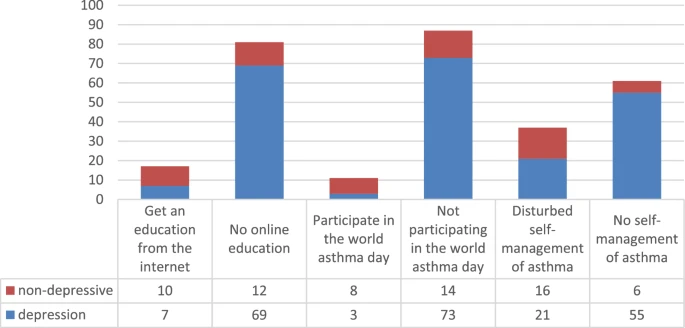
Physician education on World Asthma Day aids in disease management during the COVID-19

  • Short Report
  • Open Access

Abstract

Anxiety and depression can negatively affect the management of asthma. The study aimed to assess the psychosocial effects of asthma patients during COVID-19 and analyze potential risk factors and interventions.

In June 2022, the “Questionnaire Star” electronic questionnaire system was used to collect data. A total of 98 asthma patients from the affiliated hospital of the medical school of Ningbo University were invited to complete the questionnaires. According to our study, the prevalence of symptoms of anxiety and depression in the asthma patients in the institution was 91.8 and 77.6%, respectively.

December 26, 2022

Nutritional Management of Children with Food Allergies

Abstract

Purpose of the Review

The purpose of the review is to review the evidence for the nutritional management of paediatric food allergy and provide a practical approach for healthcare professionals working in this area.

Immunoglobulin replacement therapy in patients with immunodeficiencies: impact of infusion method on patient-reported outcomes

  • Research
  • Open Access

Abstract

Background

Understanding the impact of different immunoglobulin (Ig) infusion methods (intravenous [IVIg] and subcutaneous [SCIg]) upon treatment experience can potentially facilitate optimization of patient outcomes. Here, the perspective of patients with primary and secondary immunodeficiency diseases (PID and SID, respectively) receiving IVIg and SCIg was evaluated, in terms of treatment satisfaction, accounting for treatment history, using Association des Patients Immunodéficients du Québec (APIQ) survey data.

December 23, 2022

Hypersensitivity reactions to folinic acid: mechanisms involved based on two case reports and a literature review

  • Case Report
  • Open Access

Abstract

Background

Hypersensitivity reactions (HSR) to antineoplastic agents are an increasing problem, especially when they lead to treatment discontinuation, sometimes without any equivalent therapeutic option. HSR to folinic acid (FA), used particularly for the treatment of digestive carcinoma along with oxaliplatin and 5-fluorouracil, are rare. Only seven publications report HSR to FA, mainly confirmed by the disappearance of symptoms after the withdrawal of FA from chemotherapy. Only two papers describe allergy testing. Due to the difficult diagnosis, patients usually receive several further cycles of chemotherapy with progressively more intense symptoms before the withdrawal of FA.

December 22, 2022

Topical cyclosporine versus allergen specific immunotherapy in perennial allergic conjunctivitis


Abstract

Purpose

Symptom control in the long-term with less side effects is important in perennial allergic conjunctivitis, since would improve quality of life. This study aimed to assess the clinical efficacies of topical cyclosporin A and subcutaneous allergen immunotherapy (SCIT) in terms of sign control in perennial allergic conjunctivitis.

Which non-steroidal anti-inflammatory drug (NSAID) is safer in patients with Non-steroids Exacerbated Respiratory Disease (N-ERD)? A single-center retrospective study

Tuberk Toraks. 2022 Dec;70(4):365-374. doi: 10.5578/tt.20229608.


Free article

Abstract

Introduction: In patients with NSAID-Exacerbated Respiratory Disease (N-ERD), respiratory symptoms occur as a result of the use of cyclooxygenase (COX)-1 inhibitor non-steroidal anti-inflammatory drugs (NSAIDs). Patients with N-ERD generally tolerate selective COX-2 inhibitor NSAIDs. However, respiratory symptoms may be exacerbated in patients with N-ERD due to the intake of selective COX-2 inhibitor NSAIDs. The aim of this study was to evaluate which selective or partial COX-2 inhibitor NSAID is safer in patients with N-ERD.

December 14, 2022

Treatment of Allergic Rhinitis and Asthma in Primary Care: Dispensations Do Not Align with Prescriptions


Free PMC article

Abstract

Background: Appropriate use of effective treatments is required for satisfactory control of allergic symptoms. Coherent medical care -regular prescribing by the same Health Care Professionals- is a preliminary need.

Objective: We investigated the numbers of distinct prescribers, the regularity of medical visits, and the agreement between prescriptions and associated dispensations in individual patients with perennial allergic rhinitis (PAR) and asthma.

Methods: In primary care electronic health records (EHRs), a cohort of patients with PAR and asthma was identified. Individual EHRs were linked to corresponding claims recording all dispensations. Prescribing patterns were analyzed for the major treatment classes, and the dispensations linked to individual prescriptions were retrieved to compute the proportions of days covered (PDCs) for asthma and PAR therapy.