Research article
 
Marianne Doz, Christos Chouaid, Laure Com-Ruelle, Eduardo Calvo, Max Brosa, Julien Robert, Laurent Decuypère, Celine Pribil, Alicia Huerta, Bruno DetournayBMC Pulmonary Medicine 2013, 13:15 (22 March 2013)
| |
Research
Hamdan AL-Jahdali, Anwar Ahmed, Abdullah AL-Harbi, Mohd Khan, Salim Baharoon, Salih Bin Salih, Rabih Halwani, Saleh Al-MuhsenAllergy, Asthma & Clinical Immunology 2013, 9:8 (6 March 2013)
| |
Research
Pranav K Gandhi, Kelly M Kenzik, Lindsay A Thompson, Darren A DeWalt, Dennis A Revicki, Elizabeth A Shenkman, I-Chan HuangRespiratory Research 2013, 14:26 (23 February 2013)
| |
Research article
Kit Huckvale, Mate Car, Cecily Morrison, Josip CarBMC Medicine 2012, 10:144 (22 November 2012)
| |
Research article
Nicola J Roberts, Kathleen A Boyd, Andrew H Briggs, Ann L Caress, Martyn R PartridgeBMC Pulmonary Medicine 2012, 12:52 (8 September 2012)
| |
Research
Joao A Fonseca, Luis Nogueira-Silva, Mario Morais-Almeida, Ana Sa-Sousa, Luis F Azevedo, Jose Ferreira, Manuel Branco-Ferreira, Rodrigo Rodrigues-Alves, Antonio Bugalho-Almeida, Jean BousquetClinical and Translational Allergy 2012, 2:16 (30 August 2012)
| |
Original research article
Isabella Annesi-Maesano, Carla Sterlin, Denis Caillaud, Fréderic de Blay, François Lavaud, Denis Charpin, Chantal RaherissonMultidisciplinary Respiratory Medicine 2012, 7:24 (8 August 2012)
| |
Editorial
Giuliana Ferrante, Stefania La GruttaMultidisciplinary Respiratory Medicine 2012, 7:23 (8 August 2012)
| |
Research
Amy Boyd, Celeste T Yang, Kim Estell, Craig MS, Lynn B Gerald, Mark Dransfield, Marcas Bamman, James Bonner, T Atkinson, Lisa M SchwiebertAllergy, Asthma & Clinical Immunology 2012, 8:13 (3 August 2012)
| |
Research
José Olaguibel, Santiago Quirce, Berta Juliá, Cristina Fernández, Ana Fortuna, Jesús Molina, Vicente Plaza, on behalf of the MAGIC Study GroupRespiratory Research 2012, 13:50 (22 June 2012)
|
May 7, 2013
World Asthma Day 2013: it's time to control asthma - Collection of articles on asthma control published in the last year across some open access journals


May 6, 2013
Defensins and their role in the maintenance of the oral cavity homeostasis – a literature review
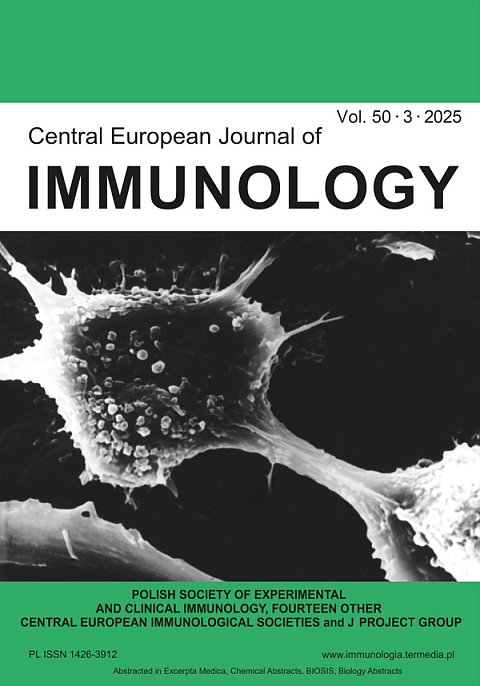
Review paper
Defensins and their role in the maintenance of the oral cavity homeostasis – a literature review
Zuzanna Ślebioda, Elżbieta Szponar, Anna Kowalska
(Centr Eur J Immunol 2013; 38 (1): 111-117)
DOI (digital object identifier): 10.5114/ceji.2013.34367
The maintenance of the local and systemic homeostasis in the human body depends on several specific and non-specific protective mechanisms. An important and one of the oldest elements of the innate, non-specific immunity in multicellular organisms are the defensins – very active, antimicrobial peptides. This review focuses on the structure and the properties of α, β and θ defensins and their biological role with a special emphasis on the oral environment. Antibacterial, antiviral and antifungal activity of the defensins, their influence on the immune response modulation in the presence of certain pathogens and the impact of their variable expression on the development of systemic diseases are discussed in this paper. We also presented the defensins’ expression sites in the oral cavity, physiologic and pathologic conditions, where the modulated defensins’ expression plays an important role and the potential options for the defensin use in the treatment of selected oral cavity diseases.
keywords:
defensins, antimicrobial peptides, oral cavity diseases, oral mucosa, innate immunity
Influences of Smoking and Aging on Allergic Airway Inflammation in Asthma

|


Sensitization to Skin-associated Microorganisms in Adult Patients with Atopic Dermatitis is of Importance for Disease Severity

Sensitization to Skin-associated Microorganisms in Adult Patients with Atopic Dermatitis is of Importance for Disease Severity
doi: 10.2340/00015555-1465
Abstract:
Atopic dermatitis (AD) is a chronic inflammatory skin disease. Environmental and genetic factors, as well as microbial products from yeasts and bacteria, play a role in triggering the disease. A cohort of 619 adult patients with AD was screened for severity of AD, sensitization to Malassezia sympodialis, Candida albicans, Staphylococcus aureus enterotoxins and Dermatophagoides pteronyssinus. Serum levels of interleukin (IL)-18 were measured. Immunoglobulin E (IgE) sensitization to the combination of both yeast and mite antigens was found to be associated with more severe disease and higher levels of total IgE. AD patients with IgE sensitization to several microbial antigens had more severe disease than those with no IgE sensitization to microbial antigens. Sera from patients with IgE-associated AD showed
higher levels of IL-18. Skin-associated microorganisms are exogenous factors triggering IgE-response and severity of AD. These findings are clinically important, and sensitization to these organisms should be assessed and considered in treatment strategies.
higher levels of IL-18. Skin-associated microorganisms are exogenous factors triggering IgE-response and severity of AD. These findings are clinically important, and sensitization to these organisms should be assessed and considered in treatment strategies.
Authors:
Andreas Sonesson, Jacek Bartosik, Julie Christiansen, Ingrid Roscher, Fredrik Nilsson, Artur Schmidtchen, Ove Bäck
Division of Dermatology and Venereology, Department of Clinical Sciences, Lund University, Biomedical center B14, Tornavägen 10, SE 221 84 Lund, Sweden. E-mail: andreas.sonesson@med.lu.se
Division of Dermatology and Venereology, Department of Clinical Sciences, Lund University, Biomedical center B14, Tornavägen 10, SE 221 84 Lund, Sweden. E-mail: andreas.sonesson@med.lu.se
Childhood Food Allergies: Current Diagnosis, Treatment, and Management Strategies

Mayo Clinic Proceedings
Volume 88, Issue 5 , Pages 512-526, May 2013
Volume 88, Issue 5 , Pages 512-526, May 2013
Childhood Food Allergies: Current Diagnosis, Treatment, and Management Strategies
Abstract
Food allergy is a growing public health concern in the United States that affects an estimated 8% of children. Food allergy is defined as an adverse health effect arising from a specific immune response that occurs reproducibly on exposure to a specific food. Nearly 40% of children with food allergy have a history of severe reactions that if not treated immediately with proper medication can lead to hospitalization or even death. The National Institute of Allergy and Infectious Diseases (NIAID) convened an expert panel in 2010 to develop guidelines outlining evidence-based practices in diagnosing and managing food allergy. The purpose of this review is to aid clinicians in translating the NIAID guidelines into primary care practice and includes the following content domains: (1) the definition and mechanism of childhood food allergy, (2) differences between food allergy and food intolerance, (3) the epidemiology of childhood food allergy in the United States, (4) best practices derived from the NIAID guidelines focused on primary care clinicians’ management of childhood food allergy, (5) emerging food allergy treatments, and (6) future directions in food allergy research and practice. Articles focused on childhood food allergy were considered for inclusion in this review. Studies were restricted to the English language and to those published within the past 40 years. A cross-listed combination of the following words, phrases, and MeSH terms was searched in PubMed and Google Scholar to identify relevant articles: food allergy, food hypersensitivity, child, pediatric, prevalence, andepidemiology. Additional sources were identified through the bibliographies of the retrieved articles.
Abbreviations and Acronyms: EoE, eosinophilic esophagitis, FAHF, food allergy herbal formula, NIAID, National Institute of Allergy and Infectious Diseases, OIT, oral immunotherapy, QoL, quality of life, SCIT, subcutaneous immunotherapy, SLIT, sublingual immunotherapy
Potential Competing Interests: Dr Gupta is on the speakers bureau for Mylan Inc. Matthew Greenhawt is a speaker and advisory board member for Nutricia. He also had a prior relationship for the past 12 months as speaker and advisory board member for Thermo Fisher.
PII: S0025-6196(13)00195-X
doi:10.1016/j.mayocp.2013.03.005
© 2013 Mayo Foundation for Medical Education and Research. Published by Elsevier Inc. All rights reserved.
Incidence and risk factors for exacerbations of asthma during pregnancy
Incidence and risk factors for exacerbations of asthma during pregnancy
Review
(25) Total Article Views

Authors: Ali Z, Ulrik CS
Published Date May 2013 Volume 2013:6 Pages 53 - 60
| Received: | 24 January 2013  |
|---|---|
| Accepted: | 20 March 2013 |
| Published: | 06 May 2013 |
Department of Pulmonary Medicine, Hvidovre Hospital and University of Copenhagen, Copenhagen, Denmark
Background: Asthma is one of the most common chronic diseases among pregnant women. Acute exacerbations of asthma during pregnancy have an unfavorable impact on pregnancy outcome. This review provides an overview of current knowledge of incidence, mechanisms, and risk factors for acute exacerbations of asthma during pregnancy.
Methods: A narrative literature review was carried out using the PubMed database.
Results: During pregnancy, up to 6% of women with asthma are hospitalized for an acute exacerbation. The maternal immune system is characterized by a very high T-helper-2:T-helper-1 cytokine ratio during pregnancy and thereby provides an environment essential for fetal survival but one that may aggravate asthma. Cells of the innate immune system such as monocytes and neutrophils are also increased during pregnancy, and this too can exacerbate maternal asthma. Severe or difficult-to-control asthma appears to be the major risk factor for exacerbations during pregnancy, but studies also suggest that nonadherence with controller medication and viral infections are important triggers of exacerbations during pregnancy. So far, inconsistent findings have been reported regarding the effect of fetal sex on exacerbations during pregnancy. Other risk factors for exacerbation during pregnancy include obesity, ethnicity, and reflux, whereas atopy does not appear to be a risk factor.
Discussion: The incidence of asthma exacerbations during pregnancy is disturbingly high. Severe asthma – better described as difficult-to-control asthma – nonadherence with controller therapy, viral infections, obesity, and ethnicity are likely to be important risk factors for exacerbations of asthma during pregnancy, whereas inconsistent findings have been reported with regard to the importance of sex of the fetus.
Keywords: acute exacerbations, pregnancy, asthma severity, incidence, risk factors


Subscribe to:
Posts (Atom)