![]() |
| Illustration of explanatory trials and real-world studies |
A blog that publishes updates and open access scientific papers about allergy, asthma and immunology. Editor: Juan Carlos Ivancevich, MD. Specialist in Allergy & Immunology
August 21, 2023
Real-world data: A relevant component in the framework of scientific evidence
Recent trends in asthma diagnosis, preschool wheeze diagnosis and asthma exacerbations in English children and adolescents: a SABINA Jr study
Kallis C, Maslova E, Morgan AD, Sinha I, Roberts G, van der Valk RJP, Quint JK, Tran TN. Thorax. 2023 Jul 31:thorax-2022-219757.
Abstract
Background: Asthma-related burden remains poorly characterised in children in the UK. We quantified recent trends in asthma prevalence and burden in a UK population-based cohort (1‒17-year-olds).
Methods: The Clinical Practice Research Datalink Aurum database (2008‒2018) was used to assess annual asthma incidence and prevalence in 1‒17-year-olds and preschool wheeze in 1‒5-year-olds, stratified by sex and age.
August 20, 2023
Maternal fish oil and/or probiotics intervention: Allergic diseases in children up to two years old
Komulainen, M, Saros, L, Vahlberg, T, Nermes, M, Jartti, T, Laitinen, K. Pediatr Allergy Immunol. 2023; 34:e14004. doi:10.1111/pai.14004
Abstract
Background
As n-3 long-chain polyunsaturated fatty acids and probiotics possess immunomodulatory properties, theoretically they could lower the risk of allergic diseases. But their effects remain controversial. We aimed to study the effects of fish oil and probiotics separately or in combination from early pregnancy onwards to lower the risk of allergic diseases in the infants.
Methods
In this double-blind trial, women (n = 439) in early pregnancies were randomized into four intervention groups: fish oil + placebo, probiotics + placebo, fish oil + probiotics, and placebo + placebo.
August 18, 2023
Effect of monitoring adherence to regular inhaled corticosteroid (ICS) alone or in combination with a long-acting β2-agonist (LABA) using electronic methods on asthma outcomes: a narrative systematic review
Almutairi M, Marriott JF, Mansur A. BMJ Open. 2023 Aug 16;13(8):e074127. doi: 10.1136/bmjopen-2023-074127.
Abstract
Objectives: To evaluate through a systematic review the effectiveness of electronic methods in monitoring adherence to regular inhaled corticosteroids (ICS) alone or in combination with long-acting β2-agonists (LABAs) and their effect on clinical outcomes.
Design: A narrative systematic review.
Data sources: MEDLINE, EMBASE, Cochrane Database of Systematic Reviews and Web of Science were searched through up to 10 July 2022.
Eligibility criteria: We included peer-reviewed studies of qualitative and quantitative outcomes that compared the effect of electronic methods to routine non-electronic monitoring intervention or placebo among children and adults with asthma on medication adherence rates to regular ICS alone or in combination with LABA, asthma control and asthma exacerbations.
August 15, 2023
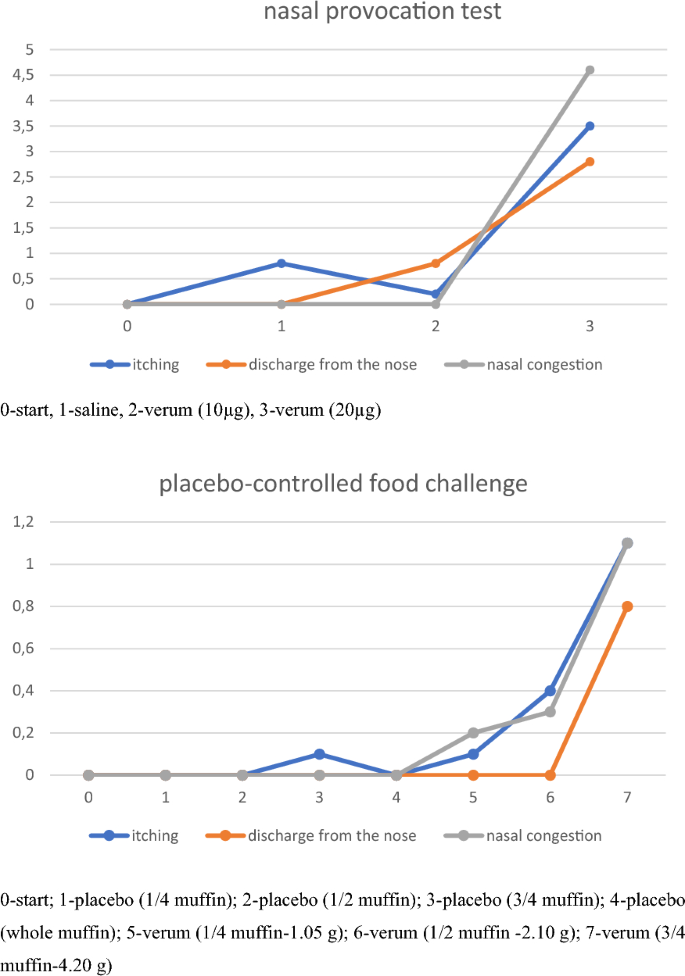
Oral and nasal provocation test in chicken egg allergy—case report
Abstract
Introduction
Allergy to chicken egg protein is a common form of food allergy. The most common clinical presentation includes gastrointestinal, skin, and respiratory symptoms. Differential diagnosis, including provocative tests, is critical in diagnosis.Case description
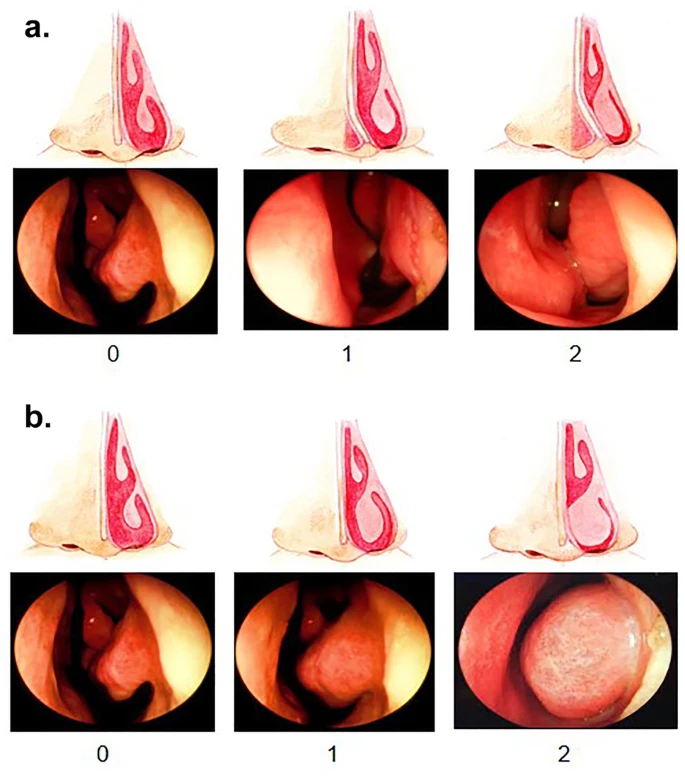
We present a case of a 21-year-old patient with egg allergy, who underwent a double-blind food provocation test with placebo (evaluating subjective complaints from the gastrointestinal tract) and a titrated nasal provocation test using dry chicken egg content. We assessed the response of the nasal mucosa in the provocation test using the visual analogue scale (VAS), acoustic and optical rhinometry, as well as measurements of nitric oxide concentration in the exhaled air. During the provocation test, we measured the changes in the transverse section of the nasal passages, which were accompanied by subjective complaints measured with the VAS scale, using objective techniques. In the nasal provocation test with a dose of 20 µg of chicken egg protein, we observed an increase in the reactivity of the nasal mucosa and a decrease in the level of nitric oxide in the exhaled air from the upper airways (920 ppb before the provocation test and up to 867 ppb during the early stage of the allergic reaction). During the provocation tests, we recorded typical symptoms associated with the early stage of the allergic reaction; including nasal obstruction (1.2 cm), leakage of watery discharge (0.8 cm) in the food test, and itchy nose (1.1 cm) in the food test vs. the nasal test: 4.6, 2.8, and 3.5 cm, respectively.
Conclusions
The nasal mucosa provides convenient conditions for evaluation of the severity of allergy to common food allergens, including chicken egg allergens.
August 14, 2023
Management of Mechanical Nasal Obstruction Isolated or Associated to Upper Airway Inflammatory Diseases in Real Life: Use of both Subjective and Objective Criteria
Merma-Linares, C., Martinez, M.D., Gonzalez, M. et al. Curr Allergy Asthma Rep (2023). https://doi.org/10.1007/s11882-023-01104-y
Abstract
Purpose of Review
Mechanical nasal obstruction (MNO) is a prevalent condition with a high impact on patient’s quality-of-life (QoL) and socio-economic burden. The aim of this study was to determine the usefulness of both subjective and objective criteria in the appropriate management of MNO, either alone or associated to upper airway inflammatory diseases such as allergic rhinitis (AR) or chronic rhinosinusitis with nasal polyps (CRSwNP).
Recent Findings
A long debate persists about the usefulness of subjective and objective methods for making decisions on the management of patients with nasal obstruction. Establishing standards and ranges of symptom scales and questionnaires is essential to measure the success of an intervention and its impact on QoL. To our knowledge this is the first real-life study to describe the management of MNO using both subjective and objective criteria in MNO isolated or associated to upper airway inflammatory diseases (AR or CRSwNP).
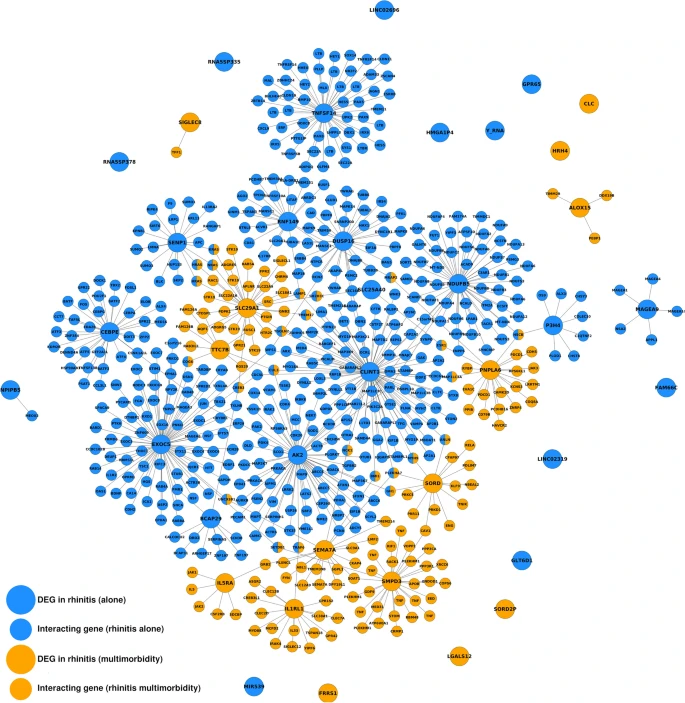
Distinction between rhinitis alone and rhinitis with asthma using interactomics
![]() |
Interactomes of rhinitis alone and rhinitis associated with multimorbidity. DEGs: differentially expressed genes. For clarity, only genes with HGNC symbol are shown. |
August 12, 2023
Dupilumab-induced eosinophilia in patients with diffuse type 2 chronic rhinosinusitis
Background
Dupilumab, a monoclonal anti-IL-4Rα antibody, is approved for several type 2 mediated inflammatory diseases like asthma, atopic dermatitis, and diffuse type 2 chronic rhinosinusitis (CRS). Clinical studies had reported a transient increase in blood eosinophils during dupilumab therapy.
This study aimed to assess the impact of elevated blood eosinophils on clinical outcome and to investigate the cause of high blood eosinophil levels under dupilumab therapy.
Methods
Patients suffering from diffuse type 2 CRS treated with dupilumab were examined on days 0, 28, 90, and 180 after therapy start. Sino-Nasal-Outcome-Test Score (SNOT-22), Total Nasal Polyp Score (TNPS), and blood samples were collected.