April 4, 2024

Human Leukocyte Antigens and Sulfamethoxazole/Cotrimoxazole-Induced Severe Cutaneous Adverse Reactions: A Systematic Review and Meta-Analysis

Wu PC, Chen WT, Huang IH, Chen CB, Wang CW, Tai CC, Chung WH, Chi CC. JAMA Dermatol. 2024 Apr 3. doi: 10.1001/jamadermatol.2024.0210. 

Key Points

Question  Is there an association between human leukocyte antigen (HLA) and sulfamethoxazole (SMX)/cotrimoxazole (CTX)–induced severe cutaneous adverse reactions (SCARs)?

Findings  In this systematic review and meta-analysis of 6 studies involving 322 patients with SCARs, significant associations were identified between the HLA-A*11:01, HLA-B*13:01, HLA-B*15:02, HLA-B*38:02, and HLA-C*08:01 genotypes and SMX/CTX-induced SCARs. The HLA-B*15:02 and HLA-B*38:02 genotypes were significantly associated with SMX/CTX-induced Stevens-Johnson syndrome/toxic epidermal necrolysis (SJS/TEN), while the HLA-A*68:01 and HLA-B*39:01 genotypes were associated with SMX/CTX-induced drug reaction with eosinophilia and systemic symptoms; the HLA-B*13:01 allele showed an association with SMX/CTX-induced SJS/TEN and drug reaction with eosinophilia and systemic symptoms.

Meaning  The results of this review suggest that multiple HLA alleles were associated with SMX/CTX-induced SCARs.

Abstract

Importance  Sulfamethoxazole (SMX) and cotrimoxazole (CTX), a fixed-dose combination of SMX and trimethoprim in a 5:1 ratio, are antibacterial sulfonamides commonly used for treating various diseases.

Baseline Severity and Disease Duration Can Predict the Response to Allergen-specific Immunotherapy in Allergic Rhinitis

 Li Y, Xiao H, Zeng Y, Tang Y, Zhou L, Liu W. Iran J Allergy Asthma Immunol. 2024 Feb 11;23(1):52-58. doi: 10.18502/ijaai.v23i1.14953.

Abstract

Allergen-specific immunotherapy (AIT) has confirmed its efficacy in improving the symptoms of allergic rhinitis. However, no reliable biomarkers have been identified to predict the efficacy of AIT were found. We aimed to find clinical and immunological markers to predict efficacy in children after 2 years of sublingual immunotherapy (SLIT). A total of 285 children diagnosed with allergic rhinitis were recruited. 

The clinical efficacy was evaluated by comparing endpoint and baseline symptom and medication scores (SMS). Baseline clinical and immunological markers (serum total and specific immunoglobulin [Ig]E) and their correlation with clinical efficacy were analyzed.

April 3, 2024

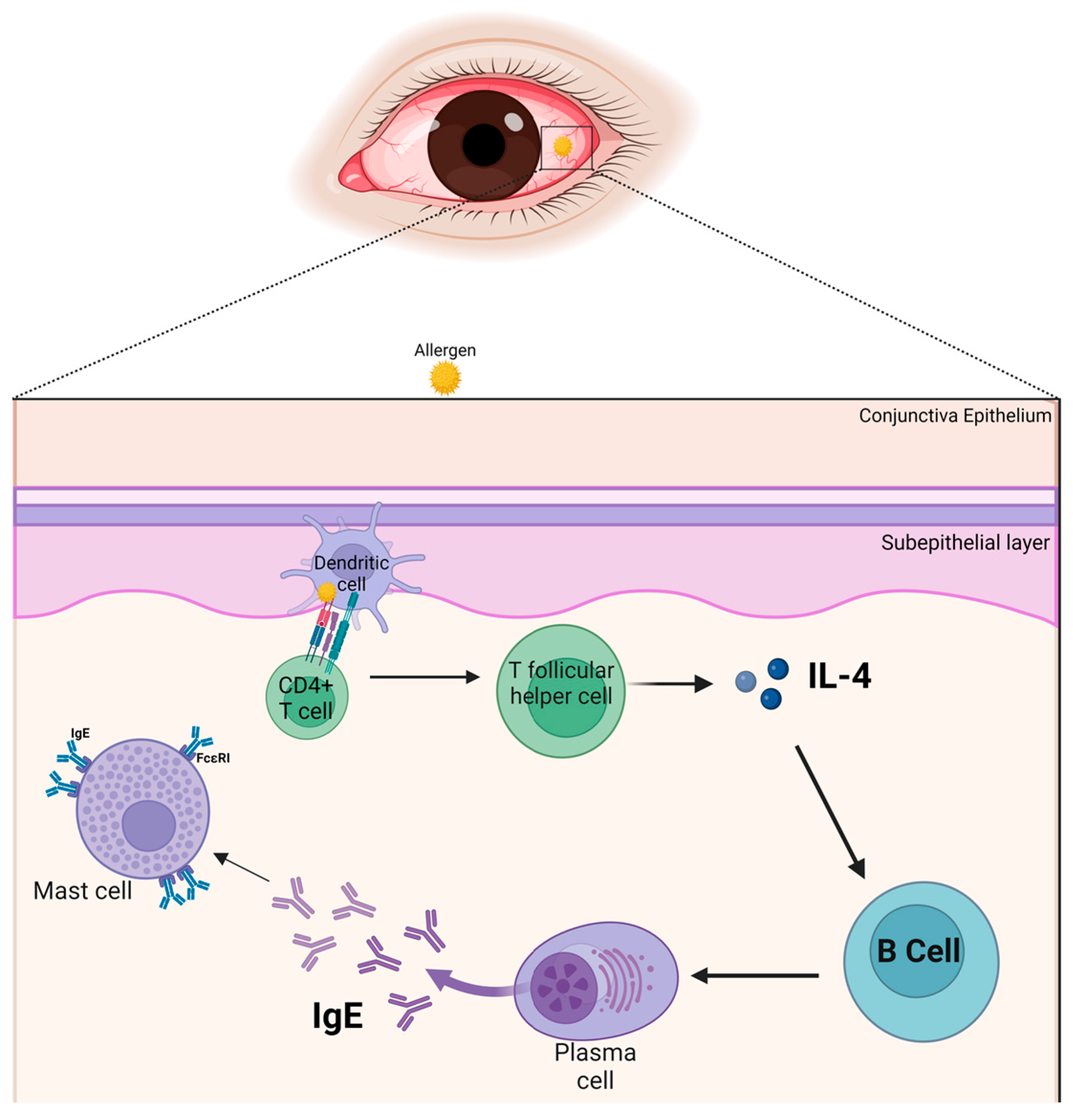
Cytokines in Allergic Conjunctivitis: Unraveling Their Pathophysiological Roles

Chigbu, D.I.; Karbach, N.J.; Abu, S.L.; Hehar, N.K. Life 2024, 14, 350. https://doi.org/10.3390/life14030350

Abstract

Allergic conjunctivitis is one of the common immune hypersensitivity disorders that affect the ocular system. The clinical manifestations of this condition exhibit variability contingent upon environmental factors, seasonal dynamics, and genetic predisposition. While our comprehension of the pathophysiological engagement of immune and nonimmune cells in the conjunctiva has progressed, the same cannot be asserted for the cytokines mediating this inflammatory cascade. In this review, we proffer a comprehensive description of interleukins 4 (IL-4), IL-5, IL-6, IL-9, IL-13, IL-25, IL-31, and IL-33, as well as thymic stromal lymphopoietin (TSLP), elucidating their pathophysiological roles in mediating the allergic immune responses on the ocular surface.

Full-dose challenge of moderate, severe, and unknown beta-lactam allergies in the emergency department

Anderson AM, Coallier S, Mitchell RE et al. Acad Emerg Med. 2024 Mar 21. doi: 10.1111/acem.14893.

Abstract

Objective

This study aims to assess the outcome of challenging documented moderate, severe, or unknown beta-lactam allergies with full dose administration of a beta-lactam antibiotic in emergency department (ED) patients admitted for acute bacterial infection.

Methods

A single-center, retrospective, descriptive study of adult patients challenged with a full dose of beta-lactam in the ED from January 2021 to December 2022 was conducted. Included patients had at least one documented moderate, severe, or unknown beta-lactam allergy in the electronic medical record (EMR) without documentation of prior tolerance. Patient demographics, prior beta-lactam antibiotic reaction, beta-lactam administered in the ED, inpatient beta-lactam continuation, adverse drug reactions, and updates to allergy profiles were collected. Descriptive statistics for data analysis were performed using SPSS Version 22.

April 2, 2024

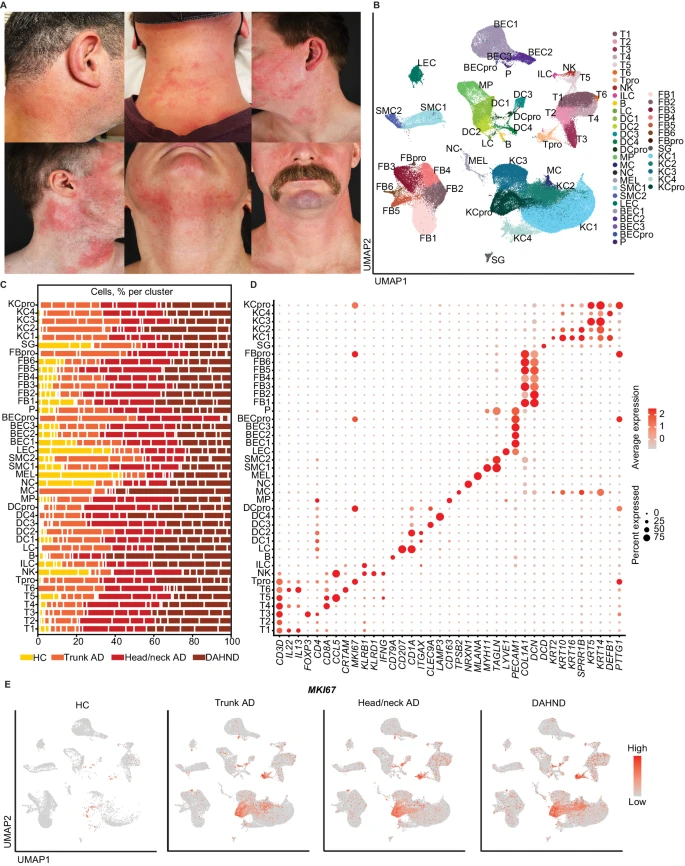
Dupilumab-associated head and neck dermatitis shows a pronounced type 22 immune signature mediated by oligoclonally expanded T cells

 Bangert, C., Alkon, N., Chennareddy, S. et al.  Nat Commun 15, 2839 (2024). https://doi.org/10.1038/s41467-024-46540-0

Abstract

Dupilumab, an IL4R-blocking antibody, has shown clinical efficacy for atopic dermatitis (AD) treatment. In addition to conjunctivitis/blepharitis, the de novo appearance of head/neck dermatitis is now recognized as a distinct side effect, occurring in up to 10% of patients. Histopathological features distinct from AD suggest a drug effect, but exact underlying mechanisms remain unknown. We profiled punch biopsies from dupilumab-associated head and neck dermatitis (DAHND) by using single-cell RNA sequencing and compared data with untreated AD and healthy control skin.

Hereditary or acquired? Comprehensive genetic testing assists in stratifying angioedema patients

Rozevska M, Kanepa A, Purina S, Gailite L, Nartisa I, Farkas H, Rots D, Kurjane N. Allergy Asthma Clin Immunol. 2024 Mar 30;20(1):28. doi: 10.1186/s13223-024-00889-5.

Abstract

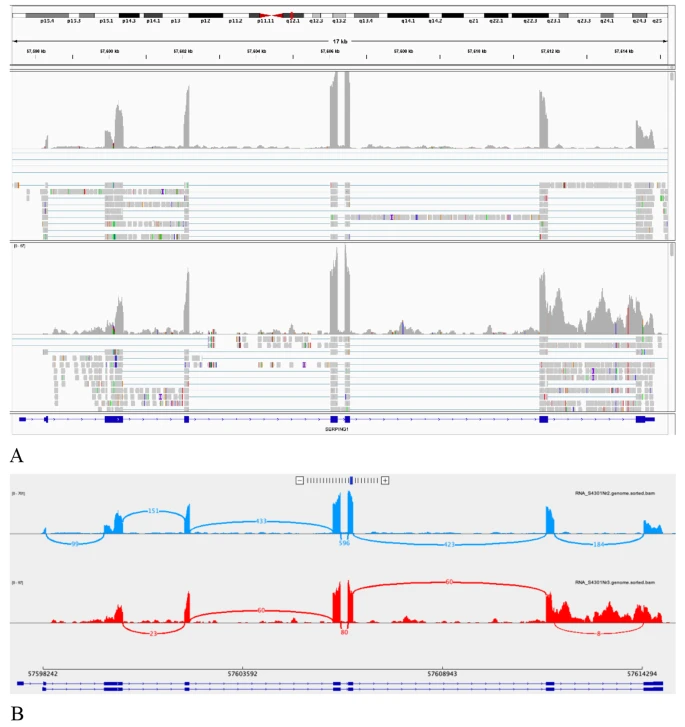
Retention of the last SERPING1 intron present due to the NM_000062.2:c.1249 + 
4 A > G r.spl variant found in patient no. 9 using transcriptome sequencing.
Hereditary angioedema (HAE) poses diagnostic challenges due to its episodic, non-specific symptoms and overlapping conditions. This study focuses on the genetic basis of HAE, particularly focusing on unresolved cases and those with normal C1-inhibitor levels (nC1-INH HAE). This study reveals that conventional testing identified pathogenic variants in only 10 patients (n = 32), emphasizing the necessity for an integrative approach using genome, exome, and transcriptome sequencing. Despite extensive genetic analyses, the diagnostic yield for nC1-INH HAE remains low in our study, the pathogenic variant for nC1-INH HAE was identified in only 1 patient (n = 21). Investigation into candidate genes yielded no pathogenic variants, prompting a re-evaluation of patients’ diagnoses.

March 31, 2024

A novel quinoline with airway relaxant effects and anti-inflammatory properties

Research - Open access


Bergwik, J., Liu, J., Padra, M. et al. Respir Res 25, 146 (2024). https://doi.org/10.1186/s12931-024-02780-8

Abstract

Background

In chronic pulmonary diseases characterized by inflammation and airway obstruction, such as asthma and COPD, there are unmet needs for improved treatment. Quinolines is a group of small heterocyclic compounds that have a broad range of pharmacological properties. Here, we investigated the airway relaxant and anti-inflammatory properties of a novel quinoline (RCD405).

Methods

The airway relaxant effect of RCD405 was examined in isolated airways from humans, dogs, rats and mice. Murine models of ovalbumin (OVA)-induced allergic asthma and LPS-induced airway inflammation were used to study the effects in vivo. RCD405 (10 mg/kg) or, for comparisons in selected studies, budesonide (3 mg/kg), were administered intratracheally 1 h prior to each challenge. Airway responsiveness was determined using methacholine provocation. Immune cell recruitment to bronchi was measured using flow cytometry and histological analyses were applied to investigate cell influx and goblet cell hyperplasia of the airways. Furthermore, production of cytokines and chemokines was measured using a multiplex immunoassay. The expression levels of asthma-related genes in murine lung tissue were determined by PCR. The involvement of NF-κB and metabolic activity was measured in the human monocytic cell line THP-1.

Results

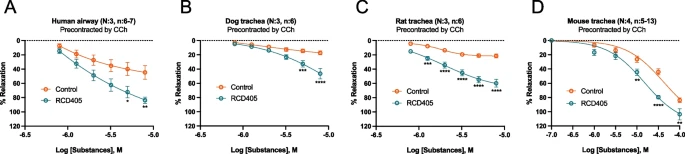
The relaxing effect of RCD405 on human, dog, rat and mouse
isolated airway pre-contracted with CCh.
RCD405 demonstrated a relaxant effect on carbachol precontracted airways in all four species investigated (potency ranking: human = rat > dog = mouse).

March 30, 2024

Clinical Practice Guideline: Immunotherapy for Inhalant Allergy

Gurgel RK, Baroody FM, Damask CC, et al. Otolaryngol Head Neck Surg. 2024 Mar;170 Suppl 1:S1-S42. doi: 10.1002/ohn.648. 

Abstract

Objective

Allergen immunotherapy (AIT) is the therapeutic exposure to an allergen or allergens selected by clinical assessment and allergy testing to decrease allergic symptoms and induce immunologic tolerance. Inhalant AIT is administered to millions of patients for allergic rhinitis (AR) and allergic asthma (AA) and is most commonly delivered as subcutaneous immunotherapy (SCIT) or sublingual immunotherapy (SLIT). Despite its widespread use, there is variability in the initiation and delivery of safe and effective immunotherapy, and there are opportunities for evidence-based recommendations for improved patient care.

Purpose

The purpose of this clinical practice guideline (CPG) is to identify quality improvement opportunities and provide clinicians trustworthy, evidence-based recommendations regarding the management of inhaled allergies with immunotherapy. Specific goals of the guideline are to optimize patient care, promote safe and effective therapy, reduce unjustified variations in care, and reduce the risk of harm. The target patients for the guideline are any individuals aged 5 years and older with AR, with or without AA, who are either candidates for immunotherapy or treated with immunotherapy for their inhalant allergies. The target audience is all clinicians involved in the administration of immunotherapy.