May 16, 2024

Contribution of MASK-air® as a mHealth tool for digitally-enabled person-centred care in rhinitis and asthma


Sousa-Pinto B, Fonseca JA, Bousquet J.  J Investig Allergol Clin Immunol. 2024 May 14:0. doi: 10.18176/jiaci.0994.

Abstract

In chronic diseases, mobile health apps may help to (i) improve clinical management and (ii) provide valuable real-world scientific evidence. In allergic rhinitis, a market research study has only identified four mHealth apps which were multilingual, resulted in scientific publications and displayed a comprehensive list of medications. Ot those, MASK-air® was the app with the highest number of scientific publications. MASK-air® has been launched in 2015 and is currently available in 30 countries, having collected data from more than 30,000 users. It comprises a daily monitoring questionnaire, allowing patients to register (i) their daily allergy symptoms by means of visual analogue scales, and (ii) their medication use.

May 14, 2024

Oral challenge vs routine care to assess low-risk penicillin allergy in critically ill hospital patients (ORACLE): a pilot safety and feasibility randomised controlled trial

Rose, M.T., Holmes, N.E., Eastwood, G.M. et al.  Intensive Care Med (2024). https://doi.org/10.1007/s00134-024-07448-x

Abstract

Purpose

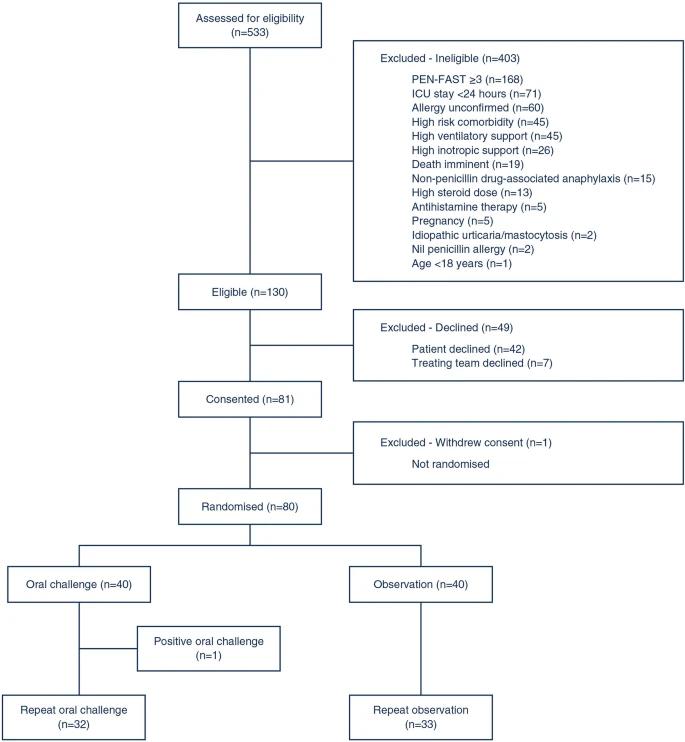
Critically ill patients are vulnerable to penicillin allergy labels that may be incorrect. The validity of skin testing in intensive care units (ICUs) is uncertain. Many penicillin allergy labels are low risk, and validated tools exist to identify those amenable to direct oral challenge. This pilot randomised controlled trial explored the feasibility, safety, and validity of direct enteral challenge for low-risk penicillin allergy labels in critical illness.

Methods


Consenting patients with a low-risk penicillin allergy label (PAL) (PEN-FAST risk assessment score < 3) in four ICUs (Melbourne, Australia) were randomised 1:1 to penicillin (250 mg amoxicillin or implicated penicillin) direct enteral challenge versus routine care (2-h post-randomisation observation for each arm). Repeat challenge was performed post -ICU in the intervention arm. Patients were reviewed at 24 h and 5 days after each challenge/observation.

May 13, 2024

Ragweed in South America: the relevance of aerobiology stations in Latin America

Cherrez-Ojeda, I., Robles-Velasco, K., Ramon, G.D. et al. Aerobiologia (2024). https://doi.org/10.1007/s10453-024-09825-x

Abstract

Pollen, particularly from the Ambrosia genus, plays a pivotal role in triggering allergic rhinoconjunctivitis symptoms. This review delves into the global background of Ambrosia, focusing on its origins, invasive potential, and spread to South America. The ecological niche for Ambrosia species is explored, emphasizing its stability globally but exhibiting unique and dynamic features in South America. Information on Ambrosia pollen concentration in South America is summarized, revealing varying levels across countries. The establishment of new aerobiology stations, as highlighted in the latest findings, contributes valuable data for understanding allergen risk management in the region.

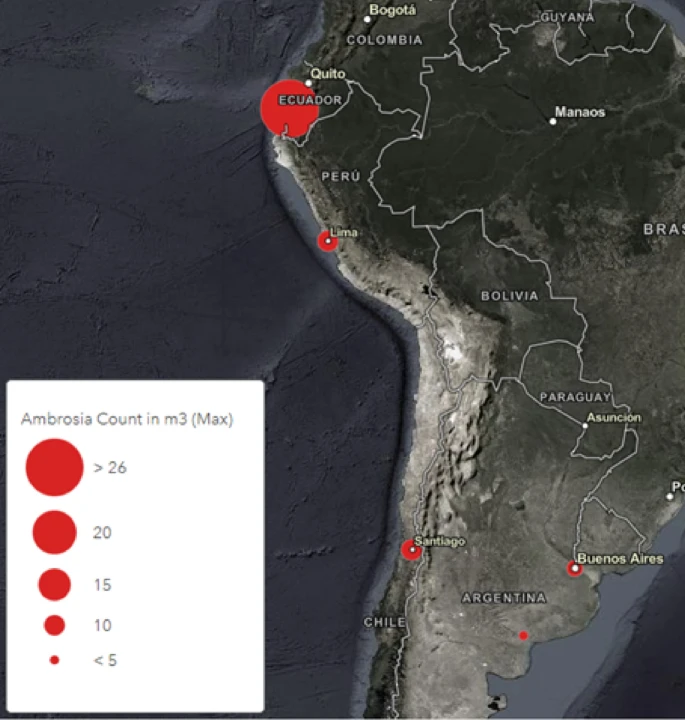
Comparative analysis of maximum daily Ambrosia 
volume (m.
3): city-wise distribution from 2019 to 2023

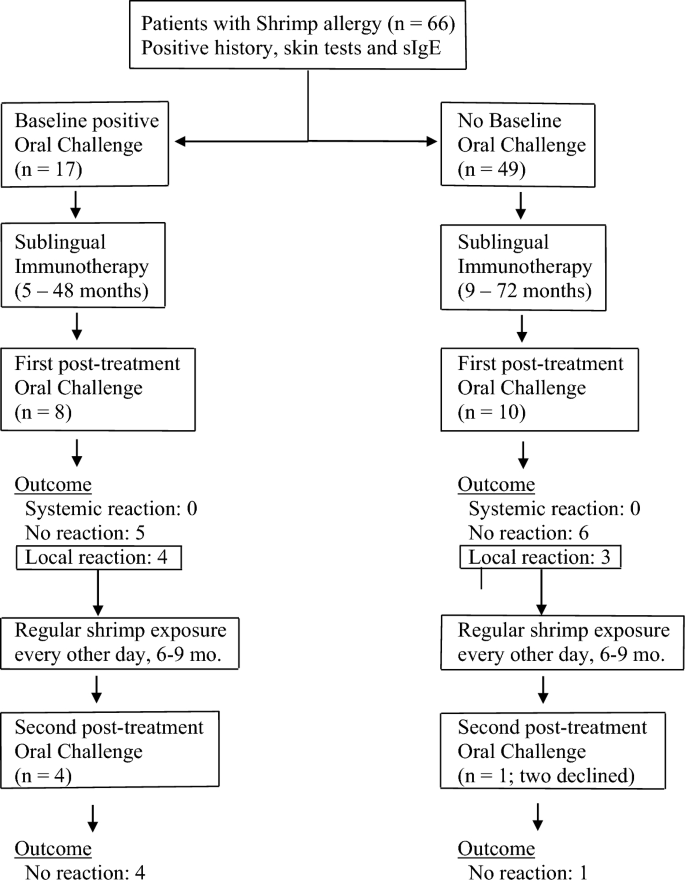
Sublingual immunotherapy for allergy to shrimp: the nine-year clinical experience of a Midwest Allergy-Immunology practice

Theodoropoulou, L.M., Cullen, N.A.  Allergy Asthma Clin Immunol 20, 33 (2024). https://doi.org/10.1186/s13223-024-00895-7

Abstract

Background

Diet restrictions and fear of adverse reactions put a significant burden on the nutrition, growth and life style of children and adults with food allergies. While various disease-modifying options are pursued, there are so far no published clinical data on immunotherapy for crustaceans. The efficacy and safety of desensitization to crustaceans by means of sublingual immunotherapy is assessed for the first time in this study with a view of validating it as a clinical-practice modality.

Methods

Charts of a Midwest Allergy-Immunology practice from the period January 2014–June 2023 were reviewed to identify patients with allergy to shrimp treated with sublingual immunotherapy and to retrospectively evaluate their responses to oral challenge.

Results

Sixty-six patients were identified who had been treated by sublingual immunotherapy for either systemic or localized reactions to shrimp. Demographics and relevant comorbidities were consistent with those of the atopic population.

May 11, 2024

Polysensitisation is associated with more severe symptoms: The reality of patients with allergy

Cacheiro-Llaguno C, Mösges R, Calzada D, González-de la Fuente S, Quintero E, Carnés J. Clin Exp Allergy. 2024; 00: 1-14. doi:10.1111/cea.14486

Abstract

Background

Studying the sensitisation profiles of patients with allergies allows for a deeper understanding of the disease which may facilitate the selection of the best-personalised allergen immunotherapy. This observational, cross-sectional, multicentre study aimed to demonstrate the heterogeneity of the German population with allergies by analysing specific immunoglobulin E (sIgE) patterns towards aeroallergens and exploring the relationship between sensitisation and clinical symptoms.

Easy assessment of the avidity of polyclonal allergen-specific serum antibodies

Strobl MR, Demir H, Wozniak-Knopp G, Wangorsch A, Rüker F, Bohle B. Clin Exp Allergy. 2024; 54: 278-285. doi:10.1111/cea.14448

Abstract

Introduction

Allergen-specific IgE-blocking IgG antibodies contribute to successful allergen immunotherapy (AIT), however, not much is known about their affinity. Since affinity measurements of polyclonal antibodies in serum are technically challenging we evaluated the applicability of acidic disruption of antibody-allergen complexes by a modified ELISA protocol with monoclonal antibodies (mAbs) specific for the relevant major allergens Betv1 and Mald1. Then, AIT-induced blocking and non-blocking Mald1-specific antibodies in sera from individuals with or without reduced apple allergy were compared.

May 10, 2024

How to Define and Manage Low-Risk Drug Allergy Labels

Copaescu AM, Li L, Blumenthal KG, Trubiano JA. J Allergy Clin Immunol Pract. 2024 May;12(5):1095-1106. doi: 10.1016/j.jaip.2024.03.021. 

Abstract

Risk stratification in drug allergy implies that specific risk categories (eg, low, moderate, and high) classify historical drug hypersensitivity reactions. These risk categories can be based on reaction phenotypic characteristics, the timing of the reaction and evaluation, the required reaction management, and individual characteristics. Although a multitude of frameworks have been described in the literature, particularly for penicillin allergy labels, there has yet to be a global consensus, and approaches continue to vary between allergy centers.

Prevalence of omalizumab resistant chronic urticaria and real world effectiveness of dupilumab in omalizumab refractory chronic urticaria patients: a single center experience

Catherine Zhu, Hessah BinJadeed, Sofianne Gabrielli, Connor Prosty, Elham Rahme, Greg Shand, Michael Fein, Moshe Ben-Shoshan, Elena Netchiporouk. Clinical and Experimental Dermatology, 2024;, llae145, https://doi.org/10.1093/ced/llae145

Abstract

Chronic urticaria (CU) is characterized by wheals, angioedema, or both lasting for ≥ 6 weeks with chronic spontaneous urticaria (CSU) being the most common subtype. Omalizumab-resistant CSU cases represent an unmet clinical need. In this study, we aimed to assess the prevalence and predictors of omalizumab failure in a large cohort of CU patients and assess the effectiveness of dupilumab for omalizumab-recalcitrant CU. Of 338 CU patients, 33 received omalizumab. 69.7% (23 patients) were responders and 30.3% (10 patients) non-responders.