May 20, 2024

Publication Trends and Hot Spots of ChatGPT’s Application in the Medicine

Li, Zq., Wang, Xf. & Liu, Jp. J Med Syst 48, 52 (2024). https://doi.org/10.1007/s10916-024-02074-y

Abstract

This study aimed to analyze the current landscape of ChatGPT application in the medical field, assessing the current collaboration patterns and research topic hotspots to understand the impact and trends. By conducting a search in the Web of Science, we collected literature related to the applications of ChatGPT in medicine, covering the period from January 1, 2000 up to January 16, 2024. Bibliometric analyses were performed using CiteSpace (V6.2., Drexel University, PA, USA) and Microsoft Excel (Microsoft Corp.,WA, USA) to map the collaboration among countries/regions, the distribution of institutions and authors, and clustering of keywords. A total of 574 eligible articles were included, with 97.74% published in 2023.

May 17, 2024

Immunotherapy and biologics in the management of IgE-mediated food allergy: Systematic review and meta-analyses of efficacy and safety.

Carmen Riggioni, Teresa Oton, Loreto Carmona, George Du Toit, Isabel Skypala, Alexandra F. Santos, the EAACI Food Allergy Guidelines Expert Group and the EAACI Research and Outreach Committee FA Group.  Allergy. 2024; 00: 1-31. doi:10.1111/all.16129

Abstract

Food allergy (FA) is a potentially life-threatening chronic condition that is becoming an increasing public health problem worldwide. This systematic review (SR) was carried out to inform the development of clinical recommendations on the treatment of IgE-mediated FA with biologics and/or IT for the update of the EAACI guidelines. A SR of randomized-controlled trials or quasi-controlled trials was carried out. Studies were identified via comprehensive search strategies in Medline, Embase, and Cochrane Library, up to April 2022. Population: Human adults, children, and adolescents with IgE-mediated FA. Intervention: IT and/or biologics. Comparator: Placebo or standard-of-care (allergen avoidance). Outcome: Efficacy (desensitization, sustained unresponsiveness (SU), remission), quality of life, and safety (systemic and local adverse reactions (AR)).

Analysis of Differentially expressed genes and Molecular pathways in Peanut Allergy Induced Dynamic Changes involved in Peanut-Specific Immune Responses: A Systematic and Bioinformatics Approach


Glory Simon Parmar, Manisha Gulati, Md Khoshnade Rabby,  View ORCID ProfileRamchander Merugu,  View ORCID ProfileSatabdi Mohanty, Umme Kulsum, Dhanshree Gajanan Pujari, Swapnja Rohit More, Om Prakash, Priyanka Shrikant Bhore,  doi: https://doi.org/10.1101/2024.05.12.24307235

This article is a preprint and has not been certified by peer review [what does this mean?]. It reports new medical research that has yet to be evaluated and so should not be used to guide clinical practice.

ABSTRACT

Peanut allergy poses a significant global health concern, triggering hypersensitivity reactions upon exposure to peanuts. Understanding the molecular mechanisms governing peanut-specific immune responses is imperative for developing effective therapeutic approaches.
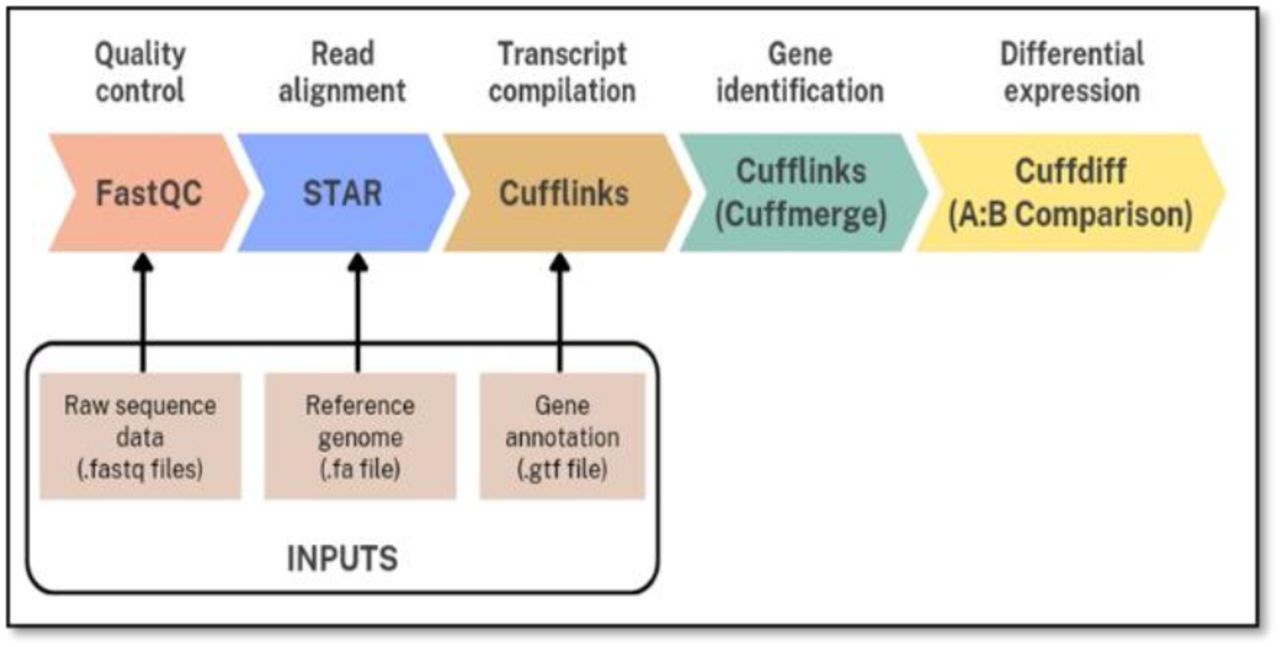
This study aimed to investigate differentially expressed genes (DEGs) and associated molecular pathways implicated in peanut allergy-induced immune responses. Employing a systematic and bioinformatics-driven approach, we analyzed gene expression profiles from peanut-allergic individuals and healthy controls using RNAseq Next-Generation Sequencing (NGS) data. Enrichment analysis of DEGs revealed their involvement in various inflammatory conditions, including autoinflammatory, allergic, and respiratory disorders.

May 16, 2024

Contribution of MASK-air® as a mHealth tool for digitally-enabled person-centred care in rhinitis and asthma


Sousa-Pinto B, Fonseca JA, Bousquet J.  J Investig Allergol Clin Immunol. 2024 May 14:0. doi: 10.18176/jiaci.0994.

Abstract

In chronic diseases, mobile health apps may help to (i) improve clinical management and (ii) provide valuable real-world scientific evidence. In allergic rhinitis, a market research study has only identified four mHealth apps which were multilingual, resulted in scientific publications and displayed a comprehensive list of medications. Ot those, MASK-air® was the app with the highest number of scientific publications. MASK-air® has been launched in 2015 and is currently available in 30 countries, having collected data from more than 30,000 users. It comprises a daily monitoring questionnaire, allowing patients to register (i) their daily allergy symptoms by means of visual analogue scales, and (ii) their medication use.

May 14, 2024

Oral challenge vs routine care to assess low-risk penicillin allergy in critically ill hospital patients (ORACLE): a pilot safety and feasibility randomised controlled trial

Rose, M.T., Holmes, N.E., Eastwood, G.M. et al.  Intensive Care Med (2024). https://doi.org/10.1007/s00134-024-07448-x

Abstract

Purpose

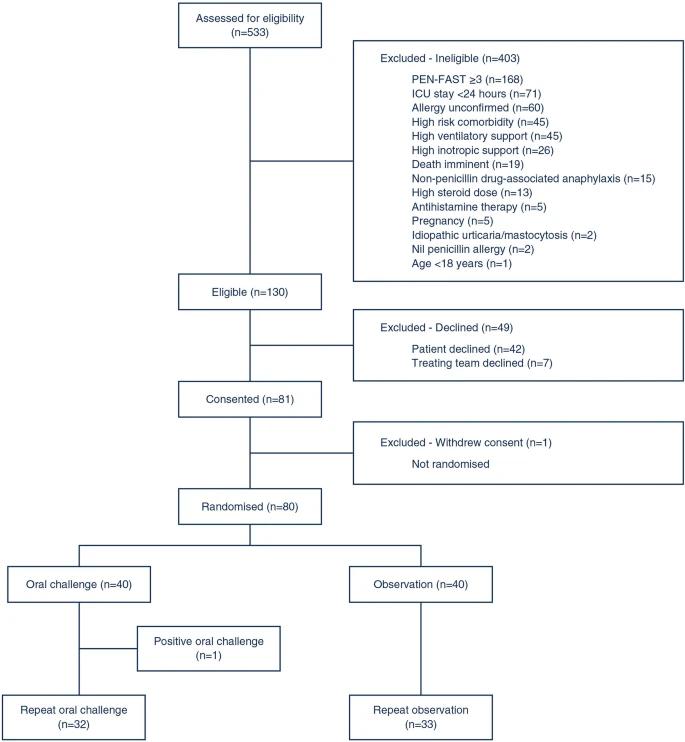
Critically ill patients are vulnerable to penicillin allergy labels that may be incorrect. The validity of skin testing in intensive care units (ICUs) is uncertain. Many penicillin allergy labels are low risk, and validated tools exist to identify those amenable to direct oral challenge. This pilot randomised controlled trial explored the feasibility, safety, and validity of direct enteral challenge for low-risk penicillin allergy labels in critical illness.

Methods


Consenting patients with a low-risk penicillin allergy label (PAL) (PEN-FAST risk assessment score < 3) in four ICUs (Melbourne, Australia) were randomised 1:1 to penicillin (250 mg amoxicillin or implicated penicillin) direct enteral challenge versus routine care (2-h post-randomisation observation for each arm). Repeat challenge was performed post -ICU in the intervention arm. Patients were reviewed at 24 h and 5 days after each challenge/observation.

May 13, 2024

Ragweed in South America: the relevance of aerobiology stations in Latin America

Cherrez-Ojeda, I., Robles-Velasco, K., Ramon, G.D. et al. Aerobiologia (2024). https://doi.org/10.1007/s10453-024-09825-x

Abstract

Pollen, particularly from the Ambrosia genus, plays a pivotal role in triggering allergic rhinoconjunctivitis symptoms. This review delves into the global background of Ambrosia, focusing on its origins, invasive potential, and spread to South America. The ecological niche for Ambrosia species is explored, emphasizing its stability globally but exhibiting unique and dynamic features in South America. Information on Ambrosia pollen concentration in South America is summarized, revealing varying levels across countries. The establishment of new aerobiology stations, as highlighted in the latest findings, contributes valuable data for understanding allergen risk management in the region.

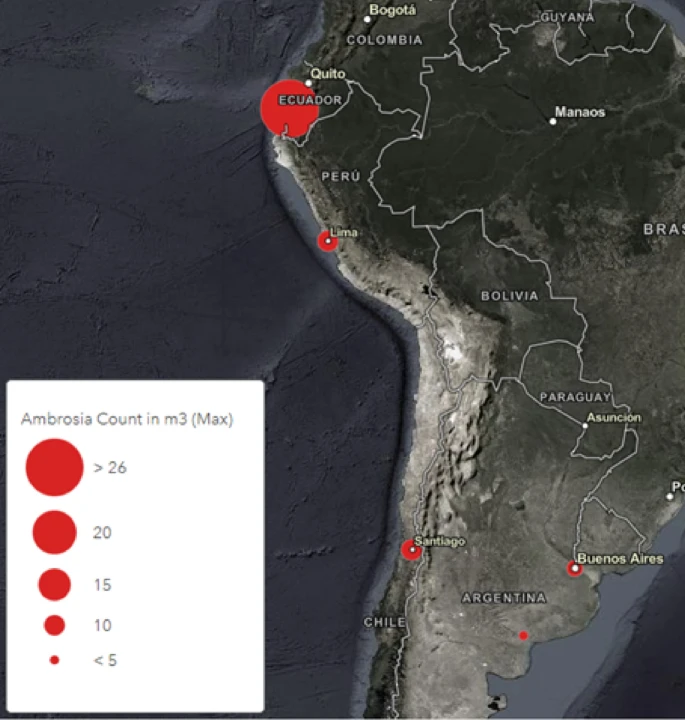
Comparative analysis of maximum daily Ambrosia 
volume (m.
3): city-wise distribution from 2019 to 2023

Sublingual immunotherapy for allergy to shrimp: the nine-year clinical experience of a Midwest Allergy-Immunology practice

Theodoropoulou, L.M., Cullen, N.A.  Allergy Asthma Clin Immunol 20, 33 (2024). https://doi.org/10.1186/s13223-024-00895-7

Abstract

Background

Diet restrictions and fear of adverse reactions put a significant burden on the nutrition, growth and life style of children and adults with food allergies. While various disease-modifying options are pursued, there are so far no published clinical data on immunotherapy for crustaceans. The efficacy and safety of desensitization to crustaceans by means of sublingual immunotherapy is assessed for the first time in this study with a view of validating it as a clinical-practice modality.

Methods

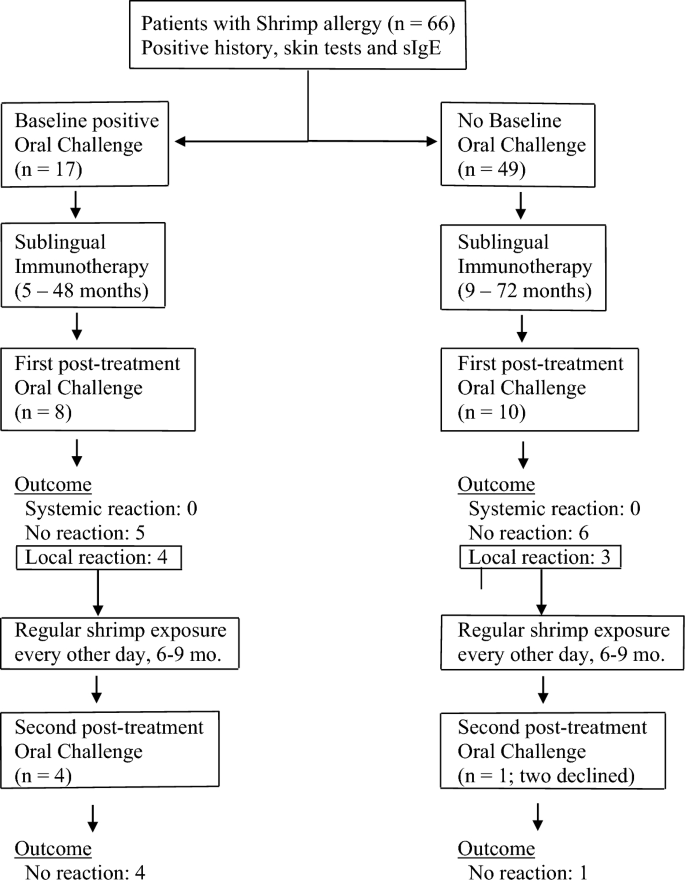
Charts of a Midwest Allergy-Immunology practice from the period January 2014–June 2023 were reviewed to identify patients with allergy to shrimp treated with sublingual immunotherapy and to retrospectively evaluate their responses to oral challenge.

Results

Sixty-six patients were identified who had been treated by sublingual immunotherapy for either systemic or localized reactions to shrimp. Demographics and relevant comorbidities were consistent with those of the atopic population.

May 11, 2024

Polysensitisation is associated with more severe symptoms: The reality of patients with allergy

Cacheiro-Llaguno C, Mösges R, Calzada D, González-de la Fuente S, Quintero E, Carnés J. Clin Exp Allergy. 2024; 00: 1-14. doi:10.1111/cea.14486

Abstract

Background

Studying the sensitisation profiles of patients with allergies allows for a deeper understanding of the disease which may facilitate the selection of the best-personalised allergen immunotherapy. This observational, cross-sectional, multicentre study aimed to demonstrate the heterogeneity of the German population with allergies by analysing specific immunoglobulin E (sIgE) patterns towards aeroallergens and exploring the relationship between sensitisation and clinical symptoms.