June 14, 2024

Patients taking benralizumab, dupilumab, or mepolizumab have lower postvaccination SARS-CoV-2 immunity

Martin C. Runnstrom, Pedro A. Lamothe, Caterina E. Faliti et al. 

In press.


Background

Biologic therapies inhibiting the IL-4 or IL-5 pathways are very effective in the treatment of asthma and other related conditions. However, the cytokines IL-4 and IL-5 also play a role in the generation of adaptive immune responses. Although these biologics do not cause overt immunosuppression, their effect in primary severe acute respiratory syndrome coronavirus 2 (SARS-CoV-2) immunization has not been studied completely.

Objective

Our aim was to evaluate the antibody and cellular immunity after SARS-CoV-2 mRNA vaccination in patients on biologics (PoBs).

Severe cutaneous reaction with initiation of dupilumab for atopic dermatitis and prurigo nodularis: An unusual adverse effect


JAAD Case Reports

Leore Lavin MSc, Gabriella Chefitz BA, Deep Patel MD, Woong Kee Baek MD, Saakshi Khattri MD

Introduction
Dupilumab is a human immunoglobulin (Ig)-G4 monoclonal antibody that has demonstrated significant efficacy in treating various inflammatory skin conditions, including atopic dermatitis (AD) and prurigo nodularis.1,2 The most common treatment-emergent adverse events include nasopharyngitis (28.1%), conjunctivitis (19.5%), AD exacerbation (16.4%), upper respiratory infections (13.1%), and injection site reactions (9.7%).1

Severe cutaneous reactions have rarely been reported with dupilumab but have been noted with the use of many biologics, including anti-tumor necrosis factor therapeutics, interleukin 6, and interleukin 12/23 inhibitors. These reactions include, but are not limited to, new-onset psoriasis, erythema multiforme (EM), lupus-like reactions, and hypersensitivity reactions.3

Herein we report a patient with AD who developed a severe cutaneous drug eruption on sun exposed skin following initiation of dupilumab.

June 13, 2024

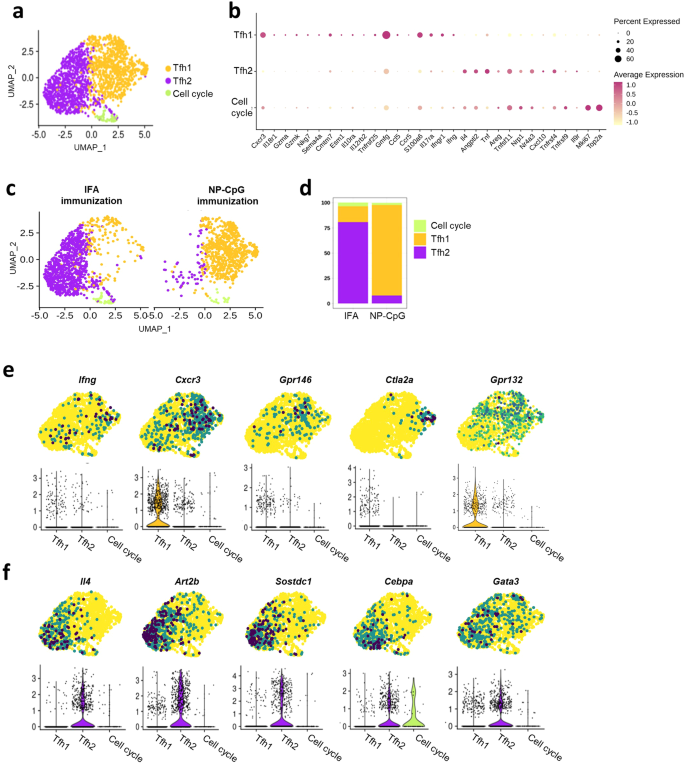
Specialized Tfh cell subsets driving type-1 and type-2 humoral responses in lymphoid tissue.

Kumar, S., Basto, A.P., Ribeiro, F. et al.  Cell Discov 10, 64 (2024). https://doi.org/10.1038/s41421-024-00681-0
Abstract 

Heterogeneity of Tfh cells under the two types of immunization.
Effective antibody responses are essential to generate protective humoral immunity. Different inflammatory signals polarize T cells towards appropriate effector phenotypes during an infection or immunization. Th1 and Th2 cells have been associated with the polarization of humoral responses. However, T follicular helper cells (Tfh) have a unique ability to access the B cell follicle and support the germinal center (GC) responses by providing B cell help. We investigated the specialization of Tfh cells induced under type-1 and type-2 conditions. We first studied homogenous Tfh cell populations generated by adoptively transferred TCR-transgenic T cells in mice immunized with type-1 and type-2 adjuvants.

Adrenergic Urticaria: An Updated Review.


Slater K N, Abu-Zahra A, Kartono F (June 11, 2024)  Cureus 16(6): e62171. doi:10.7759/cureus.62171

Abstract

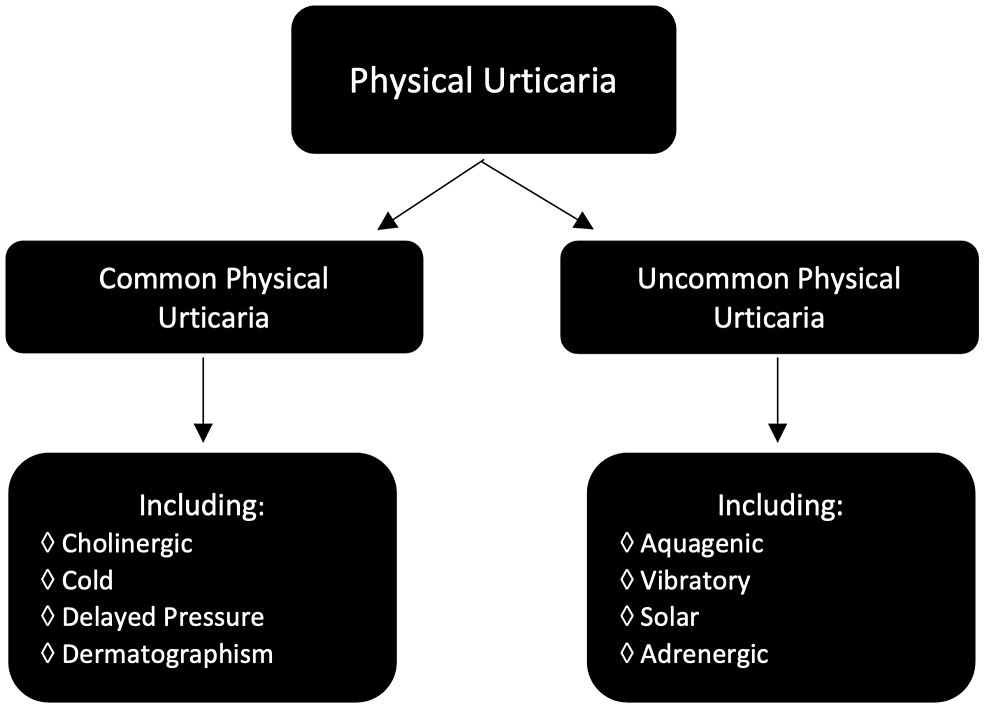
It can be difficult to delineate the cause of urticarial eruptions, and in chronic cases, it can be a challenging condition to effectively treat. Several forms of urticarial eruptions are well documented and established. Our review focuses on a form of urticaria that is less commonly reported: adrenergic urticaria. In this review, we aim to consolidate the literature in the hopes that this urticarial subtype is considered in urticarial differentials, as well as highlight potential gaps in the research and future directions in treatment options.

PDF


June 12, 2024

Embedding patients' values and preferences in guideline development for allergic diseases: The case study of Allergic Rhinitis and its Impact on Asthma 2024.

Vieira RJ, Sousa-Pinto B, Bognanni A, Yepes-Nuñez JJ, Zhang Y, Lityńska J, Sadowska E, Borowiack E, Samolinski B, Togias A, Zuberbier T, Bousquet J, Schünemann HJ. Clin Transl Allergy. 2024 Jun;14(6):e12377. doi: 10.1002/clt2.12377.

Abstract

Recommendations for or against the use of interventions need to consider both desirable and undesirable effects as well as patients' values and preferences (V&P). In the decision-making context, patients' V&P represent the relative importance people place on the outcomes resulting from a decision. Therefore, the balance between desirable and undesirable effects from an intervention should depend not only on the difference between benefits and harms but also on the value that patients place on them. V&P are therefore one of the criteria to be considered when formulating guideline recommendations in the Evidence-to-Decision framework developed by the Grading of Recommendations, Assessment, Development and Evaluations (GRADE) Working Group.

Usage prevalence of angioedema patient-reported outcome measures: results from the UCARE and ACARE PROMUSE study

Cherrez-Ojeda I, Bousquet J, Giménez-Arnau A et al. J Allergy Clin Immunol Pract. 2024 May 9:S2213-2198(24)00464-1. doi: 10.1016/j.jaip.2024.04.056.

Clinical Communication

Angioedema manifests as self-limited, localized, and transient swellings of the skin or mucosal tissues due to a loss of vascular integrity. This allows fluid to move into tissues such as the face, larynx, genitals, and bowel wall(1). The global lifetime prevalence of acquired and hereditary angioedema is 7.4%(2) and 0.002%(3), respectively. Notably, angioedema is the third most common skin condition in emergency medicine.(4) The burden of angioedema includes poor quality of life, mental issues, and reduced work and school productivity, leading to substantial direct and indirect expenses.(5) Patient-reported outcome measures (PROMs) asses disease burden,activity, and control.(6) PROMs are also used to assess the response to treatments in routine clinical practice and help to evaluate innovative therapies under development in clinical trials. Moreover, the integration of PROMs will promote cooperative decision-making among healthcare practitioners and patients, eventually improving patient satisfaction and optimizing treatment outcomes(6).

June 11, 2024

Regular consumption following early introduction of allergenic foods and aggressive treatment of eczema are necessary for preventing the development of food allergy in children

Sakihara, Tetsuhiro. Current Opinion in Allergy and Clinical Immunology 24(3):p 160-165, June 2024. | DOI: 10.1097/ACI.0000000000000983

Abstract

Purpose of review 

Over the past two decades, food allergy prevention strategies have shifted from ‘delayed introduction’ to ‘no delayed introduction’ to ‘early introduction’ of allergenic foods. This article reviews important research in this field published in the early 2020s to support future strategies for food allergy prevention.

Recent findings 

Recent randomized controlled trials (RCTs), systematic reviews, meta-analyses, and real-world studies have reported that early allergenic food introduction, especially peanut and egg, are effective for preventing food allergies. However, there are also reports that food-induced anaphylaxis admission rates in infants are increasing.

Modelling the Costs of Sublingual Immunotherapy versus Subcutaneous Immunotherapy Based on Clinical Appointments and Impacts of Patient Travel in Sweden

Cardell LO, Sterner T, Ahmed W, Slættanes AK, Svärd M, Pollock RF. Clinicoecon Outcomes Res. 2024;16:493-506 https://doi.org/10.2147/CEOR.S462698

Abstract

Aim: In Sweden, allergy immunotherapy (AIT) is available as either subcutaneous immunotherapy (SCIT) injections or sublingual immunotherapy (SLIT) tablets and is used to treat moderate-severe allergic rhinitis (AR). This study sought to determine direct and indirect annual costs stemming from treatment-related travel, appointments, waiting times and medication costs, before exploring likely CO2 emission-related cost-savings for 20,330 patients receiving SCIT or SLIT-tablets in Sweden.

Methods: A model was developed in Python to capture each category of costs in the target patient population. Absenteeism costs arising from treatment-related travel were determined by obtaining average hourly pay data from Swedish Government sources. Absenteeism costs were also calculated for 30-minute post-dose observation times, which occurred during one clinical appointment for SLIT patients, and all clinical appointments for SCIT patients.