June 16, 2024

Predictive model to differentiate chronic histaminergic angioedema and chronic spontaneous urticaria with angioedema.

Láinez-Nuez A, Salas-Parra G, Juárez-Guerrero A, Picó-Peris A, Baeza ML. J Allergy Clin Immunol Glob. 2024 May 9;3(3):100278. doi: 10.1016/j.jacig.2024.100278. 

Abstract

Background: Chronic histaminergic angioedema (CHA) may be classified as a separate acquired angioedema (AE) or as an endotype of chronic spontaneous urticaria (CSU). A recent study suggested them to be independent pathologies.

Objective: We carried out an exhaustive analysis between CHA and AE-CSU to explore the possible differentiation between them on the bases of a series of predictors.

Methods: An observational, retrospective, cross-sectional, and exploratory study was designed. Fifty-six CHA and 40 AE-CSU patients were included. Data were extracted from the year before and year after time of diagnosis.

Predicting the daily number of patients for allergic diseases using PM10 concentration based on spatiotemporal graph convolutional networks.

Jeon HJ, Jeon HJ, Jeon SH.  PLoS One. 2024 Jun 13;19(6):e0304106. doi: 10.1371/journal.pone.0304106. 

Abstract

A comparison of the prediction performance in MST-GCN with and
withoutPM10 concentrations in the input data.
Air pollution causes and exacerbates allergic diseases including asthma, allergic rhinitis, and atopic dermatitis. Precise prediction of the number of patients afflicted with these diseases and analysis of the environmental conditions that contribute to disease outbreaks play crucial roles in the effective management of hospital services. Therefore, this study aims to predict the daily number of patients with these allergic diseases and determine the impact of particulate matter (PM10) on each disease. To analyze the spatiotemporal correlations between allergic diseases (asthma, atopic dermatitis, and allergic rhinitis) and PM10 concentrations, we propose a multi-variable spatiotemporal graph convolutional network (MST-GCN)-based disease prediction model.

June 15, 2024

Regulatory framework for development and marketing authorization of allergen products for diagnosis of rare type I and type IV allergies: The current status


Zimmer J, Mahler V. Allergol Select. 2024 May 31;8:212-219. doi: 10.5414/ALX02505E.

Abstract

Test allergens with marketing authorizations in Germany (as of March 19, 2024).
Development, production, and marketing authorization of allergen products is generally challenging due to several specific characteristics, including the natural source as well as the multitude of allergenic materials. Also, depending on the frequency of sensitization in the population, the number of patients available for inclusion in clinical trials can be a limiting factor for product development. In the development of allergen products for diagnosis of type I and type IV allergies these challenges are particularly demanding because, in contrast to certain products for allergen-specific immunotherapy, no exemptions from marketing authorization are foreseen for this product group in Directive 2001/83/EC.

To be or not to be direct: The role of neuromedin U in neuro-eosinophil crosstalk

Ruichao Liu, Wenhao Shao, Jun Xu, Coco Chu. Sci Bull (Beijing). 2024 Jan 30;69(2):148-150. doi: 10.1016/j.scib.2023.11.056.

Schematic of the role of neuromedin U in neuro-eosinophil crosstalk

With the development of new experimental techniques (e.g., single-cell RNA sequencing (scRNA-seq), light sheet microscopy, and clustered regularly interspaced palindromic repeats (CRISPR)/CRISPR-associated protein 9 (Cas9)), emerging studies have begun to uncover the interactions between the nervous system and the immune system, both in health and diseases.

June 14, 2024

Patients taking benralizumab, dupilumab, or mepolizumab have lower postvaccination SARS-CoV-2 immunity

Martin C. Runnstrom, Pedro A. Lamothe, Caterina E. Faliti et al. 

In press.


Background

Biologic therapies inhibiting the IL-4 or IL-5 pathways are very effective in the treatment of asthma and other related conditions. However, the cytokines IL-4 and IL-5 also play a role in the generation of adaptive immune responses. Although these biologics do not cause overt immunosuppression, their effect in primary severe acute respiratory syndrome coronavirus 2 (SARS-CoV-2) immunization has not been studied completely.

Objective

Our aim was to evaluate the antibody and cellular immunity after SARS-CoV-2 mRNA vaccination in patients on biologics (PoBs).

Severe cutaneous reaction with initiation of dupilumab for atopic dermatitis and prurigo nodularis: An unusual adverse effect


JAAD Case Reports

Leore Lavin MSc, Gabriella Chefitz BA, Deep Patel MD, Woong Kee Baek MD, Saakshi Khattri MD

Introduction
Dupilumab is a human immunoglobulin (Ig)-G4 monoclonal antibody that has demonstrated significant efficacy in treating various inflammatory skin conditions, including atopic dermatitis (AD) and prurigo nodularis.1,2 The most common treatment-emergent adverse events include nasopharyngitis (28.1%), conjunctivitis (19.5%), AD exacerbation (16.4%), upper respiratory infections (13.1%), and injection site reactions (9.7%).1

Severe cutaneous reactions have rarely been reported with dupilumab but have been noted with the use of many biologics, including anti-tumor necrosis factor therapeutics, interleukin 6, and interleukin 12/23 inhibitors. These reactions include, but are not limited to, new-onset psoriasis, erythema multiforme (EM), lupus-like reactions, and hypersensitivity reactions.3

Herein we report a patient with AD who developed a severe cutaneous drug eruption on sun exposed skin following initiation of dupilumab.

June 13, 2024

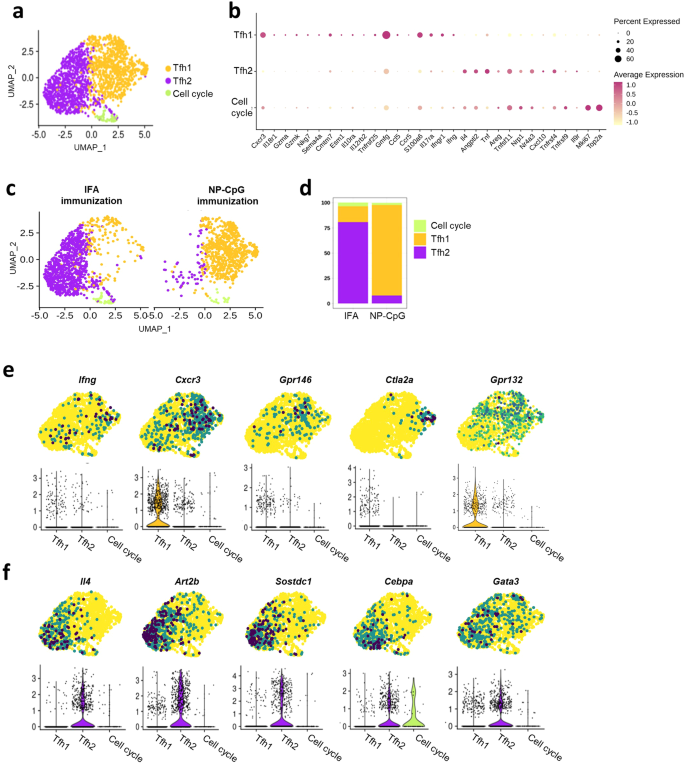
Specialized Tfh cell subsets driving type-1 and type-2 humoral responses in lymphoid tissue.

Kumar, S., Basto, A.P., Ribeiro, F. et al.  Cell Discov 10, 64 (2024). https://doi.org/10.1038/s41421-024-00681-0
Abstract 

Heterogeneity of Tfh cells under the two types of immunization.
Effective antibody responses are essential to generate protective humoral immunity. Different inflammatory signals polarize T cells towards appropriate effector phenotypes during an infection or immunization. Th1 and Th2 cells have been associated with the polarization of humoral responses. However, T follicular helper cells (Tfh) have a unique ability to access the B cell follicle and support the germinal center (GC) responses by providing B cell help. We investigated the specialization of Tfh cells induced under type-1 and type-2 conditions. We first studied homogenous Tfh cell populations generated by adoptively transferred TCR-transgenic T cells in mice immunized with type-1 and type-2 adjuvants.

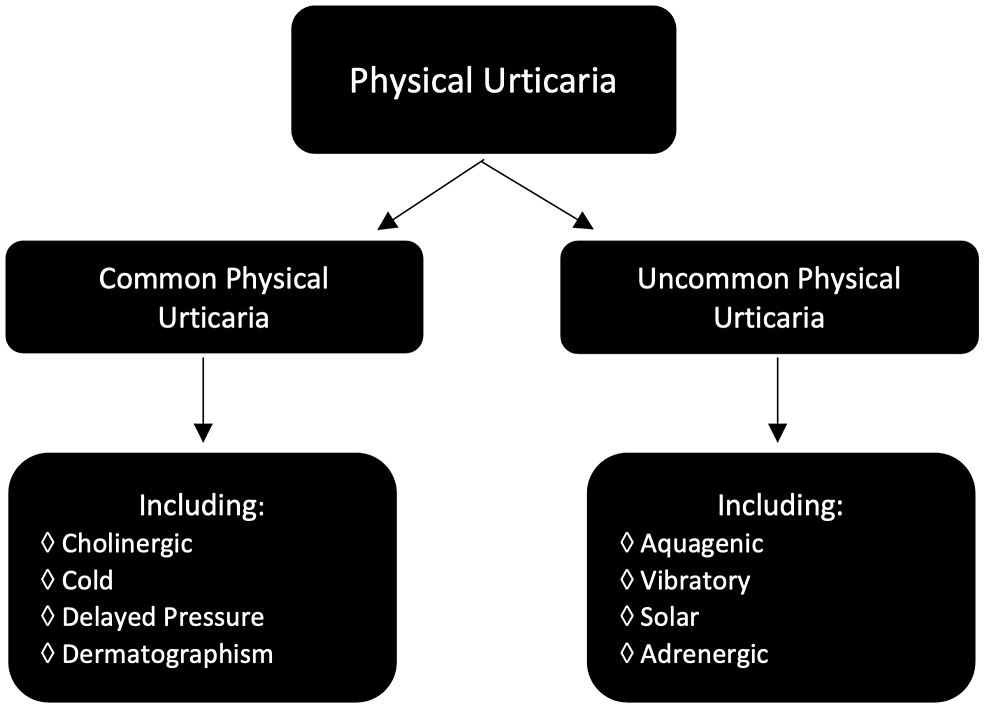
Adrenergic Urticaria: An Updated Review.


Slater K N, Abu-Zahra A, Kartono F (June 11, 2024)  Cureus 16(6): e62171. doi:10.7759/cureus.62171

Abstract

It can be difficult to delineate the cause of urticarial eruptions, and in chronic cases, it can be a challenging condition to effectively treat. Several forms of urticarial eruptions are well documented and established. Our review focuses on a form of urticaria that is less commonly reported: adrenergic urticaria. In this review, we aim to consolidate the literature in the hopes that this urticarial subtype is considered in urticarial differentials, as well as highlight potential gaps in the research and future directions in treatment options.

PDF