July 13, 2024

BSACI guidance for the implementation of Palforzia® peanut oral immunotherapy in the United Kingdom: A Delphi consensus study

Marrs T, Patel N, Burrell S, et al.  Clin Exp Allergy. 2024; 00: 1-11. doi:10.1111/cea.14491

Abstract

Background

Palforzia® enables the safe and effective desensitisation of children with peanut allergy. The treatment pathway requires multiple visits for dose escalation, up-dosing, monitoring of patients taking maintenance therapy and conversion onto daily real-world peanut consumption. The demand for peanut immunotherapy outstrips current National Health Service (NHS) capacity and requires services to develop a national consensus on how best to offer Palforzia® in a safe and equitable manner. We undertook a Delphi consensus exercise to determine guidance statements for the implementation of Palforzia®-based immunotherapy in the NHS.

Methods

Schematic diagram showing the process of the Delphi method for achieving
the final 29 consensus statements for Palforzia®-based
peanut-immunotherapyin the United Kingdom.
We undertook focus groups with children and young people who had received peanut immunotherapy to assess what was important for them and their carers. Common themes from patients formed the basis of creating draft statements. A panel of 18 multi-disciplinary professionals engaged in two rounds of anonymised voting to adapt the statements and score their importance.

Childhood infections, asthma and allergy trajectories, and chronic rhinosinusitis in middle age: A prospective cohort study across six decades

Perret JL, Idrose NS, Walters EH, et al. Allergy. 2024; 00: 1-15. doi:10.1111/all.16184


Abstract

Introduction

Evidence on the early life risk factors of adult CRS, and the history of asthma and allergies across the life course, is limited.

Aim

To investigate relationships between respiratory infective/allergic conditions in childhood, and asthma and allergies across the life course and CRS in middle age.

Methods

Data were from the population-based Tasmanian Longitudinal Health Study (TAHS) cohort, first studied in 1968 when aged 6–7 years (n = 8583) and serially followed into middle age (n = 3609). Using a well-accepted epidemiological definition, participants were assigned a CRS-severity subtype at age 53: no sinusitis/CRS (reference); past doctor diagnosis only; current symptoms without doctor diagnosis; and doctor-diagnosed CRS with current symptoms.

July 12, 2024

The Use of Azelastine Hydrochloride/Fluticasone Propionate in the Management of Allergic Rhinitis in Asia: A Review

Tantilipikorn P, Kirtsreesakul V, Bunnag C, Vangveeravong M, Thanaviratananich S, Chusakul S. J Asthma Allergy. 2024;17:667-679

https://doi.org/10.2147/JAA.S451733

Abstract: The incidence of allergic rhinitis (AR) in Asia and the world is steadily rising. Patients experience incomplete symptom relief despite existing treatment options, which warrants the need for new therapeutic regimes. Azelastine hydrochloride/fluticasone propionate (MP-AzeFlu), a novel intranasal formulation of azelastine hydrochloride and fluticasone propionate has been indicated in the treatment of AR. The current review discusses the effects of MP-AzeFlu versus conventional therapies in achieving superior clinical improvement with a very rapid onset of action (5 minutes).

Thymoma-Associated Good Syndrome: A Case Report and Literature Review

EMJ Allergy Immunol. 2024;9[1]:70-75. https://doi.org/10.33590/emjallergyimmunol/SMLF2152.

Abstract

Thymoma is often associated with many other autoimmune disorders and clinical conditions. Good syndrome is one of the rare associations between thymoma and immune deficiency that occurs in both males and females in the 4th or 5th decade of life. Patients can present with various invasive encapsulated organisms, and opportunistic viral and fungal infections, due to immune defects. The authors report a case of a 57-year-old male with underlying thymoma and lichen planus which were diagnosed 3 years apart.

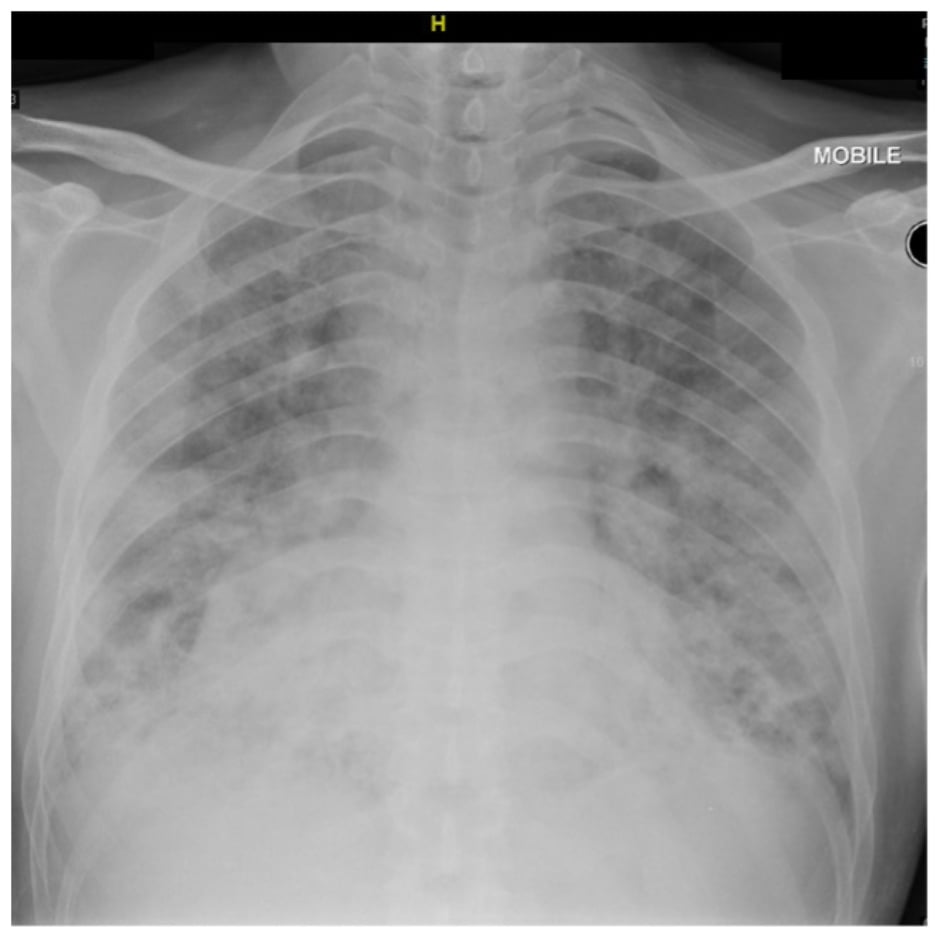
Plain chest radiograph upon admission showing consolidation in both lung fields.

He presented with atypical pneumonia during the COVID-19 pandemic, and was treated for multiple atypical infections, including cytomegalovirus and Pneumocystis carinii pneumonia.

July 11, 2024

Dupilumab in Adults With Moderate to Severe Atopic Dermatitis A 5-Year Open-Label Extension Study

Beck LA, Bissonnette R, Deleuran M, et al. JAMA Dermatol. Published online July 10, 2024. doi:10.1001/jamadermatol.2024.1536

Key Points

Question  What is the long-term safety and efficacy of dupilumab in adults with moderate to severe atopic dermatitis?

Findings  In this open-label extension study of 2677 adults with moderate to severe atopic dermatitis, dupilumab was well tolerated with no new safety incidents and showed sustained efficacy (including improvements in atopic dermatitis signs, symptoms, and quality of life) for up to 5 years.

Meaning  These data support the safety and efficacy of dupilumab treatment for up to 5 years in adults with moderate to severe atopic dermatitis, confirming previous data demonstrating sustained efficacy with an acceptable safety profile.

Abstract

Importance  Moderate to severe atopic dermatitis (AD) is a chronic inflammatory skin disease that often requires continuous long-term systemic management. Long-term safety and efficacy data for treatment options are critically important.

July 10, 2024

Evaluation of the clinical performance of multiple serum sIgE detection systems based on component-resolved diagnosis

Huang Z, Li A, Yin Z, Chen T, Gan H, Lin Z, Xue M, Huang H, Sun B. Asian Pac J Allergy Immunol. 2024 Jun 15. doi: 10.12932/AP-290923-1702. 

Abstract

Background: Serum allergen-specific IgE (sIgE) detection is an important tool in the diagnosis of allergic diseases. However, the absence of international standards for sIgE detection systems raises questions about the comparability of different systems.

Objective: This study aims to evaluate three common allergen sIgE detection systems, with a primary focus on detecting dust mite allergens.

Methods: We recruited 85 children with rhinitis and 15 healthy control children. The subjects underwent testing with three different sIgE detection systems, including magnetic particle flow fluorescence, magnetic particle chemiluminescence, and protein chip, to detect sIgE levels to HDM extracts.

High Serum Allergen-Specific IgE of House Dust Mite in Predicting the Risk of Comorbidity in Children with Allergic Conjunctivitis

Tang XJ, He JT, Liu Q, Liu E, Chen L.  J Asthma Allergy. 2024 Jun 24;17:601-609. doi: 10.2147/JAA.S467671. 

Abstract

Purpose: To investigate the patterns of allergens in allergic conjunctivitis (AC) and the association with allergic comorbidity.

Methods: This retrospective cross-sectional study enrolled 2972 children with AC. Clinical data, including sex, age, allergic comorbidities (allergic asthma, allergic rhinitis, and atopic dermatitis), and serum allergen-specific immunoglobulin E (sIgE), were collected from the electronic medical record (EMR). The categorical variables were compared with the chi-square test. The characteristics of allergens in children of different ages and comorbidities were analyzed by trend chi-square. The sensitivity level of HDM associated with AC and comorbidities was assessed by odds ratios (ORs) with 95% confidence intervals of logistic regression analysis.

July 9, 2024

Outcomes of biological therapy in patients with severe asthma with chronic rhinosinusitis in Saudi Arabia: patients with nasal polyps versus those without nasal polyps

Abuelhassan, U.E., Elnamaky, M., Alfifi, A. et al. BMC Pulm Med 24, 328 (2024). https://doi.org/10.1186/s12890-024-03139-x

Abstract

Background

This study’s purposes were to evaluate the impact of biological therapies on outcomes in patients with severe asthma (SA) and chronic rhinosinusitis (CRS) and to compare these effects among those with NP (CRSwNP) versus those without NP (CRSsNP) in the “real-world” setting in Saudi Arabian patients.

Methods

From March to September 2022, a retrospective observational cohort study was undertaken at the severe asthma clinics of the Armed Forces Hospital—Southern Region (AFHSR) and King Khalid University Hospital, Abha, Saudi Arabia, to delineate the effects of dupilumab therapy. Outcomes were assessed, including clinical outcomes, FEV1, and laboratory findings before and one year after dupilumab. Post-therapy effects were compared between CRSwNP and CRSsNP.