August 31, 2024

Allergen immunotherapy adverse events in adults with respiratory allergies-data from ADER: An EAACI task force report

Julijana A, Dimitrios M, George K, et al. Allergy. 2024; 00: 1-10. doi:10.1111/all.16286

Abstract

Background

Registries can yield important insights on allergen immunotherapy (AIT) outcomes in daily clinical practice. However, systematic recordings of adverse events (AE) due to AIT in real-life are lacking.

Methods

The Allergen Immunotherapy Adverse Events Registry (ADER) is a prospective, multicenter registry on real-life AIT safety. Data on adults (>18 years old) with respiratory allergies receiving AIT with mites, pollens, epithelia, and/or molds were retrieved and analyzed from ADER. The frequency, characteristics and risk factors of AE were investigated. The MedDRA terminology was used to record AE.

Results

A total of 1545 individuals with a mean age of 33 ± 10 years receiving 1815 AIT courses (n = 1060 sublingual (SLIT); n = 755 subcutaneous (SCIT)) in centers from eight countries were included. Patients had allergic rhinitis (65%) or, asthma only (3.7%) or rhinitis with asthma (31.2%).

Exploratory pharmacodynamics and efficacy of PF-06817024 in a Phase 1 study of patients with chronic rhinosinusitis and atopic dermatitis

Danto, S.I., Tsamandouras, N., Reddy, P. et al. Allergy Asthma Clin Immunol 20, 46 (2024). https://doi.org/10.1186/s13223-024-00894-8

Abstract

PF-06817024 is a humanized antibody against interleukin-33 that has the potential to inhibit type 2 inflammation. An exploratory analysis of the pharmacodynamics and clinical effects of single and repeat doses of PF-06817024 was assessed in patients with chronic rhinosinusitis with nasal polyps (CRSwNP) and patients with moderate-to-severe atopic dermatitis (AD), respectively, as part of a Phase 1, first-in-human study.

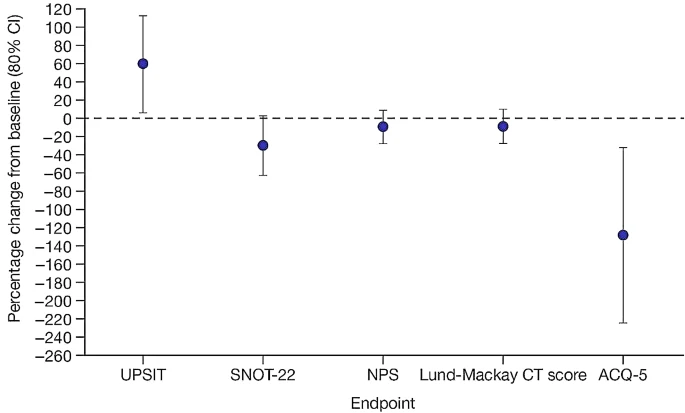
Percentage change from baseline in efficacy endpoints
at Day 61 in patients with CRSwNP
Rhinosinusitis symptoms were improved, and nasal polyps were decreased in size following treatment with PF-06817024 in patients with CRSwNP. In patients with AD, PF-06817024, in aggregate, reduced disease severity and improved symptoms, as demonstrated by greater percentage decrease from baseline in Eczema Area and Severity Index (EASI) scores and reduced pruritus numerical rating scores, compared with placebo.

August 29, 2024

Cost and Cost-Effectiveness of the Management Strategies of Chronic Urticaria A Systematic Review

Nochaiwong S, Chuamanochan M, Ruengorn C, Awiphan R, Bernstein JA, Thavorn K. JAMA Dermatol. Published online August 28, 2024. doi:10.1001/jamadermatol.2024.2863

Key Points

Question  What are the costs and cost-effectiveness of chronic urticaria (CU) management strategies?

Findings  In this systematic review including 17 unique studies, based on 2023 US dollars, median annual cost estimations for CU ranged from $5621 to $6933. Biologic omalizumab, 300 mg, for H1 antihistamine–refractory chronic spontaneous urticaria (CSU) appears to be cost-effective from a third-party payer’s perspective.

Meaning  In this review, biologic omalizumab, 300 mg, for H1 antihistamine–refractory CSU offered good value for money in US health care services; price negotiations and rebates of high-cost drugs may help promote sustainability and more effective health care allocation for CU.

Abstract

Importance  Although treatment for chronic urticaria (CU) has improved over the past decades, evidence regarding costs and net benefits associated with these treatment strategies have yet to be comprehensively characterized and synthesized.

First-Generation Antihistamines and Seizures in Young Children

Kim JH, Ha EK, Han B, Han T, Shin J, Chae KY, Rhie S, Han MY.  JAMA Netw Open. 2024 Aug 1;7(8):e2429654. doi: 10.1001/jamanetworkopen.2024.29654.


Key Points

Question  What is the association of prescriptions of first-generation antihistamines with seizure events in young children?

Findings  In this cohort study of 3178 children in Korea, prescriptions of a first-generation antihistamine were associated with a 22.0% higher seizure risk in children, especially in those aged 6 to 24 months.

Meaning  These findings reinforce the importance of cautious first-generation antihistamine prescription in young children and underline the need for further research to fully understand associations between antihistamine use and seizure risk.

Abstract

Importance  The widespread use of antihistamines in children for treatment of common cold symptoms and their central nervous system effects, like drowsiness, underscore the importance of being aware of the associated risks.

Objective  To assess associations between prescriptions of first-generation antihistamines and seizures in children using a comprehensive and nationwide dataset.

An Overview of Adherence—What It Is and Why It Is Important

Conroy ER, Banzon TM, Simoneau T, Phipatanakul W, van Boven JFM, Larenas-Linnemann D. J Allergy Clin Immunol Pract. 2024 Jul 27:S2213-2198(24)00750-5. doi: 10.1016/j.jaip.2024.07.018.

Abstract

Summary of methods to measure medication adherence. 
Asthma, allergic rhinitis, and food allergy are common allergic diseases, yet adherence to many management options remains poor, leading to worse health outcomes and financial implications for society and health systems. The underlying causes of nonadherence are numerous, ranging from patient-specific factors to broader socioeconomic and systems-based factors. In this review, we aim to discuss the definition of adherence, which can be divided into 3 components: initiation, implementation, and persistence, as well as to review various methods of measuring adherence.

August 24, 2024

Early life exposures of childhood asthma and allergies—an epidemiologic perspective

Rajesh Melaram Front. Allergy, 22 August 2024 Volume 5 - 2024 | https://doi.org/10.3389/falgy.2024.1445207


Abstract

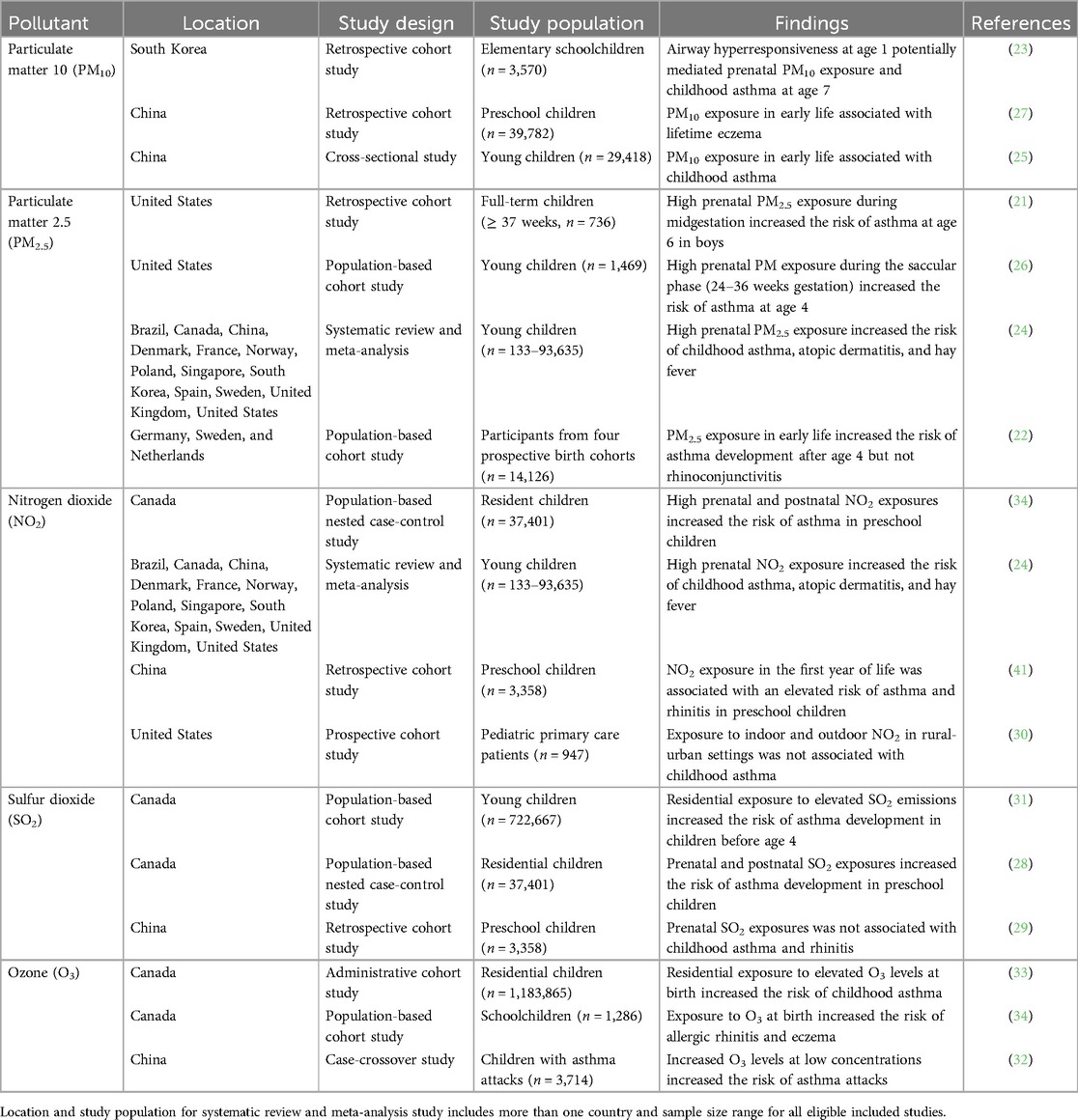
Children around the world are continuing to develop and suffer from chronic lung diseases such as asthma. Childhood asthma commonly presents with recurrent episodes of cough, shortness of breath, and wheezing, all of which can lead to missed school days and hospitalization admissions. The role of environmental pollutants and aeroallergens has been increasingly recognized in relation to asthma etiology.

August 23, 2024

Innate lymphoid cells in immunoglobulin E-mediated food allergy

Ilangovan J, Neves JF, Santos AF. Curr Opin Allergy Clin Immunol. 2024 Aug 13. doi: 10.1097/ACI.0000000000001018. 

Abstract


Purpose of review 

The known and potential role of ILCs in food allergy and tolerance
Recognition of the importance of innate lymphoid cells (ILCs) in the immune mechanisms of food allergy has grown in recent years. This review summarizes recent findings of ILCs in immunoglobulin E (IgE)-mediated food allergy. New research on ILCs in the context of the microbiome and other atopic diseases are also considered with respect to how they can inform understanding of the role of ILCs in food allergy.

Two Novel Inflammation Indexes; Can Systemic İmmune-inflammation Index and Pan-immune-inflammation Value Be Associated with Chronic Rhinosinusitis?

Hepkarsi S, Yilmazer C. Eur J Rhinol Allergy 2024;7(2):55-60.


Abstract

Objective: Chronic rhinosinusitis (CRS) can be classifed as CRS with nasal polyps (CRSwNP) and CRS without nasal polyps (CRSsNP). The aim of this study was to evaluate and compare the Systemic Immune-Infammation Index (SII) and Pan-Immune-Infammation Value (PIV) levels of patients diagnosed with chronic rhinosinusitis (CRS) with nasal polyposis (CRSwNP) and CRS without nasal polyposis (CRSsNP) along with healthy controls.

Methods: The study analyzed 320 patients from 2022 to 2023. Patients were divided into three groups. 110 CRSwNP patients, 110 CRSsNP patients, and 100 healthy individuals were included in Groups A, B, and C, respectively. SII and PIV levels were assessed after CRSwNP or CRSsNP diagnosis. The values of complete blood count, SII, and PIV were compared.