Abstract
Background
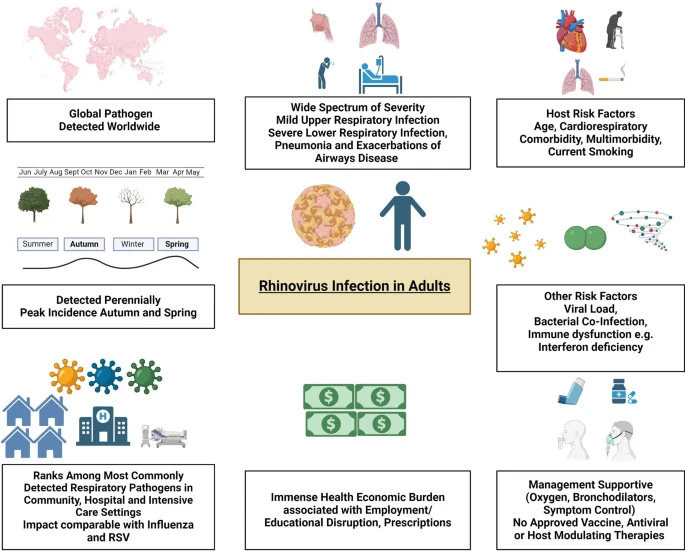 |
| Impact of rhinovirus infection in adults |
Abstract
Background
|
| Impact of rhinovirus infection in adults |
Hope Steele, Ashley Willicut, Garrison Dell, Andrew Ghastine, Xinh-Xinh Nguyen, Paul Lembicz, Hailey Doerflein, Therese Suchoski, Elizabeth Kato, Carol Feghali-Bostwick, Michael Croft, Rana Herro, The Journal of Immunology, 2025;, vkaf002, https://doi.org/10.1093/jimmun/vkaf002
Abstract
 |
| Blocking LIGHT and TL1A in vivo protects against acute bleomycin-induced PF. |

Abstract
In chronic spontaneous urticaria (CSU), the role of Mas-related G protein-coupled receptor X2 (MRGPRX2) and substance P (SP) as biomarkers of disease severity and the antihistamine response remains unclear. The study aims to examine the correlations between serum MRGPRX2 and SP levels, disease severity, and antihistamine response in patients with CSU. This study included 120 CSU patients and 30 healthy controls. Based on the Urticaria Activity Score over 7 days (UAS7), the patients with CSU were divided into two categories: severe (UAS7 ≥ 28) and non-severe (UAS7 < 28). Severe CSU patients received 20 mg of bilastine, titrated up to 80 mg based on Urticaria Control Test (UCT) results at days 15, 30, and 60. Serum MRGPRX2 and SP levels were measured at baseline for all participants and after two months in severe CSU patients.
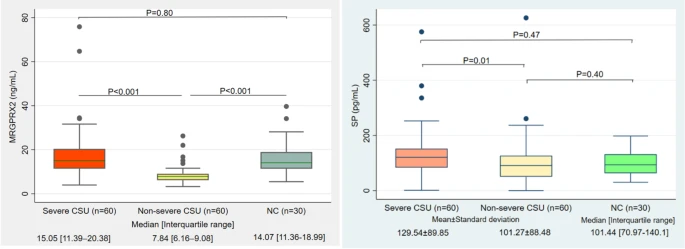 |
| Serum MRGPRX2 and SP concentrations between severe, non-severe CSU and controls (Kruskal-Wallis test with Dunn’s multiple comparison test). |

Abstract:
 |
| After injection, urticaria-like manifestations occurred on the upper face, with redness, swelling, and wheal formation. |

ABSTRACT
Background
An allergen exposure chamber (AEC) is a specialized medical facility designed to expose individuals to allergens at precise and consistent concentrations within a controlled environment. This study aimed to correlate the assessment of clinical endpoints in patients with allergic rhinitis sensitized to timothy grass pollen (Phleum pratense) by comparing three different methods: AEC, nasal allergen challenge (NAC), and symptoms during natural exposure during the grass pollen season.
Methods
Fifteen allergic subjects and twelve healthy controls were evaluated in the ALLEC AEC; allergic symptoms were measured by subjective and objective methods, including total nasal symptom score (TNSS), acoustic rhinometry (AcR), peak nasal inspiratory flow (PNIF), and nasal discharge amount.

Abstract
Food allergy has had a rapid rise in prevalence, and thus it is important to identify approaches to limit the development of food allergy early in life. Because maternal dietary supplementation with α-tocopherol (α-T), an isoform of vitamin E, during pregnancy and nursing increases neonate plasma levels of α-T and can limit neonate development of other allergies, we hypothesized that α-T can limit development of food allergy. To assess this, male mice with mutations in their skin barrier genes (FT−/− mice) were mated with wild-type females that received a diet supplemented with α-tocopherol or a control diet. Starting at postnatal day 3, these FT+/− pups were sensitized 4 to 5 times over 2.5 weeks by skin co-exposure to the food allergen peanut extract (PNE) and the environmental allergen Alternaria alternata (Alt). Control pups were exposed to saline, PNE only or Alt only. Supplementation with α-T blocked Alt+PNE sensitization (anti-PNE-specific IgE), without blocking Alt+PNE-stimulated skin IL33, Areg, OSM, CCL11, TSLP or plasma MCPT1.

