July 14, 2025

Methotrexate and ciclosporin both reduce levels of circulating IL-4 and IL-13 expressing CD4+ memory T-cells in childhood atopic dermatitis

Anton Olsson, Kathryn Steel, Rachael Cooper, Ashley P Jones, Kaitlyn R Chan, Graham Ogg, Alan D Irvine, Carsten Flohr, Leonie S Taams, on behalf of the TREAT trial team, Clinical and Experimental Dermatology, 2025;, llaf301, https://doi.org/10.1093/ced/llaf301

Abstract

Atopic dermatitis (AD) is a chronic dermatosis characterised by type-2 inflammatory responses, skin barrier anomalies, and microbiome dysregulation. The variation of AD presentation necessitates a better understanding of the underlying disease mechanisms and the modulation of immune markers over a treatment course. Globally the most used systemic therapies for moderate-to-severe AD are methotrexate (MTX) and ciclosporin (CyA).

Gating strategy for identification and analysis of
cytokine-expressing CD4+ T 4 cells in peripheral blood
from TREAT participants.
The TReatment of severe Atopic Eczema in children Trial (TREAT) was a randomised controlled trial assessing the efficacy and safety of methotrexate and ciclosporin. Peripheral blood samples from n=18 TREAT participants were analysed in a longitudinal immunological study with a focus on cytokine-expressing CD4+ T-cells.

Inhaled Allergy Diagnostics and Treatment in a Polluted Environment

Mazur M, Czarnobilska E. Int J Mol Sci. 2025 Jun 21;26(13):5966. doi: 10.3390/ijms26135966. 

Abstract

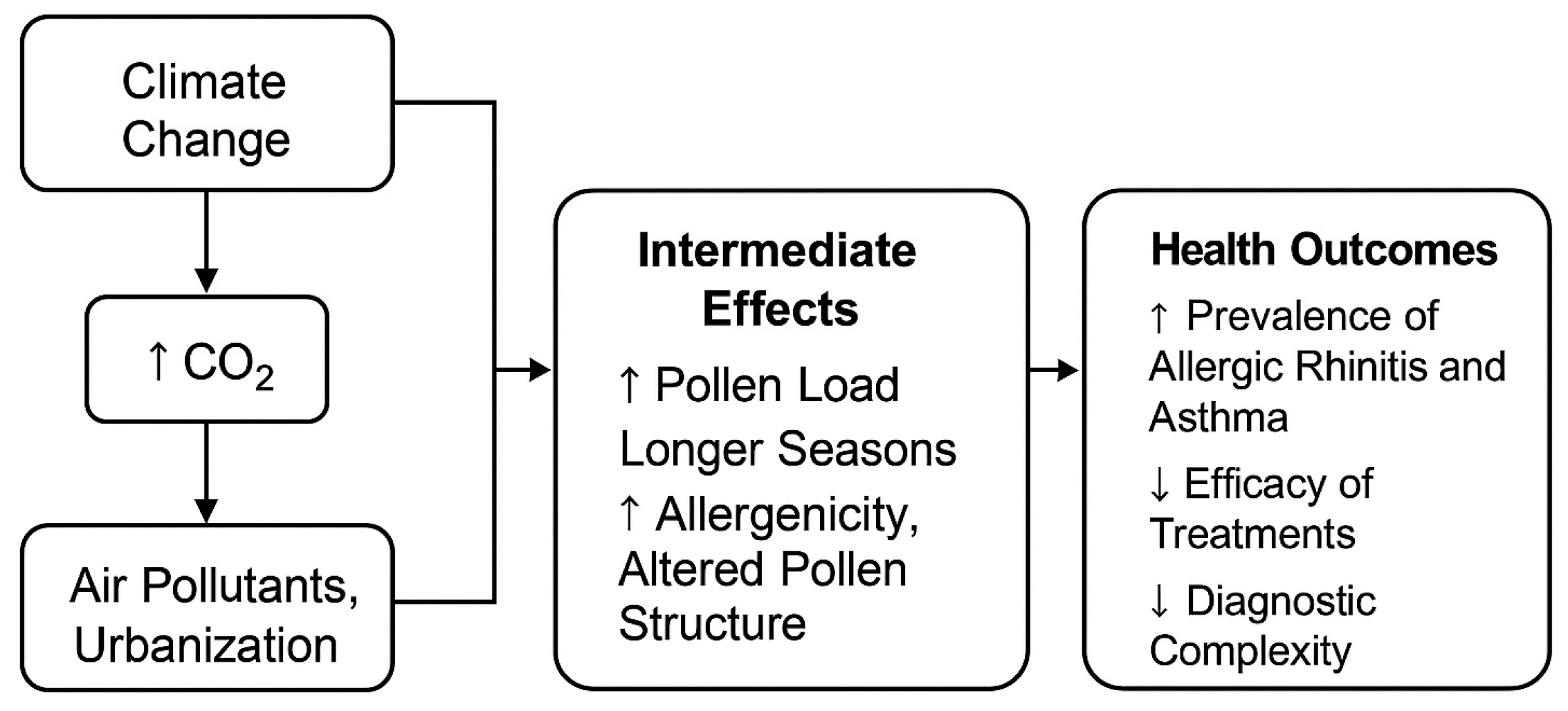
Allergic diseases have been increasing in prevalence over the last years. In a polluted environment, this problem can worsen and become more complex. Long-term exposure to air pollution can lead to the aggravation of allergic rhinitis (AR) and even to the development of seasonal asthma. Climate changes can accelerate and extend the pollination season. Research indicates that air pollution may modify the properties of pollen, making it more aggressive. Asymptomatic allergic people disclose their allergies in a polluted environment.

Schematic Representation of Environmental Impacts
on Pollen and Allergy Burden
A polluted environment complicates the diagnosis of seasonal allergies. The treatment might be more challenging as standard allergy medications may not be enough to control symptoms. The causal treatment of allergic rhinitis is specific allergen immunotherapy (AIT), which may prove less effective in people living in a polluted environment. The problem may lie in the proper evaluation for AIT as well as the assessment of its effectiveness.

July 10, 2025

Endotypes in Immune Mediated Drug Reactions: Present and Future of Relevant Biomarkers. An EAACI Task Force Report

Mayorga, C., Fernandez-Santamaria, R., Çelik, G.E., Labella, M., Murdaca, G., Sokolowska, M., Naisbitt, D. and Sabato, V. Allergy. https://doi.org/10.1111/all.16576

ABSTRACT

Endotypes and biomarkers in immediate
drug hypersensitivity reactions (IDHRs).
Drug-induced immune reactions are an important burden for patients and health systems. They can be classified into immediate-drug hypersensitivity reactions (IDHRs) and delayed-DHRs (DDHRs) based on their phenotype. Drugs do not always behave as allergens and need to bind to proteins, forming adducts. Therefore, IDHRs can be classified as antigenic (IgE, and IgG mediated) and nonantigenic immune responses (complement activation-[CARPA], mas-related G-protein coupled receptor member X2 [MRGPRX2], cyclooxygenase [COX]-1 and cytokine release reactions [CRRs]).

July 8, 2025

Prevalence trends and risk factors for allergic rhinoconjunctivitis, asthma and eczema in the UK

Diwakar, L., Subramanian, A., Shah, D.K. et al. Allergy Asthma Clin Immunol 21, 31 (2025). https://doi.org/10.1186/s13223-025-00975-2

Abstract

Background

Allergic rhinoconjunctivitis (ARC), asthma and eczema carry a substantial morbidity. These conditions often co-exist within the same individual and their prevalence can differ based on age, ethnicity and gender.

Objectives

Using a UK primary care database, we estimated the trends in prevalence over the last decade for ARC, asthma and eczema and associated risk factors.

Methods

Longitudinal cohort analysis of the health improvement (THIN) database between 1st Jan 2010 and 1st Jan 2019. Logistic regression analysis was used to explore risk factors for diagnosis of these conditions.

Results

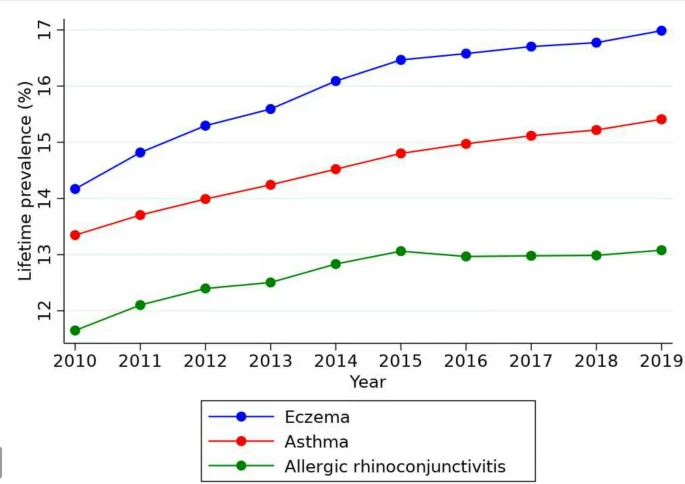
Trends in the prevalence of allergic rhinoconjunctivitis,
asthma and eczema among adults (2010–2019)
An average of 4.17 million records per year were analysed, 19.4% were children and 49.75% were male. There was an increase in prevalence of ARC, asthma and eczema amongst adults during the study period, whereas ARC and asthma prevalence amongst children has fallen.

July 1, 2025

Sputum immunoglobulin E levels correlate with eosinophilic airway regardless of atopy

Rhyou, HI., Cao, T.B.T., Quoc, Q.L. et al. Allergy Asthma Clin Immunol 21, 29 (2025). https://doi.org/10.1186/s13223-025-00976-1

Abstract

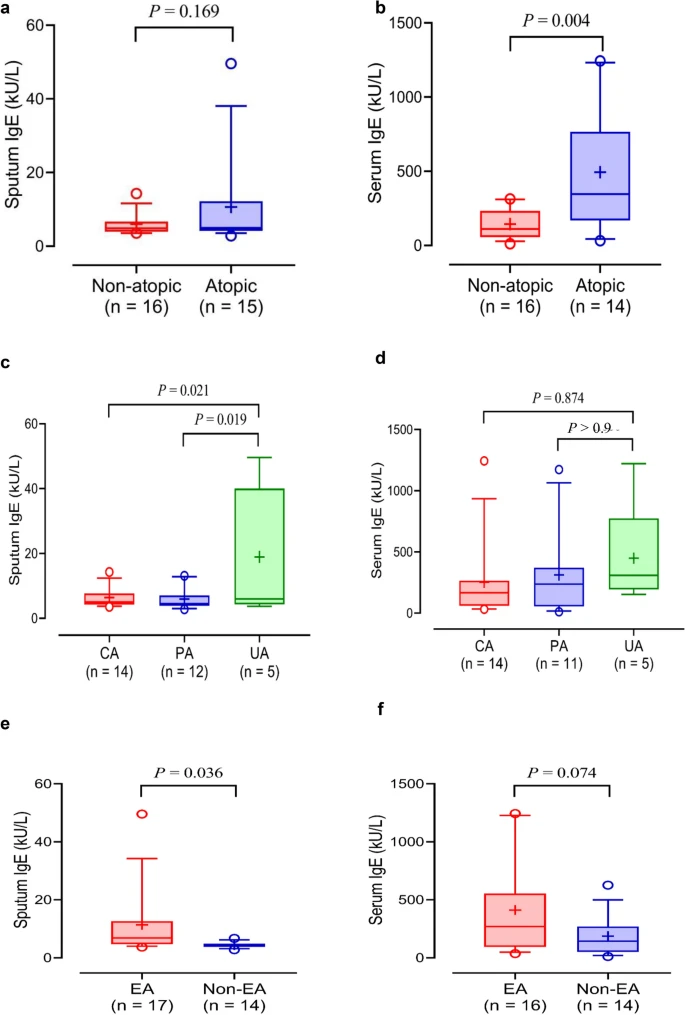
Comparison of sputum and serum total IgE levels
according to atopic status, asthma control status,
and phenotype of asthma.
Immunoglobulin E (IgE) is a key molecule that induces mast cell activation in allergic inflammation and contributes to type 2/eosinophilic inflammation in asthmatic airways. This cross-sectional study investigated the role of local IgE in asthmatic airways according to atopy, asthma control, and eosinophilic inflammation. A total of 31 adult patients with moderate-to-severe asthma were enrolled. The study subjects were classified into (1) atopic/non-atopic, (2) controlled/partly controlled/uncontrolled asthma and (3) eosinophilic/non-eosinophilic asthma. Serum/sputum IgE and serum/urine eosinophil-derived neurotoxin (EDN) were measured. Serum IgE levels were higher in atopic asthmatics than in non-atopic asthmatics, whereas no differences were noted in sputum IgE levels. Sputum IgE levels were significantly higher in uncontrolled asthmatics than in partly controlled or controlled asthmatics, and in eosinophilic asthmatics than in non-eosinophilic asthmatics, whereas no differences were noted in serum IgE levels. Significant correlations were observed between serum EDN and serum/sputum IgE levels. The production of local IgE in asthmatic airways could contribute to type 2/eosinophilic inflammation, irrespective of atopy, resulting in poor asthma control. Strategies targeting IgE may be effective in the management of non-atopic and atopic asthma.

PDF


June 30, 2025

Biomarker-driven drug development for allergic diseases and asthma: An FDA public workshop

Rabin RL, Altman MC, Arshad SH et al. J Allergy Clin Immunol. 2025 Jun;155(6):1753-1766. doi: 10.1016/j.jaci.2025.03.014. 

Workshop summary

Core outcome measures for severe adult and pediatric asthma. 
The US Food and Drug Administration (FDA) hosted a workshop on February 22, 2024, to discuss the status of biomarkers in drug development for allergic asthma and food allergy. The workshop provided a forum for open discussion among regulators, academicians, National Institutes of Health staff and industry to inform stakeholders of the requirements for the FDA to adopt a biomarker as a surrogate end point for a clinical trial, and to inform FDA of the status of various biomarkers in development.

Omalizumab in pediatric chronic spontaneous urticaria: A systematic review and meta-analysis of efficacy and safety

Alomari O, Ozceker D, Mokresh ME, et al. Pediatr Allergy Immunol. 2025; 36:e70132. doi:10.1111/pai.70132

Abstract

Chronic spontaneous urticaria significantly impairs quality of life in children, with limited treatment options beyond antihistamines. Omalizumab, an anti-IgE antibody, has shown promise in adults but data on its use in children, especially those under 12, are scarce. This systematic review and meta-analysis aim to evaluate the efficacy and safety of omalizumab in pediatric chronic spontaneous urticaria, providing insights to inform clinical practice and future guidelines. PubMed, Scopus, Embase, Cochrane, and Web of Science databases have been searched for relevant studies. The “R” software has been utilized to analyze the response and relapse rates, changes in urticaria scores, and adverse event rates. Subgroup analyses were also done based on response rate. The assessment of heterogeneity utilized the I2 and chi-squared tests, applying the random effect model.

UAS7 score reduction following omalizumab treatment in pediatric chronic urticaria
This systematic review included 36 studies met the inclusion criteria. The pooled response rate for omalizumab was 88.0% (95% CI: 80.7%–95.2%; I2 = 61.0%; p = .001), with a complete response rate of 51.0% (95% CI: 32.7%–69.2%; I2 = 90.0%; p < .001). Good or well-controlled response rates were 50.5% (95% CI: 33.9%–67.1%; I2 = 54.2%; p = .068), while poor or partial responses were 20.1% (95% CI: 14.3%–27.3%; I2 = 0.0%; p = .787).

June 28, 2025

Subclinical inflammation precedes atopic dermatitis relapses

Al B, Holzscheck N, Traidl S et al. J Allergy Clin Immunol. 2025 Jun 23:S0091-6749(25)00686-4. doi: 10.1016/j.jaci.2025.03.033.

Abstract

Background

Atopic dermatitis (AD), a widespread inflammatory skin disease, is characterized by disease recurrence, even after successful treatment. Past clinical research has mainly focused on understanding the active disease state as opposed to what drives and triggers AD relapses in the first place.

Objective
To elucidate the unknown molecular mechanisms behind AD relapses.

Methods

An observational clinical study with patients in remission was conducted, comparing biopsies from skin that would relapse within the next weeks with skin that stayed in remission using single-cell-RNA sequencing and immunohistochemistry analyses.

Results
Signs of subclinical inflammation were present in the clinically healthy appearing pre-relapse state.