August 9, 2025

Trends in seafood-induced anaphylaxis: Data from the European Anaphylaxis Registry

Faust, L. et al. The Journal of Allergy and Clinical Immunology: In Practice, Volume 0, Issue 0 Articles in Press

HIGHLIGHT BOX

  • What is already known about this topic? Shellfish and fish are common triggers of food-induced anaphylaxis. Real-world studies investigating the age-dependent clinical characteristics of anaphylaxis caused by fish and shellfish are limited.
  • What does this article add to our knowledge? Shellfish, particularly shrimp, are a leading and rising trigger of food-induced anaphylaxis in adults, with high eliciting doses; high recurrence rates characterize fish anaphylaxis in children. Adrenaline is underused in seafood-induced anaphylaxis.
  • How does this study impact current management guidelines? This study emphasizes improving adrenaline use, raising cofactor awareness, dietary prevention regarding eliciting amounts and allergen disclosure in food settings to enhance seafood anaphylaxis management across age groups and clinical presentations.

ABSTRACT

Background

Shellfish and fish are increasingly consumed worldwide and are common triggers of food-induced anaphylaxis.

August 8, 2025

Frequency of obstructive sleep apnea in patients with asthma or allergic rhinitis: a systematic review and meta-analysis

Ferreira NB, Ponte A, Grande AC et al.  Sleep Med. 2025 Jul 30;134:106705. doi: 10.1016/j.sleep.2025.106705. 


Highlights

  • Allergic rhinitis is associated with a higher frequency of obstructive sleep apnea (OSA).
  • Asthma - particularly moderate-to-severe cases - shows an association with OSA.
  • Prospective studies are needed to clarify causality and guide screening strategies.

Abstract

Background

Asthma and allergic rhinitis (AR) are prevalent respiratory diseases that often coexist with obstructive sleep apnea (OSA). The objective of this study was to evaluate whether asthma or AR are associated with a higher frequency of OSA.

Methods

We performed a systematic review including cross-sectional and cohort studies that evaluated adult participants with and without asthma or AR and reported OSA diagnosed via polysomnography. We searched PubMed, Web of Science, and Scopus. Risk of bias was assessed using the ROBINS-E tool. Certainty of evidence was evaluated using the GRADE Framework. A random-effects meta-analysis of odds ratios (OR) to quantify the association between asthma or AR and OSA was performed.

Results

Graphical Abstract
We included 12 studies (N = 19,203 participants). The meta-analysis indicated a higher frequency of OSA in AR patients (OR = 2.4; 95 %CI = 1.1; 5.3) compared to patients without the disease. In overall patients with asthma, the association with OSA (OR = 1.4; 95 %CI = 0.9; 2.2) was weaker than that observed in patients with moderate to severe asthma (OR = 10.1; 95 % CI = 1.3; 81.7).

Intestinal mast cell–derived leukotrienes mediate the anaphylactic response to ingested antigens

Bachtel ND, Cullen JL, Liu Met al. Science. 2025 Aug 7;389(6760):eadp0246. doi: 10.1126/science.adp0246. 

Structured Abstract

INTRODUCTION

Food allergies are a growing medical problem in the industrialized world. In the most extreme cases, allergic reactions manifest as anaphylaxis, a life-threatening state of bronchoconstriction and hemodynamic collapse, which occurs when food antigens enter the bloodstream and activate immunoglobulin E (IgE)–primed mast cells throughout the body. This view has led to diverse models studying anaphylaxis through intravenous administration of food antigens; however, this perspective minimizes the importance of local exposure to food antigens in mucosal tissues in the gut.

RATIONALE

Mouse models of food allergy utilize repeated gastrointestinal administration of allergen, which increases anaphylactic responses to ingestion over time. This hypersensitive state is associated with an increase in the number of mucosal mast cells in the small intestine, and studies utilizing mice deficient in intestinal mast cell expansion suggest that this population is critical for food-induced anaphylaxis to occur. We used bulk and single-cell RNA sequencing, in vitro culture models, and flow cytometry to analyze intestinal mast cell biology and to identify factors governing oral anaphylaxis susceptibility and severity.

RESULTS

Intestinal mast cell differentiation highlights mediator
requirements for oral anaphylaxis
Intestinal mast cells expanded during experimental food allergy in a manner that required IgE-mediated stimulation of Fcε receptor 1 (FcεR1). These mast cells were largely found within the epithelium of the intestine. Intestinal mast cells localized to the epithelium were distinct from the connective tissue mast cells found throughout the body, as well as those found within the lamina propria of the intestine, because they expressed different integrins, had a reduced histamine synthetic capacity, and enhanced cysteinyl leukotriene production.

August 7, 2025

Clinical validation of controlled exposure to cat dander in the Specialized Particulate Control Environmental Exposure Unit (SPaC-EEU)

Hossenbaccus, L., Linton, S., Garvey, S. et al. Allergy Asthma Clin Immunol 21, 33 (2025). https://doi.org/10.1186/s13223-025-00978-z

Abstract

Background

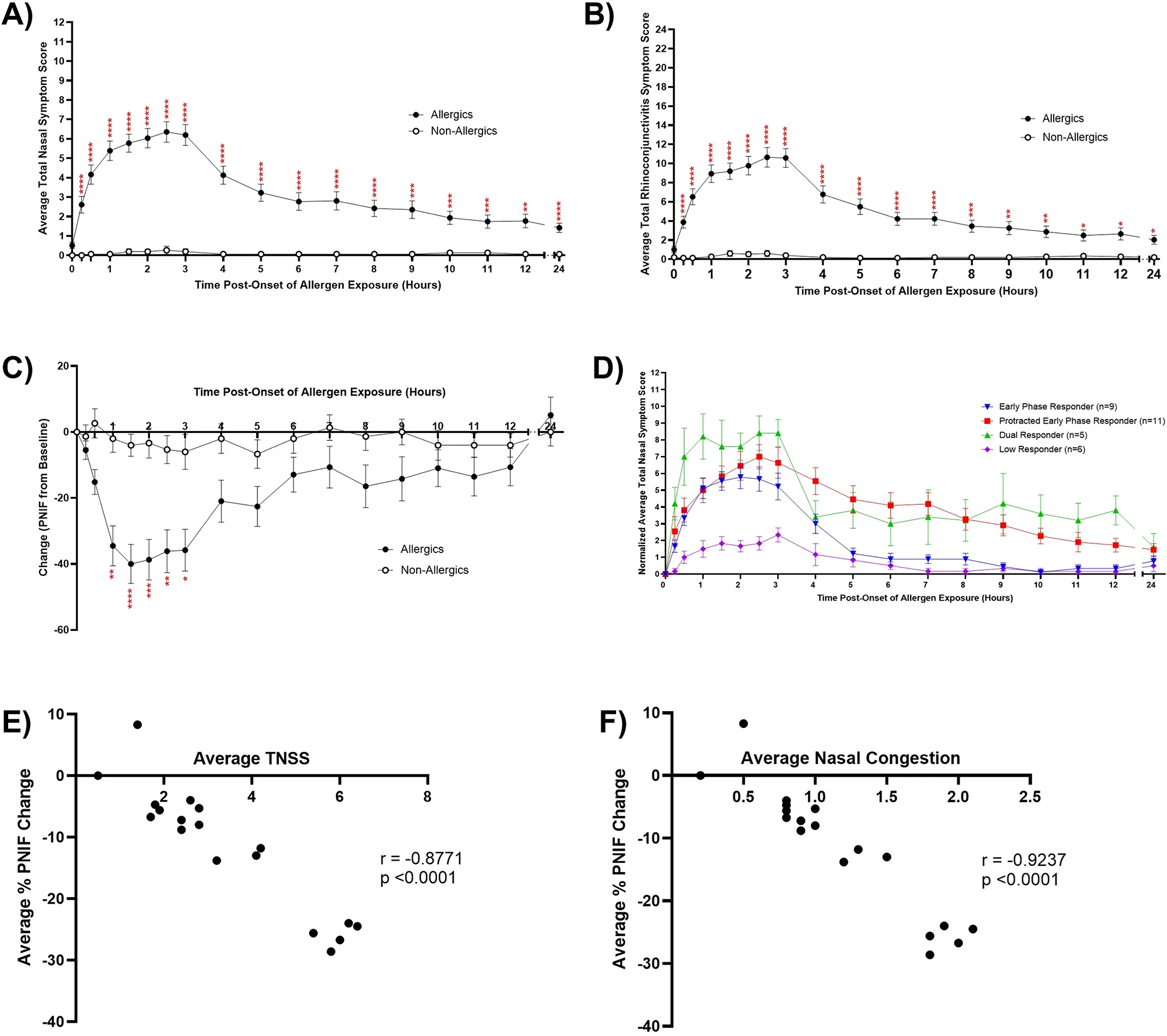
Cat allergen is the second most common cause of perennial allergic rhinitis. Despite its prevalence (~ 20% of the population), many patients continue to suffer from persistent symptoms due to constant exposure to cat allergens that reduce treatment efficacy. Modelling of the disease can improve our understanding of its onset and progression. The Specialized Particulate Control Environmental Exposure Unit (SPaC-EEU) is a controlled allergen challenge facility that has recently undergone a successful technical validation for cat dander exposure, measuring Felis domesticus 1 (Fel d 1). We then sought to perform a clinical validation with cat-allergic and non-allergic participants.

Methods

This study consisted of 3 visits. Recruited participants attended a Screening visit where eligibility was assessed, and a skin prick test (SPT) was completed. Successfully screened cat-allergic and non-allergic participants were invited back for the Allergen Exposure visit. They attended one of two 3-hour cat dander exposure Sessions in the SPaC-EEU, due to space limitations, with a target Fel d 1 concentration of 70 ng/m3. Fel d 1 concentrations were collected using air sampling cassettes and processed using a Fel d 1-specific ELISA. Real-time particle counts were monitored using a laser particle counter (LPC). Participants recorded symptom scores at time points from baseline up to 24 h post-onset of allergen exposure. Participants returned to the research site for a 24-hour Follow-up visit. Allergic participants completed a cat exposure and Quality of Life questionnaire.

Results

Cat-allergic participants have distinct symptom profiles compared
to non-allergic participants
Forty-six (31 cat-allergic and 15 non-allergic) participants completed this study. Allergic participants had significantly larger (p < 0.0001) SPT wheals to cat hair than non-allergic controls. Twenty-five participants attended the first Session (mean Fel d 1 = 35.7 ng/m3), and 21 participants attended the second Session (mean Fel d 1 = 102.3 ng/m3).

August 6, 2025

The Evolution of IgE-Based Allergy Testing in Atopic Dermatitis: Where Do We Stand?

Braun C, Graham F, Fleischer DM et al.  J Allergy Clin Immunol Pract. 2025 May 12:S2213-2198(25)00437-4. doi: 10.1016/j.jaip.2025.05.013.


Abstract

Hypothetical mechanisms of IgE sensitization without clinical
allergic mast cell reactivity in patients with atopic dermatitis (AD).
The pathophysiology of atopic dermatitis (AD) involves cutaneous inflammation, predominantly mediated by innate immunity and T cells, in which IgE has a marginal role in most patients. Over previous decades, however, there has been an ongoing debate regarding the relevance of IgE-mediated allergy testing in patients with AD. Patients with AD have a defective skin barrier that facilitates a high inflammatory response to environmental antigens, placing them at greater risk for food allergies. Nevertheless, because these patients often produce high levels of IgE, the positive predictive value of skin prick tests and specific IgE measurements is low; such tests should be performed only when there is a concordant immediate hypersensitivity reaction (ie, urticaria or angioedema) rather than eczema.

August 5, 2025

The Predictive Value of Serum Total IgE for Antihistamine Treatment Outcomes in Chinese Patients with Chronic Spontaneous Urticaria

Li Y, Peng R, Xue J, Zhao Y. Acta Derm Venereol. 2025 Aug 3;105:adv43568. doi: 10.2340/actadv.v105.43568.

Abstract

 Comparison of clinical and laboratory characteristics
between responders and non-responders to
standard-dosed second-generation H1-antihistamines
(sgAHs) in patients with chronic spontaneous
urticaria (CSU)
Chronic spontaneous urticaria is a common skin disorder with variable treatment responses. Second-generation H1-antihistamines are the first-line treatment for chronic spontaneous urticaria, yet many patients fail to respond to licensed doses. Predictors of treatment response to second-generation H1-antihistamines could help optimize disease management and minimize unnecessary healthcare costs. In this retrospective cohort study of 99 Chinese chronic spontaneous urticaria patients, higher log-transformed serum total IgE levels were significantly associated with poor response to standard-dose antihistamines (aOR = 2.09, 95% CI: 1.29–3.38, p = 0.003).

August 4, 2025

A mucosal vaccine prevents eosinophilic allergic airway inflammation by modulating immune responses to allergens in a murine model of airway disease

Sevilla-Ortega, C., Angelina, A., Martín-Cruz, L. et al.  Nat Commun 16, 7129 (2025). https://doi.org/10.1038/s41467-025-62632-x


Abstract

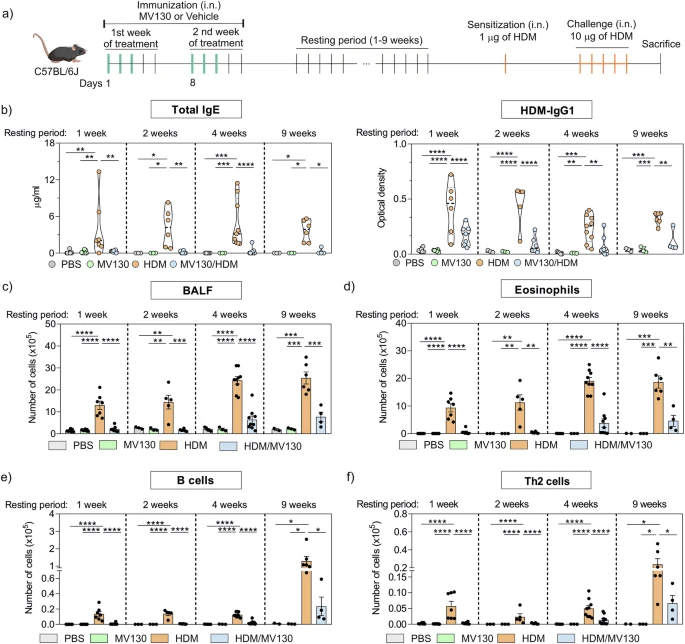
MV130 prophylactic treatment prevents allergic sensitization
and HDM-induced eosinophilic airway inflammation, conferring
protection up to 9 weeks after treatment discontinuation.
Allergic sensitization and viral infections are risk factors for asthma development and progression. Sublingual vaccination with MV130, a whole heat-inactivated polybacterial preparation, protects against viral infections, but its impact on allergic sensitization and asthma development remains unknown. Here we show MV130 prevents house dust mite (HDM)-induced local type 2 immune responses and associated eosinophilic airway inflammation, conferring protection up to 9 weeks after vaccination.

August 2, 2025

Urticaria Voices: Real-World Treatment Patterns and Outcomes in Chronic Spontaneous Urticaria.

Bernstein, J.A., Winders, T.A., McCarthy, J. et al.  Dermatol Ther (Heidelb) 15, 2201–2215 (2025). https://doi.org/10.1007/s13555-025-01461-8

Abstract

Introduction

Chronic spontaneous urticaria (CSU) is characterized by itchy wheals/hives and/or angioedema lasting longer than 6 weeks. Herein, we describe patients’ perspectives from the global Urticaria Voices study reporting treatment patterns, disease burden, treatment satisfaction, and expectations.

Methods

This global, cross-sectional online survey was conducted from February to September 2022 in patients with CSU. Eligible patients had a self-reported clinician-provided diagnosis of CSU. Data were analyzed descriptively and reported as percentages (n/N), means (standard deviation [SD]), or 95% confidence intervals.

Results

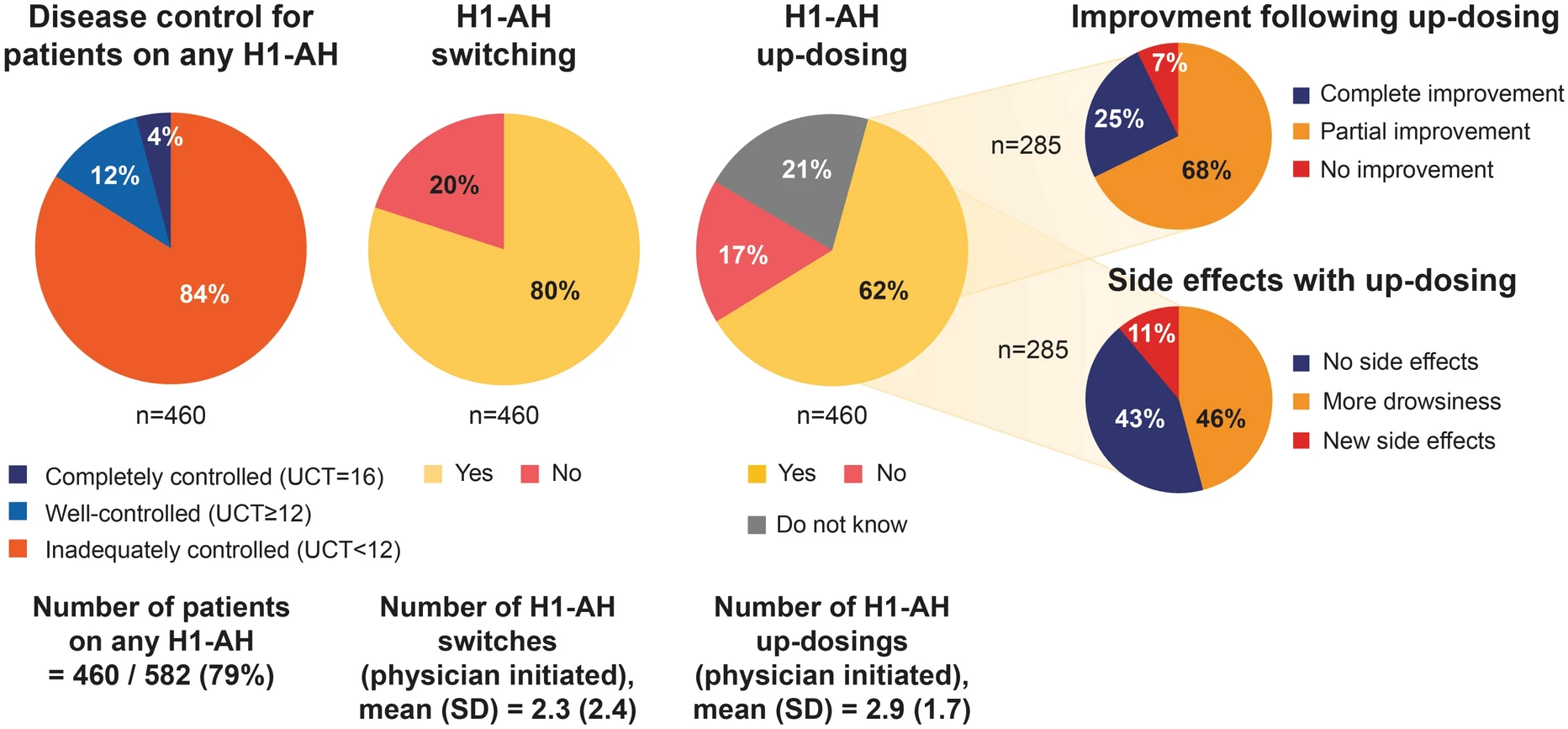
Patient-reported disease control with H1-antihistamines
Overall, 582 patients with CSU were included in this analysis (62% women; mean [SD] age: 42.0 [11.9] years). At the time of the survey, patients reported taking 2.9 (2.6) concomitant therapies; most patients (79%) were prescribed H1-antihistamines (H1-AH), of which 42% took first-generation H1-AH and 52% took second-generation H1-AH.