September 30, 2025

Clinical Characteristics of Infants Under Two Years of Age with Early Sensitization to House Dust Mites

Jeong HI, Jeon YH. J Clin Med. 2025 Sep 18;14(18):6587. doi: 10.3390/jcm14186587. 

Abstract

Background: Early-life sensitization to house dust mites (HDMs) is a recognized risk factor for adverse respiratory allergic outcomes. 

Methods: We investigated the clinical characteristics of infants under two years of age who visited our allergy clinic for evaluation with detectable HDM-specific IgE (sIgE) and compared them to HDM-sIgE–negative infants. 

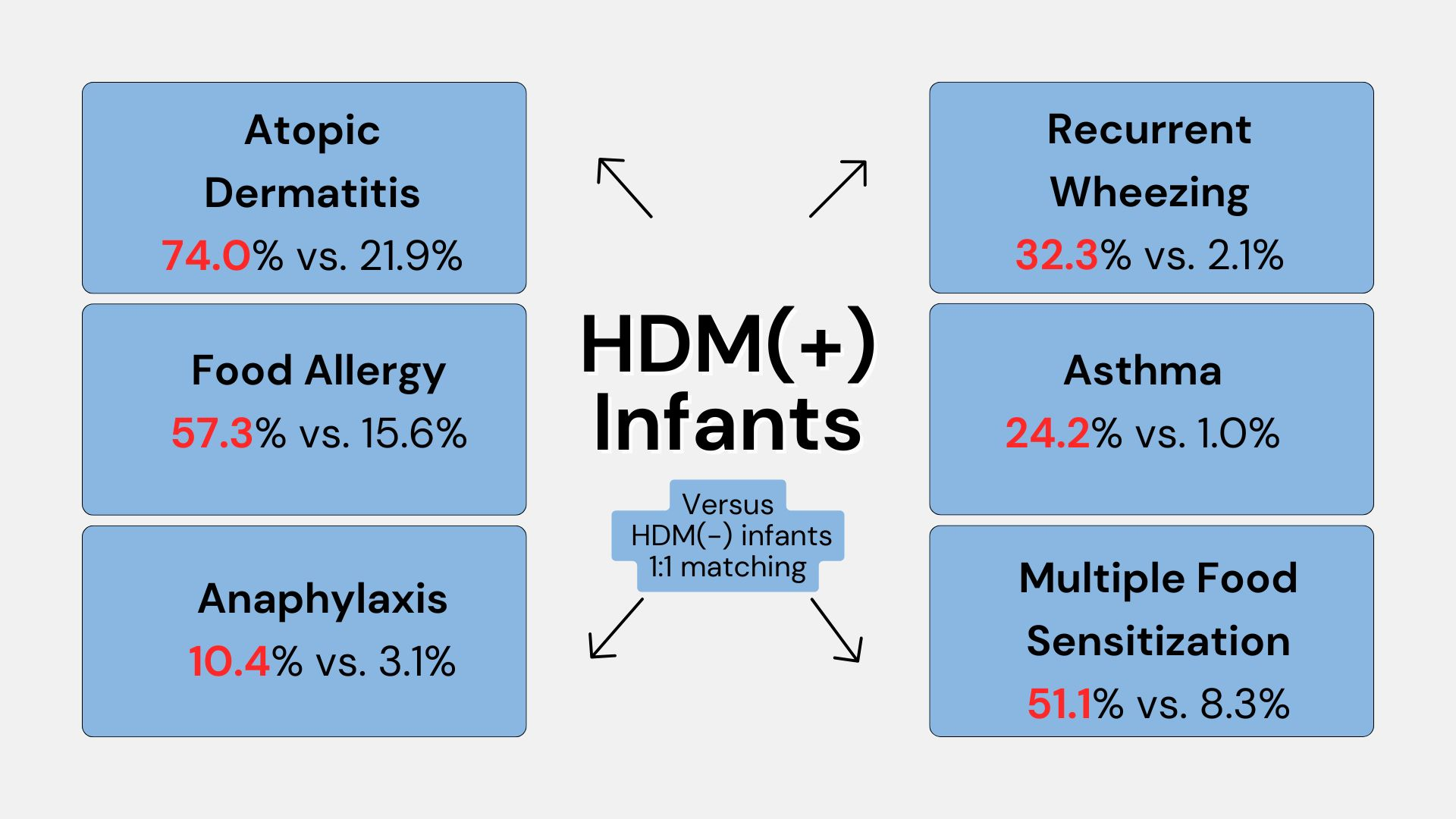
Graphical Abstract
Results: Among 1793 infants tested forHDM sIgE, 96 (5.4%) demonstrated sensitization. In the HDM-positive cohort, the prevalence of atopic dermatitis was 74.0% (90.9% among those <12 months), food allergy was 57.3% (100% among those <12 months), egg white sensitization was 71.9% (90.9% among those <12 months), and cow’s milk sensitization was 56.3% (81.8% among those <12 months). Atopic dermatitis, food allergy, ≥4 wheezing episodes, physician-diagnosed asthma, allergic rhinitis, egg white sensitization, cow’s milk sensitization, and sensitization to three or more food allergens were significantly more common in the HDM-positive group compared with the HDM-negative group.

September 29, 2025

Allergen-Specific mRNA-Lipid Nanoparticle Therapy for Prevention and Treatment of Experimental Allergy in Mice

Rochman Y, Kotliar M, Klingler AM et al. J Clin Invest. 2025 Sep 23:e194080. doi: 10.1172/JCI194080. 

Abstract

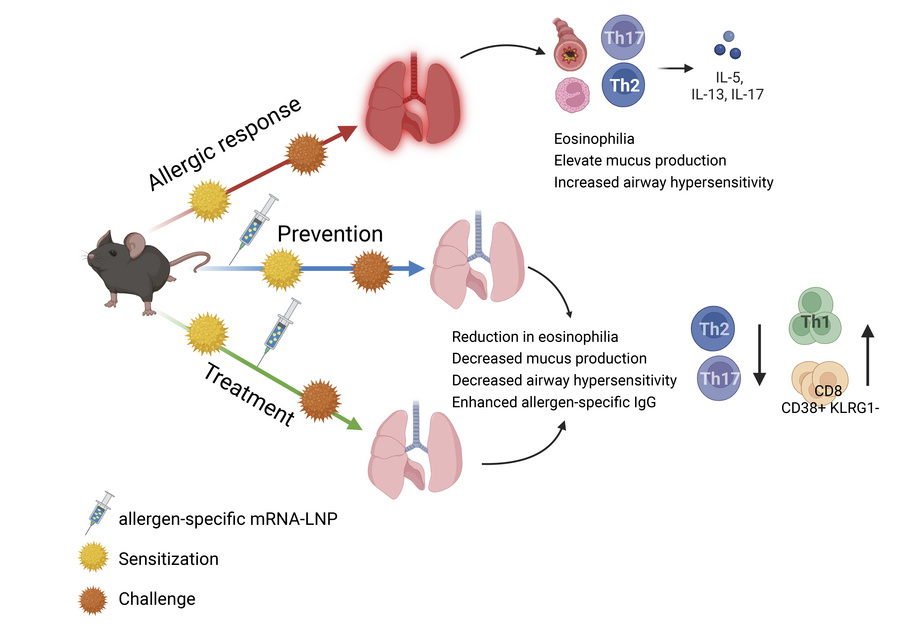
Allergic diseases have reached epidemic proportions globally, calling attention to the need for better treatment and preventive approaches. Herein, we developed allergen-encoding messenger RNA (mRNA) lipid nanoparticle (LNP) strategies for both therapy and prevention of allergic responses. Immunization with allergen-encoded mRNA-LNPs modulated T cell differentiation, inhibiting the generation of T helper type 2 (Th2) and type 17 (Th17) cells upon allergen exposure in experimental asthma models induced by ovalbumin (OVA), and naturally occurring house dust mite (HDM) and the major HDM allergen Der p1. Allergen-specific mRNA-LNP treatment attenuated clinicopathology in both preventive and established allergy models, including reduction in eosinophilia, mucus production, and airway hypersensitivity, while enhancing production of allergen-specific IgG antibodies and maintaining low IgE levels. 

Graphical Abstract
Additionally, allergen-specific mRNA-LNP vaccines in mice elicited a CD8+CD38+KLRG- T cell response as seen following SARS-CoV-2 mRNA vaccination in human, underscoring a conserved immune mechanism across species, regardless of the mRNA-encoded protein.

Improving Diagnostic Accuracy in Respiratory Allergy: Monocentric Reevaluation of the GA2LEN Panel in Germany.

Beutner C, Meyer C, Hollstein MM et al. Clin Transl Allergy. 2025;e70102. https://doi.org/10.1002/clt2.70102

ABSTRACT
Background
European guidelines recommend using a standardized baseline series of skin prick test (SPT) allergens for the diagnosis of airway allergies. In addition, local adaptation and/or extension of test panels according to regional exposure and sensitization patterns are increasingly being discussed.

Methods
Regional sensitization rates according to SPTs based on the most recent GA2LEN baseline series in Central Germany were retrospectively analyzed for 960 consecutive patients with respiratory symptoms at our university outpatient clinic. Additional SPT allergens of interest were further analyzed.

Results
Mono- and cross-sensitization in two subgroup analyses of the study cohort.
High sensitization rates to the baseline SPT series were observed in our highly selected study cohort. The positivity rates were particularly high for olive pollen (30.8%) and plantain pollen (33.4%). Positive olive and birch pollen SPTs were found in 98.5% of olive-ash-birch pollen tested patients.

September 27, 2025

Biologics in the treatment of atopic dermatitis: approved active substances and monoclonal antibodies in advanced clinical trials

Royeck, S. Allergo J Int 34, 159–166 (2025). https://doi.org/10.1007/s40629-025-00340-0

Abstract

Atopic dermatitis (AD) is the most common chronic inflammatory skin disease in industrialized countries and is characterized by heterogeneous (endo)phenotypes and a high disease burden. In Europe, four biologics and three oral Janus kinase (JAK) inhibitors are currently approved by the European Medicines Agency (EMA) for the treatment of moderate to severe AD in adolescents (≥ 12 years) and adults: dupilumab (anti-interleukin [IL]-4Rα; 2017), tralokinumab (anti-IL-13; 2021), lebrikizumab (anti-IL-13; 2023) and nemolizumab (anti-IL-31Rα; 2024) as well as the JAK inhibitors baricitinib (JAK 1/2; 2020), upadacitinib (JAK 1; 2021) and abrocitinib (JAK 1; 2022). 
Approved biologic therapies for adults in Europe

September 26, 2025

Artificial intelligence in clinical allergy practice: current status, challenges, and future directions

Lee Qiyu M, Horsaengchai W, Horsaengchai P, Malik Q. Explor Asthma Allergy. 2025; 3:100992.
https://doi.org/10.37349/eaa.2025.100992


Abstract

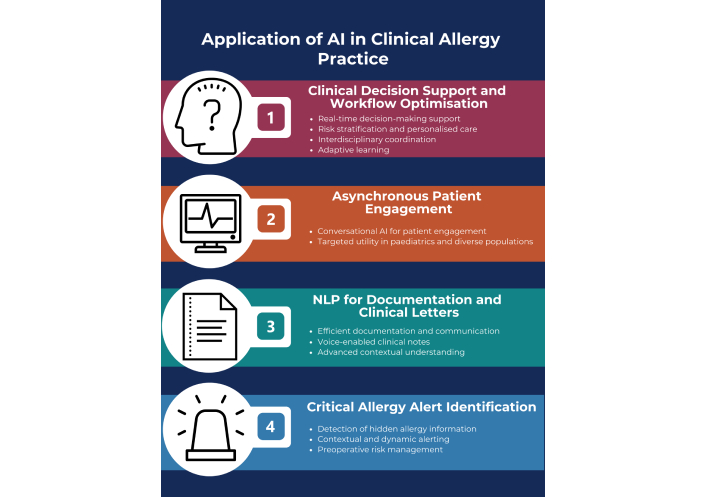
Summary of the applications of AI in clinical allergy practice
Artificial intelligence (AI) is poised to transform clinical allergy practice by enhancing diagnostic accuracy, personalising treatment, and streamlining healthcare delivery. This narrative review critically examines the current landscape of AI in allergy care, spanning clinical workflows, diagnostics, immunotherapy, and research applications. AI-powered tools such as clinical decision support systems (CDSS), natural language processing (NLP), and conversational agents are being integrated into allergy services, offering improvements in documentation, risk stratification, and remote patient engagement—particularly in paediatric and multilingual settings. Diagnostic innovations include machine learning models that predict oral food challenge outcomes and interpret multi-omics data for personalised allergy phenotyping. AI also supports adaptive immunotherapy dosing, remote monitoring via wearable biosensors, and digital coaching to promote adherence.

Characterizing drug allergy management among allergists in Canada: a national survey study

Lee, E., Lee, B., Krishnan, S. et al.  Allergy Asthma Clin Immunol 21, 41 (2025). https://doi.org/10.1186/s13223-025-00981-4

Abstract

Background

Unverified drug allergy labels are common and associated with significant patient harm, yet infrastructure and testing practices vary across clinical settings in Canada.

Objective

To characterize variability in drug allergy management among allergists in Canada and identify setting-specific barriers to drug allergy testing and desensitization.

Methods

We developed a peer-reviewed 40-item survey, distributed via the Canadian Society of Allergy and Clinical Immunology, to assess practice patterns, testing modalities, and perceived barriers among allergists. Descriptive statistics and Fisher’s exact test were used to evaluate responses by practice setting.

Results
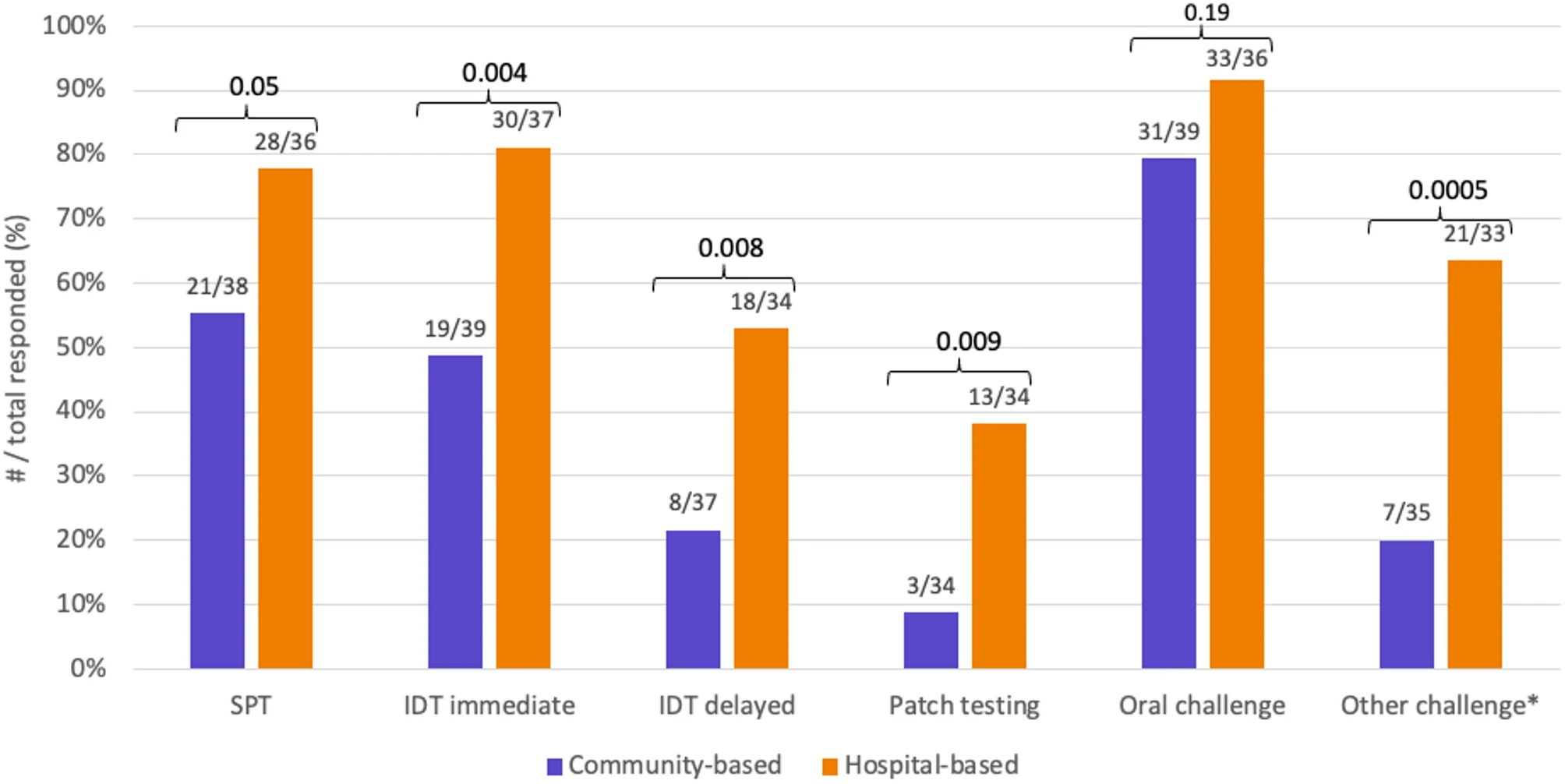
Comparison of drug allergy testing modalities by practice setting
Sixty-six allergists responded (30% estimated response rate), with 48.4% solely practicing in community clinics and 21.9% solely in hospital-based clinics. While 87.9% performed some form of drug allergy testing, hospital-based allergists were significantly more likely to perform intradermal (81.1% vs. 48.7%, p = 0.004) and patch testing (38.2% vs. 8.8%, p = 0.009), as well as non-oral drug challenges (63.6% vs. 20.0%, p = 0.0005).

September 25, 2025

What has changed with subcutaneous immunotherapy against house dust mites? Eight-year, single-center real-world data

Bulbul, Lida; Toprak, Ali; Nursoy, Mustafa A. Asia Pacific Allergy 15(3):p 176-185, September 2025. | DOI: 10.5415/apallergy.0000000000000202

Abstract

Introduction:

We aimed to investigate clinical and laboratory parameters that can predict clinical response in patients who completed subcutaneous immunotherapy (SCIT) against house dust mites (HDM) and to determine parameters associated with systemic adverse effects (SAE).

Methods:
In total, 108 patients who had complete medical data were evaluated.

Results:
Laboratory values and symptom scores before and after SCIT
Around 54.6% of patients were male; mean age was 11.7 ± 3.1 years. All patients had allergic rhinitis, 86% had asthma, and 22% had atopic dermatitis. After SCIT, mean symptom score (SS) for allergic rhinitis had decreased in 86% of patients, asthma severity had decreased in 35.5% of asthma patients. After SCIT, median eosinophil count and HDM skin prick test (SPT) diameters decreased, there was not statistically significant change in total IgE (P = 0.001, 0.001, and 0.824, respectively). No statistically significant difference was detected between the SS change groups (decreased, same, or increased) in terms of age, gender, disease duration, presence and severity of asthma, presence of atopic dermatitis, duration of SCIT, time after SCIT, initial sensitization status, total IgE, eosinophil and basophil counts, and SPT diameter for HDM.

Machine learning in allergy research: A bibliometric review

Kong E, Cucco A, Custovic A, Fontanella S. Immunol Lett. 2025 Sep 8;277:107088. doi: 10.1016/j.imlet.2025.107088.


Summary
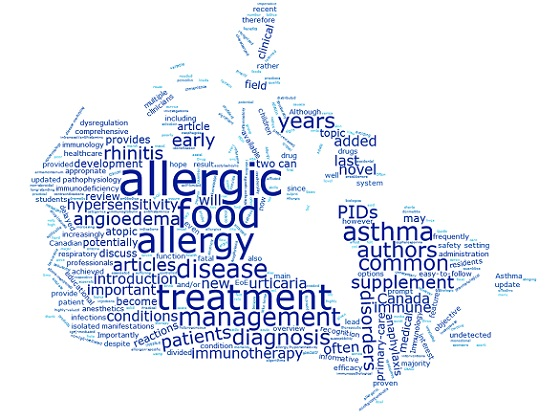
Word clouds for topics obtained by Latent Dirichlet allocation (LDA)
The emergence of big data and analytic approaches initiated research efforts to characterise different subtypes of allergic diseases, including tracking disease progression and identifying patterns that may offer insight into their development and progression. Triangulation from different data sources and study types may help to elucidate the directionality of relationships between variables at a very individual level by modelling the complex interdependencies between multiple dimensions (e.g., genome, transcriptome, epigenome, microbiome, and metabolome), thereby moving away from associative to a more causal analysis.