Abstract
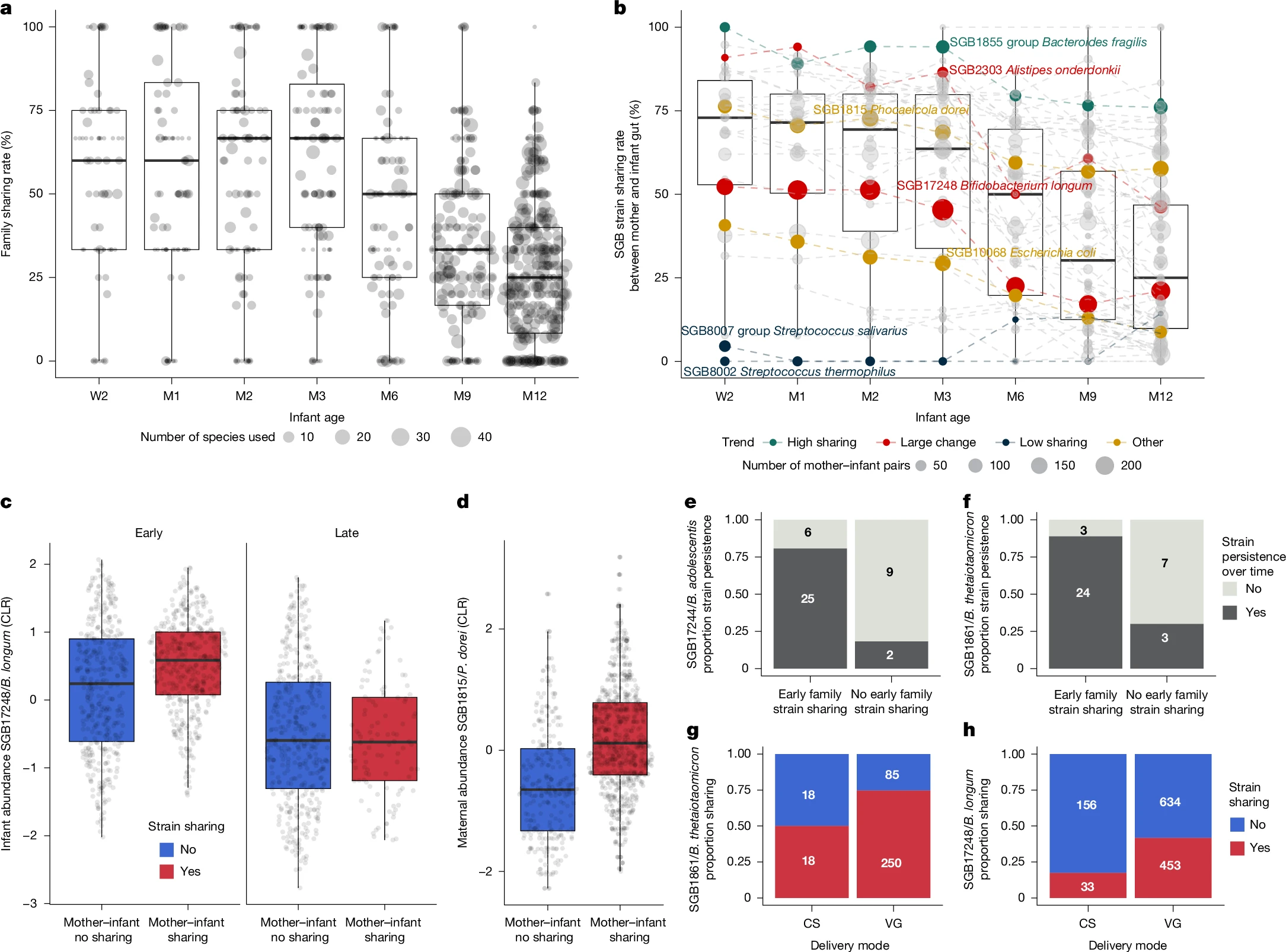 |
| Mother-to-infant gut microbial transmission. |
Abstract
|
| Mother-to-infant gut microbial transmission. |

Abstract
Background
The timing of clinically meaningful benefit after pediatric sublingual immunotherapy (SLIT) across allergic multimorbidity patterns remains uncertain. We evaluated early and longitudinal response to SLIT in routine care.
Methods
This retrospective longitudinal cohort included patients aged 3–17 years who received individualized liquid‐drop SLIT and met prespecified adherence and treatment‐persistence criteria. Assessments were performed at baseline and months 6, 12, 18, 24, and 36. The primary outcome was achievement of the Pediatric Asthma Quality of Life Questionnaire (PAQLQ) minimal clinically important difference (MCID; increase ≥0.5 points) at month 6.
Results


Allergic rhinitis is the most common chronic disease in children. Information on efficacy and safety of oral allergic rhinitis treatments in children is scarce. We aimed to comprehensively evaluate the efficacy and safety of oral medications for allergic rhinitis in children.
We performed a systematic review, searching three bibliographic databases and clinicaltrials.gov for randomized controlled trials assessing the use of oral antihistamines (OAH) or leukotriene receptor antagonists (LTRA) in children (<12 years old) with seasonal or perennial allergic rhinitis. Evaluated outcomes included the Total Nasal Symptom Score (TNSS), the Total Ocular Symptom Score (TOSS), the Rhinoconjunctivitis Quality-of-Life Questionnaire (RQLQ), development of adverse or serious adverse events, and withdrawals due to adverse events. We performed network meta-analysis at both class and individual treatment levels. Certainty in the body of evidence was assessed using the GRADE approach for network meta-analysis.


ABSTRACT
Background
Allergic rhinitis, conjunctivitis and asthma are prevalent IgE-mediated respiratory diseases that frequently coexist and impair quality of life. Allergen immunotherapy (AIT) has clinical benefits and potential disease-modifying effects. Until recently, standardised definitions of disease control and remission were lacking in routine clinical practice, particularly for allergic rhinitis and conjunctivitis. This study aimed to propose preliminary definitions of control and remission in patients receiving AIT and to assess expert consensus using the Delphi methodology.
Methods
A scientific committee developed a survey based on a literature review and expert input, addressing symptoms, medication use, quality of life, exacerbations and tools for objective and subjective assessment. Forty allergists participated in a two-round Delphi study. Consensus was predefined as ≥ 70% agreement on a 9-point Likert scale.
Results
%2010.39.40%E2%80%AFa.%C2%A0m..png) |
| Criteria for allergic conjunctivitis control and remission achieved with AIT. |

Abstract
Introduction: Symptomatic dermographism (SD) is the most common form of chronic inducible urticaria and is increasingly recognized as a burdensome disease. The 2026 international urticaria guideline recommends eliciting dermographism and threshold testing for diagnosis and includes differential blood count and erythrocyte sedimentation rate or C-reactive protein (CRP) as an extended diagnostic work-up in patients with SD. However, the clinical usefulness of these inflammatory tests in SD remains incompletely characterized.
Methods: In this retrospective real-world cohort study, we examined whether routine inflammatory markers provide interpretable signals in SD, using chronic spontaneous urticaria (CSU) as a reference comparator and serum protein electrophoresis-derived markers, including the inflammatory protein ratio (IPR) ([alpha-1 + alpha-2]/albumin × 100), as exploratory measures of inflammation.

ABSTRACT
 |
| Graphical Abstract |
Objective To systematically synthesise the benefits and harms of add-on oral antihistamines for managing atopic dermatitis (eczema).
Design Systematic review and network meta-analysis of randomised trials.
Data sources Medline, Embase, CENTRAL, the United States Food and Drug Administration, and the European Medicines Agency databases from database inception to 5 May 2025.
Study selection Randomised trials assessing add-on oral H1 antihistamines, H2 blockers, mast cell stabilisers (nedocromil sodium and sodium cromoglycate), or their combinations. Paired reviewers independently screened records, extracted data, and assessed risk of bias using a modified Cochrane Risk of Bias tool version 2.
Methods Random effects bayesian meta-analyses synthesised atopic dermatitis severity (oSCORAD—objective scoring atopic dermatitis, 0-83; minimal important difference 8.2; lower better), itch severity (numerical rating scale, 0-10; minimal important difference 3; lower better), sleep disturbance, atopic dermatitis related quality of life, and harms. The network meta-analysis GRADE (Grading of Recommendations Assessment, Development and Evaluation) and Core GRADE approaches informed certainty of evidence ratings.
 |
| Network plot of randomised trials examining effects of add-on antihistamines and mast cell stabilisers on clinician reported atopic dermatitis severity organised by treatment class and individual treatments. |

The Allergic Rhinitis and its Impact on Asthma (ARIA) guidelines had their first edition in 1999 (published in 2001),1 with subsequent revisions published in 2008,2 2010,3 2016,4 and 2020.5 Interestingly, ARIA 2016 was used as the case scenario on how to read a health Grading of Recommendations Assessment, Development and Evaluation (GRADE)-based guidelines. Motivated by novel advances in the field, a new revision of the ARIA guidelines focused on the treatment of allergic rhinitis (AR) is currently being developed. This revision is endorsed by the European Academy of Allergy and Clinical Immunology (ARIA-EAACI 2024–2025 guidelines) and follows the GRADE approach.6 The first 2 reports of the ARIA-EAACI 2024–2025 guidelines have been published,7, 8 with one focusing on intranasal treatments and the other on oral and ocular treatments for AR. A third report is being prepared, and it will focus on treatment strategies, such as use of co-medication and the use of rhinitis treatment on an as-needed basis...

