June 2, 2024

How to diagnose IgE-mediated food allergy

Lieberman J, Muraro A, Blaiss M. Arch Dis Child Educ Pract Ed. 2024 Mar 7:edpract-2023-325938. doi: 10.1136/archdischild-2023-325938. 


Abstract

Immunoglobulin E (IgE)-mediated food allergy is an immune response, typically to a food protein. Accurate diagnosis reduces unnecessary dietary restrictions and economic and psychological burden on patients and caregivers but relies on a rigorous clinical history, specific IgE diagnostic tests and, where needed, oral food challenge. Increased awareness is needed around which patients to test for IgE-mediated food allergy, as well as terms commonly associated with IgE-mediated food allergy testing, in order to optimise patient diagnosis and management. Herein, we describe approaches to diagnosis of IgE-mediated food allergy, appropriate interpretation of results and risks of overtesting.

PDF

Tezepelumab in a case of severe asthma exacerbation and influenza-pneumonia on VV-ECMO.

E. Grasmuk-Siegl, E. Xhelili, D. Doberer, M.H. Urban, A. Valipour, Respiratory Medicine Case Reports, 2024, 102057, https://doi.org/10.1016/j.rmcr.2024.102057.


Abstract

We present a case of 43-year-old male patient with broadly by Omalizumab, Mepolizumab and Benralizumab pretreated allergic asthma, who suffered a near fatal exacerbation, triggered by an influenza A infection. Due to massive bronchoconstriction with consecutive hypercapnic ventilatory failure veno-venous ECMO therapy had to be implemented.

May 31, 2024

Oral Sebetralstat for On-Demand Treatment of Hereditary Angioedema Attacks


Marc A. Riedl, M.D., Henriette Farkas, M.D., Ph.D., D.Sc., Emel Aygören-Pürsün, M.D. et al. NEJM Published May 31, 2024 DOI: 10.1056/NEJMoa2314192

Abstract

BACKGROUND

Approved on-demand treatments for hereditary angioedema attacks need to be administered parenterally, a route of administration that is associated with delays in treatment or withholding of therapy.

METHODS

In this phase 3, double-blind, three-way crossover trial, we randomly assigned participants at least 12 years of age with type 1 or type 2 hereditary angioedema to take up to two oral doses of sebetralstat (300 mg or 600 mg) or placebo for an angioedema attack. The primary end point, assessed in a time-to-event analysis, was the beginning of symptom relief, defined as a rating of “a little better” on the Patient Global Impression of Change scale (ratings range from “much worse” to “much better”) at two or more consecutive time points within 12 hours after the first administration of the trial agent. Key secondary end points, assessed in a time-to-event analysis, were a reduction in attack severity (an improved rating on the Patient Global Impression of Severity [PGI-S] scale, with ratings ranging from “none” to “very severe”) at two or more consecutive time points within 12 hours and complete attack resolution (a rating of “none” on the PGI-S scale) within 24 hours.

RESULTS

Primary and Key Secondary End Points.
A total of 136 participants were assigned to one of six trial sequences, with 110 treating 264 attacks. The time to the beginning of symptom relief with the 300-mg dose and the 600-mg dose was faster than with placebo (P<0.001 and P=0.001 for the two comparisons, respectively), with median times of 1.61 hours (interquartile range, 0.78 to 7.04), 1.79 hours (1.02 to 3.79), and 6.72 hours (1.34 to >12), respectively.

Efficacy and Safety of Donidalorsen for Hereditary Angioedema

Marc A. RiedlM.D.Raffi TachdjianM.D., M.P.H.William R. LumryM.D., et al. NEJM Published May 31, 2024 DOI: 10.1056/NEJMoa2402478

Abstract

BACKGROUND

Hereditary angioedema is a rare disorder characterized by episodic, potentially life-threatening swelling caused by kallikrein–kinin dysregulation. Long-term prophylaxis can stabilize this system. Donidalorsen, an antisense oligonucleotide, specifically reduces prekallikrein expression.

METHODS

In this phase 3, double-blind, randomized trial, we assigned patients with hereditary angioedema to receive donidalorsen (80 mg subcutaneously) or placebo once every 4 or 8 weeks. The primary end point was the time-normalized number of investigator-confirmed hereditary angioedema attacks per 4 weeks (attack rate) from week 1 to week 25.

RESULTS

Patients with a Reduction in Hereditary Angioedema Attacks.
A total of 90 patients received donidalorsen every 4 weeks (45 patients), donidalorsen every 8 weeks (23 patients), or placebo (22 patients). The least-squares mean time-normalized attack rate was 0.44 (95% CI, 0.27 to 0.73) in the 4-week group, 1.02 (95% CI, 0.65 to 1.59) in the 8-week group, and 2.26 (95% CI, 1.66 to 3.09) in the placebo group. The mean attack rate from week 1 to week 25 was 81% lower (95% CI, 65 to 89) in the 4-week group than in the placebo group (P<0.001) and 55% lower (95% CI, 22 to 74) in the 8-week group than in the placebo group (P=0.004); the median reduction in the attack rate from baseline was 90% in the 4-week group, 83% in the 8-week group, and 16% in the placebo group.

Rhinomanometry: A Comprehensive Review of Its Applications and Advancements in Rhinology Practice

Patil N, Jain S (May 30, 2024) Rhinomanometry: A Comprehensive Review of Its Applications and Advancements in Rhinology Practice. Cureus 16(5): e61370. doi:10.7759/cureus.61370


Abstract

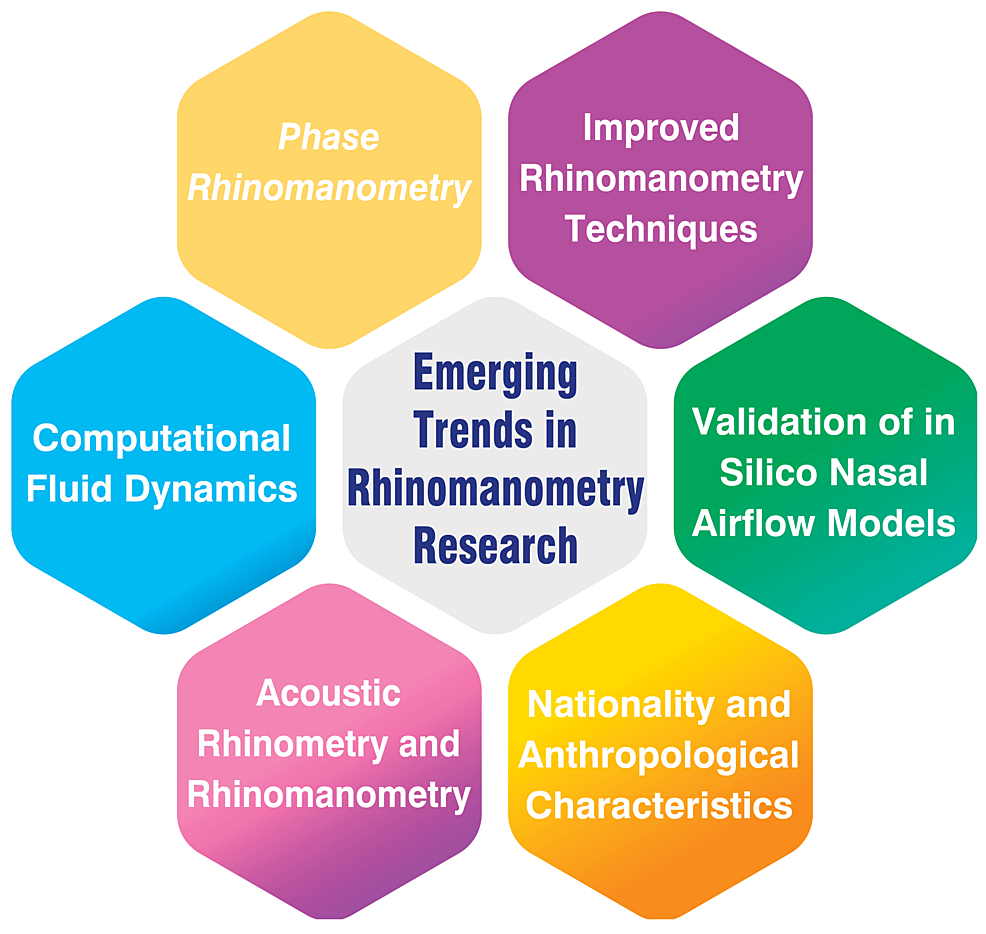
Emerging trends in rhinomanometry research
Rhinomanometry is a pivotal diagnostic technique in rhinology, providing a quantitative assessment of nasal airflow and resistance. This review comprehensively examines the historical development, principles and clinical applications of rhinomanometry, emphasising its role in diagnosing nasal obstructions, preoperative evaluations and monitoring therapeutic outcomes. Recent advancements, including the integration with imaging technologies and the application of artificial intelligence (AI), have significantly enhanced the accuracy and utility of rhinomanometry.

May 30, 2024

Association Between Atopic Dermatitis and Aging: Clinical Observations and Underlying Mechanisms.


Chen PY, Shen M, Cai SQ, Tang ZW.  J Inflamm Res. 2024;17:3433-3448 https://doi.org/10.2147/JIR.S467099

Potential mechanisms underlying the association between AD and aging.
Abstract: As one of the most prevalent chronic inflammatory skin diseases, atopic dermatitis (AD) increasingly affects the aging population. Amid the ongoing global aging trend, it’s essential to recognize the intricate relationship between AD and aging. This paper reviews existing knowledge, summarizing clinical observations of associations between AD and aging-related diseases in various systems, including endocrine, cardiovascular, and neurological.

Chronic Pruritus A Review

Butler DC, Berger T, Elmariah S, et al. JAMA. Published online May 29, 2024. doi:10.1001/jama.2024.4899 

Abstract

Importance  Chronic pruritus, defined as itch experienced for 6 weeks or longer, affects approximately 22% of people in their lifetime. Approximately 1% of physician visits are for the chief concern of chronic pruritus. Chronic pruritus is associated with adverse outcomes, including impaired sleep and reduced quality of life.

Categories of Chronic Pruritus
Observations  Chronic pruritus can be categorized by etiology into inflammatory, neuropathic, or a combination of inflammatory and neuropathic pruritus. Chronic pruritus is due to inflammation in approximately 60% of patients and may be caused by eczema, psoriasis, or seborrheic dermatitis. Chronic pruritus is due to a neuropathic or mixed etiology in approximately 25% of patients. Neuropathic causes of chronic pruritus include postherpetic neuralgia and notalgia paresthetica and are typically due to localized or generalized nerve dysregulation.

May 29, 2024

Relevance of individual bronchial symptoms for asthma diagnosis and control in patients with rhinitis: A MASK-air study

Sousa-Pinto B, Louis G, Vieira RJ, et al. Clin Transl Allergy. 2024;e12358. https://doi.org/10.1002/clt2.12358

Abstract

Rationale

It is unclear how each individual asthma symptom is associated with asthma diagnosis or control.

Objectives

To assess the performance of individual asthma symptoms in the identification of patients with asthma and their association with asthma control.

Methods

Flow chart illustrating participants' selection.
In this cross-sectional study, we assessed real-world data using the MASK-air® app. We compared the frequency of occurrence of five asthma symptoms (dyspnea, wheezing, chest tightness, fatigue and night symptoms, as assessed by the Control of Allergic Rhinitis and Asthma Test [CARAT] questionnaire) in patients with probable, possible or no current asthma. We calculated the sensitivity, specificity and predictive values of each symptom, and assessed the association between each symptom and asthma control (measured using the e-DASTHMA score). Results were validated in a sample of patients with a physician-established diagnosis of asthma.