Abstract
 |
| Therapeutic evolution in primary chronic rhinosinusitis (CRS): from symptomatic relief to targeted inflammatory modulation |
Abstract
|
| Therapeutic evolution in primary chronic rhinosinusitis (CRS): from symptomatic relief to targeted inflammatory modulation |

Abstract
Background
Allergic diseases, particularly in children, are increasing worldwide and impose growing clinical, economic, and environmental burdens on healthcare systems. Conventional models of allergy care face limitations in early diagnosis, long-term disease monitoring, patient engagement, and sustainability, highlighting the need for innovative and scalable solutions.
Objectives
This position paper aims to propose a global framework for integrating digital health innovations with sustainable models of allergy and immunology care, with particular attention to pediatric and general allergy services.
Methods
The paper is formulated as an expert opinion–based position document informed by current scientific evidence on digital health applications and sustainable healthcare practices in allergy and immunology. Key domains were identified through literature review and consensus discussions, focusing on digital transformation, environmental sustainability, and international collaboration.
Results



 |
| The summary of pathogenesis and comparison between psoriasis and atopic dermatitis. |

Tablet formulations of allergen extracts are widely recommended over other formulations for the sublingual immunotherapy (SLIT) of respiratory allergies. However, with adequate clinical trial evidence, SLIT (liquid) drop formulations may be a relevant allergy treatment option.
 |
| Graphical Abstract |
Of the 445 randomised patients (mean ± standard deviation (range) age: 32.6 ± 9.9 (18–63); males: 55.1%), 389 completed the trial.
Introduction: Chronic spontaneous urticaria (CSU) is a distressing skin condition characterized by wheals and angioedema. While omalizumab is an effective biologic therapy for antihistamine-refractory CSU, a subset of patients shows partial or no response. Identifying reliable biomarkers to predict treatment outcomes remains a significant clinical need. This study aimed to investigate the relationship between systemic inflammatory parameters, specifically monocyte counts, and the clinical response to omalizumab.
Methods: This retrospective study included 52 patients with CSU treated with omalizumab (300 mg/four weeks) for at least 12 weeks at a tertiary referral center. Patients were stratified into two groups based on their response at week 12: "Complete Response" (Urticaria Activity Score over seven days (UAS7) = 0) and "Non-Complete Response." Baseline and post-treatment complete blood count (CBC) parameters, C-reactive protein (CRP), and total IgE levels were analyzed. Binary logistic regression was performed to identify independent predictors of response.
 |
| Binary logistic regression analysis for independent predictors of complete response to omalizumab |
Abstract
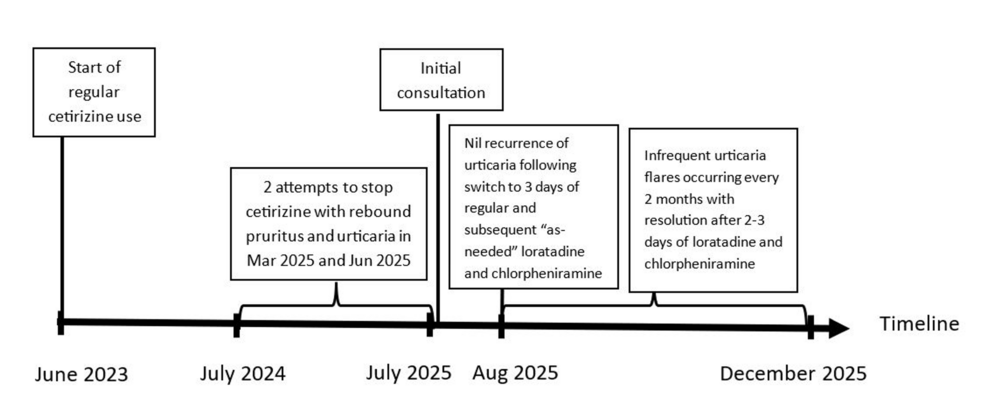 |
| Timeline of events |
Preface
We are pleased to welcome all participants to the 14th C1-inhibitor Deficiency & Angioedema Workshop.
The aim of the Workshop is to present new research findings related to rare bradykinin-mediated angioedema disorders. These include conditions caused by hereditary or acquired C1-inhibitor deficiency, as well as those with a hereditary background but normal C1-inhibitor levels. This year, a record number of abstracts will be presented over the four-day program, including 49 oral and 58 poster presentations. In addition to previously unpublished findings, five outstanding keynote lectures will also be delivered.
On the opening afternoon, Nobel Laureate Katalin Karikó will give a special lecture on the development of the mRNA vaccine, sharing all the insights gained from the long and persistent journey that led to the production of life-saving mRNA-based vaccines.

