Abstract
Background
Oral food challenges (OFCs) are considered the gold standard for diagnosis of food protein–induced enterocolitis syndrome (FPIES), a non-immunoglobulin E mediated gastrointestinal food allergy characterized by delayed, repetitive vomiting, lethargy, and sometimes diarrhea, primarily affecting infants and young children. Our modified approach to OFCs involves smaller, gradually increased doses to mitigate the risk of severe reactions. We aimed to measure the successful completion of this OFC protocol.
Methods
In a retrospective chart review, patients age < 18 years, who had 1 + episode of acute FPIES between 2015 and 2023 were identified using an allergy clinic database. Patients underwent OFCs with home up dosing every 2–4 weeks. Steps included 1%, 2%, 5%, 10%, 20%, 30%, 40%, 60%, 80%, and 100% of the final serving amount. The primary outcome was successful completion, i.e. absence of severe reactions during the OFC protocol and 1 year after.
Data were analysed using logistic regression and reported as odds ratios (OR) and 95% confidence intervals (95% CI). Results were adjusted for multiple allergic comorbidities, age of FPIES onset, and biological sex.Results
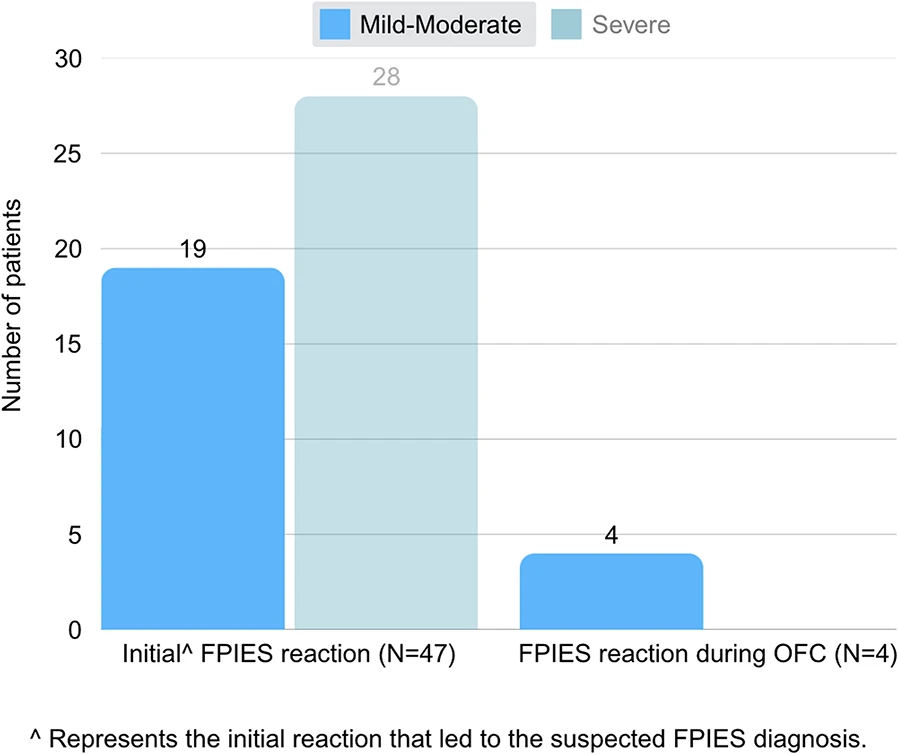 |
| Severity of initial FPIES reactions versus severity of FPIES reactions during OFC |
Conclusions
This study supports the potential for a home-based gradual approach to OFCs in FPIES, evidenced by a high completion rate and no severe reactions.


No comments:
Post a Comment