A blog that publishes updates and open access scientific papers about allergy, asthma and immunology.
Editor: Juan Carlos Ivancevich, MD. Specialist in Allergy & Immunology
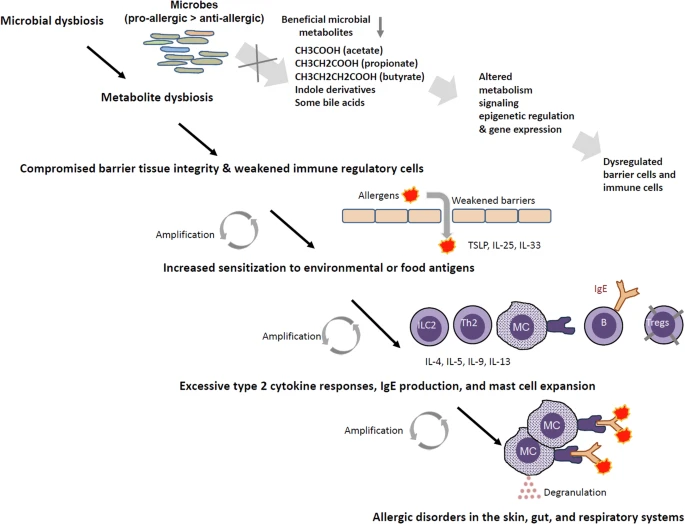
General impact of microbial metabolite dysbiosis on allergic pathogenesis.
Allergies are adverse immune responses to typically harmless substances, known as allergens. While allergies can involve diverse immune responses, type 2 immune responses that induce acute hypersensitivity mediated by mast cells, eosinophils and basophils are the major mechanisms underlying allergic disorders. Allergic diseases include atopic dermatitis, allergic rhinitis, food allergies and asthma. The onset and persistence of allergic disorders are influenced by genetic factors, pre-existing illnesses, age, environmental conditions and other lifestyle factors. In particular, diet and microbiomes considerably affect the incidence of various allergic diseases in the skin, lung and intestine. Individuals prone to develop allergic diseases often have impaired and skewed microbial diversification over the first year of life, and this can lead to altered levels of microbial metabolites in the intestine and inflamed tissues. Microbial metabolites, such as short-chain fatty acids, indole metabolites and bile acids, can exert specific regulatory effects on the various components of the immune system, such as barrier epithelial cells and immune cells, including dendritic cells, macrophages, T cells, B cells, innate lymphoid cells and mast cells. Microbial metabolites can also promote immune tolerance to allergenic substances by strengthening regulatory T cells. Understanding the role of these metabolites can lead to better prevention and control of allergic diseases. Here, in this review, we examine current research progress on the interactive relationship between microbial metabolites and allergic diseases and identify functionally important metabolites that affect allergic immune responses.


No comments:
Post a Comment