Abstract
Purpose of Review
This review examines whether allergen immunotherapy (AIT) for grass pollen allergy should expand beyond the recent trend towards a mono-species approach based on Phleum pratense. It explores whether multi-species formulations better reflect natural exposure and could improve clinical outcomes.
Recent Findings
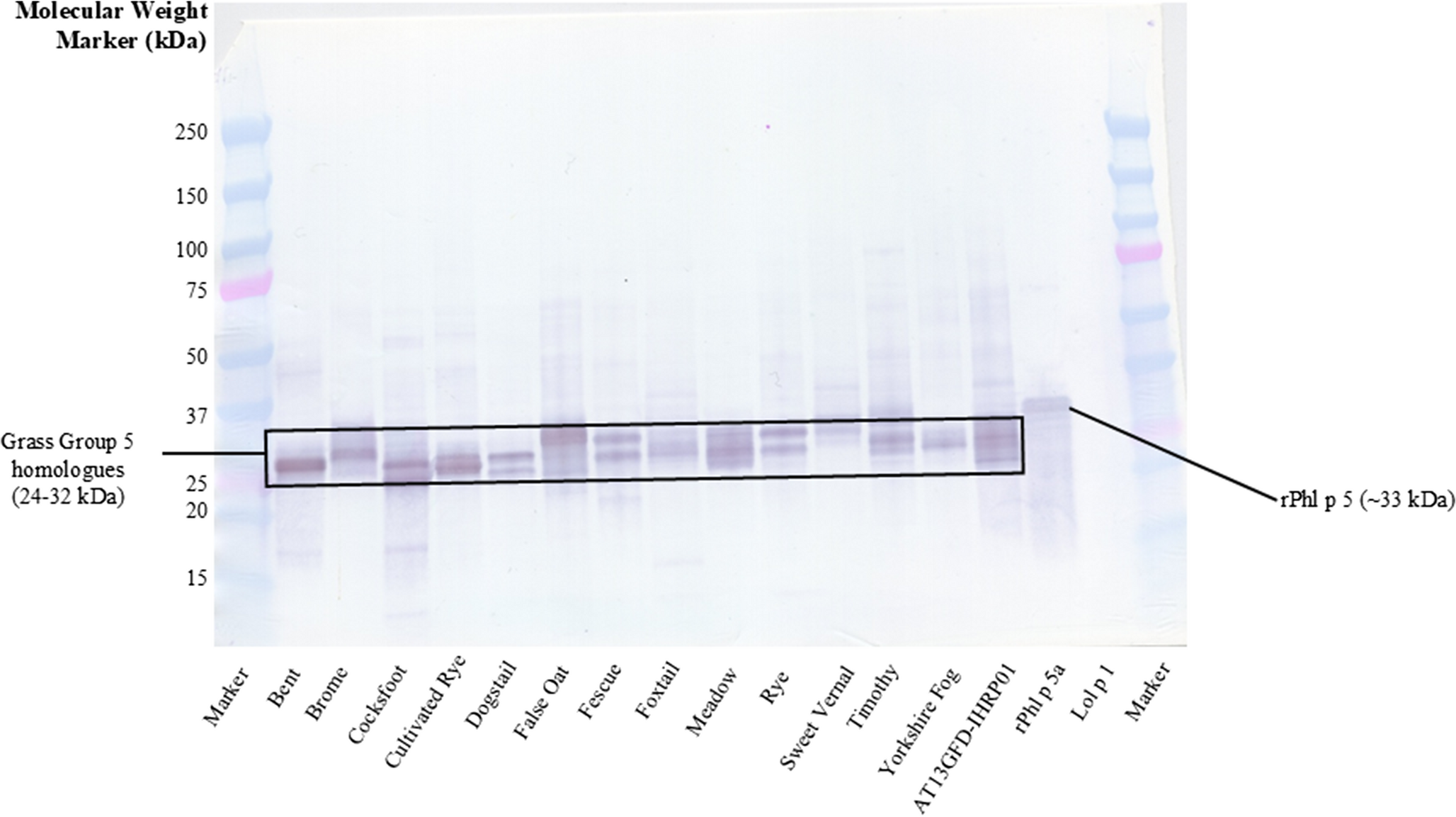 |
| Group 5 homologues identified in individual extracts and a mixed extract of 13 species of Poaceae family grasses, using a monoclonal antibody |
Summary
Evidence indicates that mono-species extracts alone do not represent the full allergenic spectrum of grass pollen. Broad-spectrum AIT formulations incorporating multiple grass species provide a more comprehensive repertoire of allergens and epitopes, potentially enhancing immunogenicity and therapeutic benefit. This supports the hypothesis that diversity does not equate to dilution in broad-spectrum formulations. The approach aligns with patient symptom patterns and may improve efficacy and asthma prevention. Future research could further refine species selection and leverage molecular diversity to optimize treatment strategies.


No comments:
Post a Comment