

March 1, 2023

Molecular Aspects of Allergen-Specific Immunotherapy in Patients with Seasonal Allergic Rhinitis

Systematic Review

Abstract
A systematic review and narrative synth
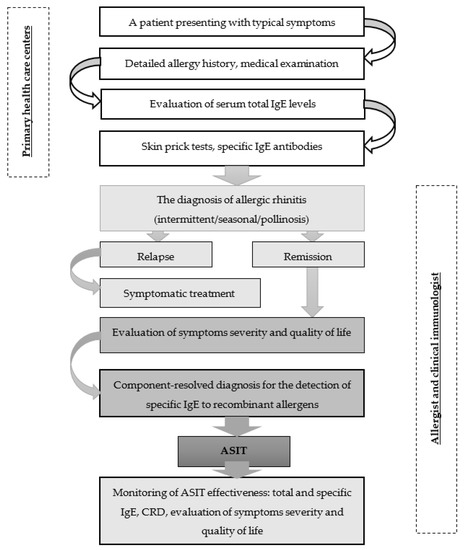
esis of publications was undertaken to analyze the role of component-resolved diagnosis technology in identifying polysensitization for the provision of allergen-specific immunotherapy to patients with seasonal allergic rhinitis. A search of publications was carried out in electronic databases in accordance with the Preferred Reporting Items for Systematic Reviews and Meta-Analyses guidelines. The search helped to identify 568 publications, 12 of which were included in this review. Overall, 3302 patients were enrolled. The major finding was that component-resolved diagnostics change the choice of relevant allergens for allergen-specific immunotherapy in at least 50% of cases. Sensitization to allergen components differs with age, type of disease, and overall disease duration. Patients who had both bronchial asthma and allergic rhinitis were sensitized to a larger number of allergens than patients who had bronchial asthma alone.

February 28, 2023

The Role of Nasal Cytology and Serum Atopic Biomarkers in Paediatric Rhinitis

Article


Diagnostics
 202313(3), 555; https://doi.org/10.3390/diagnostics13030555
(This article belongs to the Section Clinical Laboratory Medicine)
Abstract
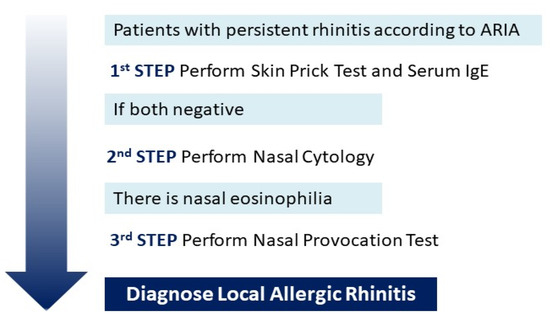
A Nasal Provocation Test allows the differentiation of allergic and non-allergic rhinitis, but it is difficult and expensive. Therefore, nasal cytology is taking hold as an alternative. We carried out a cross-sectional study, including 29 patients with persistent rhinitis according to ARIA definition and negative skin prick tests. Nasal symptoms were scored from 0 to 5 using a visual analogue scale, and patients underwent blood tests to investigate blood cell count (particularly eosinophilia and basophilia), to analyze serum total and specific IgE and eosinophil cationic protein (ECP), and to perform nasal cytology.

Antibiotic Allergy De-Labeling: A Pathway against Antibiotic Resistance

Review
Antibiotics 202211(8), 1055; https://doi.org/10.3390/antibiotics11081055 

Abstract

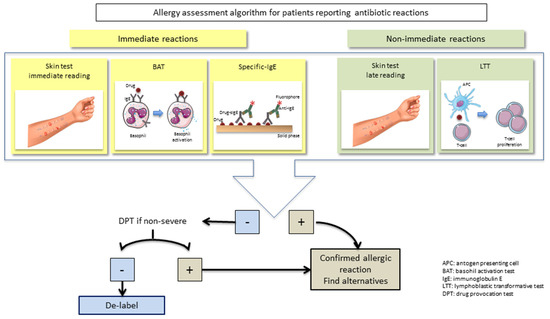
Antibiotics are one of the most frequently prescribed drugs. Unfortunately, they also are the most common cause for self-reported drug allergy, limiting the use of effective therapies. However, evidence shows that more than 90% of patients labeled as allergic to antibiotics are not allergic. Importantly, the label of antibiotic allergy, whether real or not, constitutes a major public health problem as it directly impacts antimicrobial stewardship: it has been associated with broad-spectrum antibiotic use, often resulting in the emergence of bacterial resistance. Therefore, an accurate diagnosis is crucial for de-labeling patients who claim to be allergic but are not really allergic. This review presents allergy methods for achieving successful antibiotic allergy de-labeling.

February 13, 2023

The hen and the egg question in atopic dermatitis: allergy or eczema comes first

  • Review
  • Open Access


Asthma Research and Practice volume 9, Article number: 1 (2023

Abstract

Atopic dermatitis (AD) as a chronic inflammatory systemic condition is far more than skin deep. Co-morbidities such as asthma and allergic rhinitis as well as the psychological impact influence seriously the quality of life of the patients. Recent studies have shown that only 10% of atopic patients undergo full manifestation of the atopic march, while 40% demonstrate concomitant food allergy. Exposure to food allergens in the environment causes sensitization and food allergy through the disruption of the skin barrier, as in AD. Food allergy and AD are closely related. While not all AD patients have a food allergy, 20–40% of children with moderate to severe AD will have an IgE-mediated food allergy.

Hypersensitivity to permanent tattoos – literature summary and comprehensive review of patch tested tattoo patients 1997 – 2022

Steffen SchubertNicolas KlugerInes Schreiver


Hypersensitivity to permanent tattoos - literature summary and comprehensive review of patch tested tattoo patients 1997 - 2022. Contact Dermatitis. 2023 Feb 11. doi: 10.1111/cod.14291.  
Abstract

We outline constituents of tattoo and permanent make-up ink with regard to inflammatory tattoo reactions and population-based confounders. The comprehensive review of patch tested tattoo patients between 1997-2022 shows that tattoo allergy cannot be reliably diagnosed via patch testing with today's knowledge. Weak penetration and slow haptenization of pigments, unavailability of pigments as test allergens, and a lack of knowledge concerning relevant epitopes hamper the diagnosis of tattoo allergy. Patch testing p-phenylenediamine and disperse (textile) dyes is not able to close this gap.

February 9, 2023

Modulation of transient receptor potential (TRP) channels by plant derived substances used in over-the-counter cough and cold remedies

  • Review
  • Open Access

Abstract

Background

Upper respiratory tract infections (URTIs) impact all age groups and have a significant economic and social burden on society, worldwide. Most URTIs are mild and self-limiting, but due to the wide range of possible causative agents, including Rhinovirus (hRV), Adenovirus, Respiratory Syncytial Virus (RSV), Coronavirus and Influenza, there is no single and effective treatment. Over-the-counter (OTC) remedies, including traditional medicines and those containing plant derived substances, help to alleviate symptoms including inflammation, pain, fever and cough.

February 8, 2023

Associations between outdoor air pollutants and non-viral asthma exacerbations and airway inflammatory responses in children and adolescents living in urban areas in the USA: a retrospective secondary analysis

Altman MC, Kattan M, O'Connor GT, Murphy RC, et al.

Lancet Planet Health. 2023 Jan;7(1):e33-e44. doi: 10.1016/S2542-5196(22)00302-3.

Abstract

Background: Asthma prevalence and severity have markedly increased with urbanisation, and children in low-income urban centres have among the greatest asthma morbidity. Outdoor air pollution has been associated with adverse respiratory effects in children with asthma. However, the mechanisms by which air pollution exposure exacerbates asthma, and how these mechanisms compare with exacerbations induced by respiratory viruses, are poorly understood. We aimed to investigate the associations between regional air pollutant concentrations, respiratory illnesses, lung function, and upper airway transcriptional signatures in children with asthma, with particular focus on asthma exacerbations occurring in the absence of respiratory virus.

February 6, 2023

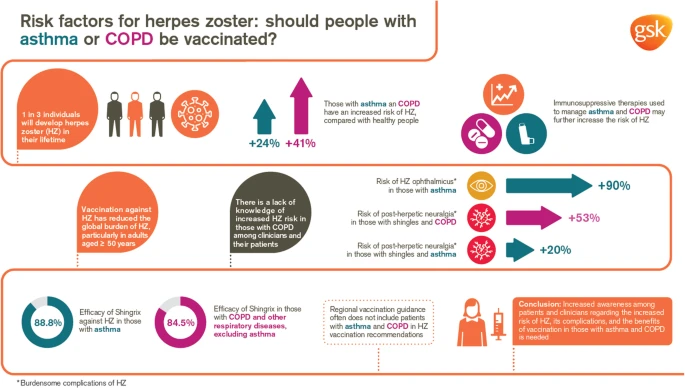
Risk factors for herpes zoster: should people with asthma or COPD be vaccinated?

  • Review
  • Open Access

Abstract

Without vaccination, an estimated 1 in 3 individuals will develop herpes zoster (HZ) in their lifetime. Increased risk of HZ is attributed to impaired cell-mediated immunity, as observed in age-related immunosenescence or in individuals immunocompromised due to disease or immunosuppressive treatments. Most vaccination guidelines recommend HZ vaccination in all adults ≥ 50 years of age, although Shingrix® was recently approved by the U.S. Food and Drug Administration for use in individuals aged ≥ 18 years who are or will be at increased risk of HZ due to immunodeficiency or immunosuppression caused by known disease or therapy, followed by approval by the European Medicines Agency for use in immunocompromised individuals aged ≥ 18 years.

Epithelial Barrier in the Nasal Mucosa, Related Risk Factors and Diseases


Zhang R. · Zhang L. · Li P. · Pang K. · Liu H. · Tian L.


As the first line of defense against risk factors, the nasal epithelial barrier maintains homeostasis in nasal mucosa. The composition of the epithelial barrier contains physical, chemical, immune, and microbiological barriers. Together, these barriers form the nasal defense against irritations. Risk factors from both internal and external environments can disrupt them. External risk factors contain allergens containing proteases, bacteria, virus, particulate matter, diesel exhaust particles, and cigarette smoke. In the meantime, inflammatory cytokines also increase the load on the barrier.