Allergic diseases and asthma are intrinsically linked to the environment we live in and to patterns of exposure. The integrated approach to understanding the effects of exposures on the immune system includes the ongoing collection of large-scale and complex data. This requires sophisticated methods to take full advantage of what this data can offer. Here we discuss the progress and further promise of applying artificial intelligence and machine-learning approaches to help unlock the power of complex environmental data sets toward providing causality models of exposure and intervention.
A blog that publishes updates and open access scientific papers about allergy, asthma and immunology. Editor: Juan Carlos Ivancevich, MD. Specialist in Allergy & Immunology
June 6, 2023
EAACI guidelines on environmental science in allergic diseases and asthma – Leveraging artificial intelligence and machine learning to develop a causality model in exposomics
June 5, 2023
Assessment of autoantibodies in paediatric population with primary immunodeficiencies: a pilot study
- Research
- Open Access
BMC Immunology volume 24, Article number: 8 (2023)
Abstract
Background
The correlation between primary immunodeficiencies (PIDs) and autoimmunity shows ethnic and geographical diversity. The aim of our study was to accumulate more data in paediatric PID population.
Methods
58 children aged 1–17 and with PID (study group) and 14 age-matched immunocompetent individuals (control group) were included in the study.
June 3, 2023
Extrapolating Evidence-Based Medicine of AIT Into Clinical Practice in the United States
Calderon MA, Casale TB, Nelson HS et al. J Allergy Clin Immunol Pract. 2023 Apr;11(4):1100-1115. doi: 10.1016/j.jaip.2022.10.033.
Executive Summary
This review sought to critically assess evidence-based medicine (EBM) for debated concepts in US allergy immunotherapy (AIT) practice for respiratory allergies in the context and quality of today’s regulatory standards. In addition, EBM for patient-centered AIT issues and the approach to implementation of AIT EBM in future clinical practice were addressed. The EBM for each concept was briefly summarized, and when possible, a practical, concise recommendation was given.
EBM in debated concepts for AIT: Individuals of all ages can have allergic rhinoconjunctivitis (ARC) and may have multiple allergen sensitivities or comorbid atopic conditions (eg, asthma).
June 2, 2023
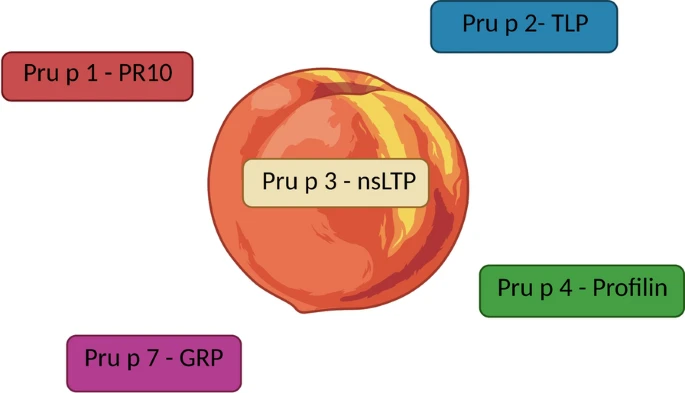
Immunotherapy with Pru p 3 for food allergy to peach and non-specific lipid transfer protein: a systematic review
- Review
- Open Access
- Carlo Maria Rossi,
- Marco Vincenzo Lenti,
- Stefania Merli,
- Amelia Licari,
- Gian Luigi Marseglia &
- Antonio Di Sabatino
Clinical and Molecular Allergy volume 21, Article number: 3 (2023)
Abstract
Background
Non-specific lipid-transfer protein (nsLTP) is a pan-allergen in the plant world, and a cause of significant concern as food allergen in the Mediterranean area, due to its general heat- and acid-resistance and hence the risk of severe allergic reactions. Pru p 3, the peach nsLTP, is considered the primary sensitizer to this allergen family and this allergy is usually persistent. Allergen-free diet and acute treatment of manifestations are the main recognized management goals in food allergy.House dust mite sublingual immunotherapy tablet safety in adolescents with allergic rhinoconjunctivitis. Worldwide clinical trial results
Horn A, Bernstein DI, Okubo K, Dalgaard T, Hels O, Sørensen HF, Henriksen M, Azuma R, Mikler J, Nolte H. Ann Allergy Asthma Immunol. 2023 Mar 15:S1081-1206(23)00171-0. doi: 10.1016/j.anai.2023.03.006.
Abstract
Background
The house dust mite (HDM) sublingual immunotherapy (SLIT)-tablet is a treatment option for allergic rhinitis with/without conjunctivitis (AR/C) approved in adults worldwide and in adolescents in some countries.
Objective
To supplement existing adolescent HDM SLIT-tablet safety data by conducting the MT-18 trial in adolescents.
Methods
MT-18 (EudraCT:2020-000446-34) was a phase 3, open-label, single-arm, 28-day safety trial of daily HDM SLIT-tablet (12 SQ-HDM dose) in European adolescents (12-17 years) with HDM AR/C, with or without asthma.
June 1, 2023
Hypereosinophilic syndrome in Europe: Retrospective study of treatment patterns, clinical manifestations, and healthcare resource utilization
Hwee J, Huynh L, Du S, Kwon N, Jakes RW, Alfonso-Cristancho R, Baylis L, Requena G, Khanal A, Rothenberg ME, Sheng Duh M. Ann Allergy Asthma Immunol. 2023 Mar 1:S1081-1206(23)00129-1. doi: 10.1016/j.anai.2023.02.022. Epub ahead of print.
Abstract
Background
The burden of hypereosinophilic syndrome (HES) in Europe is not well characterized.
Objective
To evaluate real-world patient characteristics, treatment patterns, clinical manifestations, and healthcare resource utilization for patients with HES from France, Germany, Italy, Spain, and the United Kingdom.
Methods
In this retrospective, noninterventional study, data for patients with a physician-confirmed diagnosis of HES were abstracted from medical chart reviews. Patients were aged 6 years or older at the time of HES diagnosis and had 1 or more years of follow-up from the index date (first clinic visit between January 2015 and December 2019).
May 29, 2023
Ambient fine particulate matter and allergic symptoms in the middle-aged and elderly population: results from the PIFCOPD study
Shanshan Wei, Jiping Liao, Tao Xue, Kunyao Yu, Xiuhua Fu, Ruiying Wang, Xiaomin Dang, Cheng Zhang, Hua Qiao, Shujuan Jiang, Jianhong Xiao, Lixia Dong, Jinzhi Yin, Xixin Yan, Weihua Jia, Guifang Zhang, Rui Chen, Bo Zhou, Beibei Song, Jing Li, Mengyu Yin, Lina Zhang, Liping Xie, Shaochen Dong, … Guangfa Wang
Abstract
Background
The associations between short- and long-term exposure to ambient fine particulate matter with an aerodynamic diameter ≤ 2.5 µm (PM2.5) and allergic symptoms in middle-aged and elderly populations remain unclear, particularly in China, where most cities have severe air pollution.
Validation of a primary care electronic medical records case definition for eczema: retrospective cross-sectional study
Hannah Stirton, Leanne Kosowan, Elissa M Abrams, Jennifer LP Protudjer, John Queenan & Alexander Singer

Allergy, Asthma & Clinical Immunology volume 19, Article number: 46 (2023
Abstract
Background
To validate case definitions for eczema using primary care Electronic Medical Record (EMR) data from the Canadian Primary Care Sentential Surveillance Network (CPCSSN).
Methods
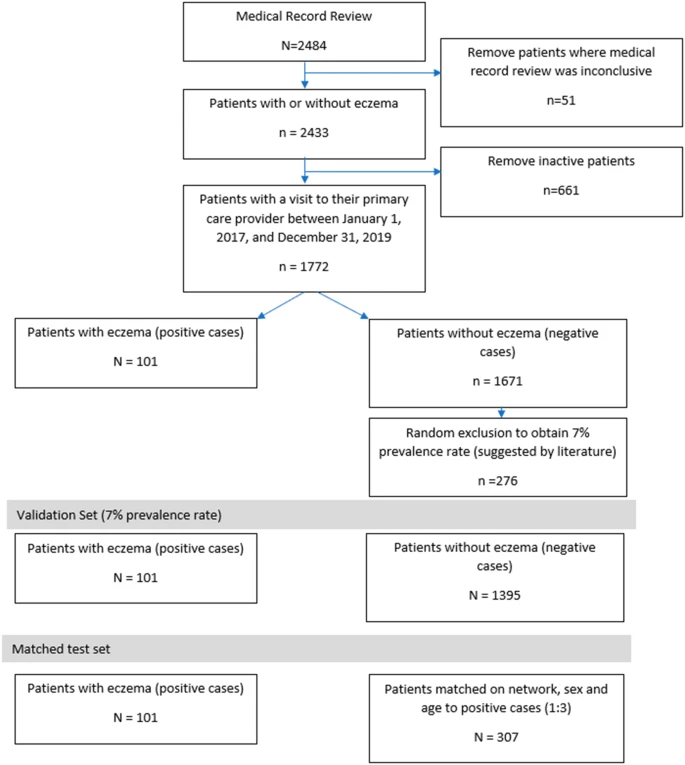
This study used EMR data from 1,574 primary care providers in seven Canadian provinces, representing 689,301 patients. Using a subset of patient records seven medical students or family medicine residents created a reference set of 1,772 patients. A total of 23 clinician-informed case definitions were validated against the reference.May 27, 2023
Chronic urticaria and the pathogenic role of mast cells
Abstract
The signs and symptoms of chronic urticaria (CU) are caused by the activation and degranulation of skin mast cells (MCs). Recent studies have added to our understanding of how and why skin MCs are involved and different in CU.

May 23, 2023
Accelerated waning of the humoral response to COVID-19 vaccines in obesity
van der Klaauw, A.A., Horner, E.C., Pereyra-Gerber, P. et al. Nat Med 29, 1146–1154 (2023). https://doi.org/10.1038/s41591-023-02343-2
Abstract
Obesity is associated with an increased risk of severe Coronavirus Disease 2019 (COVID-19) infection and mortality. COVID-19 vaccines reduce the risk of serious COVID-19 outcomes; however, their effectiveness in people with obesity is incompletely understood. We studied the relationship among body mass index (BMI), hospitalization and mortality due to COVID-19 among 3.6 million people in Scotland using the Early Pandemic Evaluation and Enhanced Surveillance of COVID-19 (EAVE II) surveillance platform.
May 22, 2023
Sinus inflammation and chronic rhinosinusitis are associated with a diagnosis of new onset asthma in the following year
Schwartz BS, Pollak JS, Bandeen-Roche K, Hirsch AG, Lehmann AE, Kern RC, Tan BK, Kato A, Schleimer RP, Peters AT. Allergy. 2023 May 17. doi: 10.1111/all.15771.
Abstract
Background
Chronic rhinosinusitis (CRS) and asthma commonly co-occur. No studies have leveraged large samples needed to formally address whether preexisting CRS is associated with new onset asthma over time.
Methods
We evaluated whether prevalent CRS (identified in two ways: validated text algorithm applied to sinus computerized tomography [CT] scan or two diagnoses) was associated with new onset adult asthma in the following year. We used electronic health record data from Geisinger in from 2008–2019. For each year we removed persons with any evidence of asthma through the end of the year, then identified those with new diagnosis of asthma in the following year.
May 19, 2023
CD4+ T cell memory. Open Access Review.
Food anaphylaxis in older people. Open Access
EAACI POSITION PAPER: Allergy to stings and bites from rare or locally important arthropods: worldwide distribution, available diagnostics, and treatment. Open Access.
Sturm GJ, Boni E, Antolín-Amérigo D, et al. Allergy. 2023 May 16. doi: 10.1111/all.15769. Epub ahead of print.
Abstract
Insect venom allergy is the most frequent cause of anaphylaxis in Europe and possibly worldwide. The majority of systemic allergic reactions after insect stings are caused by Hymenoptera and among these, vespid genera induce most of the systemic sting reactions (SSR). Honey bees are the second leading cause of SSR.
May 18, 2023
Evaluation of Plasmapheresis vs Immunoglobulin as First Treatment After Ineffective Systemic Corticosteroid Therapy for Patients With Stevens-Johnson Syndrome and Toxic Epidermal Necrolysis
Miyamoto Y, Ohbe H, Kumazawa R et al. JAMA Dermatol. 2023 May 1;159(5):481-487. doi: 10.1001/jamadermatol.2023.0035.
Key Points
Question Are the clinical outcomes of administering plasmapheresis therapy first better than those of administering intravenous immunoglobulin (IVIG) therapy first after ineffective systemic corticosteroid therapy in patients with Stevens-Johnson syndrome or toxic epidermal necrolysis (SJS/TEN)?
Findings This retrospective cohort study of 266 inpatients with SJS/TEN found no significant difference in mortality rates between the plasmapheresis-first and the IVIG-first groups. Patients who received plasmapheresis therapy first had longer hospitalization stays and incurred higher expenses.