June 21, 2023

From Amish farm dust to bacterial lysates: The long and winding road to protection from allergic disease.

Vercelli D.  Semin Immunol. 2023 Jul;68:101779. doi: 10.1016/j.smim.2023.101779. Epub 2023 May 19.

Highlights

• Protective mechanisms from natural microbe-rich environments (e.g., traditional farms) may prevent allergic diseases.

• The allergy-protective effects of natural environmental microbial exposures require innate immunity.

• Pharmacological-grade bacterial lysates that engage innate immunity and block experimental asthma may prevent allergic disease.

Abstract

Allergic diseases typically begin in early life and can impose a heavy burden on children and their families. Effective preventive measures are currently unavailable but may be ushered in by studies on the “farm effect”, the strong protection from asthma and allergy found in children born and raised on traditional farms. Two decades of epidemiologic and immunologic research have demonstrated that this protection is provided by early and intense exposure to farm-associated microbes that target primarily innate immune pathways. Farm exposure also promotes timely maturation of the gut microbiome, which mediates a proportion of the protection conferred by the farm effect.

The “allergic nose as a pollen detector” concept: e-Diaries to predict pollen trends

Paolo Maria Matricardi, Tara Hoffmann, Stephanie Dramburg 


Volume34, Issue 6 June 2023 e13966 Open Access


Abstract

Hirst pollen traps and operator pollen recognition are worldwide used by aerobiologists, providing essential services for the diagnosis and monitoring of allergic patients. More recently, semiautomated or fully automated detector systems have been developed, which facilitate prediction of pollen exposure and risk for the individual patient. In parallel, smartphone apps consisting of short questionnaires filled in daily by the patient/user provide daily scores, time trajectories, and descriptive reports of the severity of respiratory allergies in patients with pollen allergy.

June 19, 2023

A European-Japanese study on peach allergy: IgE to Pru p 7 associates with severity

Kallen EJJ, Revers A, Fernández-Rivas M, Asero Ret al.  Allergy. 2023 Jun 19. doi: 10.1111/all.15783. Epub ahead of print. 

Abstract

Background

Pru p 3 and Pru p 7 have been implicated as risk factors for severe peach allergy. This study aimed to establish sensitization patterns to five peach components across Europe and in Japan, to explore their relation to pollen and foods and to predict symptom severity.

Methods

In twelve European (EuroPrevall project) and one Japanese outpatient clinic, a standardized clinical evaluation was conducted in 1231 patients who reported symptoms to peach and/or were sensitized to peach. Specific IgE against Pru p 1, 2, 3, 4 and 7 and against Cup s 7 was measured in 474 of them. Univariable and multivariable Lasso regression was applied to identify combinations of parameters predicting severity.

World Allergy Week 2023


June 17, 2023

Breakthrough evidence based on the dual allergen exposure hypothesis—both skin intervention and oral intervention

Yamamoto-Hanada K, Ohya Y. Clin Exp Pediatr. 2023 Jun 14. doi: 10.3345/cep.2023.00045. Epub ahead of print. 

Abstract

Early-onset atopic dermatitis increases the risk of food allergies, suggesting that transcutaneous sensitization may occur through inflamed skin. Regarding food allergy causation, the dual allergen exposure hypothesis proposes that oral-route allergen exposure leads to immune tolerance, whereas allergen exposure via the inflamed skin causes food allergy.

The Natural Course of IgE-mediated Food Allergy in Children

Jeong K, Lee S. Clin Exp Pediatr. 2023 Jun 14. doi: 10.3345/cep.2022.01004.


Abstract
The prevalence of food allergy and food-induced anaphylaxis in children is increasing worldwide. Cow’s milk, hen’s egg, and wheat allergies in young children have more favorable prognosis with relatively early outgrow, while allergies to peanut, tree nuts, and seafood have higher tendency to be persistent. Although we still have an inadequate understanding about the mechanism underlying the resolution of food allergy, the roles of dendritic cells, regulatory T cells, and regulatory B cells are known to be important. Many past studies on the natural course of food allergy have been retrospective analyses of specific study groups, but recently, large-scale population-based prospective studies are being published.

Suspected cutaneous adverse drug reactions reported with traditional medicines: analysis of data for United Nations Asia region from WHO VigiBase

Barvaliya MJ, Chetan AC, Chandan N, et al. Front Pharmacol. 2023 May 30;14:1088841. doi: 10.3389/fphar.2023.1088841. 

Background: Data on traditional medicine-induced cutaneous adverse drug reactions (ADRs) is very scarce. The current secondary analysis based on the WHO database (VigiBase) of individual case safety reports (ICSRs) focuses on the suspected cutaneous ADRs linked to traditional medicines (TMs).

Methods: All the ICSRs reported between 1st January 2016 and 30th June 2021 from the UN Asia region in VigiBase where at least one TM was suspected to cause cutaneous ADRs were included in the study.

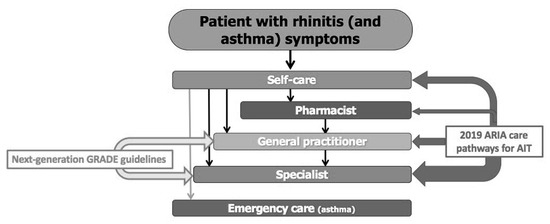
ARIA Care Pathways 2019: Next-Generation Allergic Rhinitis Care and Allergen Immunotherapy in Malaysia.

Abdul Latiff AH, Husain S, Abdullah Bet al. J Pers Med. 2023 May 15;13(5):835. doi: 10.3390/jpm13050835.

Abstract

An increase in the prevalence of allergic rhinitis (AR) worldwide presents a significant burden to the health care system. An initiative was started in Europe designated as Allergic Rhinitis and Its Impact on Asthma (ARIA) to develop internationally applicable guidelines by utilising an evidence-based approach to address this crucial issue. The efforts are directed at empowerment of patients for self-management, the use of digital mobile technology to complement and personalise treatment, and establishment of real-life integrated care pathways (ICPs).

Development of a Definition of Postacute Sequelae of SARS-CoV-2 Infection.

Thaweethai T, Jolley SE, Karlson EW, Let al.  JAMA. 2023 Jun 13;329(22):1934-1946. doi: 10.1001/jama.2023.8823.

Key Points

Question  What symptoms are differentially present in SARS-CoV-2–infected individuals 6 months or more after infection compared with uninfected individuals, and what symptom-based criteria can be used to identify postacute sequelae of SARS-CoV-2 infection (PASC) cases?

Findings  In this analysis of data from 9764 participants in the RECOVER adult cohort, a prospective longitudinal cohort study, 37 symptoms across multiple pathophysiological domains were identified as present more often in SARS-CoV-2–infected participants at 6 months or more after infection compared with uninfected participants. A preliminary rule for identifying PASC was derived based on a composite symptom score.

June 16, 2023

Broad-spectrum pan-genus and pan-family virus vaccines

Chee Wah Tan, Sophie A. Valkenburg, Leo L.M. Poon, Lin-Fa Wang.  Cell Host & Microbe, Volume 31, Issue 6, 2023, Pages 902-916,


Summary

Although the development and clinical application of SARS-CoV-2 vaccines during the COVID-19 pandemic demonstrated unprecedented vaccine success in a short time frame, it also revealed a limitation of current vaccines in their inability to provide broad-spectrum or universal protection against emerging variants. Broad-spectrum vaccines, therefore, remain a dream and challenge for vaccinology. This review will focus on current and future efforts in developing universal vaccines targeting different viruses at the genus and/or family levels, with a special focus on henipaviruses, influenza viruses, and coronaviruses.

June 15, 2023

Assessment of multiple-opinion referrals and consults at the BC Children’s Hospital Allergy Clinic


Allergy, Asthma & Clinical Immunology volume 19, Article number: 52 (2023

Abstract

Background

Allergic disease is on the rise. Waitlists for specialists are long, and many referred patients have already received prior allergic assessment, either by a certified Allergist, Primary Care Provider, or other Specialist. It is important to understand the prevalence and motivating factors for multiple-opinion referrals, to deliver timely assessment for patients with allergic disease.

Methods

June 14, 2023

Assessment of the first presentations of common variable immunodeficiency in a large cohort of patients


BMC Immunology volume 24, Article number: 9 (2023

Abstract

Background

Common Variable Immunodeficiency (CVID) is a primary immunodeficiency syndrome resulting in recurrent infections, autoimmunity, and granulomatous manifestations.

Methods and materials

This retrospective study was conducted on an Iranian national registry of immunodeficient patients from 2010 to 2021. The frequency of first presentations of CVID and its association with sex, age of onset, and family history of CVID was evaluated.

June 12, 2023

New EAACI Knowledge Hub Module: Drug Hypersensitivity Module


We encourage you to discover our newest EAACI Knowledge Hub content: “Drug Hypersensitivity Module"

The aim of the module is to provide information about basic and recent advancements in diagnosis and management of hypersensitivity reactions due to biologicals in order to harmonize the clinical approach among clinicians and enhance their information by looking at the topic from different angles.

June 9, 2023

Now available on the EAACI Knowledge Hub: NEW Allergen Immunotherapy Module


We are pleased to announce that the second Allergen Immunotherapy (AIT) module, dedicated to the latest advances, is now published!

This module focuses on the potential economic benefits of AIT, both for the patient and the society. It sheds light on the role of how eHealth technologies can support AIT's prescription, administration and monitoring. This module also provides novel insights into real world evidence (RWE) in AIT and their implications.

June 8, 2023

Mechanisms of Allergen Immunotherapy and Potential Biomarkers for Clinical Evaluation

Sahiner UM, Giovannini M, Escribese MM et al. J Pers Med. 2023 May 17;13(5):845. doi: 10.3390/jpm13050845. 


Abstract
Allergen-immunotherapy (AIT) is an efficacious and disease-modifying treatment option for IgE-mediated diseases. Among these allergic rhinitis, insect venom allergy, food allergy, and allergic asthma are the most common candidates for AIT.
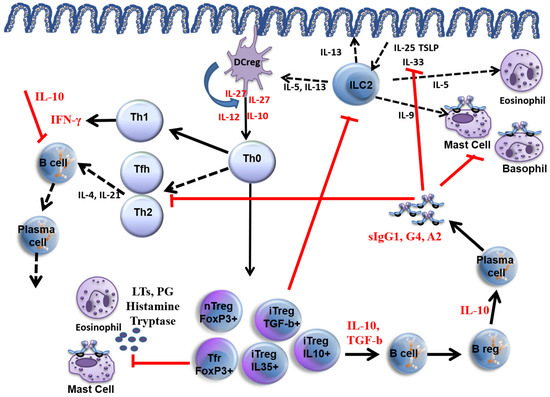
AIT gives rise to clinical immunotolerance which may last for years after the treatment cessation. Mechanisms of AIT include suppression of allergic inflammation in target tissues and stimulation of the production of blocking antibodies, especially IgG4 and IgA. These mechanisms are followed by a reduction of underlying allergen-specific Th2 cell-driven responses to the allergens. Tolerance induction takes place through the desensitization of effector cells and stimulation of regulatory T cells that show their effects by mechanisms involving cell-cell cross-talk, but also other mechanisms, e.g., by the production of immunomodulatory cytokines such as, e.g., IL-10 and TGF-beta. From a personalized medical perspective, there is a need for clinical biomarkers of value in selecting responders and optimizing patient care during AIT.