July 7, 2023

Going over Fungal Allergy: Alternaria alternata and Its Allergens


Abel-Fernández E, Martínez MJ, Galán T, Pineda F.
 J Fungi (Basel). 2023 May 18;9(5):582. doi: 10.3390/jof9050582. 

Abstract

Taxonomic distribution of allergens described and accepted by the WHO/IUIS
Fungal allergy is the third most frequent cause of respiratory pathologies and the most related to a poor prognosis of asthma. The genera Alternaria and Cladosporium are the most frequently associated with allergic respiratory diseases, with Alternaria being the one with the highest prevalence of sensitization. Alternaria alternata is an outdoor fungus whose spores disseminate in warm and dry air, reaching peak levels in temperate summers. Alternaria can also be found in damp and insufficiently ventilated houses, causing what is known as sick building syndrome. Thus, exposure to fungal allergens can occur outdoors and indoors. However, not only spores but also fungal fragments contain detectable amounts of allergens and may function as aeroallergenic sources.

July 5, 2023

Transepidermal water loss rises before food anaphylaxis and predicts food challenge outcomes

Charles F Schuler, Kelly M O'Shea, Jonathan P Troost, Bridgette Kaul, Christopher M Launius, Jayme Cannon, David M Manthei, George E Freigeh, Georgiana Sanders, Simon P Hogan, Nicholas W Lukacs, James R Baker
Journal of Clinical Investigation 2023 July 5

RATIONALE: Food allergy (FA) is a growing health problem requiring physiologic confirmation via the oral food challenge (OFC). Many OFCs result in clinical anaphylaxis, causing discomfort and risk while limiting OFC utility. Transepidermal water loss (TEWL) measurement provides a potential solution to detect food anaphylaxis in real time prior to clinical symptoms. We evaluated whether TEWL changes during an OFC could predict anaphylaxis onset.

METHODS: Physicians and nurses blind to TEWL results conducted and adjudicated the results of all 209 OFCs in this study. A study coordinator measured TEWL throughout the OFC and had no input on OFC conduct.

Eosinophil-independent IL-5 levels are increased in critically ill COVID-19 patients who survive


Allergy, Asthma & Clinical Immunology volume 19, Article number: 58 (2023)

Dear Editor,

Eosinopenia is predictive of disease severity in COVID-19, and baseline eosinophilia (in asthmatics or non-asthmatics) is associated with a lower risk of severe COVID-19 infection, usually with favourable outcomes.

July 4, 2023

EPOS/EUFOREA update on indication and evaluation of Biologics in Chronic Rhinosinusitis with Nasal Polyps 2023

Rhinology 61-3: 194-202, 2023


W.J. Fokkens - A-S. Viskens - V. Backer - D. Conti - E. De Corso - P. Gevaert - G.K. Scadding - M. Wagemann - M. Bernal-Sprekelsen - A. Chaker - E. Heffler - J.K. Han - E. Van Staeyen - C. Hopkins - J. Mullol - A. Peters - S. Reitsma - B.A. Senior - P.W. Hellings

Severe chronic rhinosinusitis with nasal polyps (CRSwNP) is a debilitating disease with a significant impact on the quality of life (QoL). It is typically characterized by a type 2 inflammatory reaction and by comorbidities such as asthma, allergies and NSAID-Exacerbated Respiratory Disease (N-ERD). Here, the European Forum for Research and Education in Allergy and Airway diseases discusses practical guidelines for patients on biologic treatment.

July 3, 2023

Is there a rationale for supplementing with vitamin D patients under treatment with allergen immunotherapy?

Di Gioacchino M, Petrarca C, Della Valle L, Mangifesta R, Santilli F.  Ann Med. 2023 Dec;55(1):2230864. doi: 10.1080/07853890.2023.2230864. 

Abstract

Vitamin D (VD) has been shown to exert immunomodulatory activities, especially in promoting immune tolerance. For these properties VD has been proposed in the therapy of immunological conditions in which the loss of tolerance is the key pathogenetic aspect of the disease, such as allergies. Despite these properties available literature suggests VD is not useful in treating or preventing allergic diseases and whether low serum VD levels favor allergic sensitization and severity is debated.

The level of VD is one of the many conditions that can influence allergic sensitization and therefore only a multivariate analysis on a numerically adequate cohort of patients, that considers all the factors that can favor allergy, would be able to assign the weight of each variable and determine the extent to which VD inhibits allergic sensitization and march. On the contrary, VD is able to potentiate the antigen-specific tolerogenic response induced by Allergen Immunotherapy (AIT) as demonstrated by the large majority of studies.

Eosinophil granule proteins as a biomarker in managing asthma and allergies

Kim CK, Callaway Z, Pawankar R. Asia Pac Allergy. 2023 Jun;13(2):66-71. doi: 10.5415/apallergy.0000000000000104. 

Abstract

In the past few decades, biomarkers have been successfully used for the diagnosis, treatment, and monitoring of disease. Taking together clinical, genetic, lifestyle, and information on relevant biomarkers, the therapy of diseases can be personalized to an individual. Several novel biomarkers have been recently reported for allergic diseases. However, to interpret the validity of biomarker data, the validation of their reliability, precision, and reproducibility is imperative. Once validated, they can be used in therapeutic product development and in clinical practice. Eosinophils are multifunctional leukocytes and major effector cells that play a crucial role in the immunological mechanisms of allergic disease.

PATH-2 TASK FORCE. A Multidisciplinary Approach for Type 2 Allergic Diseases: What Do Biologics Teach Us?

Maniscalco M, Detoraki A, Sarnelli G, Nolano M, De Paulis A, Spadaro G, Cantone E;  J Pers Med. 2023 Jun 1;13(6):941. doi: 10.3390/jpm13060941.

Editorial

Patients with atopic/allergic disorders, including atopic dermatitis (AD), allergic rhino-conjunctivitis (AR), chronic rhinosinusitis with/without nasal polyps (CRSwNP/CRSsNP), bronchial asthma, food allergy, and eosinophilic esophagitis (EoE), often share a common genetic background, a type Th2 polarized immune response, and several environmental factors.

Th2 immunity has evolved to ensure the integrity of the epithelial barrier and to protect against helminths.

July 1, 2023

A EUFOREA comment on a lost comorbidity of asthma


Allergy, Asthma & Clinical Immunology volume 19, Article number: 56 (2023

Abstract

“Epidemiology of comorbidities and their association with asthma control” (Tomisa, G., Horváth, A., Sánta, B. et al. Epidemiology of comorbidities and their association with asthma control. Allergy Asthma Clin Immunol 17, 95 (2021). https://doi.org/10.1186/s13223-021-00598-3) is an interesting paper reflecting data collection from more than 12,000 asthmatic patients in Hungary regarding their condition and associated comorbidities.

June 29, 2023

The Relationship of Parasite Allergens to Allergic Diseases

Abstract

Purpose of Review

Helminth infections modify the natural history of allergic diseases, by either decreasing or increasing their symptoms. Several helminth components are involved in the increasing of the allergic response and symptoms, overcoming the concomitant immunosuppression of helminthiases. However, the role of individual IgE-binding molecules in this process remains to be defined.

Recent Findings

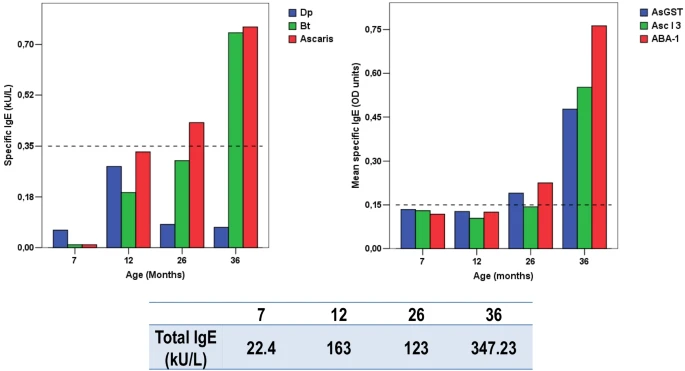
An example of allergic sensitization in a child living in the tropics.
Specific IgE against 
D. pteronyssinus (Dp), B. tropicalis (Bt), and Ascaris 
extractswere measured using ImmunoCAP™ 100. Specific IgE to 
A. l
umbricoides
 GST (AsGST), tropomyosin (Asc l 3), and ABA-1 were
measured by ELISA. 
We updated the list of helminth allergens and IgE-binding molecules, their effects on asthma presentation, and their impact on allergy diagnosis.

Intramuscular Injection of Autologous Serum in Adolescent and Adult Patients with Atopic Dermatitis: A Preliminary Randomized Clinical Trial


Nahm DH, Kim ME, Kwon B, Kim JS, Park B.  Yonsei Med J. 2023 Jul;64(7):423-432. doi: 10.3349/ymj.2022.0559.

Abstract

Purpose: The favorable clinical efficacies of intramuscular injection of autologous blood in patients with atopic dermatitis (AD) and intramuscular injection of autologous serum in patients with chronic urticaria have been demonstrated by randomized clinical trials. In this study, we assessed the clinical effectiveness and safety of the intramuscular injection of autologous serum in patients with AD.

Materials and methods: In this randomized, placebo-controlled, and double-blind trial, 23 adolescent and adult patients with moderate-to-severe AD were enrolled.

June 28, 2023

Intranasal antihistamines in the treatment of idiopathic non-allergic rhinitis: a systematic review and meta-analysis

Rhinology 61: 4, 0 - 0, 2023


N. Khoueir - M. G. Khalaf - R. Assily - S. Rassi - W.A. Hamad

BACKGROUND: Idiopathic rhinitis (IR), previously known as vasomotor rhinitis (VMR), is the most common type of non-allergic rhinitis (NAR) which affects around 100 million people worldwide. The treatment of patients with IR is not standardized. Intranasal antihistamines (INAH) are potent drugs in the treatment of allergic rhinitis but are frequently prescribed in the treatment of IR. This systematic review of the literature and meta-analysis aims to assess the effects of INAH on IR.
METHODOLOGY: A comprehensive review of the literature was conducted on Medline, Embase and Cochrane library.

Health-related quality of life and radiological and functional lung changes of patients with COVID-19 Pneumonia 3 and 10 months after discharge


BMC Pulmonary Medicine volume 23, Article number: 231 (2023)

Evaluation of the frequency of attention deficit hyperactivity disorder in patients with asthma


Clinical and Molecular Allergy volume 21, Article number: 4 (2023

Abstract

Background

Asthma is the most prevalent respiratory disease caused by chronic airway inflammation. Attention Deficit Hyperactivity Disorder (ADHD) is children's most common psychological and neurodevelopmental disorder. Increased risk for ADHD in patients with inflammatory and autoimmune diseases supports the role of inflammatory mechanisms in the occurrence of ADHD. However, the association between asthma and ADHD remains unclear.

June 26, 2023

COVID-related dysphonia and persistent long-COVID voice sequelae: A systematic review and meta-analysis

Highlights

  • A quarter of the COVID patients experience dysphonia during acute infection.

  • Seventy percent of these dysphonic patients have long-lasting voice sequelae.

  • Female has higher tendencies to develop dysphonia only during acute infection.

  • Identifying dysphonic patients and strengthening care programs are essential.

Lin CW, Wang YH, Li YE, Chiang TY, Chiu LW, Lin HC, Chang CT. Am J Otolaryngol. 2023 Jun 8;44(5):103950. doi: 10.1016/j.amjoto.2023.103950. Epub ahead of print.

Abstract

Purpose

Dysphonia is a common symptom due to the coronavirus disease of the 2019 (COVID-19) infection. Nonetheless, it is often underestimated for its impact on human's health. We conducted this first study to investigate the global prevalence of COVID-related dysphonia as well as related clinical factors during acute COVID-19 infection, and after a mid- to long-term follow-up following the recovery.

Methods

Five electronic databases including PubMed, Embase, ScienceDirect, the Cochrane Library, and Web of Science were systematically searched for relevant articles until Dec, 2022, and the reference of the enrolled studies were also reviewed.

Resistant Chronic Spontaneous Urticaria – A Case Series Narrative Review of Treatment Options

Khan S, Chopra C, Mitchell A, Nakonechna A, Yong P, Karim MY. Allergy Rhinol (Providence). 2022 Dec 21;13:21526575221144951. 

Abstract

Background

Chronic spontaneous urticaria (CSU) can be extremely debilitating to the patient and challenging for the treating clinician. The National Institute of Health and Clinical Excellence (NICE) in the United Kingdom (UK) recommendation of omalizumab for patients who fail to respond to high-dose anti-histamines has improved treatment options and quality of life. However, there is still lack of clear guidelines for treatment of patients resistant to standard and anti-IgE therapies.

Methods

We discuss the therapeutic strategies employed among nine extremely resistant CSU cases and the heterogeneity between guidelines from different societies.

Results

Patients with anti-histamine-resistant urticaria either remained on omalizumab or started on immunosuppressive drugs (dapsone or ciclosporin) when they stopped responding to omalizumab. We used clinical assessment, skin biopsies (when available) and previous published reports to consider dapsone (for predominantly neutrophilic infiltration), or ciclosporin at doses between 2 and 4 mg/kg/day. One patient with ciclosporin-resistant urticaria responded to mycophenolate mofetil.