Review Open Access
Clinical and Molecular Allergy 19, Article number: 8 (2021)
A blog that publishes updates and open access scientific papers about allergy, asthma and immunology. Editor: Juan Carlos Ivancevich, MD. Specialist in Allergy & Immunology
Review Open Access
Clinical and Molecular Allergy volume 19, Article number: 8 (2021)
Asthma Research and Practice volume 7, Article number: 7 (2021)
Adherence to inhaled corticosteroids (ICS) in asthma is vital for disease control. However, obtaining reliable and clinically useful measures of adherence remains a major challenge. We investigated the association between patient-reported adherence and objectively measured adherence based on filled prescriptions with inhaled corticosteroids in adults with asthma.
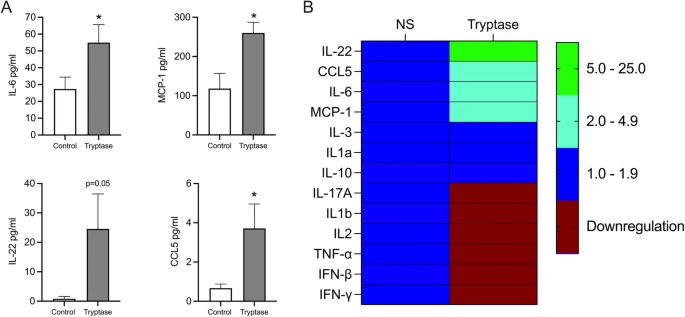
Mast cells (MCs) are known to contribute to both acute and chronic inflammation. Bronchial epithelial cells are the first line of defence against pathogens and a deficient anti-viral response has been suggested to play a role in the pathogenesis of asthma exacerbations. However, effects of MC mediators on bronchial epithelial immune response have been less studied. The aim of this study is to investigate the direct effects of stimulation with MC proteases, tryptase and chymase, on inflammatory and anti-viral responses in human bronchial epithelial cells (HBECs).
Clinical and Molecular Allergy volume 19, Article number: 7 (2021)
Asthma is a common chronic condition, affecting approximately 339 million people worldwide. The main goal of the current asthma treatment guidelines is to achieve clinical control, encompassing both the patient symptoms and limitations and the future risk of adverse asthma outcomes. Despite randomized controlled trials showing that asthma control is an achievable target, a substantial proportion of asthmatics remain poorly controlled in real life.
Trained immunity is the ability of the innate immune system to form immune memory responses to provide support the formation of appropriate adaptive responses. Allergic airways disease (AAD) is a maladapted immune response to allergens, initiated and maintained by the type 2 (T2) inflammatory pathway. It is predicated by the elaboration of cytokines IL-4 and IL-13 and follows activation of the STAT6 transcription factor.
Allergy, Asthma & Clinical Immunology volume 17, Article number: 41 (2021)
The epidemiologic impact of hereditary angioedema (HAE) is difficult to quantify, due to misclassification in retrospective studies resulting from non-specific diagnostic coding. The aim of this study was to identify cohorts of patients with HAE-1/2 by evaluating structured and unstructured data in a US ambulatory electronic medical record (EMR) database.
BMC Pulmonary Medicine volume 21, Article number: 123 (2021)
The effectiveness of the 23-valent pneumococcal polysaccharide vaccine (PPSV23) in preventing pneumococcal pneumonia has been controversial.
To evaluate the effectiveness of the PPSV23 in elderly outpatients with chronic respiratory diseases, we carried out a case–control study, including 4128 outpatients aged ≥ 65 years, in the respiratory department.