
Abstract
 |
| The MASK-air® app. |
|
| The MASK-air® app. |
Thomas C, Castillo Valladares H, Berger TG, Chang AY. JAMA. 2024 Sep 9. doi: 10.1001/jama.2024.13896.
Abstract
 |
| Clinical Presentations of Scabies, Bedbug, and Body Lice Infestations |
Observations Scabies is caused by mites (Sarcoptes scabiei) that burrow into the epidermis. Transmission primarily occurs from prolonged skin-to-skin contact with an individual who has an infestation. Common scabies is characterized by excoriated pruritic papules, plaques, and pathognomonic burrows on finger/toe web spaces, volar wrists, ankles, axillae, buttocks, male genitalia, and areolae. Permethrin cream and oral ivermectin are first-line treatments for adults, with similar clearance rates by week 2 (74% with permethrin vs 68% with ivermectin; relative risk, 0.91; 95% CI, 0.76-1.08).

Abstract
Background
Cetirizine and Loratadine are the two best-selling second-generation antihistamines for allergic diseases. This study aims to provide a comparative analysis of the differences in adverse drug events (ADEs) between these two medications, which can assist clinicians in making appropriate treatment decisions.
Methods
ADE reports related to Cetirizine and Loratadine obtained from the FDA adverse event reporting system (FAERS) database were analyzed using disproportionality analysis and Bayesian analysis to evaluate and compare the ADE signals of both drugs.
Results
 |
| The number of Cetirizine-related ADEs and Loratadine-related ADEs reported yearly after 2004. |


Abstract
Background
Treatments for allergic rhinitis include intranasal or oral medications.
Objective
To perform a systematic review with meta-analysis comparing the effectiveness of intranasal corticosteroids or antihistamines versus oral antihistamines or leukotriene receptor antagonists in improving allergic rhinitis symptoms and quality of life.
Methods
We searched four bibliographic databases and three clinical trial datasets for randomised controlled trials (i) assessing patients ≥12 years old with seasonal or perennial allergic rhinitis, and (ii) comparing intranasal corticosteroids or antihistamines versus oral antihistamines or leukotriene receptor antagonists. We performed a meta-analysis of the Total Nasal Symptom Score (TNSS), Total Ocular Symptom Score (TOSS), Rhinoconjunctivitis Quality of Life Questionnaire (RQLQ), development of adverse events, and withdrawals due to adverse events. Certainty of evidence was assessed using GRADE.
Results
 |

Abstract
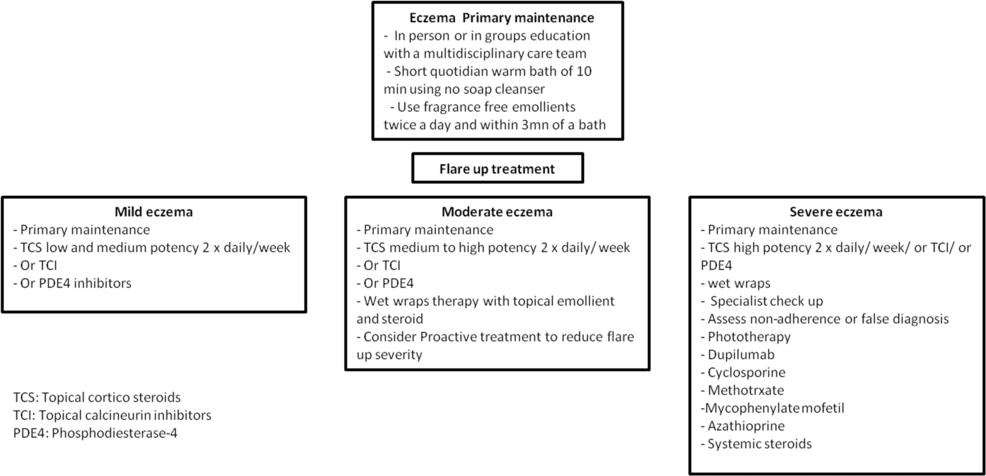 |
| Atopic dermatitis treatment |

Abstract
Importance Community-acquired pneumonia (CAP) results in approximately 1.4 million emergency department visits, 740 000 hospitalizations, and 41 000 deaths in the US annually.


Abstract
Background
Consumption of ultra-processed foods [UPFs] may be associated with negative health outcomes. Limited data exist regarding the potential role of UPFs in the occurrence of allergic diseases. The underlying mechanisms underpinning any such associations are also poorly elucidated.
Methods
We performed a systematic review and narrative evidence synthesis of the available literature to assess associations between UPF consumption and pediatric allergy outcomes (n = 26 papers), including data on the association seen with the gut microbiome (n = 16 papers) or immune system (n = 3 papers) structure and function following PRISMA guidelines.
Results
 |
| Advanced Glycation end products and the immune system. |

