A blog that publishes updates and open access scientific papers about allergy, asthma and immunology. Editor: Juan Carlos Ivancevich, MD. Specialist in Allergy & Immunology
July 18, 2025
Comparative Efficacy of Montelukast–Levocetirizine Combination Therapy Versus Monotherapy in Allergic Rhinitis: A Systematic Review and Meta-analysis
Abstract
Introduction: Combination therapy with antihistamines and leukotriene receptor antagonists (LTRAs) is frequently used in allergic rhinitis (AR), particularly in patients with persistent or inadequately controlled symptoms. However, supporting evidence has been inconsistent. This meta-analysis assessed the efficacy of montelukast combined with levocetirizine in patients with allergic rhinitis by directly comparing the combination therapy with each monotherapy and evaluating individual symptom domains.
Methods: A systematic review and meta-analysis of randomized controlled trials (RCTs) was conducted, with database searches performed through March 2025. Outcomes included daytime and nighttime total symptom scores, individual nasal symptoms, rhinoconjunctivitis-related quality of life (RQLQ), and treatment-emergent adverse events (TEAEs). Pooled effects were calculated using standardized mean differences (SMDs) and odds ratios (ORs) with 95% confidence intervals (CIs).
July 17, 2025
Risk of anaphylaxis on commercial flights
Turner, Paul J. Current Opinion in Allergy and Clinical Immunology ():10.1097/ACI.0000000000001090, July 14, 2025. | DOI: 10.1097/ACI.0000000000001090
Abstract
Purpose of review
Air travel has now returned to prepandemic levels, with over 10.5 billion passengers in 2024. Many of these passengers have food allergies, and there is a perception that allergic reactions are common during commercial flights.
Recent findings
![]() |
| Estimated rates of food-induced allergic reactions in people with known food allergy during commercial flights |
Summary
Allergic reactions during commercial flights are uncommon
July 16, 2025
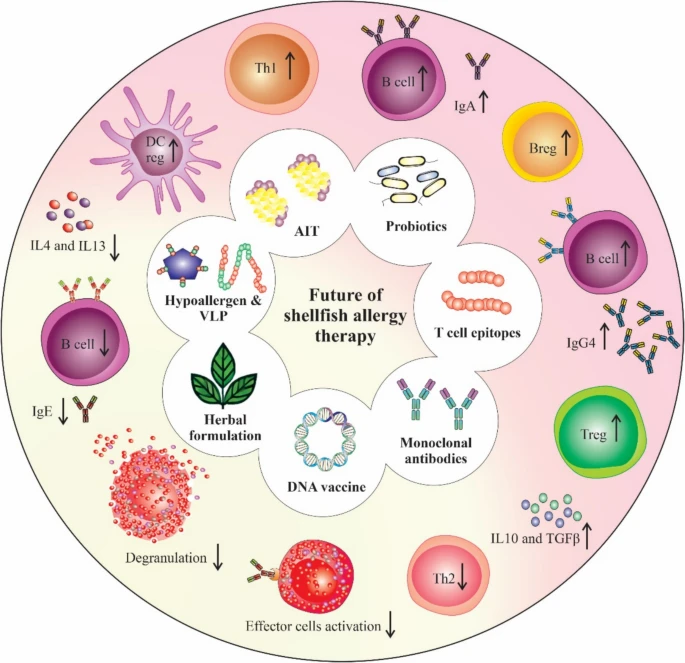
Advances in Shellfish Allergy Therapy: From Current Approaches to Future Strategies
Abstract
Shellfish allergy, triggered by immune reactions to crustacean and mollusk proteins upon consumption/inhalation, is one of the most severe and persistent food allergies, affecting approximately 1%–3% of the general population worldwide. Shellfish is among the “big nine” food allergens responsible for over 90% of food allergy cases worldwide. Its diagnosis poses major challenges due to regional species diversity and a lack of reliable diagnostic tools. Management strategies generally emphasize strict avoidance and provision of emergency adrenaline autoinjectors; however, these approaches are inconvenient and insufficient for both patients and healthcare providers. Given the rising prevalence of shellfish allergy, there is an urgent need for targeted therapies that focus on key allergens, particularly tropomyosin—a major pan-allergen.
![]() |
| Future directions in shellfish allergy therapy. |
July 14, 2025
Methotrexate and ciclosporin both reduce levels of circulating IL-4 and IL-13 expressing CD4+ memory T-cells in childhood atopic dermatitis
Anton Olsson, Kathryn Steel, Rachael Cooper, Ashley P Jones, Kaitlyn R Chan, Graham Ogg, Alan D Irvine, Carsten Flohr, Leonie S Taams, on behalf of the TREAT trial team, Clinical and Experimental Dermatology, 2025;, llaf301, https://doi.org/10.1093/ced/llaf301
Abstract
Atopic dermatitis (AD) is a chronic dermatosis characterised by type-2 inflammatory responses, skin barrier anomalies, and microbiome dysregulation. The variation of AD presentation necessitates a better understanding of the underlying disease mechanisms and the modulation of immune markers over a treatment course. Globally the most used systemic therapies for moderate-to-severe AD are methotrexate (MTX) and ciclosporin (CyA).
![]() |
| Gating strategy for identification and analysis of cytokine-expressing CD4+ T 4 cells in peripheral blood from TREAT participants. |
Inhaled Allergy Diagnostics and Treatment in a Polluted Environment
Mazur M, Czarnobilska E. Int J Mol Sci. 2025 Jun 21;26(13):5966. doi: 10.3390/ijms26135966.
Abstract
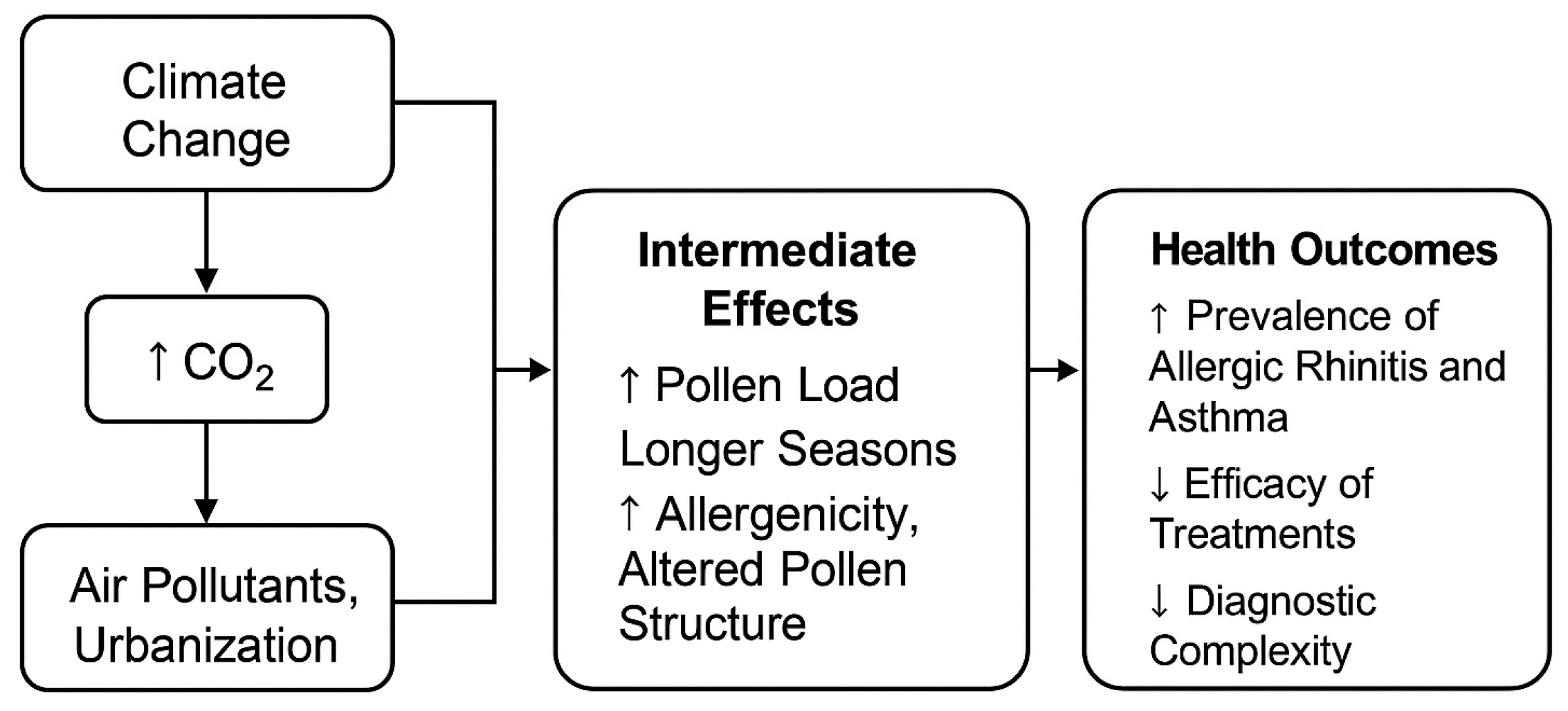
Allergic diseases have been increasing in prevalence over the last years. In a polluted environment, this problem can worsen and become more complex. Long-term exposure to air pollution can lead to the aggravation of allergic rhinitis (AR) and even to the development of seasonal asthma. Climate changes can accelerate and extend the pollination season. Research indicates that air pollution may modify the properties of pollen, making it more aggressive. Asymptomatic allergic people disclose their allergies in a polluted environment.
![]() |
| Schematic Representation of Environmental Impacts on Pollen and Allergy Burden |
July 10, 2025
Endotypes in Immune Mediated Drug Reactions: Present and Future of Relevant Biomarkers. An EAACI Task Force Report
Mayorga, C., Fernandez-Santamaria, R., Çelik, G.E., Labella, M., Murdaca, G., Sokolowska, M., Naisbitt, D. and Sabato, V. Allergy. https://doi.org/10.1111/all.16576
ABSTRACT
![]() |
| Endotypes and biomarkers in immediate drug hypersensitivity reactions (IDHRs). |
July 8, 2025
Prevalence trends and risk factors for allergic rhinoconjunctivitis, asthma and eczema in the UK
Diwakar, L., Subramanian, A., Shah, D.K. et al. Allergy Asthma Clin Immunol 21, 31 (2025). https://doi.org/10.1186/s13223-025-00975-2
Abstract
Background
Allergic rhinoconjunctivitis (ARC), asthma and eczema carry a substantial morbidity. These conditions often co-exist within the same individual and their prevalence can differ based on age, ethnicity and gender.
Objectives
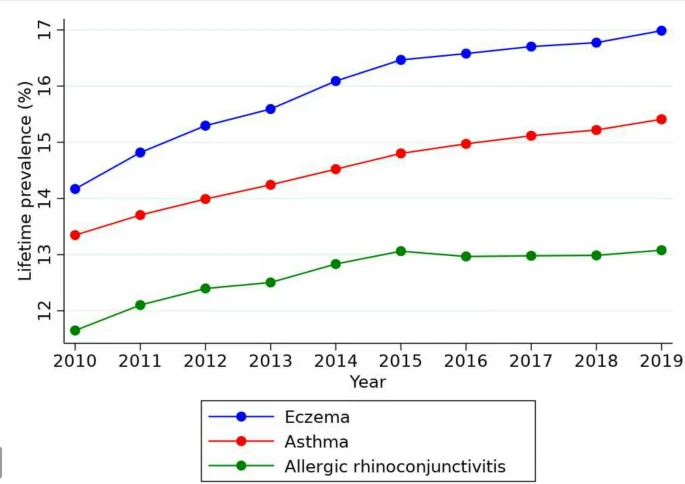
Using a UK primary care database, we estimated the trends in prevalence over the last decade for ARC, asthma and eczema and associated risk factors.
Methods
Longitudinal cohort analysis of the health improvement (THIN) database between 1st Jan 2010 and 1st Jan 2019. Logistic regression analysis was used to explore risk factors for diagnosis of these conditions.
Results
![]() |
| Trends in the prevalence of allergic rhinoconjunctivitis, asthma and eczema among adults (2010–2019) |
July 1, 2025
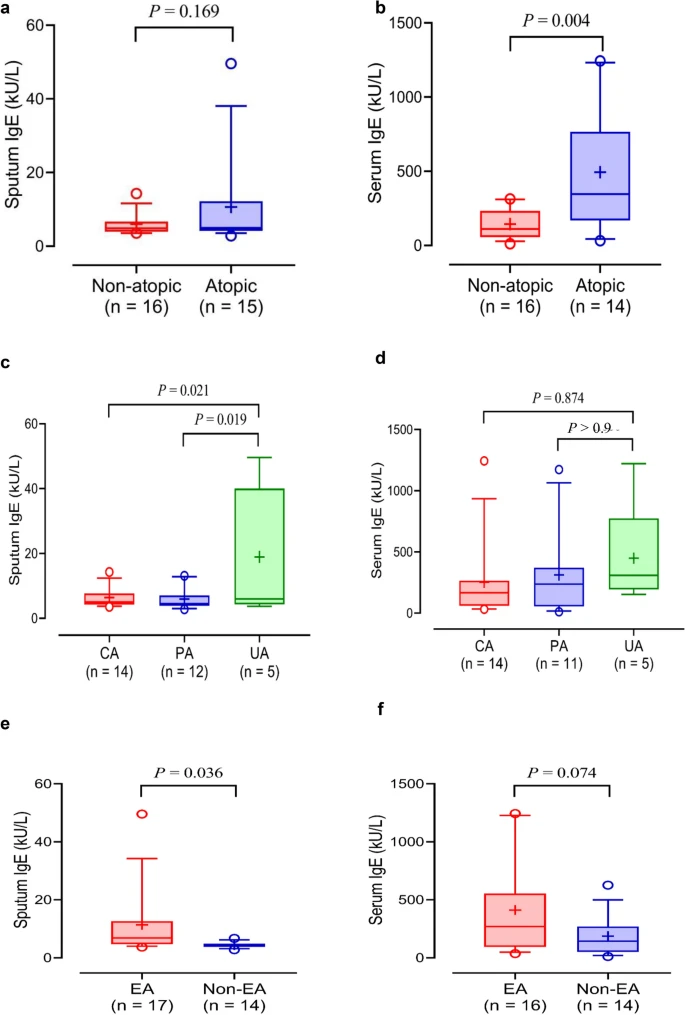
Sputum immunoglobulin E levels correlate with eosinophilic airway regardless of atopy
Rhyou, HI., Cao, T.B.T., Quoc, Q.L. et al. Allergy Asthma Clin Immunol 21, 29 (2025). https://doi.org/10.1186/s13223-025-00976-1
Abstract
![]() |
| Comparison of sputum and serum total IgE levels according to atopic status, asthma control status, and phenotype of asthma. |