September 10, 2025

Recent Insights into the Epidemiology and Management of Anaphylaxis


Sato S, Kodachi T, Yanagida N, Ebisawa M.  Balkan Med J. 2025 Sep 1;42(5):393-404. doi: 10.4274/balkanmedj.galenos.2025.2025-5-86.

Abstract

Anaphylaxis is a severe, rapidly developing systemic hypersensitivity reaction that can be life-threatening if not promptly identified and treated. Its global incidence is on the rise, especially among children, though fatal outcomes remain uncommon. This review summarizes the current understanding of anaphylaxis, covering its epidemiology, triggers, acute management, and strategies for long-term prevention, with emphasis on cases caused by food, medications, and insect stings. The estimated lifetime prevalence of anaphylaxis ranges from 0.05% to 2%. In children, food is the primary trigger, whereas in adults, medications are the most commonly responsible. 

Recent Epidemiology of Food-Induced Anaphylaxis in Adults
The main culprits for food-related anaphylaxis differ by region: in Western countries, peanuts and tree nuts predominate; in East Asia, hen’s eggs and cow’s milk are most frequent; and in Southeast Asia, seafood is the leading cause.

Lacticaseibacillus rhamnosus GG in a chewable colonizes the nose and facilitates local immune benefits in allergic rhinoconjunctivitis patients

De Boeck I, Spacova I, Cauwenberghs E et al. Microbiol Spectr 0:e00773-25.

https://doi.org/10.1128/spectrum.00773-25

ABSTRACT

Current treatments fall short in managing allergic rhinitis (AR), emphasizing the need for additional strategies. Beneficial bacteria application shows promise in AR; however, most studies focus on oral probiotic administration without monitoring the applied strains in the upper respiratory tract (URT) and their local effects. In this randomized, double-blind, placebo-controlled trial, the probiotic Lacticaseibacillus rhamnosus GG was administered via chewable tablets in seasonal AR patients, randomized to probiotic (n = 33) or placebo (n = 31) groups. Per-protocol analysis of the URT microbiome, immune markers, and AR symptoms was performed. L. rhamnosus GG trafficked from chewables to the oropharynx (77%, P = 0.02) and nasopharynx (41%, P < 0.0001). 

Impact of treatment on TNSS in relation to grass pollen exposure
and medication use in terms of effect size.
Control of self-reported AR symptoms via validated questionnaires under grass pollen exposure was observed after 2 weeks of probiotic administration and not upon placebo.

September 9, 2025

Smartwatch Use and Physician Well-Being A Randomized Clinical Trial

Dyrbye LN, West CP, Wilton AR, Satele DV, Athreya AP. JAMA Netw Open. 2025 Aug 1;8(8):e2527275. doi: 10.1001/jamanetworkopen.2025.27275. 

Key Points

Question  Does wearing a smartwatch and having access to its physiological data (eg, sleep, step count, and heart rate) improve the well-being of physicians?

Findings  In this randomized clinical trial including 184 physicians, burnout was lower and resilience was higher at 6 months among physicians in the intervention arm vs the control arm after adjusting for baseline score, demographics, specialty, and work hours.

Meaning  Wearing a smartwatch and having access to its data may be a worthwhile individual strategy that improves physicians’ well-being.

Abstract

RCT: Smartwatch Wear and Physician Well-Being
 RCT: Smartwatch Wear and Physician Well-Being
Visual Abstract.

Importance  Burnout remains prevalent among physicians and can negatively affect quality, safety, and cost of patient care. Few randomized studies on interventions to address burnout have been conducted to date.

Objective  To determine whether wearing a smartwatch and having access to its physiological data (eg, sleep, step count, and heart rate) improves physician well-being (and if so, which dimensions of well-being).

Molecular allergy diagnosis enabling personalized medicine

Matricardi PM, van Hage M, Custovic A et al.  J Allergy Clin Immunol. 2025 Sep;156(3):485-502. doi: 10.1016/j.jaci.2025.01.014. 

Abstract

Allergic patients are characterized by complex and patient-specific IgE sensitization profiles to various allergens, which are accompanied by different phenotypes of allergic disease. Molecular allergy diagnosis establishes the patient’s IgE reactivity profile at a molecular allergen level and has moved allergology into the era of precision medicine. Molecular allergology started in the late 1980s with the isolation of the first allergen-encoding DNA sequences. 
Overview of MA’s many applications in diagnosis
Already in 2002, the first allergen microarrays were developed for the assessment of complex IgE sensitization patterns. Recombinant allergens are used for a precise definition of personal IgE reactivity profiles, identification of genuine IgE sensitization to allergen sources for refined prescription of allergen-specific immunotherapy and allergen avoidance diagnosis of co- versus cross-sensitization, epidemiologic studies, and prediction of symptoms, phenotypes, and development of allergic disease.

September 8, 2025

Identification of immune-related biomarkers associated with allergic rhinitis and development of a sample diagnostic model

Wang M, Wang S, Lin X, Lv X, Liu X, Zhang H. PLoS One. 2025 Sep 3;20(9):e0329549. doi: 10.1371/journal.pone.0329549. 

Abstract

This study was designed to identify immune-related biomarkers associated with allergic rhinitis (AR) and construct a robust a diagnostic model. Two datasets (GSE5010 and GSE50223) were downloaded from the NCBI GEO database, containing 38 and 84 blood CD4 + T cell samples, respectively. To eliminate batch effects, the surrogate variable analysis (sva) R package (version 3.38.0) was employed, enabling the integration of data for subsequent analysis. Immune cell infiltration profiles were assessed using the Gene Set Variation Analysis (GSVA) R package (version 1.36.3). A gene co-expression network was constructed via the Weighted Gene Co-Expression Network Analysis (WGCNA) algorithm to identify disease-related modules. Differentially expressed genes (DEGs) were identified using the linear models for microarray data (limma) R package (version 3.34.7), followed by functional enrichment analysis using DAVID. Protein-protein interaction (PPI) networks were constructed based on the STRING database to highlight key genes. A diagnostic model was subsequently developed utilizing the Least Absolute Shrinkage and Selection Operator (LASSO) regression algorithm and Support Vector Machine (SVM) method, with its discriminative capacity assessed via Receiver Operating Characteristic (ROC) curves. 

The expression of IL-3, LYN, RBB7, RCF4,
and TNFRSF1B in nasal mucosa of AR and
CTRL groups were detected by qPCR.
A total of twenty-eight immune cell types were analyzed, revealing significant differences in eight types between the AR and control groups. Through WGCNA, three disease-related modules comprising 4278 candidate genes were identified.

Control of Allergic Rhinitis and Asthma Test for Children (CARATkids): A systematic review and meta-analysis of its measurement properties

El Didi HS, Pereira AM, Jácome C et al. Pediatr Allergy Immunol. 2025 Sep;36(9):e70191. doi: 10.1111/pai.70191. 

Abstract

Control of Allergic Rhinitis and Asthma Test for Children (CARATkids) is the first patient-reported outcome measure (PROM) designed to assess both allergic rhinitis and asthma simultaneously in children aged 6 to 12 years. CARATkids has been validated in several languages and countries, highlighting the need for a review of its psychometric properties. This study aims to evaluate the measurement properties of CARATkids. This systematic review follows PRISMA and COSMIN guidelines. A systematic search was performed across three databases (Ovid/MEDLINE, Web of Science, and Scopus in October 2023, updated in June 2025). We included studies focused on the development, cultural adaptation, or validation of CARATkids, as well as studies comparing CARATkids with other PROMs. 

Main meta-analytical results on the properties of the
Control of Allergic Rhinitis and Asthma Test for Children (CARATkids).
We evaluated the quality of CARATkids development, the methodological quality of primary studies, the overall rating, and the certainty of evidence for each CARATkids measurement property and performed a meta-analysis of its measurement properties. Our search retrieved 193 results. We included nine studies. CARATkids displayed sufficient content validity.

September 6, 2025

Urticaria as a dermatologic manifestation of Giardia infection: a systematic review of clinical, diagnostic, and therapeutic features

Mahdavi, J., Ahmadifar, K. & Ghasemikhah, R. BMC Infect Dis 25, 1085 (2025). https://doi.org/10.1186/s12879-025-11484-3

Abstract

Background

Giardiasis is recognized as the most prevalent enteric protozoal infection worldwide. Although gastrointestinal symptoms are the most common manifestations of giardiasis, several studies have reported cases of urticaria associated with this infection. Urticaria is a common mast cell-dependent disorder characterized by wheals, angioedema, or both. The aim of this study was to conduct the first systematic review to comprehensively synthesize the clinical, diagnostic, and therapeutic features of urticaria as a dermatologic manifestation in patients with giardiasis.

Methods

This review was conducted in accordance with the Preferred Reporting Items for Systematic reviews and Meta-Analyses (PRISMA) statement. PubMed/MEDLINE, Web of Science, Scopus, ScienceDirect, and Google Scholar were searched without language restrictions up to 2025 to identify articles reporting patients with urticaria and giardiasis.

Results

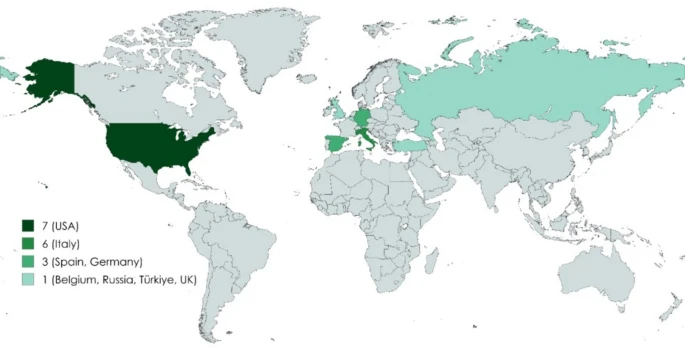
Number of cases from different countries
Thirteen papers describing a total of 23 patients (14 males and 9 females, aged 4 to 56 years) were included. The locations of urticarial lesions varied, involving the head, trunk, and extremities. The duration of urticaria ranged from 8 h to 8 months.

Prevention of Atopic Dermatitis in High-Risk Infants: A Review of the Role of Lipid-Based Barrier Repair Therapy

C.-W. J. Chan and M. O. Visscher,  Pediatric Dermatology (2025): 1–14, https://doi.org/10.1111/pde.70010.

ABSTRACT

Background/Objective

Growing evidence highlights the role of physiological lipids, namely ceramides, cholesterol, and free fatty acids, in maintaining skin barrier function and preventing atopic dermatitis (AD). Current evidence on the efficacy, safety, and clinical relevance of stratum corneum (SC) lipid-based therapies to prevent AD and increase skin barrier integrity in high-risk infants was reviewed and synthesized.

Methods

Searches with key words lipid-based therapy, atopic dermatitis, infant, and prevention were conducted to identify papers using PubMed, Embase, Cochrane Library, and Scopus databases from January 2000 to June 2024.

Results

SC lipid-based therapies were reported to replenish deficient SC lipids, thereby improving skin barrier function, a critical aspect of AD management.