September 16, 2025

Validation of the Urticaria Activity Score for Cold Urticaria

Grekowitz E, Salameh P, Altrichter S et. al. J Allergy Clin Immunol Pract. 2025 Sep;13(9):2329-2337.e3. doi: 10.1016/j.jaip.2025.04.012. 

Abstract

Background

Cold urticaria (ColdU) is characterized by the appearance of wheals and/or angioedema and itch after exposure to cold stimuli. The Cold Urticaria Activity score (ColdUAS) is a newly devised patient-reported outcome measure (PROM) assessing disease activity in ColdU.

Objectives

We aimed to validate the ColdUAS according to PROM guidelines, assess the optimal documentation period, and develop a scoring computation algorithm.

Methods
We instructed 71 patients with typical and atypical ColdU to complete the ColdUAS questionnaire over 4 consecutive weeks and asked to fill out additional anchor instruments including global assessment tools and validated quality of life measures.

September 15, 2025

Efficacy and safety of Sublingual immunotherapy for allergic rhinitis: an overview of systematic reviews and meta analyses

Wang, Z., Wang, N., Liang, X. et al.  Eur Arch Otorhinolaryngol (2025). https://doi.org/10.1007/s00405-025-09664-7

Abstract

Introduction

Reappraisal of Systematic reviews/Meta analyses on Sublingual Immunotherapy for Allergic Rhinitis: Evidence for Clinical Practice and Decision-Making.

Methods

A comprehensive computerized search was conducted across PubMed, Embase, the Cochrane Library, Web of Science, CNKI, VIP, WANFANG, and CBM databases from their inception to June 8, 2025, to systematically identify Systematic reviews and Meta analyses on Sublingual Immunotherapy for allergic rhinitis. A citation overlap matrix was constructed to calculate the corrected covered area, assessing the degree of primary study overlap. The risk of bias, methodological quality, reporting quality, and certainty of evidence in the included Systematic reviews/Meta analyses were evaluated using ROBIS, AMSTAR-2, PRISMA 2020, and GRADE tools, respectively. Both quantitative and qualitative analyses were performed on the primary outcomes to derive a more comprehensive and in-depth understanding.

Results

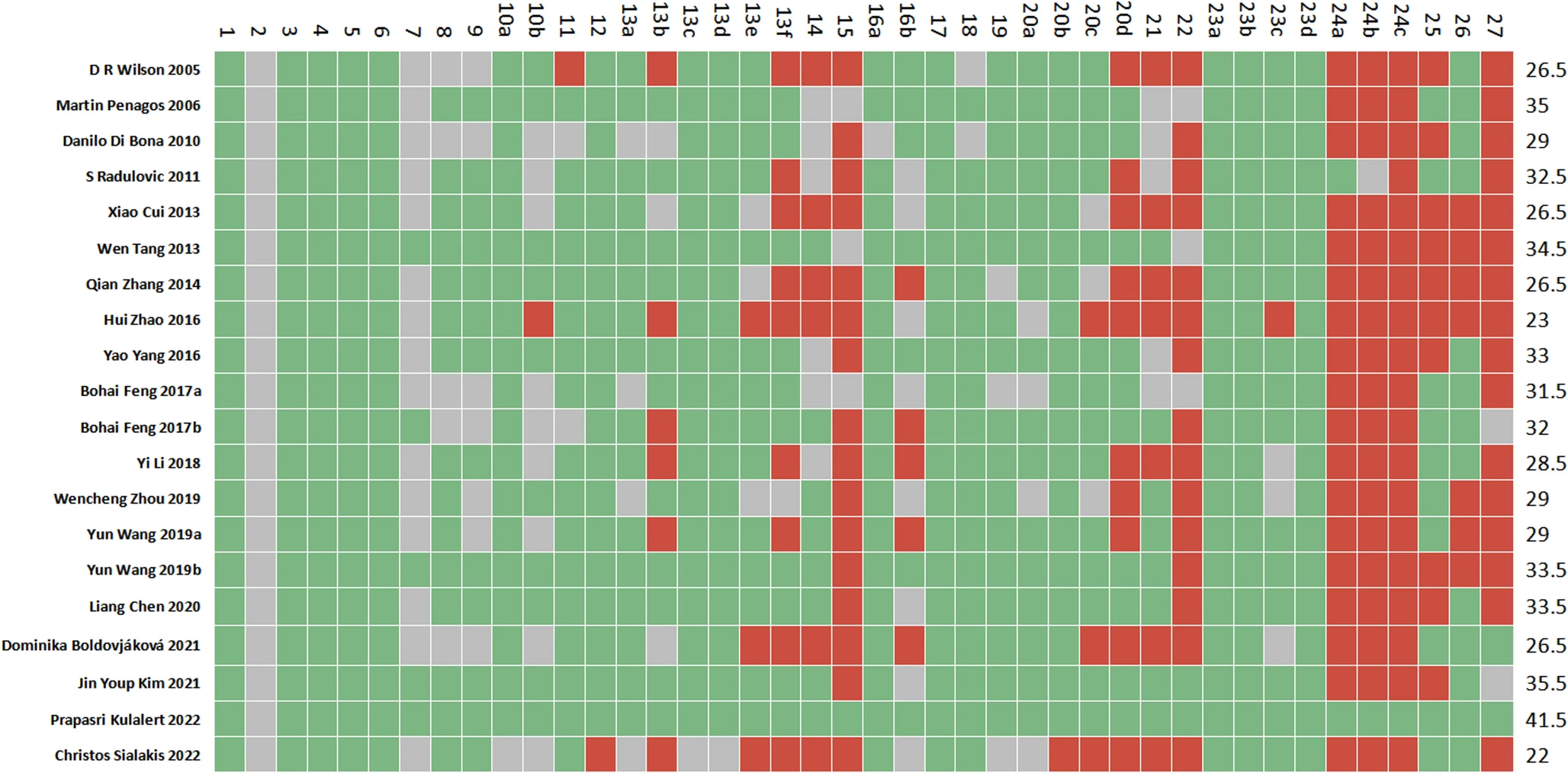
Cartesian heatmap of the scores of each item in PRISMA 2020.
Note: Green indicates compliance; Gray indicates partial compliance;
Red indicates non-compliance
A total of 20 Systematic reviews/Meta analyses were included in this umbrella review. The corrected covered area of 6.391% derived from the citation matrix analysis indicated a modest degree of primary study overlap among the included literature.

Differential Diagnosis of Chronic Spontaneous Urticaria

Gialama D, Bonnekoh H, Rothermel NDet al. J Allergy Clin Immunol Pract. 2025 Sep;13(9):2242-2250. doi: 10.1016/j.jaip.2025.06.019. 

Abstract

Patients with chronic recurrent wheals most commonly receive the diagnosis of chronic spontaneous urticaria, although a number of autoimmune, autoinflammatory, and malignant diseases can be suspected based on certain red flags. These warning signs are a wheal duration of more than 24 hours, post-inflammatory hyperpigmentation, and systemic symptoms such as arthralgia and fever and/or elevated inflammatory markers. 

Urticarial exanthema: (A) Chest, (B) back, and (C) hands.
Here, we detail the case of an adult patient who initially received the diagnosis of chronic spontaneous urticaria, discussing possible differential diagnoses and outlining options for treating the patient once a diagnosis has been established.

September 11, 2025

Bibliometric analysis of the association between air pollution and allergic rhinitis

Geng Z, Ma Y, Qi X. Glob Health Action. 2025 Dec;18(1):2547434. doi: 10.1080/16549716.2025.2547434.

Abstract

Background: Allergic rhinitis (AR) is an increasingly prominent global public health issue, where air pollution significantly contributes to its rising incidence. Although numerous studies have explored the link between air pollution and AR pathogenesis, comprehensive summaries are still limited.

Objective: This study performs a bibliometric analysis to identify research hotspots and emerging trends, offering insights into AR prevention and management.

Methods: Literature related to on air pollution and AR was retrieved from the Web of Science Core Collection database. Visualization tools, including VOSviewer, CiteSpace, and Bibliometrix R, were utilized to analyze contributions by countries, institutions, authors, journals, and keywords, with the aim of predicting future research trends.

Number of global publications related to air pollution
and allergic rhinitis
Results: A total of 4,020 authors, 1,368 institutions, and 75 countries contributed to 753 publications. The United States leads in research contributions, while China has shown rapid growth since 2012.

Multiomics approach to evaluating personalized biomarkers of allergen immunotherapy

Shamji MH, Fulton WT, Animashaun I et al. J Allergy Clin Immunol. 2025 Sep;156(3):523-534. doi: 10.1016/j.jaci.2025.06.036.


Abstract

Multiomics approach to identify biomarkers of AIT.
Recent advancements in genomics and “omic” technologies have ushered in a transformative era referred to as personalized or precision medicine. This innovative approach considers the unique genetic profiles of individuals, along with a range of variability factors, to devise tailored disease treatments and prevention strategies that cater to the distinct needs of each patient. Although the terms personalized medicine and precision medicine are frequently utilized interchangeably, it is essential to delineate the subtle distinctions between them.

Comparative Safety of JAK Inhibitors vs TNF Antagonists in Immune-Mediated Inflammatory Diseases A Systematic Review and Meta-Analysis

Solitano V, Ahuja D, Lee HH, et al.  JAMA Netw Open. 2025;8(9):e2531204. doi:10.1001/jamanetworkopen.2025.31204

Key Points

Question  What are the comparative safety profiles of Janus kinase (JAK) inhibitors vs tumor necrosis factor (TNF) antagonists in patients with immune-mediated inflammatory diseases (IMIDs)?

Findings  In this systematic review and meta-analysis including 42 head-to-head comparative effectiveness studies of 813 881 patients with IMIDs treated with JAK inhibitors or TNF antagonists, no meaningful differences in risk of serious infections, malignant neoplasms, and major cardiovascular events were observed. JAK inhibitor use was associated with a slightly higher risk of venous thromboembolism compared with TNF antagonist use; the overall incidence of serious adverse events was low.

Meaning  These findings call for revisiting the strict regulatory guidance imposed by the US Food and Drug Administration and the European Medicines Agency restricting use of all JAK inhibitors after failure of, or contraindications to, TNF antagonists, across all indications.

Abstract

Importance  Janus kinase (JAK) inhibitors are highly effective medications for several immune-mediated inflammatory diseases (IMIDs). However, safety concerns have led to regulatory restrictions.

September 10, 2025

Recent Insights into the Epidemiology and Management of Anaphylaxis


Sato S, Kodachi T, Yanagida N, Ebisawa M.  Balkan Med J. 2025 Sep 1;42(5):393-404. doi: 10.4274/balkanmedj.galenos.2025.2025-5-86.

Abstract

Anaphylaxis is a severe, rapidly developing systemic hypersensitivity reaction that can be life-threatening if not promptly identified and treated. Its global incidence is on the rise, especially among children, though fatal outcomes remain uncommon. This review summarizes the current understanding of anaphylaxis, covering its epidemiology, triggers, acute management, and strategies for long-term prevention, with emphasis on cases caused by food, medications, and insect stings. The estimated lifetime prevalence of anaphylaxis ranges from 0.05% to 2%. In children, food is the primary trigger, whereas in adults, medications are the most commonly responsible. 

Recent Epidemiology of Food-Induced Anaphylaxis in Adults
The main culprits for food-related anaphylaxis differ by region: in Western countries, peanuts and tree nuts predominate; in East Asia, hen’s eggs and cow’s milk are most frequent; and in Southeast Asia, seafood is the leading cause.

Lacticaseibacillus rhamnosus GG in a chewable colonizes the nose and facilitates local immune benefits in allergic rhinoconjunctivitis patients

De Boeck I, Spacova I, Cauwenberghs E et al. Microbiol Spectr 0:e00773-25.

https://doi.org/10.1128/spectrum.00773-25

ABSTRACT

Current treatments fall short in managing allergic rhinitis (AR), emphasizing the need for additional strategies. Beneficial bacteria application shows promise in AR; however, most studies focus on oral probiotic administration without monitoring the applied strains in the upper respiratory tract (URT) and their local effects. In this randomized, double-blind, placebo-controlled trial, the probiotic Lacticaseibacillus rhamnosus GG was administered via chewable tablets in seasonal AR patients, randomized to probiotic (n = 33) or placebo (n = 31) groups. Per-protocol analysis of the URT microbiome, immune markers, and AR symptoms was performed. L. rhamnosus GG trafficked from chewables to the oropharynx (77%, P = 0.02) and nasopharynx (41%, P < 0.0001). 

Impact of treatment on TNSS in relation to grass pollen exposure
and medication use in terms of effect size.
Control of self-reported AR symptoms via validated questionnaires under grass pollen exposure was observed after 2 weeks of probiotic administration and not upon placebo.