November 16, 2025

Evaluation of the relationship between multiple inflammatory markers, disease severity and antihistamine response in chronic spontaneous urticaria


Atik Ö, Can A.  Alergologia Polska - Polish Journal of Allergology. 2025. doi:10.5114/pja.2025.156073.

Introduction

Chronic spontaneous urticaria (CSU) is a skin condition marked by excessive immune system inflammation. The C-reactive protein (CRP)/albumin ratio (CAR), neutrophil/lymphocyte ratio (NLR), eosinophil/neutrophil ratio (ENR), and eosinophil/lymphocyte ratio (ELR) are recent biomarkers that indicate systemic inflammation.

Aim

This study aims to examine the role of these inflammatory markers in assessing the severity of CSU and predicting the response to antihistamine treatment.

Material and methods

The study included 246 CSU patients from our outpatient clinic.

November 15, 2025

Transepidermal Water Loss in Oral Food Challenges in Children With Peanut Allergy. A Randomized Clinical Trial

Freigeh GE, O’Shea KM, Troost JP et al JAMA Netw Open. 2025;8(11):e2543371. doi:10.1001/jamanetworkopen.2025.43371


Key Points

  • Question  Can transepidermal water loss (TEWL) as a measure of skin barrier function be used to reduce anaphylaxis rates and severity during oral food challenges in children with peanut allergy?
  • Findings  In this randomized clinical trial that included 40 children aged 6 months to 5 years with peanut allergy, the anaphylaxis rate among participants with an allergic reaction during a peanut oral food challenge was lower in the group for which TEWL was used as a stopping criterion (63%) than in the control group (100%).
  • Meaning  The findings suggest TEWL can augment anaphylaxis prediction during oral food challenges.

Abstract

Visual Abstract.
Importance  Food allergy is a prevalent chronic medical condition in children, with limited diagnostic options. Transepidermal water loss (TEWL) is a measure of skin barrier function with emerging utility in atopy and food allergy.

Objective  To determine whether use of TEWL as a stopping criterion can prevent anaphylaxis during a peanut oral food challenge (OFC).

Design, Setting, and Participants  This was a single-center randomized clinical trial of children aged 6 months to 5 years with a history of a clinical peanut allergic reaction and positive peanut skin prick and/or serum immunoglobulin E testing.

November 14, 2025

Exploring the Disease Duration of Urticaria and Associated Determinants in Primary Care

R. Soegiharto, B. J. Hengevelt, N. Boekema-Bakker, et al.  Clinical & Experimental Allergy (2025): 1–4, https://doi.org/10.1111/cea.70170.


Summary

  • Most patients (75%) with new-onset urticaria in general practice recover within 1 week.
  • Chronic urticaria (17%) was associated with higher age at onset, high BMI and early prednisolone prescriptions, the latter likely reflecting higher disease severity.
Determinants of longer disease duration.

To the editor,
Most patients presenting with new-onset urticaria are expected to have short-lived symptoms, acute urticaria (AU). Initial treatment of urticaria is therefore generally limited to a wait-and-see approach and second-generation (low dose) H1-anthistamines [1]. However, it is estimated that 0%–39% of patients develop chronic urticaria (CU), mainly based on outdated studies that focused on children with a follow-up time of up to 2 years [2]. Determining the exact proportion of CU patients is essential, because...

November 13, 2025

REAL WORLD DATA ON THE EFFECTIVENESS OF EPINEPHRINE NASAL SPRAY IN CLINICAL PRACTICE-UPDATE

Casale, T. et al. Annals of Allergy, Asthma & Immunology, Volume 135, Issue 5, S2

Abstract

Introduction

Intranasal epinephrine spray 2 mg (IN) is the first FDA-approved needle-free epinephrine product for the treatment of severe allergic reactions, including anaphylaxis. Intranasal epinephrine efficacy and safety are supported by extensive pharmacokinetic and pharmacodynamic data, a Phase 3 study in Oral Food Challenge (OFC) patients, and a series of case reports. To evaluate “real world” performance, health care providers (HCP) were surveyed regarding treatment outcomes following IN use.

Methods

Product was provided through an experience program to HCPs for use in their clinics and were surveyed regarding 1) the number of patients dosed; 2) the number of patients requiring a second dose of epinephrine to treat their allergic reactions; and 3) ease of use on a scale of 1-7. Data was collected by the company.

November 11, 2025

Associations between reservoir bedroom dust allergen levels and sleep symptoms in school-age children

Gueye-Ndiaye S, Wang Y, Wang J et al.  Sleep Health 2025 Nov 4:S2352-7218(25)00215-3. doi: 10.1016/j.sleh.2025.09.007.

Abstract

Objectives

Exposure to allergens may trigger inflammatory pathways contributing to poor sleep. We investigated the associations between indoor allergen concentrations with multiple sleep dimensions in children.

Methods

Bedroom dust aeroallergens were collected in participants' homes. The outcomes were caregiver-reported sleep-related daytime impairment and sleep disturbance (pediatric PROMIS instruments), sleep-disordered breathing (SDB; apnea-hypopnea index or oxygen desaturation index >5), and actigraphy-based short sleep (<8 hours) duration and poor sleep continuity (sleep fragmentation index > 75th percentile).

November 10, 2025

Recommendations for the diagnosis and management of eosinophilic esophagitis in adults and children in Canada: a Delphi consensus project

Avinashi, V., Gupta, M., Payne, B.A. et al.  Allergy Asthma Clin Immunol 21, 47 (2025). https://doi.org/10.1186/s13223-025-00993-0


Abstract

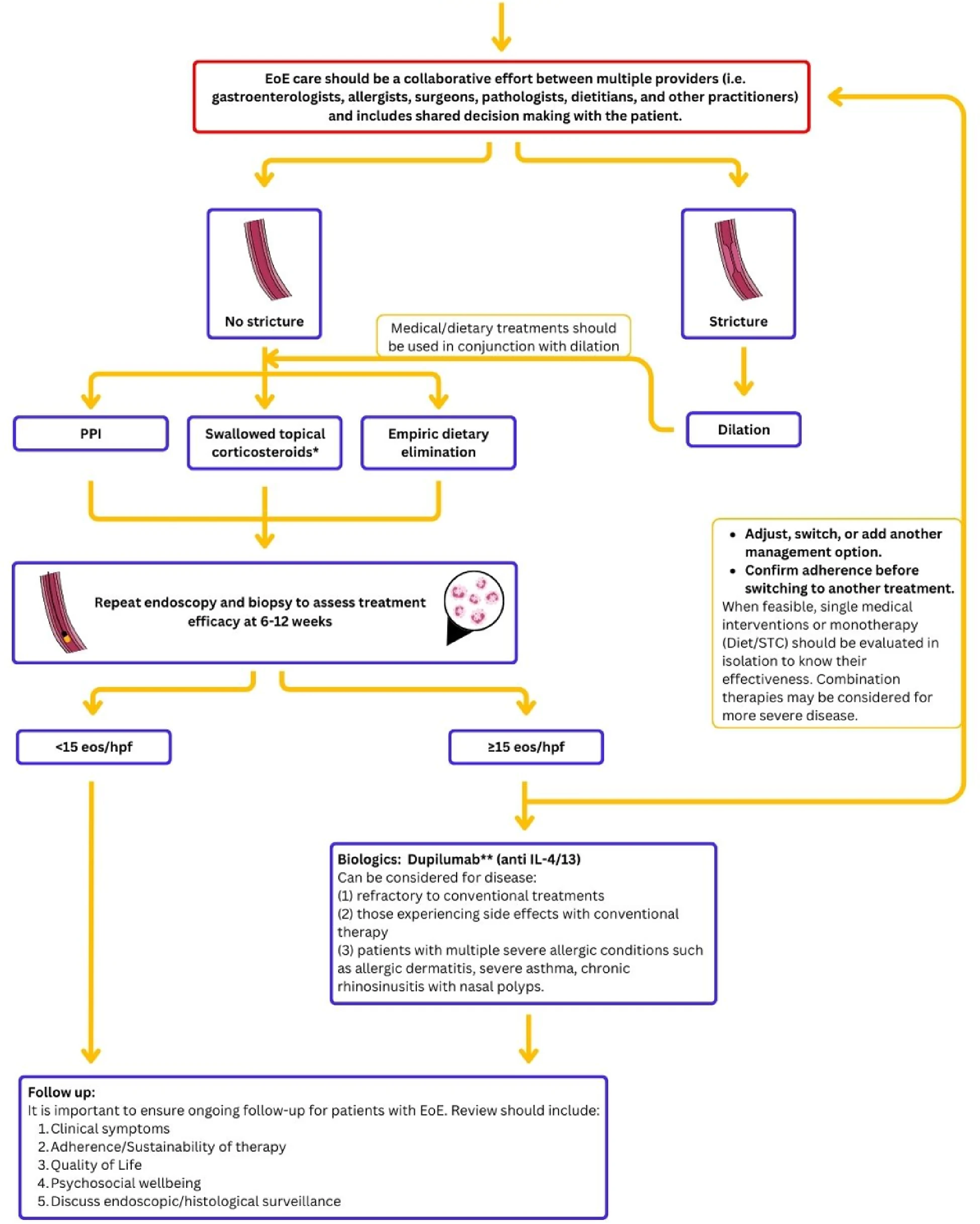
Flow diagram of EoE diagnosis and management.
*budesonide orodispersible tablet (JorvezaR) approved
by Health Canada,**dupilumab (DupixentR) approved
by Health Canada
Background

Eosinophilic esophagitis (EoE) is a chronic inflammatory disease of the esophagus that effects both pediatrics and adult patients in Canada and is increasing in prevalence. No Canadian focused best practice recommendations currently exist to guide clinical practice.

Methods

The study used a modified Delphi technique to develop evidence and expert opinion-based recommendations for providing care for patients with EoE. The Delphi process consisted of 3 rounds of quantitative surveys and qualitative consensus meetings.

November 4, 2025

Evaluating the efficacy of a novel home-based oral food challenge protocol for pediatric food protein induced enterocolitis syndrome

Morris, E.G., Huan, P.W., Protudjer, J.L.P. et al.  Allergy Asthma Clin Immunol 21, 45 (2025). https://doi.org/10.1186/s13223-025-00994-z

Abstract

Background

Oral food challenges (OFCs) are considered the gold standard for diagnosis of food protein–induced enterocolitis syndrome (FPIES), a non-immunoglobulin E mediated gastrointestinal food allergy characterized by delayed, repetitive vomiting, lethargy, and sometimes diarrhea, primarily affecting infants and young children. Our modified approach to OFCs involves smaller, gradually increased doses to mitigate the risk of severe reactions. We aimed to measure the successful completion of this OFC protocol.

Methods

In a retrospective chart review, patients age < 18 years, who had 1 + episode of acute FPIES between 2015 and 2023 were identified using an allergy clinic database. Patients underwent OFCs with home up dosing every 2–4 weeks. Steps included 1%, 2%, 5%, 10%, 20%, 30%, 40%, 60%, 80%, and 100% of the final serving amount. The primary outcome was successful completion, i.e. absence of severe reactions during the OFC protocol and 1 year after.

November 3, 2025

Vasomotor Rhinitis: Current Concepts and Emerging Therapies

Aldawas G, Bhat I N (October 28, 2025)  Cureus 17(10): e95631. doi:10.7759/cureus.95631


Abstract

Practical treatment algorithm for vasomotor rhinitis (VMR)
Vasomotor rhinitis (VMR) is a non-infectious, non-allergic subtype of rhinitis, which is characterized by nasal blockage, liquid runny rhinorrhea, and increased sensitivity to nonspecific nasal triggers (such as changing temperature and smell). Although VMR is a disease with a high prevalence rate, it is wrongly diagnosed and under-treated due to its clinical manifestation with allergic rhinitis. Databases such as PubMed, EMBASE, and Cochrane Library were searched to obtain articles published between 2000 and 2025. Randomized controlled trials, cohort studies, and major clinical guidelines were included, while case reports and non-English studies were excluded to ensure consistency and reproducibility of the findings. Existing evidence shows that multiple regulations of the autonomic nervous system, neuropathway neuroplasticity and inflammation, and excessive quantitative stimulation of transient receptor potential (TRP) channels all play a role in the pathophysiology of VMR. Variable therapies include corticosteroids, intranasal antihistamines, and anticholinergics, although ipratropium bromide has had the best dependability results in terms of rhinorrhea.