February 27, 2025

2024 Update of the RECOVER-Adult Long COVID Research Index

Geng LN, Erlandson KM, Hornig M et al; RECOVER Consortium. 2024 Update of the RECOVER-Adult Long COVID Research Index. JAMA. 2025 Feb 25;333(8):694-700. doi: 10.1001/jama.2024.24184. 

Key Points

Question  How do updated data from nearly 4000 additional participants and expanded symptom questionnaires inform the prior research classification for long COVID (LC) or post–COVID-19 condition?

Findings  In this prospective, observational cohort study, data from 13 647 adults participating in the Researching COVID to Enhance Recovery (RECOVER-Adult) study were used to update the research index for classifying symptomatic LC and 5 symptom subtypes that differ in associated demographic features and quality of life.

Meaning  The 2024 LC research index may help researchers identify people with symptomatic LC and its symptom subtypes. Refinement of the index will be needed as research advances and the understanding of LC deepens.

Abstract

Importance  Classification of persons with long COVID (LC) or post–COVID-19 condition must encompass the complexity and heterogeneity of the condition. Iterative refinement of the classification index for research is needed to incorporate newly available data as the field rapidly evolves.

February 24, 2025

Particularities of Chronic Urticaria in Latin American Countries: Epidemiology, Pathogenesis and Treatment


Larco, JI., Ensina, L., Alvarez, L. et al.  Curr Treat Options Allergy 12, 4 (2025). https://doi.org/10.1007/s40521-024-00379-4

Abstract

Purpose of Review

Chronic Urticaria is a multifactorial disease. Despite international guideline recommendations each region has particular characteristics with unique needs. The aim of this review is to present the particularities of urticaria in Latin America (LATAM) and evaluate the clinical and investigation costs of CSU in LATAM and other regions.

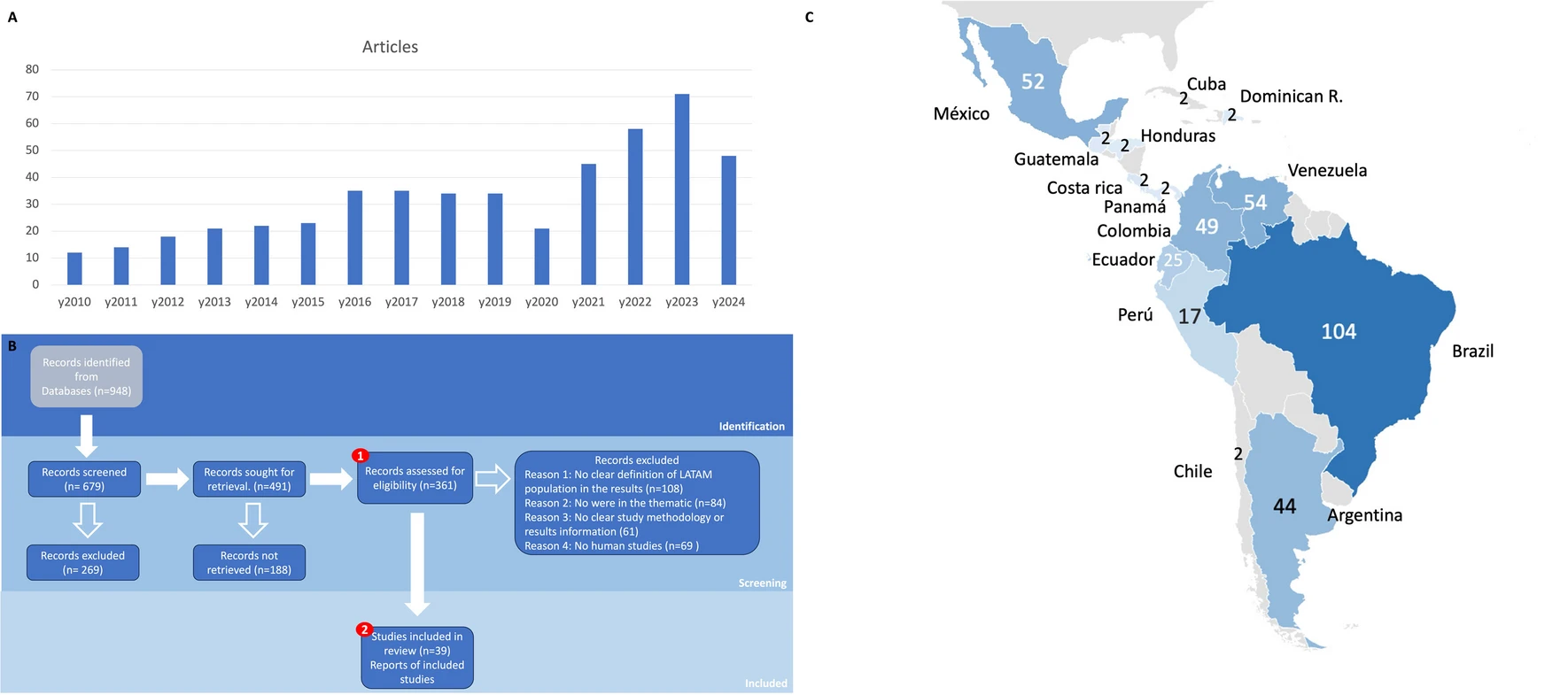
CSU publications in LATAM 2010 to June 2024
Recent Findings

In the last 10 years there has been a significant increase in research on CSU in LATAM. At the molecular level, the presence of specific IgE against environmental allergens and eosinophils seems to be more frequent among CSU in LATAM than in other regions, suggesting a greater presence of type 2 inflammation, perhaps secondary to the characteristics of the environment in some areas of LATAM.

Understanding Angioedema in Urticaria, with Jonathan Bernstein, MD


 Angioedema is a complication that has a significant burden on patients with inflammatory skin conditions such as urticaria. While research is ongoing in the field to better treat angioedema, unmet needs in its management remain.

HCPLive spoke with Jonathan Bernstein, MD, adjunct professor, University of Cincinnati School of Medicine and past president of the American Academy of Allergy, Asthma, and Immunology (AAAAI) to get a sneak peek at the talk he will be giving during the #AAAAI/#WAO Joint Congress on updates in urticaria management. He discussed unmet needs in patients with angioedema and urticaria, including making appropriate decisions and implementing physician education to improve this. He also discussed progress in research in the space, and current research adding to the field’s understanding of the disease, including mast cells mechanisms.

Source: https://www.youtube.com/@HCPLiveNews 

February 22, 2025

Impact of asthma and allergic rhinitis control on sleep disordered breathing in pediatrics

Medalhas Rebelo da Silva CI, Martins R, Ferreira R. Sleep Med X. 2024 Oct 10;8:100129. doi: 10.1016/j.sleepx.2024.100129. 

Highlights

  • Asthma and rhinitis in children are associated with sleep disordered breathing.
  • Uncontrolled allergic respiratory diseases have a negative impact on sleep.
  • Questionnaires are useful to assess allergic respiratory disease control and sleep.
  • It is worth to screen early for sleep disturbance in children with allergic disease.

Abstract

Aim

The aim of our study is to assess the quality of sleep in children with asthma and/or allergic rhinitis, as well as the impact of the control of allergic respiratory diseases on sleep disturbances.

Materials and methods

It is an observational cross-sectional study on children attending pediatric allergy appointments at a portuguese tertiary hospital (G1), and compared to a control population (G2).

February 20, 2025

Nasal Symptoms Among Allergic Rhinitis Patients Could Contribute to Sexual Dysfunction

Zhang H, Zhang H, Jin P, Yu K, Zi X, Liang X, Zhang H, Zhao L. J Asthma Allergy. 2025;18:219-227
https://doi.org/10.2147/JAA.S483507

Abstract

Background:  Allergic rhinitis (AR) is a prevalent chronic inflammatory airway disease with a range of symptoms that can significantly impact quality of life. This study aimed to explore the relationship between the severity of nasal symptoms and sexual function in AR patients.

Methods:  A case-control study involving 1034 AR patients and 422 healthy controls was conducted. Nasal symptoms were assessed using Visual Analog Scale (VAS) scores, while sexual function was evaluated using the International Index of Erectile Function (IIEF) for males and the Female Sexual Function Index (FSFI) for females.

Results:
In female AR patients, total FSFI scores, as well as scores for subjective arousal, orgasmic function, and intercourse satisfaction, were significantly decreased compared to controls. Nasal obstruction scores were significantly correlated with sexual desire, subjective arousal, orgasmic function, intercourse satisfaction, and total FSFI scores (r=− 0.3176, r=− 0.2106, r=− 0.6129, r=− 0.3430, r=− 0.5233). Dysosmia scores also correlated with subjective arousal, orgasmic function, intercourse satisfaction, and total FSFI scores (r=− 0.4331, r=− 0.3123, r=− 0.5259, r=− 0.5436). Overall disease severity correlated significantly with subjective arousal, orgasmic function, intercourse satisfaction and total scores (r=− 0.2908, r=− 0.3703, r=− 0.3739, r=− 0.4225).

Respiratory Syncytial Virus Vaccine and Nirsevimab Uptake Among Pregnant People and Their Neonates

Blauvelt CA, Zeme M, Natarajan A, Epstein A, Roh ME, Morales A, Bourdoud N, Flaherman VJ, Prahl MK, Gaw SL. JAMA Netw Open. 2025 Feb 3;8(2):e2460735. doi: 10.1001/jamanetworkopen.2024.60735.

Key Points

  • Question  What was the uptake of the bivalent respiratory syncytial virus (RSV) prefusion F protein–based (RSVpreF) vaccine during pregnancy and of infant monoclonal antibody against RSV (nirsevimab) during the introductory season?
  • Findings  In this cohort study of 647 pregnant individuals, 64.0% of eligible pregnant individuals received the RSVpreF vaccine and 70.1% of eligible neonates received nirsevimab, which translated to more than 80% coverage against RSV during all but the first month of the study period. There was no significant association between RSVpreF vaccination and preterm birth in a nested case-control study.
  • Meaning  This study suggests that an RSV prevention strategy that included both prenatal vaccination and infant monoclonal antibody administration had high uptake and reassuring perinatal outcomes.

Abstract

Importance  Two interventions to prevent severe respiratory syncytial virus (RSV) in infants were approved in 2023—a bivalent prenatal RSV prefusion F protein–based (RSVpreF) vaccine and an infant monoclonal antibody (nirsevimab).

February 19, 2025

Paraben exposure related to Staphylococcal enterotoxin IgE sensitization, allergic rhinitis and nasal patency in children

Ha, E., Kwak, J., Kim, J. et al. Sci Rep 15, 6038 (2025). https://doi.org/10.1038/s41598-025-89095-w

Abstract

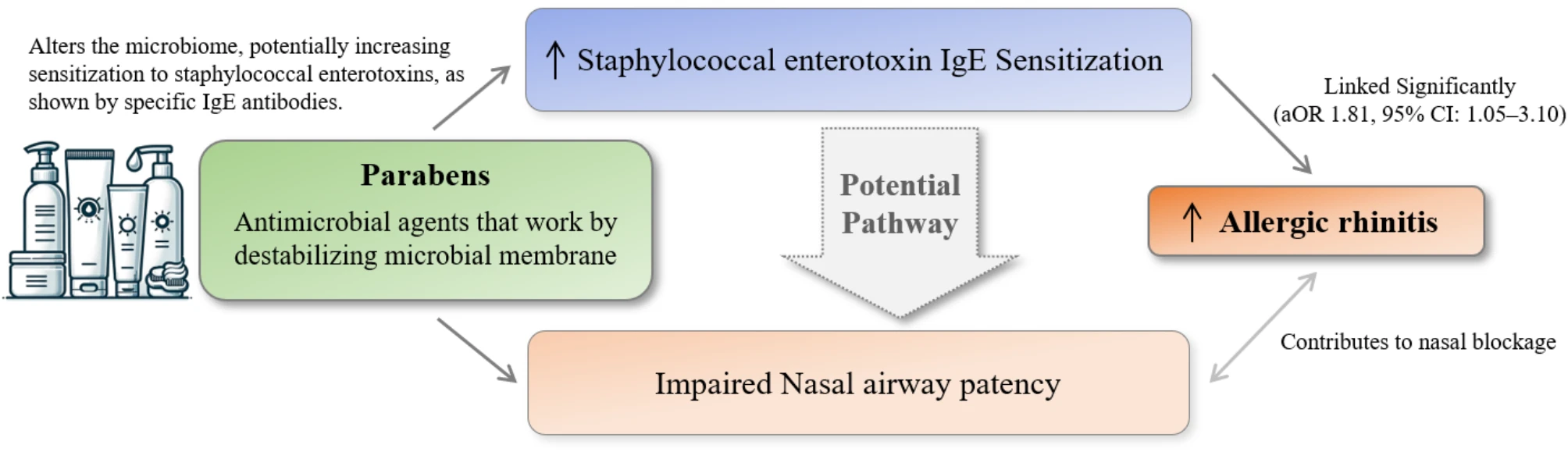
Significant association between sensitization to staphylococcal
enterotoxin and paraben exposure in children, related to
allergic rhinitis and nasal response to decongestants. 
AR Allergic rhinitis, TSST toxic shock syndrome toxin.
The study aims to investigate the link between paraben exposure, Staphylococcal enterotoxin IgE sensitization, and their combined relationship on allergic rhinitis and nasal patency in children. We assessed 276 children aged 10–12, examining their demographic backgrounds, atopy status, prevalence of allergic diseases, and serum specific IgE levels for Staphylococcal enterotoxins A, B, and toxic shock syndrome toxin (TSST). Parabens metabolites in urine samples were measured to assess exposure levels. The cohort included 276 children (mean 10.9 years), comprising 119 males and 157 females.

February 17, 2025

Adherence to Treatment in Allergic Rhinitis During the Pollen Season in Europe: A MASK-air Study

Sousa-Pinto B, Costa EM, Vieira RJ et al. Clin Exp Allergy. 2025 Feb 16. doi: 10.1111/cea.70004. Epub ahead of print. 


ABSTRACT

Background

Adherence to rhinitis treatment has been insufficiently assessed. We aimed to use data from the MASK-air mHealth app to assess adherence to oral antihistamines (OAH), intra-nasal corticosteroids (INCS) or azelastine-fluticasone in patients with allergic rhinitis.

Methods

We included regular European MASK-air users with self-reported allergic rhinitis and reporting at least 1 day of OAH, INCS or azelastine-fluticasone. We assessed weeks during which patients answered the MASK-air questionnaire on all days. We restricted our analyses to data provided between January and June, to encompass the pollen seasons across the different assessed countries.