Abstract
 |
| Molecular mechanisms of CSU |
|
| Molecular mechanisms of CSU |
Abstract
Introduction: Eosinophilic esophagitis (EoE) is a chronic, immune-mediated disorder of the esophagus driven by type-2 inflammation. Dupilumab, a monoclonal antibody targeting the IL-4Ra subunit shared by the IL-4 and IL-13 receptor complexes , has recently emerged as a targeted biologic therapy for EoE. This systematic review evaluates the evidence for dupilumab in EoE across pediatric and adult populations, focusing on efficacy, safety, and symptom improvement.
Methods: MEDLINE and Embase were searched from inception to June 30, 2025. Eligible studies included randomized controlled trials, cohort studies, case-control studies, and case reports reporting dupilumab use in confirmed EoE. Study screening and quality assessment were performed in duplicate. . Data on demographics, atopic comorbidities, dosing regimens, histologic outcomes, symptom improvement, and adverse events were extracted and summarized descriptively.
 |
| Forest plot of histological remission rates with dupilumab across included randomized controlled trials |
Abstract
Background
Respiratory syncytial virus (RSV) is the leading cause of lower respiratory tract infection (LRTI) in infants. Although influenza, parainfluenza, and human metapneumovirus also contribute to LRTI-related hospitalizations, their comparative population-level healthcare burden is not well defined. This study compared population-level healthcare utilization (HCU) associated with RSV-LRTI and LRTI caused by other respiratory viruses (ORspV-LRTI).
Methods
This nationwide retrospective cohort study used electronic health records from Clalit Health Services (CHS), covering more than 5 million individuals in Israel. Infants born in 2015–2023 and hospitalized before 12 months of age with PCR-confirmed viral LRTI during the RSV season were included. Acute healthcare utilization (HCU) was assessed within 30 days following hospital discharge, and long-term respiratory HCU was evaluated through 6 years of age.
Abstract
 |
| Key features of regulatory T cell (Treg) function in maintaining immune and tissue homeostasis. |
Abstract
Purpose of Review
Chronic rhinosinusitis with nasal polyps (CRSwNP) is a heterogeneous inflammatory disease that may be refractory to conventional medical and surgical therapies. Advances in the understanding of type 2 inflammatory mechanisms have led to the development of targeted biologic therapies. This review examines clinical trial evidence, and real-world data supporting biologic use in CRSwNP.
Recent Findings
Four biologics (dupilumab, omalizumab, mepolizumab, tezepelumab) are FDA approved in the United States for the management of refractory CRSwNP. Randomized controlled trials and multiple additional studies have demonstrated the efficacy of biologics in reducing nasal polyp burden and nasal congestion in patients who are refractory to traditional medical/surgical therapy or are poor surgical candidates.
Abstract
Purpose of Review
In this review, we conducted a literature search seeking to better understand the relationship between chronic spontaneous urticaria (CSU) and nonsteroidal anti-inflammatory drugs hypersensitivity (NSAID-hypersensitivity) associated with NSAID exacerbated cutaneous diseases (NECD), its clinical course, and gain insight into the answers to clinical questions.
Recent Findings
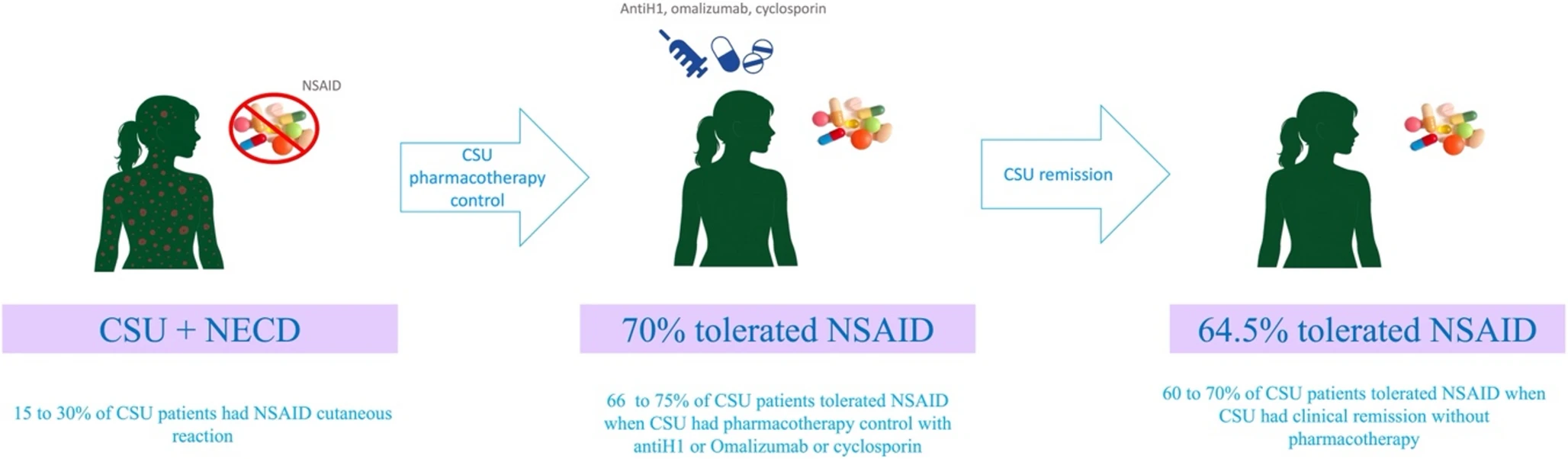 |
| CSU and NSAID cutaneous reaction interaction |
 |
Serum allergen-specific immunoglobulin levels measured by ELISA. |

 |
| Trees, grasses, and weeds share common pan-allergens (i.e., profilins and polcalins), which can lead to false positive reactions in skin prick test or whole allergen extracts. |

