
Abstract
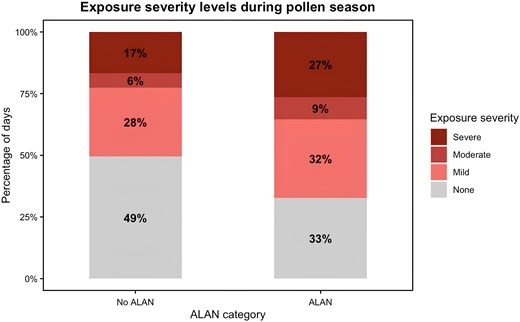 |
| Proportion of days in the pollen season under four exposure severity levels for “No ALAN” and “ALAN” conditions. |
Significance Statement
Artificial light at night (ALAN) is a rapidly expanding form of environmental stressor, yet its effects on pollen dynamics and allergy-related health risks remain largely unexamined. Using long-term airborne pollen data and satellite-derived ALAN observations, this study shows that ALAN is associated with shifting the timing and lengthening the duration of the pollen season across the Northeastern United States. These shifts lead to more days and higher severity of allergenic pollen exposure, suggesting that ALAN is an overlooked driver of allergy risk. The findings highlight the need to incorporate nighttime lighting into public health planning, particularly in urban areas where ALAN exposure and allergy prevalence are the highest.


No comments:
Post a Comment