
Abstract
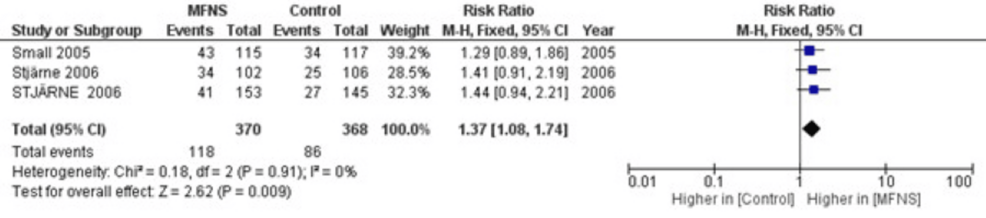 |
| Forest Plot of the Risk Ratio for Subjects With an
ImprovementWith MFNS Once Daily Compared to Placebo |
Abstract
|
| Forest Plot of the Risk Ratio for Subjects With an
ImprovementWith MFNS Once Daily Compared to Placebo |

Abstract
Objective
To evaluate the association between smell loss and other aspects of disease, and evaluate dupilumab efficacy in patients with severe chronic rhinosinusitis with nasal polyps (CRSwNP) and moderate or severe smell loss.
Methods
This post-hoc analysis of the SINUS-24/52 studies (NCT02912468/NCT02898454) analyzed nasal polyp score (NPS, 0−8), nasal congestion/obstruction (NC, 0−3), Lund-Mackay CT-scan score (LMK-CT, 0−24), rhinosinusitis severity visual analog scale (RS-VAS, 0-10), and 22-item Sinonasal Outcome Test (SNOT-22, 0−110) according to baseline monthly average patient-reported loss of smell scores (LoS, 0−3) of >1 to 2 (moderate) or >2 to 3 (severe) in patients randomized to dupilumab 300 mg or placebo every 2 weeks.

 |
| The roles of stakeholders in digital health initiatives. Dark purple: strong driver; light purple: driver; orange: influences the driver HCPs, healthcare professionals. |

Abstract
 |
| Induction of peripheral and central trained immunity (TRIM). |

Abstract
Background
Hereditary angioedema with normal C1-inhibitor function (HAE nC1-INH) and idiopathic angioedema of unknown etiology (AE-UNK) are rare conditions that cause recurrent subcutaneous and submucosal swelling. The characteristics and clinical outcomes of patients with these conditions in Canada have not been studied.
Methods
The aim of this study was to extract real-world evidence from the electronic health records of patients with HAE nC1-INH or AE-UNK who were managed in selected practices of Canadian HAE-treating specialist physicians between 01-Jan-2012 and 01-Jan-2022, to examine case numbers, treatment, clinical outcomes, and healthcare utilization.
Results
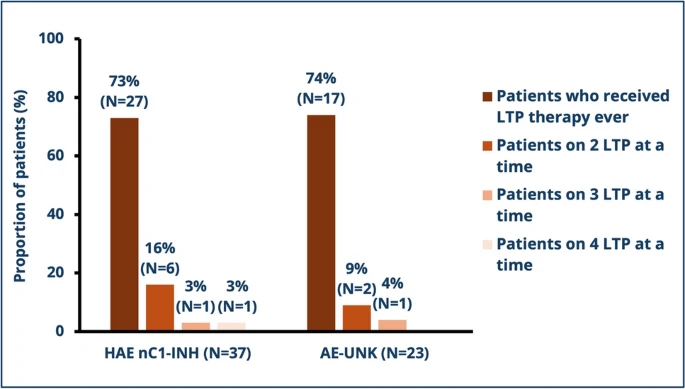 |
| LTP treatment use. HAE nC1-INH, non-histaminergic hereditary angioedema with family history; AE-UNK, non-histaminergic hereditary angioedema without family history |
Abstract
Purpose
The primary aim of this systematic review is to assess the efficacy, safety, and cost-effectiveness of high-volume steroid nasal irrigation (SNI) for treating chronic rhinosinusitis (CRS) and allergic rhinitis (AR).
Methods
Abstract
Purpose of Review
There is growing evidence that enolase is involved in allergy. This manuscript reviews the impact of enolase in allergic disease and describes several sources of this allergen including molds, plants, animals, and pollens, among others. IgE epitopes are carefully analyzed as they may account for cross-reactivity.
Recent Findings
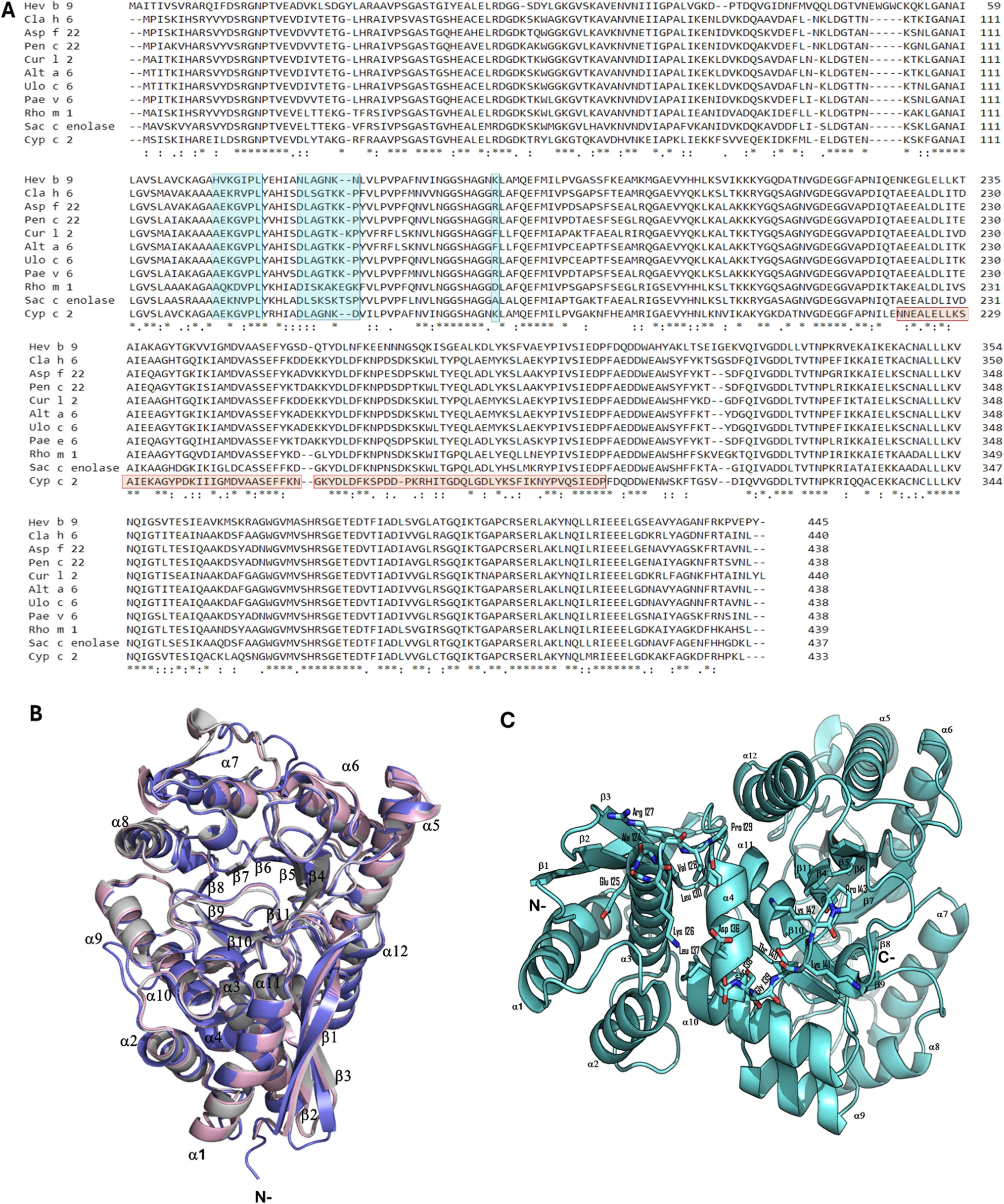 |
| Enolase's conserved amino acid sequence and structure. |