November 3, 2025

Efficacy comparison of combined montelukast-antihistamine and montelukast monotherapy in allergic rhinitis: a meta-analysis of randomized controlled trials

Kim JS, Stybayeva G, Hwang SH.  Eur Ann Allergy Clin Immunol. 2025 Oct 31. doi: 10.23822/EurAnnACI.1764-1489.420. 

SUMMARY

Background. Combination therapy with montelukast and oral antihistamines is commonly used in allergic rhinitis (AR), but its comparative benefit over montelukast monotherapy remains unclear. This meta-analysis aimed to evaluate the efficacy of combination therapy compared to monotherapy, with a focus on symptom-specific outcomes. 

Methods. A comprehensive search of PubMed, SCOPUS, Embase, Web of Science, and Cochrane databases was conducted through April 2025. We systematically reviewed randomized controlled trials comparing montelukast combined with oral antihistamines to montelukast monotherapy in patients with AR. Outcomes included total symptom scores, Rhinoconjunctivitis Quality of Life Questionnaire (RQLQ) scores, and individual symptom domains. Pooled effects were analyzed using standardized mean differences (SMDs) with 95% confidence intervals (CIs). 

Direct comparison of changes in total symptom scores and
Rhinoconjunctivitis Quality of Life Questionnaire (RQLQ)
scores between combination therapy and
montelukast monotherapy.
Results. Thirteen RCTs enrolling 2,950 patients were identified. Combination therapy significantly improved daytime symptoms (SMD = 0.25; 95%CI 0.15 to 0.35), with limited benefit for nighttime symptoms (SMD = 0.10; 95%CI -0.01 to 0.21) or RQLQ scores (SMD = 0.11; 95%CI -0.05 to 0.26). In subgroup analysis, all combinations with loratadine, desloratadine, or levocetirizine showed greater efficacy than monotherapy in improving daytime symptoms.

October 31, 2025

Cellular Stress, Inflammation and Barrier Damage in Gut Epithelial Cells Caused by Aspartame

Y. Pat, D. Yazici, C. Zeyneloglu, et al. Allergy (2025): 1–18, https://doi.org/10.1111/all.70095.


ABSTRACT

Graphical Abstract
Aspartame has been widely used as a sweetener in foods and beverages since the 1980s. In this study, we aimed to assess its effects on gut epithelial cell biology, inflammation and the epithelial barrier. We found that aspartame induces cytotoxic effects, disrupts the epithelial barrier and triggers proinflammatory cytokine release in gastrointestinal epithelial cells, organoids and gut-on-a-chip models at concentrations corresponding to daily consumed doses in food products. Cellular cytotoxicity was observed at doses as low as 1.25 mg/mL. RNA sequencing analysis revealed that aspartame significantly alters the transcriptome in gut-on-a-chip models, with upregulation of pathways involved in the unfolded protein response, pro-apoptotic and inflammatory processes and downregulation of those related to DNA repair and replication.

October 30, 2025

Updated Evidence for Covid-19, RSV, and Influenza Vaccines for 2025-2026

Scott J, Abers MS, Marwah HK et al. N Engl J Med. 2025 Oct 29. doi: 10.1056/NEJMsa2514268. 

Abstract

Background

Changes in the vaccine advisory process in the United States have disrupted immunization guidance, which reinforces the need for independent evidence review to inform decisions regarding immunization for respiratory viruses during the 2025–2026 season.

Methods

We conducted a systematic review of U.S.-licensed immunizations against coronavirus disease 2019 (Covid-19), respiratory syncytial virus (RSV), and influenza. We searched databases on PubMed/MEDLINE, Embase, and Web of Science for updates of the most recent review by the Advisory Committee on Immunization Practices (ACIP) Evidence-to-Recommendations for each disease, which was performed during the 2023–2024 period. Outcomes included vaccine efficacy and effectiveness against hospitalization, other clinical end points, and safety.

Results

Meta-Analysis of Vaccine Effectiveness
against Hospitalization for Covid-19
Of 17,263 identified references, 511 studies met the inclusion criteria. Covid-19 mRNA vaccines against the XBB.1.5 subvariant had pooled vaccine effectiveness against hospitalization of 46% (95% confidence interval [CI], 34 to 55; from cohort studies) and 50% (95% CI, 43 to 57; from case–control studies) among adults and 37% (95% CI, 29 to 44) among immunocompromised adults. In a case–control study, vaccines against the KP.2 subvariant showed an effectiveness of 68% (95% CI, 42 to 82).

Safety and tolerability of astegolimab, an anti-ST2 monoclonal antibody: a narrative review

Kelsen, S.G., Maurer, M., Waters, M. et al.  Respir Res 26, 302 (2025). https://doi.org/10.1186/s12931-025-03360-0


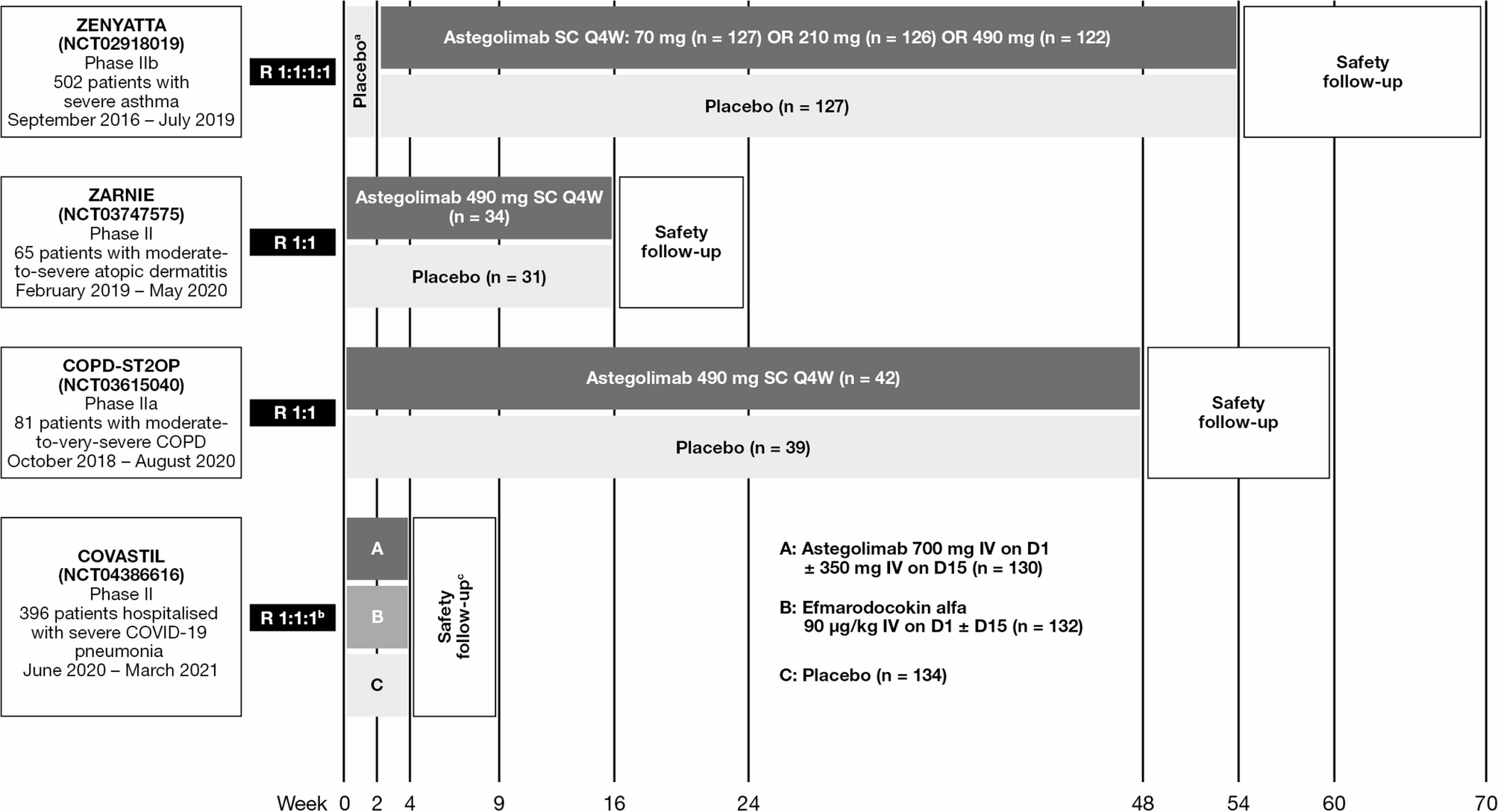
An overview of published randomized, double-blind,
placebo-controlled Phase II/IIa/IIb trials of astegolimab
Abstract

Chronic inflammation is an underlying feature of respiratory diseases such as chronic obstructive pulmonary disease (COPD). Novel therapies that target the inflammatory mechanisms driving acute exacerbations of COPD are required. The ST2 receptor, which binds the alarmin interleukin (IL)-33 to initiate an inflammatory response, is a potential target. Astegolimab, a fully human immunoglobulin G2 monoclonal antibody, which binds with high affinity to ST2 to prevent binding of IL-33, is a potential therapy for COPD. However, targeting inflammatory pathways that form part of the immune system may have unintended consequences, such as implications for the response to infection and cardiovascular function. Therefore, an understanding of astegolimab’s safety profile in clinical use is essential.
This narrative review summarizes clinical safety data from published clinical trials of astegolimab with a focus on adverse events of interest, including infections and cardiac events.

October 27, 2025

Atopic comorbidities associated with chronic spontaneous urticaria: a case-control analysis of the All of Us research program

Cortes JA, Adjei-Frimpong NA, Fakhouri SK, Delacqua F, Oldenburg R. JEADV Clin Prac. Published online October 8, 2025. doi:10.1002/jvc2.70181

ABSTRACT

Background

Chronic spontaneous urticaria (CSU) is a mast cell-driven condition defined by recurrent wheals and/or angioedema lasting over 6 weeks without an identifiable trigger. Though CSU is known to co-occur with atopic diseases and share Th2-dominant immunologic pathways, prior studies have not adequately addressed these relationships in diverse populations.

Objectives

To examine associations between CSU and atopic comorbidities in the All of Us (AoU) research program, a diverse, nationwide National Institutes of Health cohort focused on increasing enrollment from historically underrepresented groups.

Methods

We conducted a matched, case-control study of AoU participants aged ≧ 18 years enrolled between May 6, 2018 and October 1, 2023. CSU cases were identified using SNOMED codes 51611005 and 42265009. Controls were matched 4:1 by age, sex, race, ethnicity, and smoking status.

Montelukast: risk of mental disorders vs. efficacy–a meta-analysis

Sobczak M and Pawliczak R (2025)  Front. Pharmacol. 16:1659852. doi: 10.3389/fphar.2025.1659852

Abstract

Background: Montelukast, a selective leukotriene receptor antagonist, is widely used in the treatment of bronchial asthma and allergic rhinitis (AR). Although it is a well-tolerated drug, there are reports of possible central nervous system side effects, including, for example, mood changes and suicidal thoughts. Therefore, we conducted a meta-analysis to test the effects of montelukast on the mental health of patients taking montelukast and to test its effectiveness in treating asthma and AR.

Methods: PubMed, Web of Science, and the Cochrane Central Register of Controlled Trials databases were searched to find articles of control-compared randomized clinical trials, which investigated the efficacy of montelukast treatment as well as articles about mental disorders after this treatment. The relative risk with 95% confidence interval (CI) and the standardized mean difference with 95% CI were calculated to compare the effect. A random effects model was used to calculate effect sizes.

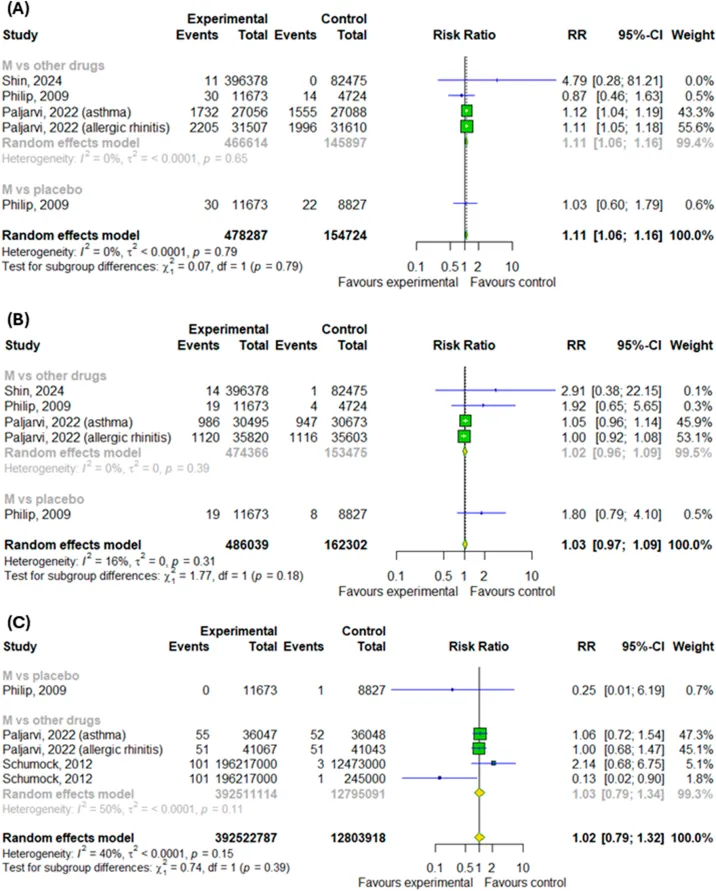
Risk of (A) anxiety, (B) depression and (C) suicidal and self-injurious
behaviors,nonfatal self-harm or completed suicides after montelukast
treatmentcompared to control.
Results: Our meta-analysis was based on 4 studies (mental health analysis) and 19 studies (efficacy analysis). We indicated that montelukast treatment was associated with a higher risk of anxiety by 11% (RR = 1.11; 95% CI [1.06; 1.16]; p < 0.0001, I2 = 0%) without differences between subgroups.

October 26, 2025

Can artificial intelligence improve the diagnosis and management of patients with eosinophilic esophagitis?

Issa IA, Youssef O, Issa T. World J Gastroenterol. 2025 Oct 14;31(38):110999. doi: 10.3748/wjg.v31.i38.110999. 

Abstract

Eosinophilic esophagitis (EoE) is a chronic, immune-mediated condition leading to esophageal inflammation and a range of symptomatic complications if inadequately managed. Recent epidemiological trends indicate a significant increase in EoE prevalence, complicating patient care amid diagnostic challenges associated with conventional methods such as endoscopy and histopathological analysis. This review explores the promise of artificial intelligence (AI) and deep learning models in enhancing the diagnosis and management of EoE, addressing the limitations of traditional approaches including inter-observer variability, invasiveness, and delays in diagnosis. By synthesizing findings from peer-reviewed studies, we demonstrate that AI algorithms exhibit high diagnostic accuracy in recognizing subtle endoscopic features and quantifying eosinophilic tissue infiltration. Moreover, these technologies can streamline workflows, reduce dependency on manual assessments, and enhance personalized care strategies. 

Summary of artificial intelligence methodologies applicable
to eosinophilic esophagitis diagnosis.


Despite the potential benefits, challenges regarding the integration of AI into clinical practice remain, including issues of algorithmic bias, data privacy, and the need for robust validation across diverse healthcare settings.

October 24, 2025

Family dermatology life quality index (F-DLQI): German validation and applicability to parents of infants and toddlers with dermatological conditions

Traxler, J., da Silva Burger, N., Augustin, M. et al.  Eur J Pediatr 184, 703 (2025). https://doi.org/10.1007/s00431-025-06494-x

Abstract

Parents of children with skin conditions face an additional caregiving burden and significant health-related quality of life (HRQoL) impairments. This study aimed to (1) test the psychometric properties of the German version of the Family Dermatology Life Quality Index (F-DLQI) in parents of infants and toddlers with any dermatological diagnosis and (2) examine the associations between the parents’ and their children’s HRQoL. Parents (n = 126) of 0- to 4-year-old children with any skin disease filled in the F-DLQI and an instrument assessing their children’s HRQoL, the Infants and Toddlers Dermatology Quality of Life questionnaire (InToDermQoL). 

Descriptive statistics of the F-DLQI at baseline
and follow-up (T1, n = 126)
The attending physician provided clinical information. Internal consistency, 2-week test–retest reliability, measurement error, and known-groups validity across severity levels of the F-DLQI were examined. Associations between the parents’ and their children’s HRQoL were tested using regression analysis. Internal consistency and test–retest reliability of the F-DLQI were good (Cronbach’s α = 0.896, ICC = 0.867), and construct validity was confirmed. Parents’ HRQoL (F-DLQI) and children’s current complaints as reported by their parents, but not physician-rated disease severity, were associated with children’s HRQoL.