Labrador-Horrillo M, Cenni B, Ferrer Puga M. J Investig Allergol Clin Immunol. 2026 Jun 15;36(3):170-184. doi: 10.18176/jiaci.1183.
Abstract
 |
| BTK signaling transduction pathways and inhibitor binding sites |
Labrador-Horrillo M, Cenni B, Ferrer Puga M. J Investig Allergol Clin Immunol. 2026 Jun 15;36(3):170-184. doi: 10.18176/jiaci.1183.
Abstract
|
| BTK signaling transduction pathways and inhibitor binding sites |
A largely unknown proportion of Hymenoptera venom-allergic patients do not undergo venom immunotherapy (VIT) despite positive allergy testing and counselling. We aimed to identify factors associated with the refusal of VIT, and evaluate the natural course of venom allergy in untreated individuals.
Out of 1163 candidates for VIT, 271 (23.3%) declined or postponed treatment for at least 12 months. Complete data from 166 of these patients, who were interviewed and counselled during routine follow-up, were available for retrospective evaluation.
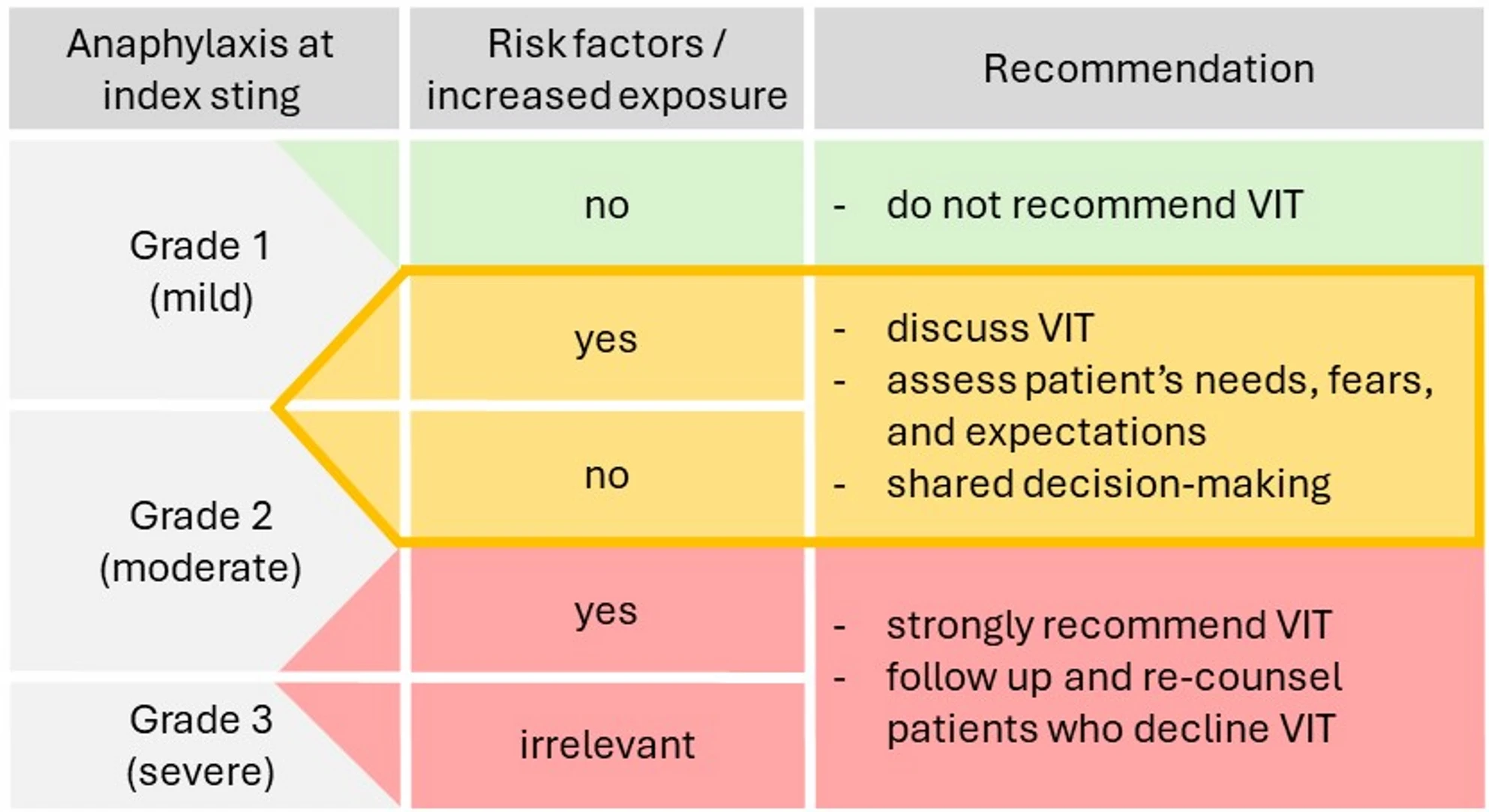 |
| Individualised counselling and recommendation of VIT, taking into account anaphylaxis severity, risk factors/exposure, and the patient’s needs, fears, and expectations |
What is Known: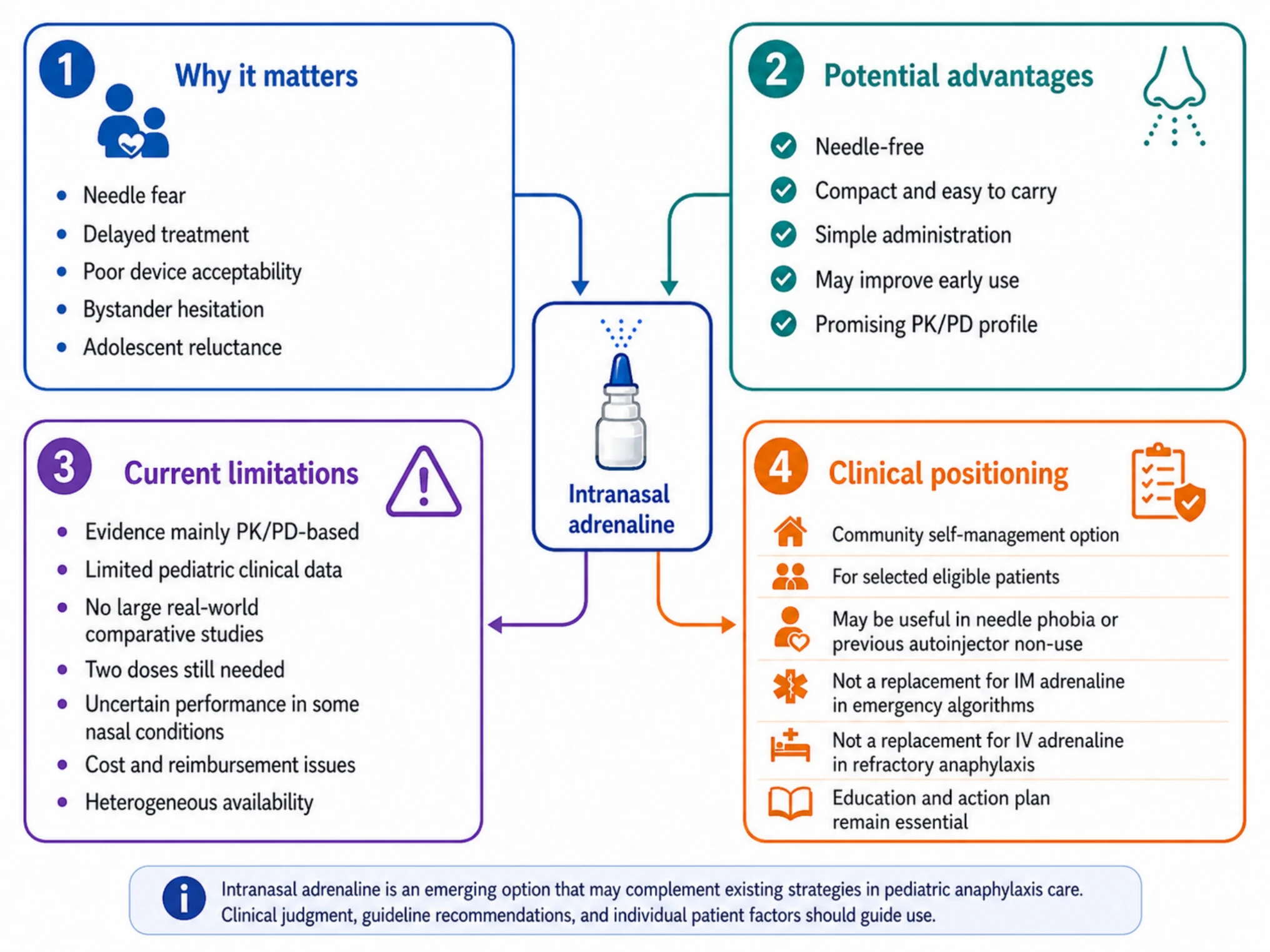
Intranasal adrenaline in pediatric self-management: promise and limits.
• Intramuscular adrenaline is the first-line treatment for anaphylaxis and should not be delayed.
• Food is the leading trigger in children, while drugs, venom, and cofactors become more relevant with age.
What is New:
• Intranasal adrenaline is a promising needle-free option, but pediatric evidence remains limited.
• Omalizumab and oral immunotherapy may reduce risk but do not replace emergency preparedness.
Abstract
Anaphylaxis is a time-critical, potentially fatal systemic hypersensitivity reaction. This narrative review summarizes recent advances in the diagnosis and management of anaphylaxis in children and adolescents, with emphasis on new diagnostic frameworks, improved self-management strategies, intranasal adrenaline, and disease-modifying therapies.
Sublingual immunotherapy (SLIT) efficacy for allergic rhinitis (AR) varies considerably, with 30%–40% of patients showing poor response. A reliable tool integrating multidimensional factors for individualized efficacy prediction remains lacking. This study aimed to construct an optimal prediction model incorporating clinical characteristics, environmental exposure factors, and immune-inflammatory indicators to predict SLIT efficacy in AR patients, and further establish a nomogram as an auxiliary interpretable tool for intuitive clinical application.
A total of 346 AR patients receiving SLIT were included and randomly allocated to training (n = 242) and validation (n = 104) cohorts at a 7:3 ratio. Baseline data included demographics, clinical features, symptom scores, environmental exposures, and immune-inflammatory indicators. Univariate and multivariate logistic regression analyses were performed to screen independent predictive factors. Three models, including random forest, support vector machine, and conventional logistic regression, were developed for performance comparison. Model performance was evaluated using the area under the receiver operating characteristic curve (AUC), calibration curves, and decision curve analysis (DCA). On the basis of independent predictors, a nomogram was constructed for visual interpretation. Shapley Additive Explanations (SHAP) analysis was further applied to interpret feature importance of the optimal model.


Abstract
Background
The psychosocial burden of food allergy (FA) impacts the entire family, particularly the affected child and their parents.
Objective
To evaluate psychosocial parental burden (PB) in families of children with FA, identify factors associated with PB, and assess its relationship with child-reported and parent-proxy food allergy quality of life (FAQOL).
Methods
A total of 114 children aged 2 to 17 years with IgE–mediated FA and their parents (mothers = 86.5%) completed validated age-specific FAQOL and PB questionnaires. Associations between demographic and clinical variables and scores were analyzed.
Results
 |
| Strict allergen avoidance and trace reactions relate to PB. |
 |
| Mechanism of Action |
Abstract
Background
Pumpkin seed, a member of the Cucurbitaceae family, is increasingly consumed because of its high protein content and perceived health benefits. Along with its growing use, cases of pumpkin seed allergy are being reported. However, data on pumpkin seed allergy and oral immunotherapy (OIT) remain scarce.
Methods
We conducted a retrospective chart review at a tertiary pediatric center (Sainte-Justine University Hospital Center, Montreal, Canada) including all patients who initiated or completed pumpkin seed OIT since 2019. OIT protocols were individualized, with dose increases typically performed every four weeks. Target maintenance doses were at least 300 mg of pumpkin seed protein.
Results
 |
| Caracteristics of the population |


