June 29, 2024

Impact of Cosmetics and Cleansers in Atopic Dermatitis—How to Advise Patients.

Marcelino, J., Giménez-Arnau, A.M.  Curr Treat Options Allergy 11, 62–76 (2024). https://doi.org/10.1007/s40521-024-00360-1

Abstract

Purpose of Review

Atopic dermatitis (AD) or eczema is a frequent chronic inflammatory skin disease. Taking care of the eczematous skin is important to reduce the inflammation and return it to a healthier looking nourished skin. Beyond recommending topical anti-inflammatory drugs and the use of emollients, recommendations on the correct use of other everyday skin products, as cleansers or make-up products, are lacking.

Recent Findings

Potential allergens that can be found in cleansers and make-up removers
The dry, itchy, and inflamed eczematous skin causes anxiety, poor self-image, low self-esteem, decreased social skills, and an overall decrease in a patients’ quality of life. The use of make-up has been shown to ameliorate these impacts. Knowledge on the components of cosmetic products can help suit the products to an eczematous skin.

Utilization and related harms of systemic glucocorticosteroids for atopic dermatitis: claims data analysis.

Kristina Hagenström, Theresa Klinger, Katharina Müller, Charlotte Willers, Matthias Augustin,  British Journal of Dermatology, 2024;, ljae250, https://doi.org/10.1093/bjd/ljae250

Abstract

Background and objectives

Systemic glucocorticosteroids (SGCs) are used in the short-term treatment of atopic dermatitis (AD), but are not recommended for long-term use since associated with severe side effects. This study aimed to characterize the utilization and potentially negative effects of SGC use for AD in German statutory health insurance (SHI) claims data.

Patients and methods

Cross-sectional and longitudinal analysis of a large nationwide SHI dataset. SGC drug prescriptions and incidences of predefined comorbidities after drug initiation known as potentially harmful side effects were analysed.

June 28, 2024

Multidisciplinary Management of Pediatric Chronic Rhinosinusitis with Nasal Polyposis

Oh, E., Miller, J.E. & Lee, J.T. Curr Treat Options Allergy 11, 34–48 (2024). https://doi.org/10.1007/s40521-024-00362-z

Abstract

Purpose of review

This review explores the comprehensive management and treatment strategies for pediatric chronic rhinosinusitis with nasal polyps (CRSwNP). It addresses questions regarding the efficacy and safety of both current treatments and emerging therapies. Additionally, this paper examines the diagnostic challenges in pediatric CRSwNP, particularly its distinct presentations and characteristics compared to those in adults.

Recent findings

Current research highlights various approaches for treating pediatric CRSwNP. Intranasal corticosteroids are found to be effective in managing symptoms, while oral corticosteroids are used to manage severe cases.

Satisfaction, Qol and adherence of patients allergic to dust mites and/or pollens undergoing sublingual immunotherapy.

Garrido-Fernández S, Fernández DG, López GS, Mar Escribano Rodríguez MD, Delgado VM, Iglesias-Souto J, Castro Gómez C, Bòria EV, Hernández-Peña J, Sánchez-López J. Immunotherapy. 2024 Jun 18:1-12. doi: 10.1080/1750743X.2024.2347828.

Abstract
Aim: Sublingual immunotherapy (SLIT) changes history of allergic respiratory disease (ARD). However, adherence is a barrier for optimal outcomes. Patients & methods: In the QUALI study, 859 patients with house-dust mite (HDM) and/or pollen induced ARD uncontrolled with symptomatic treatment and undergoing SLIT for at least 6 months or including one pre-coseason (pollen) were collected. 
Allergic respiratory disease evolution following
sublingual immunotherapy.
Results & conclusion:
SLIT significantly improved allergic rhinoconjunctivitis (ARC) and asthma symptom control, leading to reduced medication, meaningful health-related quality of life gain, improved nasal, ocular and bronchial symptoms and everyday life activities. Patients were highly satisfied and most of them adhered to SLIT, being forgetfulness the main non-adherence motive. SLIT is a quick effective treatment against persistent moderate-to-severe symptoms in ARC and asthma but it should been improve forgetfulness, as non-adherence reason.

Plain language summary
Sublingual immunotherapy (SLIT) has really changed how we deal with allergic respiratory disease. But there's a catch: sticking to the treatment can be tough.
In the QUALI study, we looked at 859 patients dealing with dust mite and/or pollen allergies who were not getting relief from the usual treatments. We put them on SLIT for at least 6 months or during pollen season.
This treatment made a big difference. Symptoms got better, people needed less medication and they felt better in their day-to-day lives. Most patients were happy with the treatment and stuck to it well, but some forgot sometimes.
In short, SLIT works fast and works well for moderate to severe allergies and asthma. But we need to help people remember to stick with it.

June 25, 2024

Eosinophil-associated diseases: the Allergist's and Clinical Immunologist's perspective

Marra AM, Rossi CM, Piga MA, Moroncini G, Bilò MB. Eur Ann Allergy Clin Immunol. 2024 Mar 28. doi: 10.23822/EurAnnACI.1764-1489.339. 

Abstract 

Eosinophil-associated diseases (EADs) refer to heterogeneous conditions in which eosinophils are believed to play critical pathological roles. They encompass common respiratory conditions, such as asthma, chronic rhinosinusitis with nasal polyps (CRSwNP), less common primary eosinophilic disorders of gastrointestinal tract, and rare conditions including eosinophilic granulomatosis with polyangiitis (EGPA) and hypereosinophilic syndrome (HES).

A literature search was carried out in January 2024 in the MEDLINE and Scopus databases using the PubMed search engine (PubMed, National Library of Medicine, Bethesda, MD). We focused on blood eosinophilia and hypereosinophilia. A diagnostic workup is proposed. From allergist’s point of view, we focused the review on 4 groups of eosinophilic disorders of specific interest.

June 24, 2024

High Serum Allergen-Specific IgE of House Dust Mite in Predicting the Risk of Comorbidity in Children with Allergic Conjunctivitis

Tang XJ, He JT, Liu Q, Liu E, Chen L.  J Asthma Allergy. 2024;17:601-609  https://doi.org/10.2147/JAA.S467671

Purpose: To investigate the patterns of allergens in allergic conjunctivitis (AC) and the association with allergic comorbidity.

Methods: This retrospective cross-sectional study enrolled 2972 children with AC. Clinical data, including sex, age, allergic comorbidities (allergic asthma, allergic rhinitis, and atopic dermatitis), and serum allergen-specific immunoglobulin E (sIgE), were collected from the electronic medical record (EMR). The categorical variables were compared with the chi-square test. The characteristics of allergens in children of different ages and comorbidities were analyzed by trend chi-square. The sensitivity level of HDM associated with AC and comorbidities was assessed by odds ratios (ORs) with 95% confidence intervals of logistic regression analysis.

June 23, 2024

Risk of Anaphylaxis Associated with Cold Urticaria

Bizjak, M., Rutkowski, K. & Asero, R. Curr Treat Options Allergy (2024). https://doi.org/10.1007/s40521-024-00366-9

Abstract

Purpose of review

Cold-induced anaphylaxis (ColdA) is a poorly understood form of anaphylaxis that occurs in patients with cold urticaria (ColdU). This comprehensive review aims to deepen the understanding of ColdA. It emphasizes the identification of high-risk ColdU patients susceptible to ColdA and provides recommendations for their effective management.

Recent findings

Recent studies, including the large international COLD-CE study, have identified clinical features of ColdU patients associated with increased ColdA risk. These individuals can now be recognized through routine clinical assessments.

June 21, 2024

COFAITH and COMFA: A Collective Roadmap for Past and Future Food Allergy Clinical Trials and Observational Research on Interventions

Protudjer, J. ., Munblit, D., Apfelbacher, C., Marchisotto, M., Cook, E., Capper, I., Rodríguez Del Río, P. and Comberiati, P. (2024) Clin Exp Allergy. https://doi.org/10.1111/cea.14522

Abbreviations
COFAITH: clinical outcomes of efficacy in food allergen immunotherapy trials
COMFA: core outcome measures for food allergy

Summary

  • Recent initiatives explored food allergy outcome harmonisation, for existing immunotherapy trials and future clinical trials.

  • Outcomes common to both initiatives included desensitisation, sustained unresponsiveness/remission, quality of life and allergic symptoms.


Management of Refractory Anaphylaxis: An Overview of Current Guidelines

Pouessel, G., Dribin, T., Tacquard, C., Tanno, L., Cardona, V., Worm, M., Deschildre, A., Muraro, A., Garvey, L. and Turner, P. (2024) Clin Exp Allergy. https://doi.org/10.1111/cea.14514

ABSTRACT

In this review, we compare different refractory anaphylaxis (RA) management guidelines focusing on cardiovascular involvement and best practice recommendations, discuss postulated pathogenic mechanisms underlining RA and highlight knowledge gaps and research priorities. There is a paucity of data supporting existing management guidelines.

First- and second-line treatment of refractory anaphylaxis
according to the current guidelines. IV, intravenous.
Therapeutic recommendations include the need for the timely administration of appropriate doses of aggressive fluid resuscitation and intravenous (IV) adrenaline in RA. The preferred second-line vasopressor (noradrenaline, vasopressin, metaraminol and dopamine) is unknown. Most guidelines recommend IV glucagon for patients on beta-blockers, despite a lack of evidence.

June 20, 2024

Unraveling determinants of severe anaphylaxis — A cluster analysis from a large national hospitalization database

Luciana Kase Tanno , Pham Thao Van Luong, Megane Dieval, Caroline Dunoyer, Nicolas Molinari, Isabella Annesi-Maesano, Pascal Demoly. Journal of Allergy and Hypersensitivity Diseases Volume 1, January–March 2024, 100004

Abstract

Background

Understanding potential risk factors and phenotypes at-risk of anaphylaxis can tailor public health actions to prevent avoidable deaths. Therefore, our aim was to explore patterns of hospital admissions diagnosed with anaphylaxis in France from 2012 to 2021, across different age groups, using the national French hospital database and to evaluate potential determinants to propose phenotypes at-risk, with a particular view to severe cases.

Methods

This is a descriptive study, using data from the French Program for the Medicalization of Information Systems, from 2012 to 2021. We included all patients hospitalized for anaphylaxis using International Classification of Diseases (ICD)-10 codes listed as a primary diagnosis.

Transition between subcutaneous and sublingual allergen immunotherapy: Recommendations of the Brazilian Association of Allergy and Immunology (ASBAI)

Aarestrup, Fernando Monteiro et al. Journal of Allergy and Clinical Immunology: Global, Volume 3, Issue 3, 100281

Abstract

The use of allergen immunotherapy (AIT) in Brazil has specific regional conditions owing to the pattern of allergen sensitization, as well as to genetic, socioeconomic, and cultural characteristics. This review article aims to discuss the clinical practice of AIT by the subcutaneous or sublingual route in Brazil, addressing the possibilities of transition between these forms of administration. A systematic review using the PubMed and Cochrane databases was performed, and the websites of major allergy and immunology organizations were consulted.

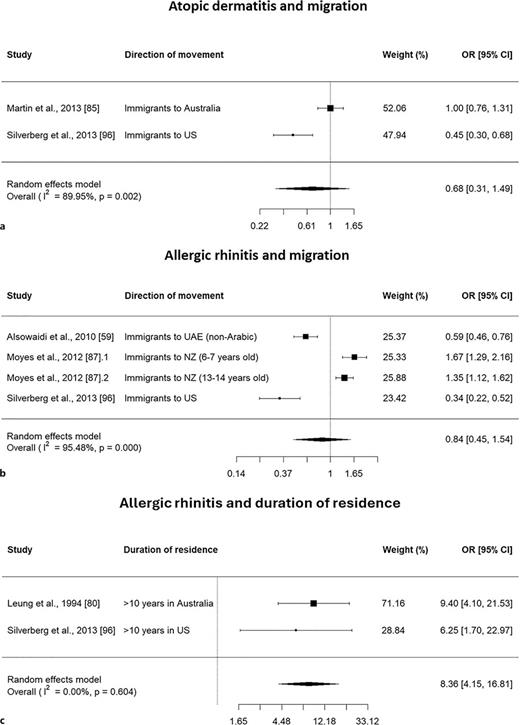
The Association between Migration and Prevalence of Allergic Diseases: A Systematic Review and Meta-Analysis

Qi Yi Ambrose Wong; Fook Tim Chew Int Arch Allergy Immunol 1–24.  JUNE 20 2024 https://doi.org/10.1159/000539382

Introduction: Allergic diseases remain of concern due to their increasing prevalence worldwide. Intrinsic and environmental risk factors have been implicated in the pathogenesis of allergic disease. Among the possible risk factors, migration has been associated with the manifestation of allergic diseases. We aimed to consolidate the existing evidence, review the hypotheses for the relationship between environmental factors and allergic disease, and provide a direction for future work. Methods: This systematic review and meta-analysis complied with Preferred Reporting Items for Systematic Reviews and Meta-Analyses (PRISMA) guidelines. The Web of Science database was searched in September 2023 to retrieve publications investigating the relationship between allergic rhinitis (AR), atopic dermatitis (AD), or asthma and the following factors: (i) migrant status (i.e., migrants vs. natives) or (ii) duration since migration among migrants.

June 19, 2024

Biomarkers of peanut allergy in children over time.

Foong R-X, Du Toit G, van Ree R, et al.  Allergy. 2024; 00: 1-12. doi:10.1111/all.16193

Abstract

Background

Various biomarkers are used to define peanut allergy (PA). We aimed to observe changes in PA resolution and persistence over time comparing biomarkers in PA and peanut sensitised but tolerant (PS) children in a population-based cohort.

Methods

Participants were recruited from the EAT and EAT-On studies, conducted across England and Wales, and were exclusively breastfeed babies recruited at 3 months old and followed up until 7–12 years old. Clinical characteristics, skin prick test (SPT), sIgE to peanut and peanut components and mast cell activation tests (MAT) were assessed at 12 months, 36 months and 7–12 years. PA status was determined at the 7–12 year time point.

Contribution of MASK-air® as an mHealth Tool for Digitally Enabled Person-Centered Care in Rhinitis and Asthma

Sousa-Pinto B, Fonseca JA, Bousquet J. J Investig Allergol Clin Immunol. 2024 May 14:0. doi: 10.18176/jiaci.0994. 


Abstract:

 How MASK-air® can contribute to research and clinical practice.
GDPR indicates General Data Protection Regulation.
In chronic diseases, mHealth apps help to improve clinical management and provide valuable real-world scientific evidence. In allergic rhinitis, a market research study identified only 4 mHealth apps that were multilingual, resulted in scientific publications, and displayed a comprehensive list of medications. Of these 4 apps, MASK-air® generated the highest number of scientific publications. MASK-air was launched in 2015 and is currently available in 30 countries, with data collected from more than 30 000 users. It comprises a daily monitoring questionnaire, enabling patients to register their daily allergy symptoms by means of visual analog scales and their medication use.

June 17, 2024

Development of an efficient, effective, and economical technology for proteome analysis

Martin KR, Le HT, Abdelgawad A, Yang C, Lu G, Keffer JL, Zhang X, Zhuang Z, Asare-Okai PN, Chan CS, Batish M, Yu Y. Cell Rep Methods. 2024 Jun 10:100796. doi: 10.1016/j.crmeth.2024.100796.

Highlights

• Rapid, robust, and cost-effective alternative to proteomics sample preparation
• Versatile filter devices can meet a wide range of proteomics analysis needs
• On-filter in-cell digestion facilitates low-input proteomics
• Ready-to-go E3 and E4 filter devices are available

Motivation
Conventional proteomics sample processing methods often have high technical barriers to broad biomedical scientists, leading to difficulties for quick adoption and standardization. Existing protocols are also typically associated with costly reagents and accessories, making them less feasible for resource-limited settings as well as for clinical proteomics and/or core facilities where large numbers of samples are usually processed. Thus, there is a strong unmet need for an easy-to-use, reliable, and low-cost approach for general proteomics sample preparation.

Summary
We present an efficient, effective, and economical approach, named E3technology, for proteomics sample preparation. By immobilizing silica microparticles into the polytetrafluoroethylene matrix, we develop a robust membrane medium, which could serve as a reliable platform to generate proteomics-friendly samples in a rapid and low-cost fashion. We benchmark its performance using different formats and demonstrate them with a variety of sample types of varied complexity, quantity, and volume.
Could Corticosteroid/Antihistamine Combination Nasal Sprays Be Used as Anti-Inflammatory Reliever Therapy for Allergic Rhinitis?

Lipworth BJ, Stewart K, Kuo CR, Chan R. J Allergy Clin Immunol Pract. 2024 Jun;12(6):1434-1435. doi: 10.1016/j.jaip.2024.01.024.

EDITORIAL

Current guidelines advocate using regular treatment with intranasal corticosteroid/antihistamine (CS/AH) combination sprays as step-up therapy for adolescent and adult patients with moderate to severe persistent allergic rhinitis (AR) where there is suboptimal control with intranasal CS alone.1 

Rationale for using low-dose intranasal corticosteroid/antihistamine (CS/AH)
combination as on-demand anti-inflammatory reliever therapy for allergic rhinitis (AR).
Patients would escalate and de-escalate the dose according to symptoms,
prevailing triggers, and attendant disease severity.
The therapeutic rationale here is that the CS component is effective at suppressing symptoms attributable to type 2 (T2) inflammation mediated by eosinophils, whereas the AH provides additional activity on T2 symptoms mediated by IgE and mast cells. The evidence from clinical studies shows superior clinical efficacy based on symptom scores when comparing twice-daily CS/AH combination versus twice-daily CS alone, demonstrating additivity of response for the 2 moieties.2,3

Smartphone applications supporting self-management programme for adults with Chronic Obstructive Pulmonary Disease: A Scoping Review.

Glynn L, Mc Cann M, Mc Cabe C. PLOS Digit Health. 2024 Jun 13;3(6):e0000532. doi: 10.1371/journal.pdig.0000532.

Abstract

Introduction: Chronic Obstructive Pulmonary Disease (COPD) significantly impacts on both the quality and quantity of life for patients due to frequent exacerbations requiring hospital admissions resulting in increased morbidity and mortality. A self-management programme purpose is to increase one's knowledge, confidence, and skills to self-manage their chronic illness such as COPD.

Objective: The objective of this review will therefore answer the following research question: What is the current literature pertaining to the use of a smartphone app in supporting a comprehensive self-management programme among COPD patients? A preliminary search was conducted in, Medline, Embase and CINAHL databases to ascertain index terms and keywords. Following this a rigorous search was carried out on Medline, Embase, CINAHL, Web of Science and ASSIA. The findings from this search are presented in tabular form using the PRSIMA flow diagram.

June 16, 2024

Allergic Conjunctivitis Management: Update on Ophthalmic Solutions.

Leonardi A, Quintieri L, Presa IJ, LLoves JM, Montero J, Benítez-Del-Castillo JM, Lestón FJS, González-Mancebo E, Asero R, Groblewska A, Kuna P. Curr Allergy Asthma Rep. 2024 Jun 13. doi: 10.1007/s11882-024-01150-0. 

Abstract

Purpose of review: The aim of this review, is to present an updated revision of topical management of SAC and PAC, based on the available scientific evidence and focused on the impact of ophthalmic solution formulations on eye surface.
Recent findings: Physicians treating ocular allergy should be aware of tear film and tear film disruption in SAC and PAC, and how eye drop composition and additives affect the physiology of the allergic eye. Seasonal and perennial allergic conjunctivitis (SAC and PAC) are the most frequent causes of ocular allergy (OA), and both conditions are underdiagnosed and undertreated.
Predictive model to differentiate chronic histaminergic angioedema and chronic spontaneous urticaria with angioedema.

Láinez-Nuez A, Salas-Parra G, Juárez-Guerrero A, Picó-Peris A, Baeza ML. J Allergy Clin Immunol Glob. 2024 May 9;3(3):100278. doi: 10.1016/j.jacig.2024.100278. 

Abstract

Background: Chronic histaminergic angioedema (CHA) may be classified as a separate acquired angioedema (AE) or as an endotype of chronic spontaneous urticaria (CSU). A recent study suggested them to be independent pathologies.

Objective: We carried out an exhaustive analysis between CHA and AE-CSU to explore the possible differentiation between them on the bases of a series of predictors.

Methods: An observational, retrospective, cross-sectional, and exploratory study was designed. Fifty-six CHA and 40 AE-CSU patients were included. Data were extracted from the year before and year after time of diagnosis.

Predicting the daily number of patients for allergic diseases using PM10 concentration based on spatiotemporal graph convolutional networks.

Jeon HJ, Jeon HJ, Jeon SH.  PLoS One. 2024 Jun 13;19(6):e0304106. doi: 10.1371/journal.pone.0304106. 

Abstract

A comparison of the prediction performance in MST-GCN with and
withoutPM10 concentrations in the input data.
Air pollution causes and exacerbates allergic diseases including asthma, allergic rhinitis, and atopic dermatitis. Precise prediction of the number of patients afflicted with these diseases and analysis of the environmental conditions that contribute to disease outbreaks play crucial roles in the effective management of hospital services. Therefore, this study aims to predict the daily number of patients with these allergic diseases and determine the impact of particulate matter (PM10) on each disease. To analyze the spatiotemporal correlations between allergic diseases (asthma, atopic dermatitis, and allergic rhinitis) and PM10 concentrations, we propose a multi-variable spatiotemporal graph convolutional network (MST-GCN)-based disease prediction model.

June 15, 2024

Regulatory framework for development and marketing authorization of allergen products for diagnosis of rare type I and type IV allergies: The current status


Zimmer J, Mahler V. Allergol Select. 2024 May 31;8:212-219. doi: 10.5414/ALX02505E.

Abstract

Test allergens with marketing authorizations in Germany (as of March 19, 2024).
Development, production, and marketing authorization of allergen products is generally challenging due to several specific characteristics, including the natural source as well as the multitude of allergenic materials. Also, depending on the frequency of sensitization in the population, the number of patients available for inclusion in clinical trials can be a limiting factor for product development. In the development of allergen products for diagnosis of type I and type IV allergies these challenges are particularly demanding because, in contrast to certain products for allergen-specific immunotherapy, no exemptions from marketing authorization are foreseen for this product group in Directive 2001/83/EC.

To be or not to be direct: The role of neuromedin U in neuro-eosinophil crosstalk

Ruichao Liu, Wenhao Shao, Jun Xu, Coco Chu. Sci Bull (Beijing). 2024 Jan 30;69(2):148-150. doi: 10.1016/j.scib.2023.11.056.

Schematic of the role of neuromedin U in neuro-eosinophil crosstalk

With the development of new experimental techniques (e.g., single-cell RNA sequencing (scRNA-seq), light sheet microscopy, and clustered regularly interspaced palindromic repeats (CRISPR)/CRISPR-associated protein 9 (Cas9)), emerging studies have begun to uncover the interactions between the nervous system and the immune system, both in health and diseases.

June 14, 2024

Patients taking benralizumab, dupilumab, or mepolizumab have lower postvaccination SARS-CoV-2 immunity

Martin C. Runnstrom, Pedro A. Lamothe, Caterina E. Faliti et al. 

In press.


Background

Biologic therapies inhibiting the IL-4 or IL-5 pathways are very effective in the treatment of asthma and other related conditions. However, the cytokines IL-4 and IL-5 also play a role in the generation of adaptive immune responses. Although these biologics do not cause overt immunosuppression, their effect in primary severe acute respiratory syndrome coronavirus 2 (SARS-CoV-2) immunization has not been studied completely.

Objective

Our aim was to evaluate the antibody and cellular immunity after SARS-CoV-2 mRNA vaccination in patients on biologics (PoBs).

Severe cutaneous reaction with initiation of dupilumab for atopic dermatitis and prurigo nodularis: An unusual adverse effect


JAAD Case Reports

Leore Lavin MSc, Gabriella Chefitz BA, Deep Patel MD, Woong Kee Baek MD, Saakshi Khattri MD

Introduction
Dupilumab is a human immunoglobulin (Ig)-G4 monoclonal antibody that has demonstrated significant efficacy in treating various inflammatory skin conditions, including atopic dermatitis (AD) and prurigo nodularis.1,2 The most common treatment-emergent adverse events include nasopharyngitis (28.1%), conjunctivitis (19.5%), AD exacerbation (16.4%), upper respiratory infections (13.1%), and injection site reactions (9.7%).1

Severe cutaneous reactions have rarely been reported with dupilumab but have been noted with the use of many biologics, including anti-tumor necrosis factor therapeutics, interleukin 6, and interleukin 12/23 inhibitors. These reactions include, but are not limited to, new-onset psoriasis, erythema multiforme (EM), lupus-like reactions, and hypersensitivity reactions.3

Herein we report a patient with AD who developed a severe cutaneous drug eruption on sun exposed skin following initiation of dupilumab.

June 13, 2024

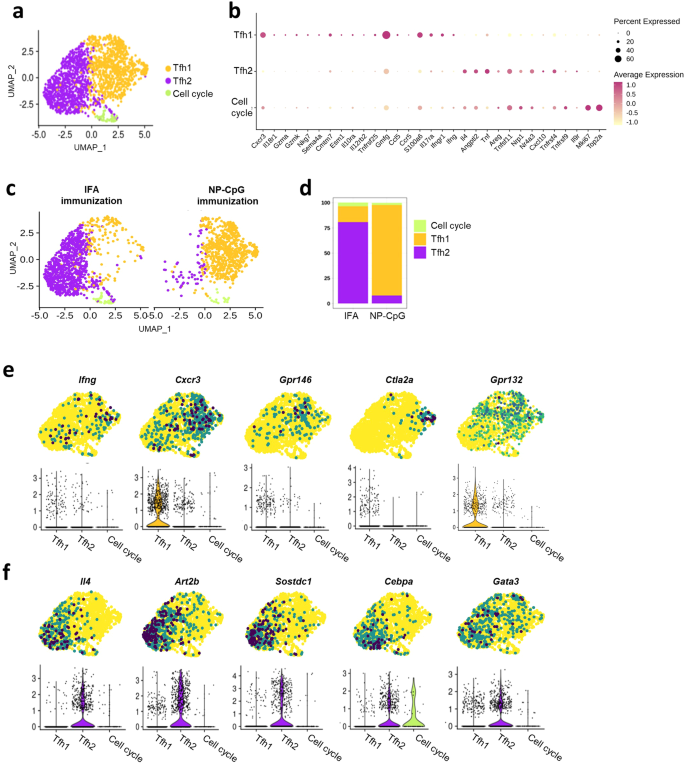
Specialized Tfh cell subsets driving type-1 and type-2 humoral responses in lymphoid tissue.

Kumar, S., Basto, A.P., Ribeiro, F. et al.  Cell Discov 10, 64 (2024). https://doi.org/10.1038/s41421-024-00681-0
Abstract 

Heterogeneity of Tfh cells under the two types of immunization.
Effective antibody responses are essential to generate protective humoral immunity. Different inflammatory signals polarize T cells towards appropriate effector phenotypes during an infection or immunization. Th1 and Th2 cells have been associated with the polarization of humoral responses. However, T follicular helper cells (Tfh) have a unique ability to access the B cell follicle and support the germinal center (GC) responses by providing B cell help. We investigated the specialization of Tfh cells induced under type-1 and type-2 conditions. We first studied homogenous Tfh cell populations generated by adoptively transferred TCR-transgenic T cells in mice immunized with type-1 and type-2 adjuvants.

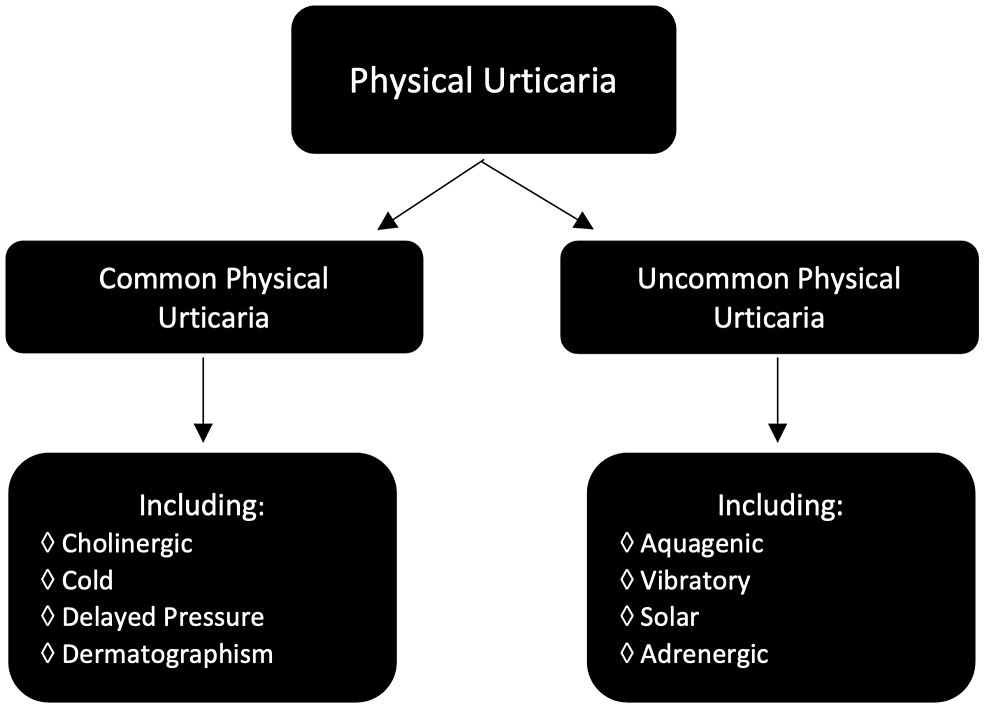
Adrenergic Urticaria: An Updated Review.


Slater K N, Abu-Zahra A, Kartono F (June 11, 2024)  Cureus 16(6): e62171. doi:10.7759/cureus.62171

Abstract

It can be difficult to delineate the cause of urticarial eruptions, and in chronic cases, it can be a challenging condition to effectively treat. Several forms of urticarial eruptions are well documented and established. Our review focuses on a form of urticaria that is less commonly reported: adrenergic urticaria. In this review, we aim to consolidate the literature in the hopes that this urticarial subtype is considered in urticarial differentials, as well as highlight potential gaps in the research and future directions in treatment options.

PDF


June 12, 2024

Embedding patients' values and preferences in guideline development for allergic diseases: The case study of Allergic Rhinitis and its Impact on Asthma 2024.

Vieira RJ, Sousa-Pinto B, Bognanni A, Yepes-Nuñez JJ, Zhang Y, Lityńska J, Sadowska E, Borowiack E, Samolinski B, Togias A, Zuberbier T, Bousquet J, Schünemann HJ. Clin Transl Allergy. 2024 Jun;14(6):e12377. doi: 10.1002/clt2.12377.

Abstract

Recommendations for or against the use of interventions need to consider both desirable and undesirable effects as well as patients' values and preferences (V&P). In the decision-making context, patients' V&P represent the relative importance people place on the outcomes resulting from a decision. Therefore, the balance between desirable and undesirable effects from an intervention should depend not only on the difference between benefits and harms but also on the value that patients place on them. V&P are therefore one of the criteria to be considered when formulating guideline recommendations in the Evidence-to-Decision framework developed by the Grading of Recommendations, Assessment, Development and Evaluations (GRADE) Working Group.

Usage prevalence of angioedema patient-reported outcome measures: results from the UCARE and ACARE PROMUSE study

Cherrez-Ojeda I, Bousquet J, Giménez-Arnau A et al. J Allergy Clin Immunol Pract. 2024 May 9:S2213-2198(24)00464-1. doi: 10.1016/j.jaip.2024.04.056.

Clinical Communication

Angioedema manifests as self-limited, localized, and transient swellings of the skin or mucosal tissues due to a loss of vascular integrity. This allows fluid to move into tissues such as the face, larynx, genitals, and bowel wall(1). The global lifetime prevalence of acquired and hereditary angioedema is 7.4%(2) and 0.002%(3), respectively. Notably, angioedema is the third most common skin condition in emergency medicine.(4) The burden of angioedema includes poor quality of life, mental issues, and reduced work and school productivity, leading to substantial direct and indirect expenses.(5) Patient-reported outcome measures (PROMs) asses disease burden,activity, and control.(6) PROMs are also used to assess the response to treatments in routine clinical practice and help to evaluate innovative therapies under development in clinical trials. Moreover, the integration of PROMs will promote cooperative decision-making among healthcare practitioners and patients, eventually improving patient satisfaction and optimizing treatment outcomes(6).

June 11, 2024

Regular consumption following early introduction of allergenic foods and aggressive treatment of eczema are necessary for preventing the development of food allergy in children

Sakihara, Tetsuhiro. Current Opinion in Allergy and Clinical Immunology 24(3):p 160-165, June 2024. | DOI: 10.1097/ACI.0000000000000983

Abstract

Purpose of review 

Over the past two decades, food allergy prevention strategies have shifted from ‘delayed introduction’ to ‘no delayed introduction’ to ‘early introduction’ of allergenic foods. This article reviews important research in this field published in the early 2020s to support future strategies for food allergy prevention.

Recent findings 

Recent randomized controlled trials (RCTs), systematic reviews, meta-analyses, and real-world studies have reported that early allergenic food introduction, especially peanut and egg, are effective for preventing food allergies. However, there are also reports that food-induced anaphylaxis admission rates in infants are increasing.

Modelling the Costs of Sublingual Immunotherapy versus Subcutaneous Immunotherapy Based on Clinical Appointments and Impacts of Patient Travel in Sweden

Cardell LO, Sterner T, Ahmed W, Slættanes AK, Svärd M, Pollock RF. Clinicoecon Outcomes Res. 2024;16:493-506 https://doi.org/10.2147/CEOR.S462698

Abstract

Aim: In Sweden, allergy immunotherapy (AIT) is available as either subcutaneous immunotherapy (SCIT) injections or sublingual immunotherapy (SLIT) tablets and is used to treat moderate-severe allergic rhinitis (AR). This study sought to determine direct and indirect annual costs stemming from treatment-related travel, appointments, waiting times and medication costs, before exploring likely CO2 emission-related cost-savings for 20,330 patients receiving SCIT or SLIT-tablets in Sweden.

Methods: A model was developed in Python to capture each category of costs in the target patient population. Absenteeism costs arising from treatment-related travel were determined by obtaining average hourly pay data from Swedish Government sources. Absenteeism costs were also calculated for 30-minute post-dose observation times, which occurred during one clinical appointment for SLIT patients, and all clinical appointments for SCIT patients.

June 8, 2024

Metabolomics of IgE-Mediated Food Allergy and Oral Immunotherapy Outcomes based on Metabolomic Profiling


Yamini V. Virkud, Jennifer N. Styles, Rachel S. Kelly, Sarita U. Patil, Bert Ruiter, Neal P. Smith, Clary Clish, Craig E. Wheelock, Juan C. Celedón, Augusto A. Litonjua, Supinda Bunyavanich, Scott T. Weiss, Erin S. Baker, Jessica A. Lasky-Su, Wayne G. Shreffler medRxiv 2024.05.31.24308233; doi: https://doi.org/10.1101/2024.05.31.24308233

Abstract

Background The immunometabolic mechanisms underlying variable responses to oral immunotherapy (OIT) in patients with IgE-mediated food allergy are unknown.

Objective To identify novel pathways associated with tolerance in food allergy, we used metabolomic profiling to find pathways important for food allergy in multi-ethnic cohorts and responses to OIT.

Methods Untargeted plasma metabolomics data were generated from the VDAART healthy infant cohort (N=384), a Costa Rican cohort of children with asthma (N=1040), and a peanut OIT trial (N=20) evaluating sustained unresponsiveness (SU, protection that lasts after therapy) versus transient desensitization (TD, protection that ends immediately afterwards). Generalized linear regression modeling and pathway enrichment analysis identified metabolites associated with food allergy and OIT outcomes.

June 6, 2024

Telemedicine and Resource Utilization in Pulmonary Clinic

Puthumana, R.M., Grosgogeat, C.A., Davis, J.K. et al. BMC Pulm Med 24, 267 (2024). https://doi.org/10.1186/s12890-024-03066-x

Abstract

Background

Telemedicine use increased with the Covid-19 pandemic. The impact of telemedicine on resource use in pulmonary clinics is unknown.

Methods

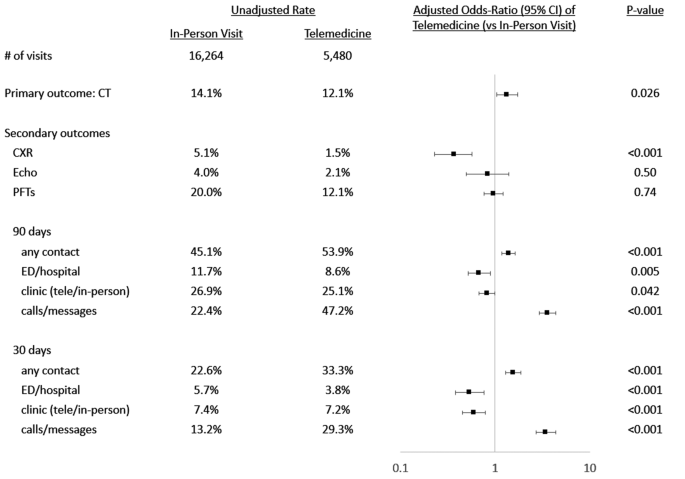
This retrospective cohort study identified adults with pulmonary clinic visits at the University of Miami Hospital and Clinics (January 2018-December 2021). The primary exposure was telemedicine versus in-person visits. Standard statistics were used to describe the cohort and compare patients stratified by visit type. Multivariable logistic regression models evaluated the association of telemedicine with resource use (primarily, computed tomography [CT] orders placed within 7 days of visit).

Results

Association of Telemedicine with Resource Use. 
21,744 clinic visits were included: 5,480 (25.2%) telemedicine and 16,264 (74.8%) in-person. In both, the majority were < 65-years-old, female, and identified as Hispanic white. Patients seen with telemedicine had increased odds of having CT scans ordered within 7 days (adjusted odds ratio [aOR] 1.34, [95% confidence interval 1.04–1.74]); and decreased odds of chest x-rays (aOR 0.37 [0.23–0.57]). Telemedicine increased odds of contact of any kind with our healthcare system within 30-days (aOR 1.56 [1.29–1.88]) and 90-days (aOR 1.39 [1.17–1.64]).

June 5, 2024

Anaphylaxis in a Swiss university emergency department: clinical characteristics and supposed triggers

Ehrhard, S., Eyb, V., Gautschi, D. et al. Allergy Asthma Clin Immunol 20, 35 (2024). https://doi.org/10.1186/s13223-024-00901-y

Abstract

Background

Anaphylaxis is the most severe form of acute systemic and potentially life-threatening reactions triggered by mast and basophilic cells. Recent studies show a worldwide incidence between 50 and 112 occurrences per 100,000 person-years. The most identified triggers are food, medications, and insect venoms. We aimed to analyze triggers and clinical symptoms of patients presenting to a Swiss university emergency department for adults.

Methods

Six-year retrospective analysis (01/2013 to 12/2018) of all patients (> 16 years of age) admitted with moderate or severe anaphylaxis (classification of Ring and Messmer ≥ 2) to the emergency department. Patient and clinical data were extracted from the electronic medical database of the emergency department.

Results

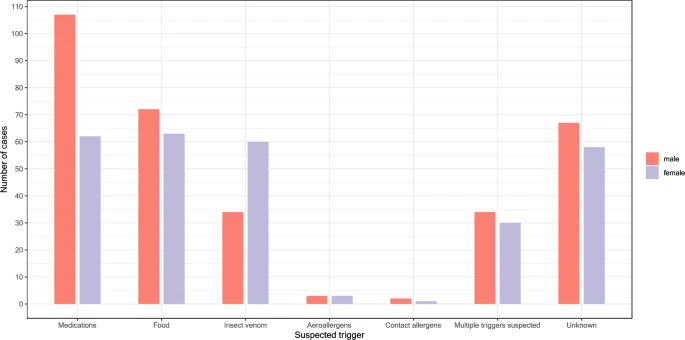
Suspected triggers: different frequency between women and men, n = 531
Of the 531 includes patients, 53.3% were female, the median age was 38 [IQR 26–51] years. The most common suspected triggers were medications (31.8%), food (25.6%), and insect stings (17.1%).

June 2, 2024

Multiplex Assays in Allergy Diagnosis: Allergy Explorer 2 versus ImmunoCAP ISAC E112i


Nösslinger H, Mair E, Oostingh GJ, Ahlgrimm-Siess V, Ringauf A, Lang R.  Diagnostics (Basel). 2024 May 8;14(10):976. doi: 10.3390/diagnostics14100976.

Abstract

Frequency of detection of animal and plant pan-allergens
by ISAC (blue) and ALEX
2 (green) and their concordance
ImmunoCAP ISAC E112i (ISAC) and Allergy Explorer 2 (ALEX2) detect specific immunoglobulin E (IgE) reactivity. Both multiplex assays contain molecular allergens and ALEX2 additionally includes allergen extracts and inhibitors that block the binding of IgE to cross-reacting carbohydrate determinants (CCDs). This study aimed to compare the performance of ISAC and ALEX2 by determining the IgE reactivity against allergen extracts and/or allergen components and by using qualitative, semiquantitative, and quantitative analyses of all comparable allergen components in sera from 216 participants recruited in South Tyrol/Italy.