January 5, 2026

COVID-19 mRNA Vaccination and 4-Year All-Cause Mortality Among Adults Aged 18 to 59 Years in France

Semenzato L, Le Vu S, Botton J, et al.  JAMA Netw Open. 2025;8(12):e2546822. doi:10.1001/jamanetworkopen.2025.4682

Key Points

Question  Are COVID-19 mRNA vaccines associated with the long-term risk of all-cause mortality?

Findings  In this cohort study including 22.7 million vaccinated individuals and 5.9 million unvaccinated individuals, vaccinated individuals had a 74% lower risk of death from severe COVID-19 and no increased risk of all-cause mortality over a median follow-up of 45 months.

Meaning  These national-level results found no increased risk of 4-year all-cause mortality in individuals aged 18 to 59 years vaccinated against COVID-19, further supporting the safety of the mRNA vaccines that are being widely used worldwide.

Abstract

Importance  While several studies have assessed the impact of COVID-19 vaccination on short-term mortality, none have compared long-term mortality by vaccination status, particularly in young individuals who are less likely to experience severe disease following SARS-CoV-2 infection.

January 3, 2026

TZ1391: a computationally designed circular mRNA multi-epitope vaccine candidate against Mycobacterium tuberculosis via TLR3 immunomodulation

Ali, A., Alamri, A., Mishra, V.K. et al.  BMC Immunol (2026). https://doi.org/10.1186/s12865-025-00795-4


Abstract

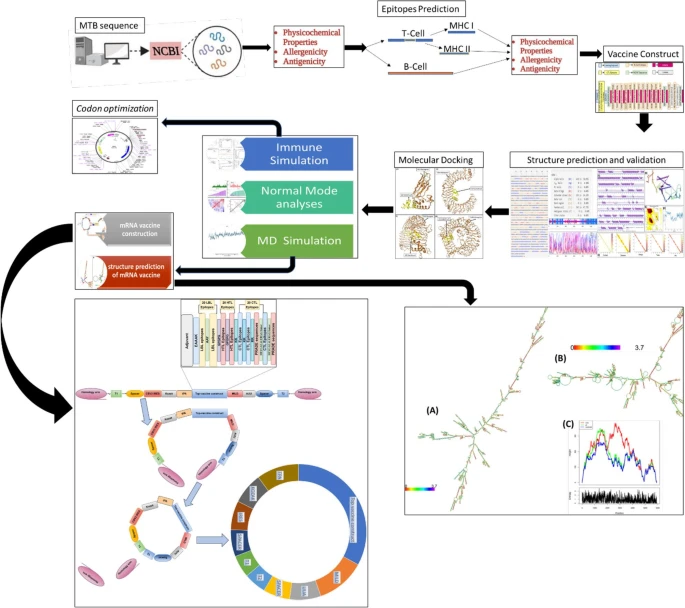
Graphical Abstract
Tuberculosis (TB), caused by Mycobacterium tuberculosis, remains a major global health burden due to latent infection, multidrug resistance, and the limited efficacy of the BCG vaccine. To address this challenge, we computationally designed and evaluated a circular mRNA-based multi-epitope vaccine candidate, TZ1391. Five experimentally validated M. tuberculosis antigens (ESAT-6, CFP-10, Ag85B, PPE18, and HspX) were used to predict immunodominant cytotoxic T lymphocyte (CTL), helper T lymphocyte (HTL), and B-cell epitopes.

January 2, 2026

Peanut Oral Immunotherapy Using 30 and 300 mg Maintenance Doses


Abstract
Background
The lowest dose of peanut oral immunotherapy (P-OIT) has not been determined.
Objective
To evaluate whether very low-dose oral immunotherapy (30 mg) may safely and effectively increase tolerated doses and induce immunologic changes.
Methods
Visual Summary
We prospectively enrolled peanut-allergic children reactive to 444 mg peanut protein (PP) or less in double-blind placebo-controlled food challenges (DBPCFC) and randomly assigned them to three groups. Two were double-blinded P-OIT groups escalating to 30 mg (Group 30 mg) or 300 mg (Group 300 mg) PP maintenance doses. A third group followed open-label avoidance (Group Avoid). Cumulative tolerated doses of 443 mg or greater and 1,043 mg or greater PP were compared with Group Avoid by DBPCFC planned at 1 year.

December 29, 2025

Hypocomplementemic Urticarial Vasculitis: A Case Report

Aparicio E E, Guerrero D V, Alcántara V D, et al. (December 26, 2025) Cureus 17(12): e100143. doi:10.7759/cureus.100143


Abstract

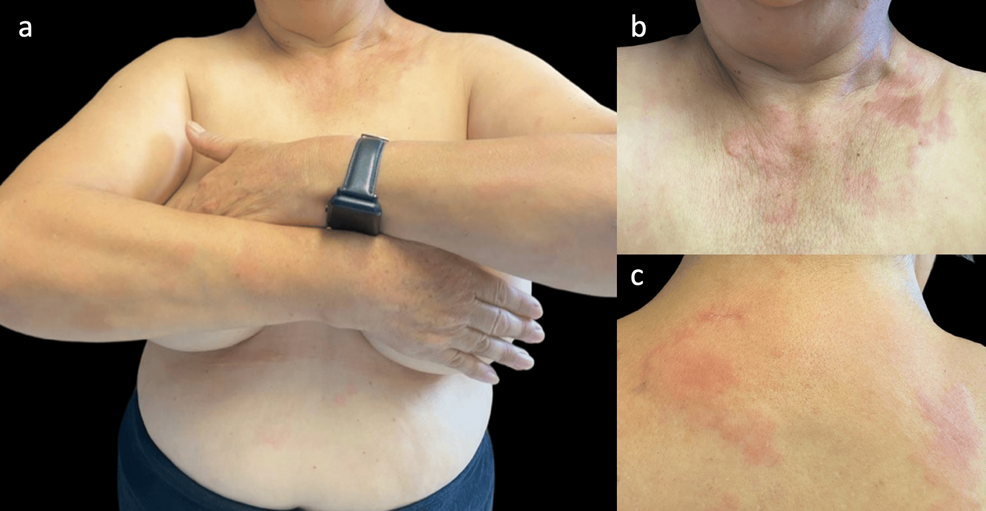
Cutaneous manifestations of hypocomplementemic urticarial vasculitis
Urticarial vasculitis (UV) is an inflammatory condition that affects small vessels, generating urticarial lesions with wheals lasting >24 hours. It can be divided into two main groups: normocomplementemic (NUV) and hypocomplementemic urticarial vasculitis (HUV). The latter is a rare condition, whose association with autoimmune diseases, primarily systemic lupus erythematosus (SLE), makes its diagnosis difficult.

December 26, 2025

A Systematic Review and Meta-Analysis on the Induction of Confirmed Eosinophilic Esophagitis as a Side Effect of Allergen Immunotherapy: An EAACI Task Force Report

Rossi CM, Terreehorst I, Apostolidou E et al. Allergy. 2025 Dec 16. doi: 10.1111/all.70183.

ABSTRACT

Risk of bias (RoB) domains for the randomized controlled trials (RCT)
on the development of eosinophilic esophagitis (EoE) after allergen
immunotherapy (AIT).
The European Academy of Allergy and Clinical Immunology (EAACI) established a Task Force to assess the existing data on the relationship between eosinophilic esophagitis (EoE) and allergen immunotherapy (AIT). This systematic review and meta-analysis aimed to study the incidence of confirmed EoE, developing as a side effect of AIT to food or airborne allergens, following the Preferred Reporting Items for Systematic Reviews and Meta-Analysis (PRISMA) 2020 guidelines. The literature search was performed in three databases (PubMed, Embase and Scopus). Databases were searched from inception to March 31st, 2023. A total of 17 studies met the criteria for inclusion in the review.

Unravelling allergic rhinitis: exploring pathophysiology, advances in treatment, and future directions.

Singh AK, Shaili S, Siddiqui A et al. Front Allergy. 2025 Dec 4;6:1636415. doi: 10.3389/falgy.2025.1636415.


Abstract

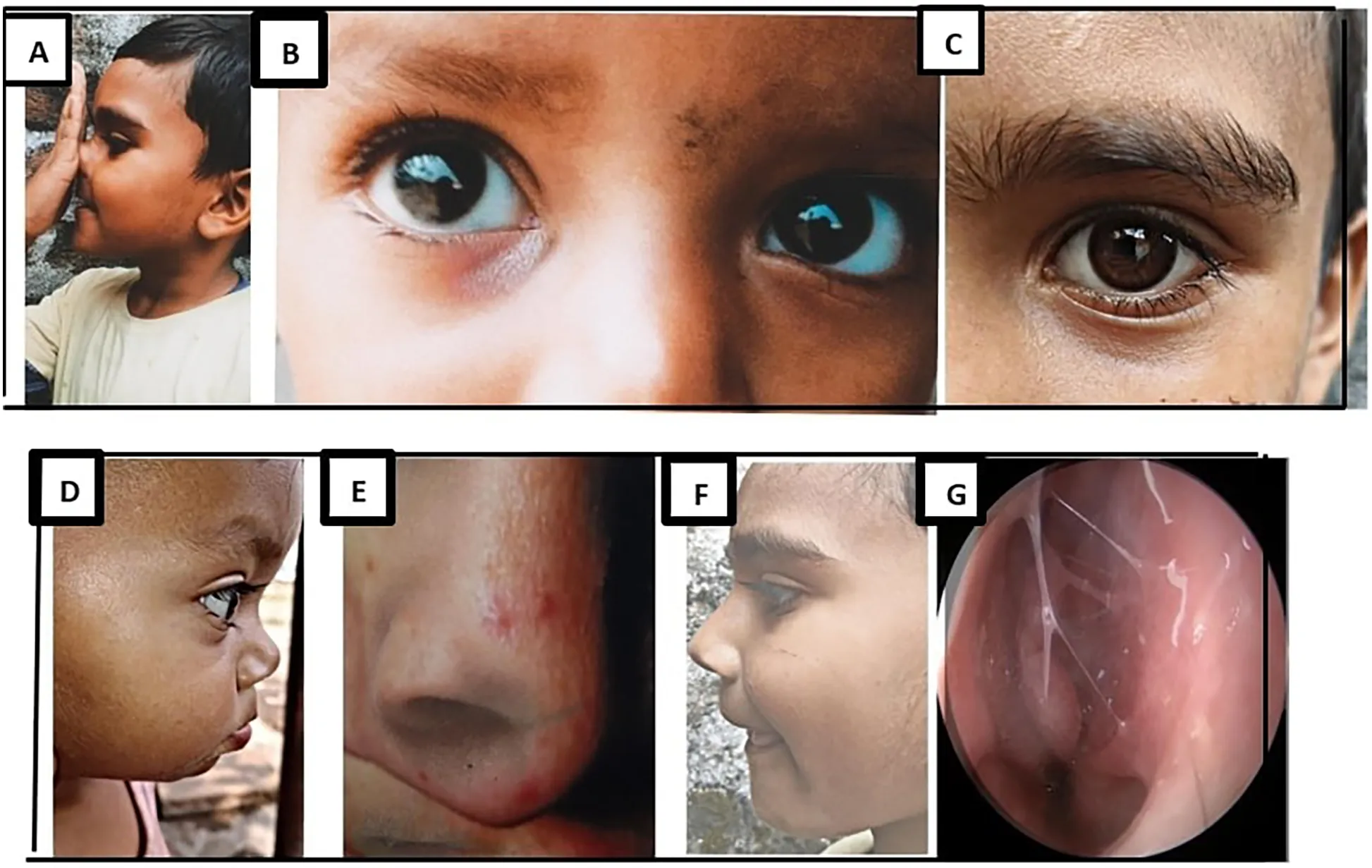
The pathophysiology of AR results in typical examination findings 
(A) the allergic salute. (B) Allergic shiners. (C) Dennie-Morgan lines.
 
(D) Facial grimacing or twitching. This is related to nasal itching. 
(E) Nasal creasing related to the allergic salute. (F) Allergic facies. 
(G) Typical nasal mucosa.
Allergic rhinitis (AR) is a complex, multifactorial condition that continues to pose significant clinical and public health challenges, despite the availability of established therapeutic strategies. It significantly contributes to a lower quality of life by causing sleep issues, mental fatigue, and a decline in productivity. A thorough grasp of AR is crucial to enhancing diagnosis and treatment results because of its pervasive effects and ongoing management gaps. This review covers a wide range of topics, such as classification schemes, historical perception, and physical consequences of AR.

December 23, 2025

Comparative efficacy of omalizumab, dupilumab, and remibrutinib in chronic spontaneous urticaria: a network meta-analysis of randomized control trials

Xiong G, Rayner DG, Kim L et al. J Dermatolog Treat. 2025 Dec;36(1):2580374. doi: 10.1080/09546634.2025.2580374.

Abstract
Introduction
Chronic spontaneous urticaria (CSU) is a skin condition that significantly impairs quality of life. While omalizumab remains the standard treatment for patients who have failed antihistamines, emerging therapies show promise in randomized control trials (RCTs). This study aims to compare the relative efficacy of omalizumab, dupilumab, and remibrutinib in CSU.

Methods
Four databases were searched for RCTs evaluating omalizumab (75/150/300 mg Q4W), dupilumab (300 mg Q2W), or remibrutinib (25 mg BID) in CSU. Urticaria Activity Score (UAS7), Itch Severity Score (ISS7), Dermatology Life Quality Index (DLQI; DLQI 0/1), disease control (UAS7 ≤ 6), and symptom remission (UAS7 = 0) were assessed at weeks 12/24. Frequentist random-effects network meta-analysis were conducted in R.

Results
Forest plot depicting reduction in UAS7 compared to placebo
at week 12 of dupilumab 300 mg biweekly, omalizumab 300 mg,
150 mg, or 75 mg every four weeks, and remibrutinib 25 mg
twice daily.
Fifteen studies (4,913 patients) were included. Omalizumab 300 mg demonstrated the greatest efficacy in UAS7, ISS7, symptom remission, and disease control at both timepoints. Remibrutinib showed the greatest DLQI improvement and second-highest UAS7 reduction and odds of symptom remission.

A retrospective cohort study on the association between allergic rhinitis, sublingual immunotherapy, and COVID-19 symptomatology

Zhang, YY., Lu, MP., Chen, YB. et al. Sci Rep (2025). https://doi.org/10.1038/s41598-025-31902-5


Abstract

The impacts of allergic rhinitis (AR) and allergen-specific sublingual immunotherapy (SLIT) on coronavirus disease 2019 (COVID-19) have not been fully understood. Therefore, the aim of this study was to investigate the effects of AR and SLIT on symptoms of COVID-19 within one month after Chinese authorities adjusted their COVID-19 response measures. The study enrolled 1368 participants, including 746 AR patients and 622 controls without allergic diseases. SLIT was administered to 122 infected AR patients (AR with SLIT group), while it was not administered to the other 483 infected AR patients (AR without SLIT group). Patients’ outcomes were compared after propensity score matching (PSM). The data showed that AR played a dual role in COVID-19, acting as both a protective factor against respiratory symptoms and a risk factor increasing the likelihood of olfactory/gustatory dysfunctions and fever, compared to non-allergic individuals.