J. Jacob, A. Fong, C. Joyce, M. Lloyd, A. Lowe, and C. Katelaris. Allergy (2026): 1–22, https://doi.org/10.1111/all.70382.
ABSTRACT
![]() |
| Selection of studies into the review (PRISMA flow diagram). |
A blog that publishes updates and open access scientific papers about allergy, asthma and immunology. Editor: Juan Carlos Ivancevich, MD. Specialist in Allergy & Immunology
J. Jacob, A. Fong, C. Joyce, M. Lloyd, A. Lowe, and C. Katelaris. Allergy (2026): 1–22, https://doi.org/10.1111/all.70382.
![]() |
| Selection of studies into the review (PRISMA flow diagram). |
Y.-M.Ye, M.-E.Kim, B.Kwon, and D.-H.Nahm. Experimental Dermatology 35, no. 4 (2026): e70249, https://doi.org/10.1111/exd.70249.
ABSTRACT
Chronic spontaneous urticaria (CSU) remains challenging to manage in patients who do not respond adequately to antihistamines or currently available immunomodulatory therapies. Intramuscular injection of autologous total IgG (autologous immunoglobulin therapy: AIGT) has demonstrated clinical efficacy, safety and immunomodulatory effects in patients with moderate-to-severe atopic dermatitis in a randomized placebo-controlled clinical trial. However, the clinical usefulness of AIGT in patients with CSU has not been evaluated. We conducted a prospective open-label pilot study to assess the efficacy and safety of AIGT in antihistamine-refractory CSU. Fifteen adults with CSU received nine weekly intramuscular injections of 100 mg autologous IgG from Week 0 through Week 8 (inclusive).
![]() |
| Longitudinal changes in UAS7 (A), UCT (B), CU-QoL (C) and VAS (D) from baseline to Weeks 4, 8, 12, 16, 20 and 24. |
Abstract
Objectives
Atopic dermatitis (AD), a chronic, immune-mediated inflammatory disease, is characterized by intense itch, eczematous rash, and skin pain, which can have negative impacts to quality-of-life (QoL), sleep, and mental health (especially anxiety and depression). Evaluation of the impacts of AD on the patient’s lived experience are most accurately assessed by the patient, making measures of patient-reported outcomes (PROs) indispensable. The objective of the current study was to assess the long-term impact of upadacitinib, a once-daily oral selective Janus kinase inhibitor approved for the treatment of moderate-to-severe AD, on patient-reported outcomes, providing a comprehensive in-depth evaluation of results of patient experience across multiple domains.
Methods
Using integrated data from the Measure Up 1 & 2 trials, the current study characterizes the efficacy of upadacitinib on several measures that assess the impact of AD on patients’ lives, including patient-reported disease and symptom severity, sleep, emotional well-being, daily activities, QoL, and treatment satisfaction.
Piggott T, Saadat P, Herrmann A et al. Ann Intern Med. 2026 May 12. doi: 10.7326/ANNALS-25-04761. Epub ahead of print.
Abstract
![]() |
| GRADE framework for integrating planetary health in health guidelines. |
Cherrez-Ojeda I, Bousquet J, Zuberbier T et al. Front Allergy. 2026 Apr 24;7:1666241. doi: 10.3389/falgy.2026.1666241.
Abstract
Rationale: Guidelines advise for the implementation of patient-reported outcomes (PROMs) to provide crucial insights into patients' perceptions of their disease burden, treatment needs, and quality of life. Despite their proven benefits in managing chronic respiratory diseases like asthma, allergic rhinitis (AR), and rhinosinusitis (RS), there is limited data on their adoption among physicians treating these conditions.
Objectives: Our objective is to identify the utilization patterns of PROMs, together with the reasons for their usage and the barriers to their adoption among practitioners managing patients with asthma, AR, and RS.
Methods: This was a cross-sectional observational study using a questionnaire encompassing all pertinent PROMs and disseminated to practitioners associated with the ARIA, UCARE, ADCARE, and ACARE networks. Individuals unfamiliar with PROMS or lacking prior experience with it were eliminated. Descriptive and analytical data were utilized, categorized by the frequency and type of PROMs applied. Stata 18.0 was utilized, with p < 0.05 indicating statistical significance.
![]() |
| Frequency of use of specific PROMs across asthma, allergic rhinitis, and chronic rhinosinusitis |
Conclusions: The use of PROMs is suboptimal, primarily due to time limitations. It is imperative that methods be swiftly implemented to include these techniques into the therapeutic environment to attain enhanced outcomes.
Abstract
Purpose of Review
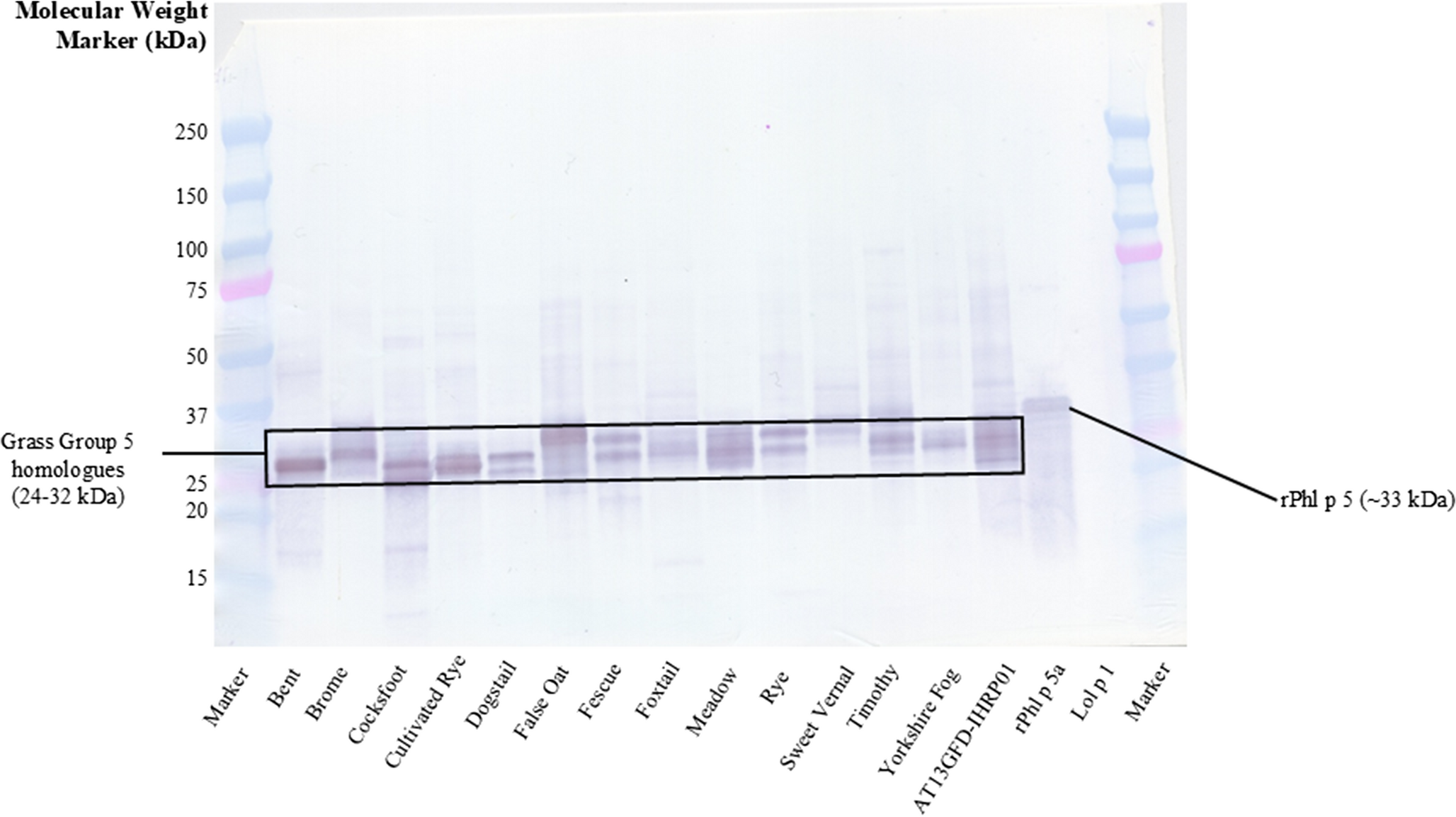
This review examines whether allergen immunotherapy (AIT) for grass pollen allergy should expand beyond the recent trend towards a mono-species approach based on Phleum pratense. It explores whether multi-species formulations better reflect natural exposure and could improve clinical outcomes.
Recent Findings
![]() |
| Group 5 homologues identified in individual extracts and a mixed extract of 13 species of Poaceae family grasses, using a monoclonal antibody |