Hiroyuki Yagyu, Masahiro Kiuchi, Kiyoshi Hirahara. International Immunology, 2026;, dxag015, https://doi.org/10.1093/intimm/dxag015
Abstract
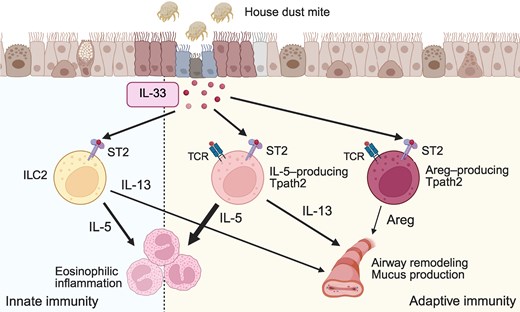 |
| IL-33-mediated activation of innate and adaptive type 2 immune cells. |
Hiroyuki Yagyu, Masahiro Kiuchi, Kiyoshi Hirahara. International Immunology, 2026;, dxag015, https://doi.org/10.1093/intimm/dxag015
Abstract
|
| IL-33-mediated activation of innate and adaptive type 2 immune cells. |

Abstract
The use of aesthetic dermatologic procedures in patients with underlying allergic and inflammatory skin diseases is on the rise, but specific safety considerations are often overlooked. Individuals with hypersensitivity to injectables, chronic inducible urticaria, allergic contact dermatitis, atopic dermatitis, or hereditary angioedema may face an increased risk of adverse reactions triggered by mechanical trauma, injected substances, or disruption of the skin barrier.

 |
Diagnostic workflow for beta-lactam immediate hypersensitivity skin testing |

 |
| Sankey Plot illustrating the distributions of observed and predicted trajectories and their overlaps. |

 |
| Graphical Abstract |
ABSTRACT
 |
Characteristics of immediate drug hypersensitivity reactions (DHR) caused by excipients. |

Key Points
Question What are the risk factors associated with the development of food allergy in children?
Findings This systematic review and meta-analysis of 2.8 million participants in 190 studies identified the following largest and most certain risk factors associated with the development of food allergies in children: prior allergic conditions (atopic march/diathesis), atopic dermatitis, increased skin transepidermal water loss, filaggrin gene sequence variations, delayed solid food introduction, infant and intrapartum antibiotic exposure, male sex, being first born, family history of allergy, parental migration, self-identification as Black, and cesarean delivery.
Meaning This systematic review and meta-analysis clarifies the major and minor risk factors associated with developing early-onset food allergy to inform optimal prevention clinical practice, policy, and research.
Abstract
Importance The incidence and risk (predictive) factors for early life food allergy development remain uncertain.

Abstract
Purpose of Review
This review examines whether allergen immunotherapy (AIT) for grass pollen allergy should expand beyond the recent trend towards a mono-species approach based on Phleum pratense. It explores whether multi-species formulations better reflect natural exposure and could improve clinical outcomes.
Recent Findings
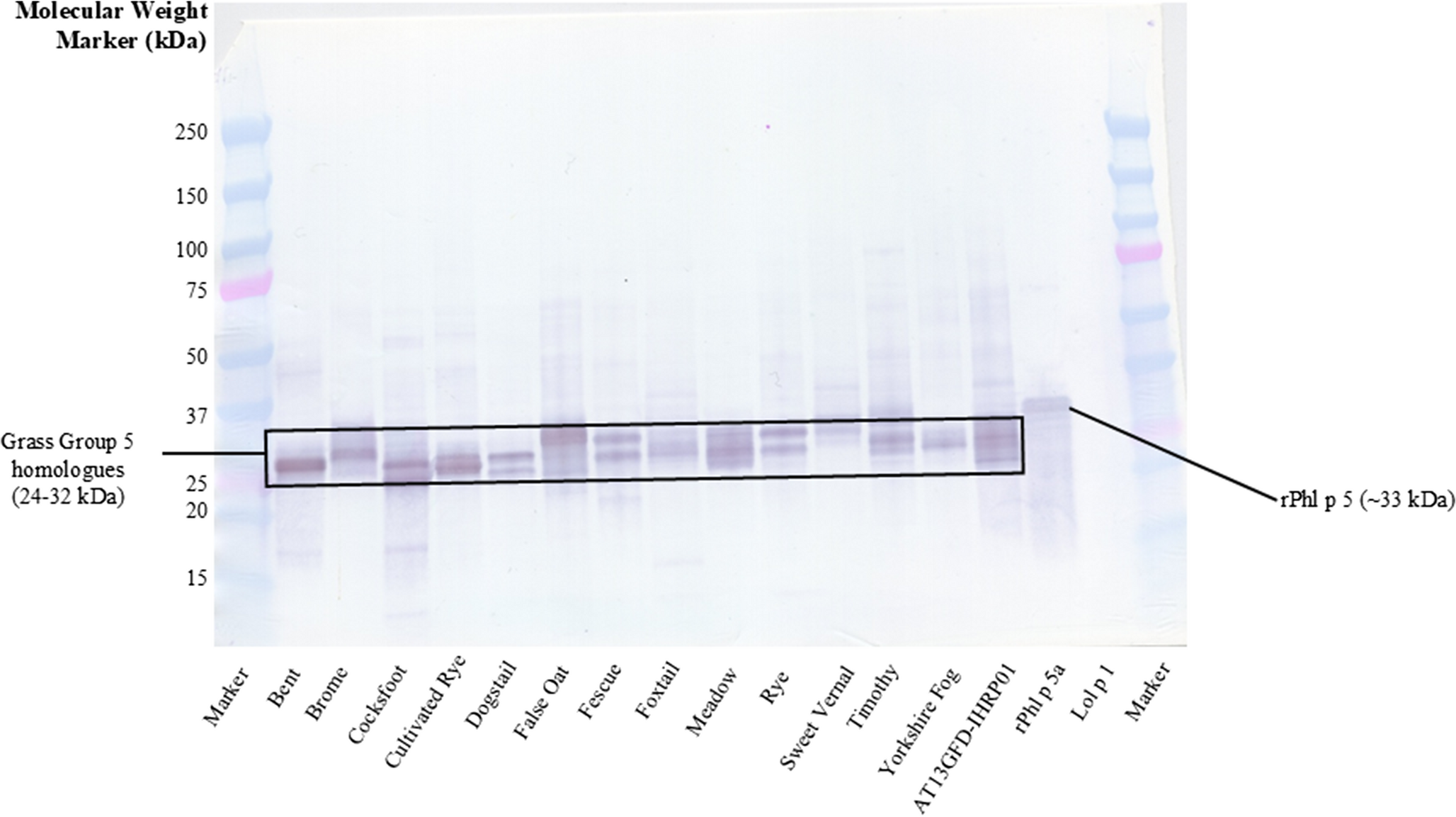 |
| Group 5 homologues identified in individual extracts and a mixed extract of 13 species of Poaceae family grasses, using a monoclonal antibody |

